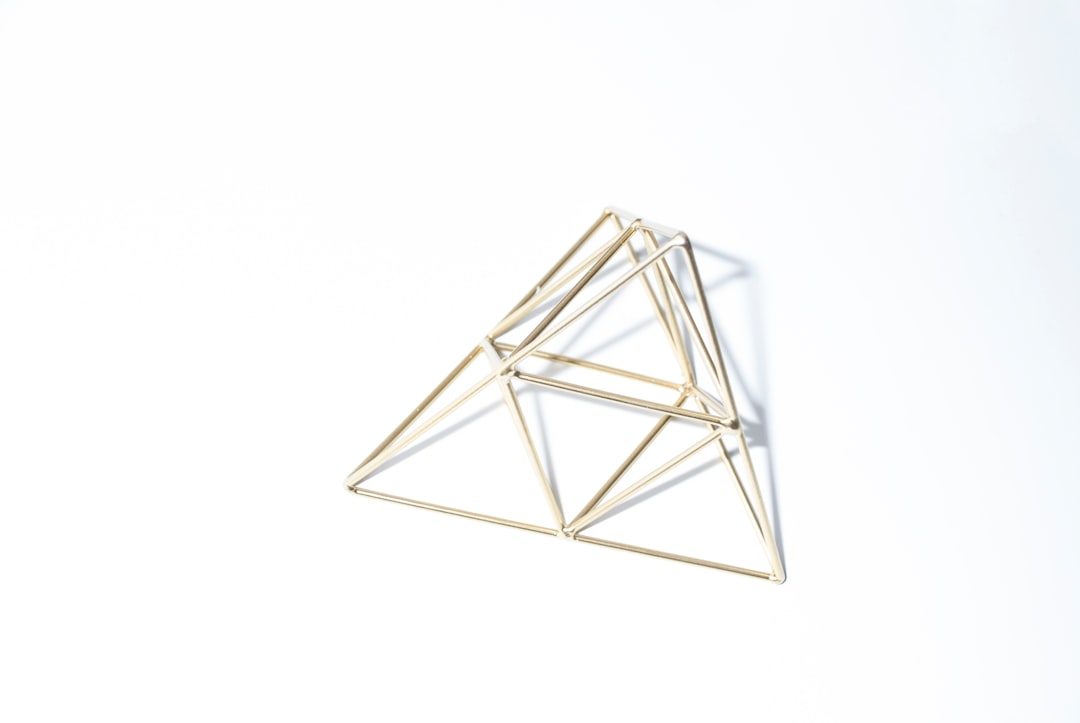
The pervasive presence of rectangular and square forms within human-made structures and objects is undeniable, a consequence of ease of fabrication, modularity, and a certain perceived stability. However, the triangulated frame, while perhaps less ubiquitous in everyday human experience, embodies a superior inherent rigidity and load-bearing capacity. This article explores the fundamental principles behind the strength of triangular frames, examines various applications across engineering and design, and addresses the psychological and practical barriers that contribute to what can be termed “human motor reluctance” in their wider adoption.
The fundamental strength of the triangle lies in its geometric impossibility to deform without an alteration in the length of one of its sides. Unlike a square or rectangle, which can be deformed into a parallelogram or rhomboid without changing the length of its members, a triangle maintains its shape under applied forces. This characteristic makes it the only geometrically stable polygon.
Geometric Principles of Triangulation
Consider a simple two-dimensional frame. A four-sided frame, such as a square articulated at its corners, will readily collapse under a diagonal force, transforming from a square to a parallelogram. This collapse occurs because the corners act as pivots, allowing relative rotation. In contrast, if a diagonal member is added to this square, dividing it into two triangles, the frame becomes rigid. Each of the two triangles now resists deformation.
Load Distribution and Stress Pathways
In a triangulated structure, applied loads are efficiently distributed along the members. When a force is exerted on a joint, the load is resolved into tensile and compressive forces along the adjacent members. These forces are then transmitted through the entire triangular network, often resulting in a more uniform distribution of stress compared to non-triangulated designs. This allows for the use of lighter materials or smaller cross-sections for a given load, leading to material efficiency.
Comparison to Other Geometric Forms in Structural Engineering
While squares and rectangles are fundamental to construction, their stability often relies on the rigidity of their joints or the addition of bracing elements that effectively create triangles. For example, the diagonal bracing in a rectangular building frame or the webbing in an I-beam function precisely to impart triangular stability. This demonstrates an implicit reliance on triangular principles even when the outward form is rectilinear.
Triangular frames have been a topic of interest in understanding human motor reluctance, particularly in how structural stability influences movement efficiency. For a deeper exploration of this concept, you can refer to a related article that discusses the implications of frame design on human biomechanics and performance. This article can be found at this link.
Engineering Applications of Triangular Frames
The principles of triangulation are not merely theoretical curiosities; they are foundational to a vast array of engineering disciplines, enabling the construction of structures that withstand immense forces and spans.
Trusses in Bridge and Roof Construction
Perhaps the most iconic application of triangular frames is in truss bridges and roof trusses. The efficiency of a truss lies in its ability to carry loads primarily through axial tension and compression in its members, minimizing bending moments.
Warren, Pratt, and Howe Trusses
Several common truss configurations exist, each with specific advantages. The Warren truss employs equilateral or isosceles triangles, creating an aesthetically balanced and often economically fabricated structure. The Pratt truss utilizes vertical members in compression and diagonal members in tension, making it efficient for longer spans. Conversely, the Howe truss uses vertical members in tension and diagonal members in compression, sometimes favored in situations where compressive forces need to be distributed differently. Each of these designs, however, relies exclusively on the fundamental strength of the triangulated network.
Space Frames and Geodesic Domes
Beyond planar trusses, three-dimensional triangulated structures, known as space frames, provide expansive, column-free spaces. Geodesic domes, famously popularized by Buckminster Fuller, are a prime example. These structures derive their immense strength from their highly interconnected triangular components, allowing them to enclose large volumes with remarkable material efficiency and resistance to external loads like wind and seismic activity. Consider the structural integrity of a soap bubble to a lesser extent, where surface tension creates a distributed resistance; a geodesic dome achieves similar strength through its meticulously connected facets.
Frameworks in Aerospace and Automotive Industries
The pursuit of lightweight yet robust structures is paramount in aerospace and automotive engineering. Triangulated frameworks offer a compelling solution.
Aircraft Fuselage and Wing Structures
Aircraft fuselages often incorporate internal truss structures or highly stiff paneling that behaves as a triangulated system to resist bending and torsional loads. Similarly, wing spars and ribs form a triangulated network to distribute aerodynamic forces efficiently, ensuring the wing’s integrity during flight. The constant battle against gravity necessitates maximum strength with minimum weight, a challenge the triangle adeptly addresses.
Automotive Chassis Design
While often concealed, the underlying chassis of high-performance vehicles, particularly in racing, frequently employs space frame designs or roll cages that are meticulously triangulated. This provides exceptional torsional rigidity, which is crucial for handling and crash protection. Imagine the forces a racing car endures; the chassis, like a finely tuned skeleton, distributes these forces through its triangulated bones.
Addressing Human Motor Reluctance
Despite the clear engineering advantages, there appears to be a palpable “human motor reluctance” in the more widespread, overt adoption of triangular forms in everyday objects and architectural elements. This reluctance is a complex interplay of aesthetic preferences, historical precedence, and practical considerations.
Aesthetic and Perceptual Biases
Human beings have an ingrained preference for certain forms, and the rectangle often features prominently. This preference can be attributed to several factors.
The Familiarity of Rectilinear Forms
Our built environment is overwhelmingly rectilinear. Houses, furniture, screens, and even the pages of this article conform to right angles. This constant exposure creates a deep-seated familiarity and comfort with these forms. Triangles, while structurally superior, can appear unconventional or even jarring in contexts where rectilinear forms are expected. They are the outliers in a world of right angles, and deviations from the norm often elicit psychological resistance.
Perceived Complexity and Visual Unrest
While a single triangle is simple, a complex triangulated network, such as a truss or space frame, can appear visually complex or “busy” to the untrained eye. This visual density can sometimes be perceived as aesthetically less pleasing than the clean lines of a rectangular structure. The underlying efficiency can become obscured by its visual intricacy.
Historical and Cultural Influences on Design
Architectural history is replete with examples of rectilinear structures, from ancient temples to modern skyscrapers. This long lineage has instilled a cultural bias towards these forms, making the adoption of overtly triangular designs seem radical or avant-garde, rather than pragmatic. The square and the rectangle are etched into our historical consciousness as markers of stability and progress, overlooking the quiet strength of their triangular counterparts.
Practical and Manufacturing Considerations
Beyond aesthetics, there are tangible practical reasons that contribute to the predominance of rectilinear forms, particularly in mass production.
Ease of Fabrication and Assembly
Cutting and joining rectangular components typically involves fewer complex angles and more standardized joinery techniques. Wood and metal are often produced in rectangular stock, simplifying the initial shaping process. Manufacturing a series of identical triangular components and assembling them into a larger structure can sometimes be more intricate and labor-intensive, requiring more precise cuts and specialized jigs.
Modularity and Spatial Efficiency
Rectangular objects nest efficiently, minimizing wasted space in storage and transportation. Rooms are typically rectangular because furniture, designed to fit within these spaces, is also predominantly rectangular. The modularity of rectangular building blocks simplifies construction and allows for flexible interior layouts. Triangles, by their very nature, can introduce dead space or require more custom-fitted elements, making their integration into existing systems more challenging.
Human Scale and Interaction
Furniture, for instance, is often designed with the human body in mind, fitting our largely rectilinear limbs and postures. A rectangular table provides an expansive, uniform surface. While triangular tables exist, they often present challenges in seating arrangements and surface utilization, feeling less accommodating to multiple users or a diverse array of objects.
Overcoming Reluctance and Embracing Triangulation
Overcoming this human motor reluctance is not about wholesale abandonment of rectangular forms, but rather about a more conscious and informed integration of triangular principles where they offer distinct advantages.
Education and Design Awareness
Increasing public and design professional awareness of the inherent benefits of triangulation is crucial. This involves highlighting successful applications and demystifying the perceived complexity of triangular forms.
Illustrating the “Hidden” Triangles
Many seemingly rectangular structures already incorporate hidden triangles for strength. Educational efforts could focus on revealing these underlying engineering principles, demonstrating that triangular strength is not alien but integral to much of our built world. This can lead to a more intuitive understanding and appreciation.
Encouraging Exploratory Design and Innovation
Design competitions and academic research can encourage the exploration of novel applications for triangulated structures, pushing the boundaries of aesthetics and functionality. This fosters a generation of designers who are not bound by traditional rectilinear constraints.
Advancements in Manufacturing and Materials
Technological progress can mitigate some of the practical challenges associated with triangular forms.
Automation and Digital Fabrication
Computer Numerical Control (CNC) machines and 3D printing can precisely cut and form complex triangular components with minimal human intervention, reducing fabrication costs and increasing accuracy. This removes the “difficulty” barrier that often accompanies non-standard geometric forms.
Novel Materials and Construction Techniques
The development of new, lightweight, and high-strength materials, combined with innovative joining and assembly techniques, can make triangulated structures even more efficient and affordable. For example, advancements in composite materials can lead to incredibly strong yet light triangular components, expanding their practical applications.
Biometric and Ergonomic Integration
Considering how humans interact with forms can also influence the adoption of triangles.
Ergonomic Benefits in Specific Applications
For certain applications, such as specialized seating or support structures, a triangulated design might offer superior ergonomic benefits or greater adaptability to the human form. For example, some adaptive equipment for individuals with mobility challenges might benefit from the flexible rigidity of triangular frameworks.
The “Softening” of Triangular Forms
While the sharp angles of a purely geometric triangle can be perceived as harsh, designers can soften these forms through rounded edges, material choices, or by embedding them within larger, more organic shapes. This can address the aesthetic concerns while retaining the structural benefits. The stark geometry does not have to be uncompromising; it can be integrated with a more fluid sensibility.
In conclusion, the triangular frame stands as a testament to geometric efficiency and structural integrity, a silent workhorse behind numerous feats of engineering. Human motor reluctance towards its more overt adoption is a multifaceted phenomenon rooted in aesthetics, historical inertia, and practical manufacturing challenges. However, as our understanding of design principles deepens, and as manufacturing technologies advance, the inherent advantages of triangulation become increasingly compelling. By consciously integrating triangular principles, both overtly and subtly, into our designs and constructions, we can build a more resilient, efficient, and ultimately more innovative future. The triangle, often unseen or underestimated, holds a key to unlocking greater strength and resourcefulness in the human-made world.

SHOCKING: CIA Remote Viewer Finds “The Governor” Controlling Earth
FAQs
What are triangular frames in the context of human motor control?
Triangular frames refer to a conceptual or physical framework used to analyze or guide human motor movements, often involving three points or axes that help in understanding spatial orientation and coordination during motion.
How does human motor reluctance affect movement within triangular frames?
Human motor reluctance is the natural hesitation or resistance to initiate or change movement. Within triangular frames, this reluctance can influence how smoothly and accurately a person transitions between positions or maintains stability, impacting motor performance.
Why are triangular frames important for studying human motor behavior?
Triangular frames provide a structured way to examine the spatial and mechanical aspects of human movement. They help researchers and clinicians understand coordination, balance, and motor planning by simplifying complex motions into manageable geometric relationships.
Can triangular frames be used in rehabilitation or motor learning?
Yes, triangular frames can be applied in rehabilitation and motor learning to design exercises and interventions that improve coordination, balance, and motor control by targeting specific spatial relationships and movement patterns.
What factors influence human motor reluctance within triangular frames?
Factors include neurological conditions, muscle strength, proprioceptive feedback, cognitive load, and psychological aspects such as fear or uncertainty. These elements can affect a person’s willingness or ability to perform movements within the constraints of triangular frames.