
Neptune, the outermost planet in our solar system, a swirling azure sphere of mystery, presents a unique challenge to planetary scientists: its internal heat source. Unlike its rocky terrestrial neighbors that have largely cooled from their primordial fiery births, and unlike Jupiter and Saturn, whose immense gravitational squeezes create a formidable internal furnace, Neptune, a gas giant, exhibits a puzzling thermal anomaly. It radiates significantly more heat into space than it receives from the Sun. This discrepancy, a cosmic riddle, points to a powerful but poorly understood internal engine, a relentless generator of energy that continues to shape Neptune’s dynamic atmosphere and magnetosphere. Understanding this internal heat is not merely an academic curiosity; it is a key to unlocking the secrets of ice giant formation, evolution, and the very processes that drive planetary atmospheres.
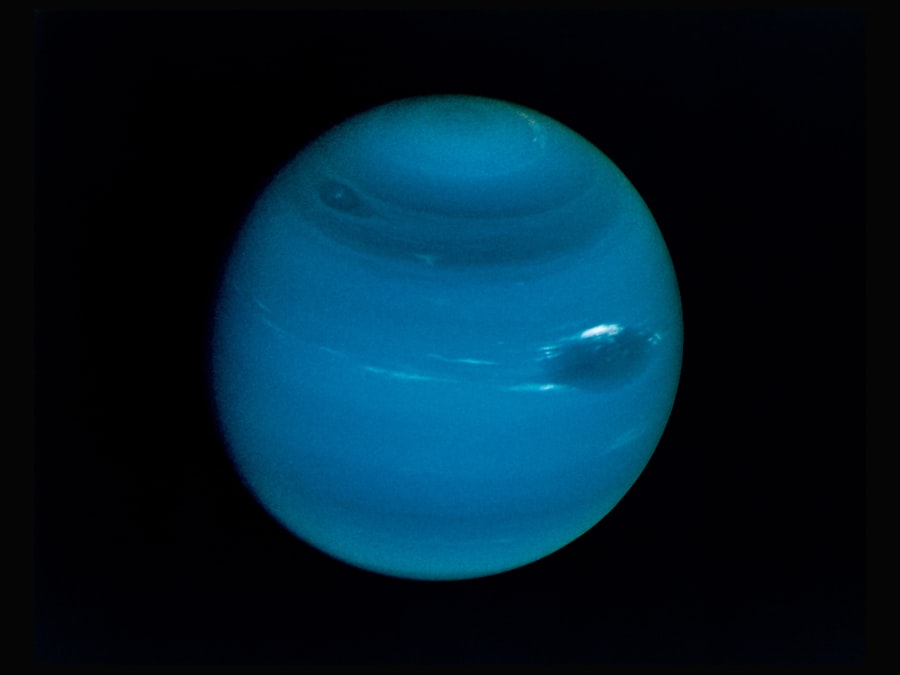
Neptune, a world veiled in perpetual twilight, is an enigma wrapped in an enigma. Its dominant hue, a striking blue, is a consequence of methane in its upper atmosphere absorbing red light. Yet, beneath this vibrant facade lies a puzzle that continues to perplex astronomers: Neptune’s internal heat. Observations, primarily from the Voyager 2 spacecraft during its 1989 flyby, revealed that Neptune emits approximately 2.6 times more energy than it absorbs from the distant Sun. This surplus heat is a profound departure from what one might expect from a planet of its size and composition, especially when compared to Uranus, its celestial sibling, which radiates roughly the same amount of heat as it receives. This disparity between Neptune and Uranus, two planets seemingly so alike in their classification as ice giants, is a powerful clue, hinting at distinct evolutionary pathways and internal processes. As you delve into the management of this internal heat source, imagine Neptune as a vast, celestial engine, perpetually running on a fuel whose nature remains a subject of intense scientific inquiry.
The Observed Thermal Anomaly
The first definitive evidence for Neptune’s internal heat came from infrared observations. These measurements, akin to taking a planet’s temperature, revealed that the heat radiating outwards from Neptune is substantially greater than the insolation it receives. This excess thermal output, often referred to as a “heat imbalance” or “internal heat flux,” suggests an ongoing energy generation process within the planet. For context, consider a well-insulated house on a cold day. It loses heat to its surroundings, but if it also has an active heating system, the internal temperature will be maintained, and often higher than the ambient air. Neptune, in this analogy, is like a house with a very potent heating system, contributing significantly to its overall thermal budget. The scientific community has grappled with the implications of this anomaly for decades, proposing various mechanisms to explain this persistent energy flux.
Comparison with Uranus: A Tale of Two Ice Giants
The striking difference in thermal output between Neptune and Uranus is a critical piece of the puzzle. Uranus, a planet that appears to have tipped over on its side due to a colossal ancient impact, exhibits a remarkably balanced thermal budget. It radiates very little excess heat, leading scientists to speculate that its internal processes are either different or have cooled down considerably. Neptune, on the other hand, remains an active heat emitter. This contrast points to fundamental differences in their internal structure, composition, or perhaps their formation histories. It’s as if two seemingly identical cars were built, one operating perfectly efficiently, while the other, despite appearing the same, has an engine that continues to burn an unknown fuel, generating a surprising amount of heat. Understanding why Neptune and Uranus diverge so dramatically in this regard is essential for comprehending the diversity of ice giant planets across the cosmos.
Neptune’s internal heat source management is a critical aspect of understanding its atmospheric dynamics and magnetic field. For a deeper insight into this topic, you can explore the article discussing the implications of internal heat on planetary atmospheres and magnetism. This article provides valuable context and analysis that can enhance your understanding of Neptune’s unique characteristics. To read more, visit this link.
Potential Sources of Neptune’s Internal Heat
The question of how Neptune generates this prodigious internal heat has led to a variety of compelling hypotheses, each with its own set of supporting evidence and remaining challenges. These proposed mechanisms are like different kinds of batteries that could power Neptune’s internal furnace, and identifying the dominant player is the key to understanding its energy budget.
Gravitational Contraction (Kelvin-Helmholtz Mechanism)
One of the most widely accepted explanations for internal heat in gas giants is slow gravitational contraction, also known as the Kelvin-Helmholtz mechanism. As a planet ages, it continues to slowly shrink under its own immense gravity. This contraction converts gravitational potential energy into thermal energy. Imagine squeezing a sponge; as you compress it, heat is generated. While this process is thought to be a significant contributor to the internal heat of younger gas giants, its effectiveness in generating the observed excess heat in Neptune, a planet that has had billions of years to cool, is a point of discussion. The theory suggests that if Neptune is still undergoing a measurable degree of contraction, it could account for a portion of its thermal output. However, the rate of contraction required to match Neptune’s observed heat radiation might be too high for a planet of its age, leading scientists to explore other avenues.
The Rate of Contraction
The Kelvin-Helmholtz mechanism relies on a specific rate of gravitational contraction. If Neptune were contracting too quickly, it would have significantly shrunk over its 4.5-billion-year history, a phenomenon not explicitly observed. Conversely, if the contraction rate is too slow, it cannot account for the substantial excess heat detected. Scientists use sophisticated models to calculate the expected contraction rates for planets of Neptune’s mass and composition and compare these predictions with observational data. The discrepancy often leads to the conclusion that gravitational contraction alone may not be the sole driver of Neptune’s internal heat.
Residual Heat from Formation
Another facet of the Kelvin-Helmholtz mechanism, particularly relevant for planets as ancient as Neptune, is the idea of residual heat from formation. The process of planet formation itself involves immense energetic collisions and accretion, generating significant heat. While much of this primordial heat would have dissipated over billions of years, a fraction might remain trapped within the planet’s core and mantle. This residual heat acts like embers from a past fire, still glowing faintly and contributing to the overall thermal budget. The question then becomes: how much of this residual heat could realistically persist and manifest as the observed excess thermal radiation?
Radiogenic Heating from Radioactive Decay
While Neptune is classified as an ice giant, it likely contains a significant rocky core and possibly a substantial rocky-metallic component within its metallic hydrogen layer. This rocky component would contain naturally occurring radioactive isotopes, such as uranium, thorium, and potassium. The radioactive decay of these elements releases energy in the form of heat. This process is akin to a slow-burning, internal power source, continuously replenishing Neptune’s thermal output. The efficiency of this radiogenic heating depends on the abundance and type of these radioactive elements present within Neptune’s interior.
Abundance of Radioactive Isotopes
The amount of heat generated by radioactive decay is directly proportional to the concentration of radioactive isotopes within the planet. If Neptune’s rocky core and interior contain a higher than average abundance of these elements, it could significantly contribute to its internal heat. Understanding the initial composition of the protoplanetary disk from which Neptune formed is crucial for estimating these abundances. Variations in these initial conditions could explain the divergence in thermal output between Neptune and Uranus.
Location of Radioactive Elements
The distribution of radioactive elements within Neptune’s interior also plays a role. If these elements are concentrated in the planet’s core or lower mantle, their heat generation will be more efficiently trapped and channeled towards the planet’s surface. Conversely, if they are dispersed throughout a much larger volume, their contribution to the observed surface radiation might be less pronounced. Modeling the internal structure of Neptune and the likely distribution of heavier elements is key to assessing the impact of radiogenic heating.
Differentiation and Phase Transitions
As Neptune settled into its planetary form, heavier elements like iron and rock would have sunk towards the center, creating a differentiated structure with a dense core. This process of differentiation, a gravitational sorting of materials, releases gravitational potential energy as heat. Furthermore, certain materials within Neptune’s interior may undergo phase transitions under the immense pressures and temperatures. These transitions, such as the transformation of materials into denser crystalline structures, can also release heat. Imagine a layered cake being compressed; the different layers settling and becoming more compact would generate some internal warmth.
The Sinking of Heavy Elements
The formation of a metallic hydrogen layer and a rocky core would have been an energetically active process. As these heavier elements sank through the less dense materials, they would have done work against the buoyant forces, converting gravitational potential energy into heat. This is a one-time event that contributes to the initial thermal budget of the planet, and a portion of this heat may still be radiating outwards.
Exotic Phase Transitions in the Interior
Under the extreme pressures within Neptune, commonly observed materials can adopt exotic crystalline forms. The transition between these phases can be accompanied by a release of energy. For example, water ice, which is abundant in Neptune, undergoes numerous complex phase transitions at high pressures. If Neptune’s interior contains materials undergoing such transitions, it could be a significant source of its internal heat. These transitions can be viewed as internal chemical reactions happening under immense pressure, releasing energy as they occur.
Tidal Heating (Less Likely for Neptune’s Core Heat)
While tidal heating is a significant source of internal heat for moons that orbit close to massive planets, such as Jupiter’s moon Io, it is generally considered a less likely primary source for the bulk internal heat of Neptune itself. Tidal forces are exerted by a planet’s gravitational pull on its moons, causing internal friction and generating heat. However, the internal heat observed in Neptune is thought to originate from its core and mantle, not from the internal friction caused by its own moons. Nevertheless, the influence of Neptune’s large moon Triton on its internal dynamics cannot be entirely dismissed.
Influence of Triton
Triton, Neptune’s largest moon, is thought to have been captured by Neptune relatively recently in its history and is thought to possess a subsurface ocean. The gravitational interaction between Neptune and Triton, and potentially other smaller moons, could induce some tidal stresses within Neptune. However, the magnitude of this effect is generally considered insufficient to explain the planet’s overall substantial thermal anomaly. It’s like a gentle breeze on a roaring bonfire; it might add a touch of warmth, but it’s not the primary fuel source.
Managing Neptune’s Internal Heat: Models and Observations
The scientific endeavor to “manage” Neptune’s internal heat is essentially an ongoing effort to understand and quantify its sources and effects. This involves developing sophisticated theoretical models and meticulously analyzing observational data. Imagine a team of engineers trying to understand and control a complex industrial furnace; they need blueprints (models) and thermometers and sensors (observations) to get the job done.
Thermal Evolution Models
Planetary scientists employ sophisticated computer simulations, known as thermal evolution models, to replicate the cooling and evolution of planets. These models take into account various physical processes, including gravitational contraction, radioactive decay, and heat transport through convection and conduction. By adjusting parameters within these models, scientists can attempt to match the observed thermal output of Neptune.
Simulating Interior Dynamics
These models delve deep into Neptune’s interior, simulating the flow of heat from the core to the atmosphere. They consider the physical properties of materials under extreme pressures and temperatures, the likely composition of the planet, and the rates at which different heat-generating processes are occurring. The goal is to create a virtual Neptune that behaves like the real one, both in terms of its temperature profile and its overall energy budget.
Parameterizing Heat Dissipation
A key aspect of thermal evolution models is how they parameterize the rate at which heat is dissipated from the planet’s interior to its atmosphere and eventually into space. This involves understanding the efficiency of convection in Neptune’s fluid layers and the thermal conductivity of its solid components. The way heat escapes is as critical as how it is generated in determining the planet’s overall temperature.
Observational Constraints from Spacecraft and Telescopes
Direct observations are the bedrock upon which theoretical models are built and evaluated. Missions like Voyager 2 and ground-based as well as space-based telescopes provide crucial data points that constrain our understanding of Neptune’s thermal state.
Infrared Radiometry
Infrared telescopes are indispensable tools for measuring the thermal radiation emitted by planets. By analyzing the spectrum and intensity of this infrared light, scientists can determine Neptune’s effective temperature and its total energy output. This is the primary method used to detect and quantify the planet’s internal heat anomaly.
Microwave Observations
Microwave observations can penetrate deeper into Neptune’s atmosphere than infrared observations, providing insights into the temperature profiles of deeper layers. These measurements can help distinguish between heat generated in the upper atmosphere versus heat originating from the planet’s core.
Future Missions and Observational Opportunities
While our current understanding of Neptune’s internal heat is substantial, it is far from complete. Dedicated future missions to the outer solar system are crucial for refining our models and potentially uncovering new thermal processes.
Dedicated Orbiter Missions
A dedicated orbiter mission to Neptune would provide unprecedented opportunities for long-term, in-situ measurements of its atmosphere and interior. Such a mission could map temperature variations across the planet, study atmospheric dynamics driven by internal heat, and potentially probe the planet’s magnetic field, which is intimately linked to its internal processes.
Advanced Telescope Capabilities
Improvements in the resolution and sensitivity of ground-based and space-based telescopes will also continue to enhance our observational capabilities. The ability to detect faint thermal signatures and analyze atmospheric composition with greater precision will be vital for ongoing studies of Neptune’s internal heat.
Impact of Internal Heat on Neptune’s Atmosphere and Magnetosphere

Neptune’s internal heat is not merely an abstract thermal anomaly; it is a potent engine that drives a significant portion of the planet’s observable phenomena, particularly its dynamic atmosphere and its complex magnetosphere. Imagine this internal heat as the hidden engine of a powerful machine, dictating much of its outward behavior.
Atmospheric Dynamics and Weather Patterns
The excess heat escaping from Neptune’s interior fuels its vigorous atmospheric circulation. This energy drives powerful winds, creates massive storm systems, and influences the distribution of heat and atmospheric gases.
Driving Powerful Winds
The extreme winds observed on Neptune, reaching speeds of over 2,000 kilometers per hour, are thought to be largely powered by the planet’s internal heat. This heat provides the energy gradient necessary to sustain such rapid atmospheric motion. Without this internal energy source, Neptune’s atmosphere would likely be far less dynamic, more akin to the calmer atmospheres of some exoplanets.
The Great Dark Spots and Storms
The enigmatic “Great Dark Spots” observed by Voyager 2 and subsequently by the Hubble Space Telescope are massive anticyclonic storm systems. The formation and sustenance of these colossal vortices are believed to be a consequence of the thermal energy rising from Neptune’s interior, interacting with its atmospheric layers. The constant replenishment of energy from below prevents these storms from dissipating as quickly as they might on a planet without such a strong internal heat source.
Generation and Dynamics of the Magnetosphere
Neptune’s churning interior, driven by its internal heat, is also thought to play a crucial role in generating its powerful and unusually tilted magnetosphere.
The “Dyna mo” Theory
The leading theory for generating planetary magnetic fields is the dynamo effect. This process occurs in the electrically conductive fluid cores of planets, where the movement of molten material generates electric currents, which in turn create a magnetic field. Neptune’s internal heat is essential for maintaining the convection of its electrically conductive metallic hydrogen layer, a key ingredient for a powerful dynamo.
Unusual Tilt and Complexity
Neptune’s magnetosphere is notably asymmetrical and significantly tilted relative to its rotational axis. This unusual configuration is a topic of ongoing research, but it is believed to be influenced by the complex convection patterns within its interior, driven by the internal heat. The nature of these convection cells, dictated by the internal heat flux, directly impacts the resulting magnetic field.
Recent studies on Neptune’s internal heat source management have revealed intriguing insights into the planet’s thermal dynamics. Researchers have been investigating how the unique atmospheric conditions and internal processes contribute to the heat retention and distribution within this distant giant. For a deeper understanding of these phenomena, you can explore a related article that discusses various aspects of planetary heat management in detail. This article can be found here.
Implications for Ice Giant Formation and Evolution
| Metric | Value | Unit | Description |
|---|---|---|---|
| Internal Heat Flux | 0.433 | W/m² | Estimated heat flow from Neptune’s interior to its atmosphere |
| Core Temperature | 7000 | K | Approximate temperature at Neptune’s core |
| Heat Source Type | Radioactive Decay & Gravitational Contraction | N/A | Primary mechanisms generating internal heat |
| Heat Transport Mechanism | Convection | N/A | Dominant process moving heat from interior to outer layers |
| Internal Heat Contribution to Total Energy | 2.6 | Times Solar Energy Absorbed | Neptune emits 2.6 times more energy than it receives from the Sun |
| Estimated Age of Heat Source | 4.5 | Billion years | Age of Neptune’s internal heat generation processes |
Understanding Neptune’s internal heat source has profound implications for our understanding of how ice giants form and evolve throughout the cosmos. It provides a crucial piece of the puzzle in deciphering the diversity of planetary systems.
Diversity of Ice Giant Formation Pathways
The difference in internal heat between Neptune and Uranus suggests that ice giants may form through a range of different processes or that their subsequent evolutionary paths diverge significantly. This implies that when we observe exoplanets classified as ice giants, they might have a wide array of internal thermal states, leading to diverse atmospheric and geophysical characteristics.
Protoplanetary Disk Conditions
The initial composition and conditions of the protoplanetary disk from which Neptune and Uranus formed could have played a significant role in their subsequent internal heat generation. Variations in the abundance of radioactive elements or the presence of different core-forming materials could lead to these observed differences.
Late-Stage Accretion Events
Late-stage accretion of massive objects onto a forming planet can inject significant heat. If Neptune experienced different or more substantial late-stage accretion events than Uranus, it could explain its hotter interior today.
Studying Extrasolar Ice Giants
Neptune serves as a vital Rosetta Stone for understanding the vast population of exoplanets, many of which are believed to be ice giants. By characterizing Neptune’s internal heat, we gain a framework for interpreting the observations of these distant worlds.
Interpreting Exoplanet Atmospheres
The atmospheric features and thermal profiles of extrasolar ice giants can provide clues about their internal heat sources. If an exoplanet exhibits thermal properties similar to Neptune, it suggests similar internal processes at play. Conversely, if it resembles Uranus, it points to a different evolutionary history.
Constraining Interior Models
Our understanding of Neptune’s internal heat helps us constrain the interior models we apply to extrasolar planets. We can use Neptune as a benchmark to test the validity of our assumptions about the composition, structure, and thermal processes of these distant worlds.
In conclusion, Neptune’s internal heat source remains a captivating enigma. It is a testament to the complexity and dynamism of planetary interiors, a silent engine powering a world of swirling storms and mighty winds. The ongoing scientific quest to unravel its secrets is not just about understanding one planet; it is about decoding the fundamental processes that shape worlds across the universe, offering us glimpses into the origins and evolution of planetary diversity itself.

STOP: The Neptune Lie Ends Now
FAQs
What is meant by Neptune’s internal heat source?
Neptune’s internal heat source refers to the energy generated within the planet itself, primarily from the residual heat left over from its formation and possibly from ongoing gravitational contraction or radioactive decay. This internal heat contributes to Neptune’s overall energy output and affects its atmospheric dynamics.
How does Neptune’s internal heat affect its atmosphere?
Neptune’s internal heat drives convection currents within its atmosphere, leading to dynamic weather patterns, including strong winds and storms. The heat helps maintain temperature gradients that influence cloud formation and atmospheric circulation.
What methods are used to study Neptune’s internal heat?
Scientists study Neptune’s internal heat through observations of its thermal emission using space telescopes and spacecraft data, as well as through computer modeling of its interior structure and heat transfer processes. Measurements of Neptune’s total energy output compared to the energy it receives from the Sun help estimate its internal heat contribution.
Why is managing Neptune’s internal heat source important in planetary science?
Understanding and managing knowledge about Neptune’s internal heat source is crucial for building accurate models of the planet’s formation, evolution, and current state. It also helps in comparative studies of other giant planets and contributes to our broader understanding of planetary systems.
Are there any challenges in measuring Neptune’s internal heat?
Yes, challenges include the vast distance to Neptune, which limits the resolution and frequency of observations, and the complexity of interpreting thermal emissions influenced by both internal heat and solar radiation. Additionally, the lack of dedicated missions to Neptune means data is limited compared to closer planets.