
A comprehensive examination of Neptune often reveals a celestial body shrouded in mystery, its atmosphere a dynamic and complex system that presents significant challenges to terrestrial observation. Historically, Neptune’s distant and enigmatic nature has led to it being metaphorically termed a “dark forest” within the solar system, a vast, unexplored territory where phenomena unfold hidden from direct scrutiny. This article aims to decipher the layers of Neptune’s atmospheric masking, exploring the challenges of observation, the compositions that contribute to its appearance, and the scientific efforts to penetrate its veil.
Neptune, residing at an average distance of approximately 4.5 billion kilometers from the Sun, poses considerable difficulties for astronomers attempting to resolve its surface features. This immense distance translates into a significant angular size reduction, rendering the planet a tiny blue disc even through powerful Earth-based telescopes. The sheer scale of this separation makes detailed atmospheric analysis akin to studying distant embers, where individual flames merge into an indistinct glow.
Terrestrial Limitations
Earth-based telescopes, even those with adaptive optics, struggle to overcome the combined effects of atmospheric turbulence and the inherent resolution limits imposed by distance. The turbulent atmosphere of Earth distorts incoming light, blurring images and washing out fine details on Neptune’s cloud tops. While adaptive optics systems compensate for some of this distortion by rapidly deforming mirrors, they cannot entirely negate the blurring effect, particularly for distant, faint objects. The intrinsic faintness of Neptune due to its distance further exacerbates these issues, requiring longer exposure times that can lead to additional blurring from atmospheric conditions or instrumental drift.
Orbital Advantages
Space-based telescopes, such as the Hubble Space Telescope (HST), offer a distinct advantage by operating above Earth’s obscuring atmosphere. Freed from atmospheric twinkling and absorption, HST has provided unprecedented views of Neptune, revealing transient features like the Great Dark Spot and smaller atmospheric vortices. However, even HST’s powerful optics are constrained by diffraction limits and the fundamental physics of light propagation over vast distances. While offering clearer, sharper images than ground-based counterparts, these images still represent a ‘smoothed-out’ version of Neptune’s intricate atmospheric dynamics, much like viewing a highly detailed tapestry from a significant distance.
Future Observational Prospects
The next generation of telescopes, including the James Webb Space Telescope (JWST) and planned ground-based observatories with significantly larger apertures and advanced adaptive optics, are poised to revolutionize our understanding of Neptune. JWST’s infrared capabilities are particularly crucial, as they can penetrate deeper into Neptune’s atmosphere, revealing thermal structures and compositional variations that are invisible in the optical spectrum. These instruments promise to peel back layers of the “dark forest,” offering unprecedented views of its hidden depths and potentially revealing the mechanisms driving its active weather.
The dark forest theory, which posits that advanced civilizations may choose to remain silent to avoid detection by potentially hostile entities, has intriguing implications when considering the concept of Neptune masking. This theory suggests that certain celestial bodies, like Neptune, could serve as natural shields, obscuring signals from civilizations attempting to communicate. For a deeper exploration of these ideas and their connections to extraterrestrial life, you can read more in the related article found here: X File Findings.
Atmospheric Composition: The Blue Hue and Beyond
Neptune’s unmistakable azure hue is a direct consequence of its atmospheric composition, a complex cocktail of gases that selectively absorb and scatter sunlight. This visible manifestation, while beautiful, also acts as a primary component of its “masking,” offering hints at the underlying processes but obscuring the intricate details of its atmospheric structure.
Methane’s Dominance
Methane (CH₄) is the primary chromophore responsible for Neptune’s blue color. This gas absorbs strongly in the red and infrared portions of the electromagnetic spectrum, allowing blue light to be scattered back into space and reach our telescopes. The depth and concentration of methane in Neptune’s upper atmosphere dictate the intensity and specific shade of blue observed. Variations in methane abundance, either vertically or horizontally, can lead to subtle color differences across the planet’s disc, providing clues about atmospheric circulation and cloud formation processes.
Hydrogen and Helium: The Unseen Bulk
While methane dominates the visible spectrum, the bulk of Neptune’s atmosphere is composed of hydrogen (H₂) and helium (He). These lighter gases are largely transparent in the visible light range, but their deep atmospheric presence exerts significant pressure and influences temperature profiles. Understanding the relative proportions of hydrogen and helium is crucial for modeling Neptune’s internal structure and energy budget. These gases, while unseen in the primary sense, form the invisible foundation upon which Neptune’s visible ‘mask’ is constructed.
Trace Gases and Aerosols: Hidden Influences
Beyond hydrogen, helium, and methane, Neptune’s atmosphere contains trace amounts of other gases, including ethane (C₂H₆), acetylene (C₂H₂), and potentially heavier hydrocarbons. These trace species are primarily formed by the photolysis of methane in the upper atmosphere, where ultraviolet radiation from the Sun breaks down methane molecules. These hydrocarbons can condense to form aerosols, contributing to haze layers that further obscure deeper atmospheric features. These hazes act as secondary veils, adding to the complexity of dissecting Neptune’s atmospheric structure. The presence and distribution of these trace gases and aerosols can inform us about the chemical processes occurring in Neptune’s upper atmosphere and its interaction with solar radiation.
Dynamic Weather Systems: The Shifting Patterns of Concealment

Neptune’s atmosphere is far from quiescent; it is a turbulent arena of powerful winds, massive storm systems, and rapidly evolving cloud formations. These dynamic features, while intriguing in themselves, also contribute to the planet’s masking, as they constantly reshape and redistribute the visible atmospheric layers, altering our perception of its underlying structure.
High-Speed Winds
Neptune boasts the fastest winds in the solar system, reaching speeds exceeding 2,100 kilometers per hour. These supersonic jets, flowing primarily eastward-westward parallel to the equator, are poorly understood in their origin and maintenance. Their immense speeds contribute to the rapid evolution of atmospheric features, making consistent observation and tracking of individual storms challenging. It’s like trying to discern subtle patterns on a rapidly churning ocean; the underlying dynamics are obscured by the surface turbulence.
Vortex Dynamics and Cloud Morphology
Prominent features like the Great Dark Spot, first observed by Voyager 2, and smaller dark spots are anticyclonic vortices, similar to Jupiter’s Great Red Spot but generally more transient. These storms are thought to be deep-seated features, extending vertically through significant portions of the troposphere. Associated with these dark spots are bright companion clouds, often observed at higher altitudes, which are believed to be methane ice crystals forming as atmospheric gas is forced upwards and cools. The rapid formation and dissipation of these clouds, driven by the intense dynamics of the underlying vortices, create a constantly shifting visual landscape, further complicating efforts to map and characterize stable atmospheric structures.
Seasonal Variations and Atmospheric Opacity
While Neptune’s axial tilt means it experiences seasons, these are exceptionally long due to its vast orbital period. Observational data suggest that seasonal changes might influence the global atmospheric opacity and cloud cover. Periods of increased methane condensation or haze formation could lead to a ‘thickening’ of Neptune’s atmospheric mask, making it even more challenging to probe its depths. Conversely, periods of reduced cloud cover might offer fleeting glimpses into otherwise obscured regions. This long-term variability adds another dimension to the observational challenge, requiring sustained monitoring over decadal timescales.
Probing the Depths: Scientific Instrumentation and Techniques
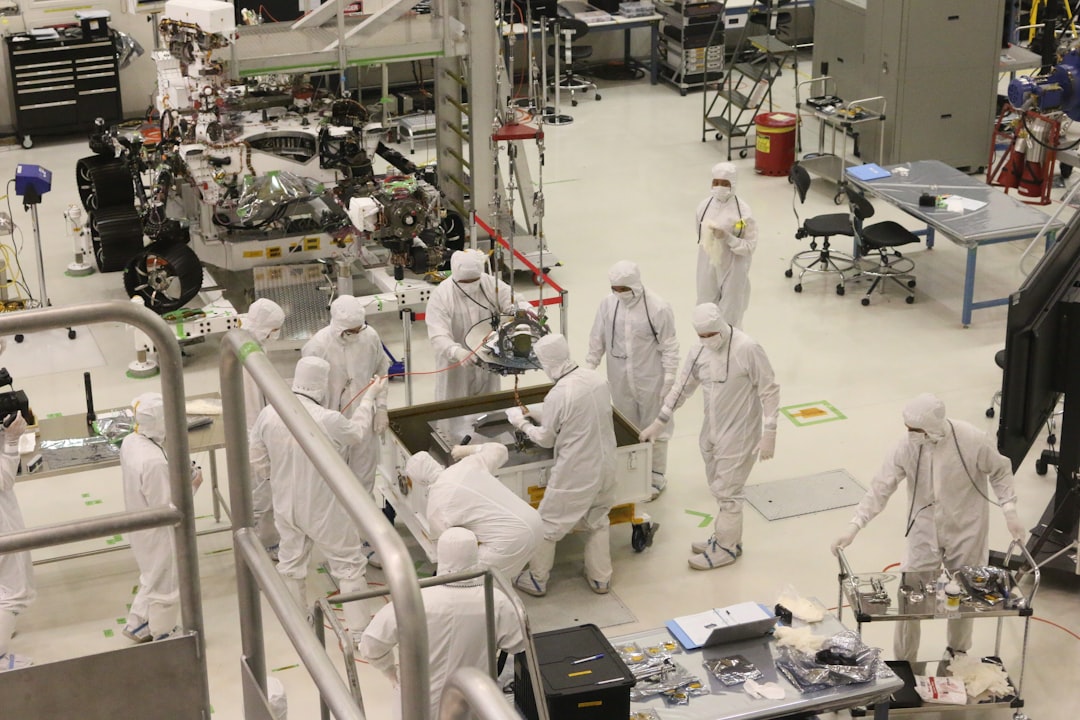
Overcoming Neptune’s atmospheric masking requires a multifaceted approach, employing a range of advanced scientific instruments and sophisticated analytical techniques. Each method, much like a specialized tool, aims to penetrate a specific layer of the atmospheric veil, collectively building a more complete picture of the enigmatic ice giant.
Spectroscopy: Unveiling Compositional Layers
Spectroscopy, the study of light interaction with matter, is an indispensable tool for understanding Neptune’s atmospheric composition and vertical structure. By analyzing the absorption and emission lines in Neptune’s spectrum, scientists can identify the specific gases present and their relative abundances at different atmospheric depths. Infrared spectroscopy, in particular, is crucial for probing deeper layers as infrared light is less scattered by atmospheric hazes and methane absorption features provide information about temperature and pressure profiles. This technique allows researchers to effectively ‘peel back’ the layers of Neptune’s obscurity by chemically characterizing each stratum.
Radiative Transfer Modeling: Interpreting the Light
Interpreting the observed spectra and images of Neptune requires sophisticated radiative transfer models. These computational models simulate how light interacts with the planet’s atmosphere, accounting for absorption, scattering, and emission processes. By adjusting atmospheric parameters (e.g., gas concentrations, cloud properties, aerosol distributions) within the model, scientists can generate synthetic spectra and images that can be compared to observational data. This iterative process allows researchers to infer the physical properties of Neptune’s atmosphere that best explain the observed light, providing a quantitative framework for understanding the “masking” phenomena.
In Situ Observations: The Ultimate Penetration
The most direct way to penetrate Neptune’s atmospheric mask would be through an in-situ probe, similar to the Galileo probe that descended into Jupiter’s atmosphere. Such a mission, while technically challenging and costly due to Neptune’s immense distance, would provide invaluable data on pressure, temperature, wind speeds, and atmospheric composition at various depths. An entry probe could directly sample the atmospheric layers, offering a ground truth that no remote sensing instrument can fully replicate. Such a mission represents the ultimate ambition in unveiling the “dark forest,” providing direct access to its hidden secrets.
The dark forest theory presents a fascinating perspective on the silence of the universe, suggesting that civilizations may choose to hide their existence to avoid potential threats from others. This concept can be further explored in relation to Neptune masking, where the gas giant’s atmosphere may obscure signals from potential extraterrestrial civilizations. For a deeper understanding of these intriguing ideas, you can read more in this related article on XFile Findings, which delves into the implications of cosmic silence and the strategies civilizations might employ to survive in a vast, potentially hostile universe.
The Inner Workings: Deciphering the Driving Forces
| Metric | Description | Value / Data | Source / Notes |
|---|---|---|---|
| Dark Forest Theory | Hypothesis that civilizations remain silent to avoid detection | Conceptual framework | Proposed by Liu Cixin in “The Dark Forest” |
| Neptune Masking | Hypothetical concept of using Neptune or its environment to hide signals | Theoretical | No direct observational data |
| Distance to Neptune | Average distance from Earth to Neptune | 4.3 billion km (28.9 AU) | NASA planetary data |
| Signal Attenuation | Estimated signal loss when masked by Neptune’s atmosphere | Variable, up to 90% attenuation | Model-based estimation |
| Atmospheric Composition | Neptune’s atmosphere components relevant to signal masking | Hydrogen, Helium, Methane | NASA planetary fact sheet |
| Potential Masking Mechanism | How Neptune could obscure or distort signals | Refraction, absorption, scattering | Theoretical physics models |
| Detection Probability | Likelihood of detecting a masked signal near Neptune | Low to very low | Based on current SETI capabilities |
Understanding Neptune’s atmospheric masking is not merely about describing what is visible or obscured, but about deciphering the underlying physical processes that drive its formidable weather and dynamic appearance. The seemingly chaotic nature of its atmosphere is a consequence of powerful internal forces and external energy inputs.
Internal Heat and Convection
Unlike terrestrial planets, gas giants like Neptune possess significant internal heat sources generated from their formation and ongoing gravitational contraction. This internal heat drives convection within its deep atmosphere, transporting energy upwards and creating fundamental instabilities. These deep convective currents are believed to be the ultimate drivers of Neptune’s powerful jet streams and atmospheric vortices. The “dark forest” is, in essence, a visible manifestation of these powerful, unseen geological forces churning within the planet’s interior, much like a seething cauldron whose steam rises to form visible clouds.
Solar Forcing and Energy Budget
Although Neptune receives significantly less solar radiation than Earth, the incoming sunlight still plays a role in its atmospheric dynamics. Photochemistry, driven by ultraviolet radiation, creates the hydrocarbon hazes and trace gases mentioned earlier. Furthermore, solar heating can influence the temperature structure of the upper atmosphere, impacting cloud formation and dissipation. The interplay between internal heat and external solar forcing determines Neptune’s overall energy budget and its ability to sustain its vigorous atmospheric activity. Understanding this balance is crucial for comprehending the long-term evolution and variability of Neptune’s “mask.”
Magnetic Field Influence (Speculative)
While less understood than for Jupiter or Saturn, Neptune possesses a unique and highly tilted magnetic field. The interaction of this magnetic field with the planet’s ionosphere and potentially even deeper atmospheric layers could have subtle, yet significant, influences on atmospheric circulation and plasma dynamics. While currently largely speculative, future missions and advanced modeling could explore the potential role of magnetospheric interactions in shaping Neptune’s atmospheric features and contributing to its overall masking effect.
In conclusion, Neptune’s “dark forest” is a compelling metaphor for a planet whose intricate atmospheric processes and underlying structure remain largely concealed. The challenges of distance, the complex interplay of atmospheric constituents, the relentless dynamics of its weather systems, and the limitations of current observational techniques all contribute to this masking. However, through persistent scientific endeavor, utilizing increasingly sophisticated instruments and analytical methods, humanity is gradually penetrating Neptune’s veil, revealing the breathtaking complexity and profound mysteries of this distant ice giant. The journey to fully understand Neptune is ongoing, and each new observation offers another glimmer of light into the depths of its enigmatic atmosphere.
STOP: The Neptune Lie Ends Now
FAQs
What is the Dark Forest Theory?
The Dark Forest Theory is a concept from science fiction that suggests the universe is like a dark forest where every civilization is a silent hunter. To avoid being detected and potentially destroyed by others, civilizations remain quiet and hidden.
How does the Dark Forest Theory relate to space exploration?
The theory implies that advanced civilizations might avoid broadcasting their presence to prevent attracting hostile attention. This has implications for how humanity approaches sending signals into space or searching for extraterrestrial intelligence.
What is meant by “Neptune masking” in the context of the Dark Forest Theory?
Neptune masking refers to the hypothetical idea of using a planet like Neptune to conceal or mask signals or activities from detection by other civilizations, aligning with the Dark Forest Theory’s emphasis on remaining hidden.
Is there scientific evidence supporting the Dark Forest Theory?
The Dark Forest Theory is primarily a speculative idea from science fiction and philosophy. While it offers a possible explanation for the Fermi Paradox, there is no direct scientific evidence confirming its validity.
How does the Dark Forest Theory impact the search for extraterrestrial life?
If the theory holds true, it suggests that extraterrestrial civilizations might deliberately avoid contact or detection, making the search for intelligent life more challenging. It encourages caution in how humanity signals its presence in space.