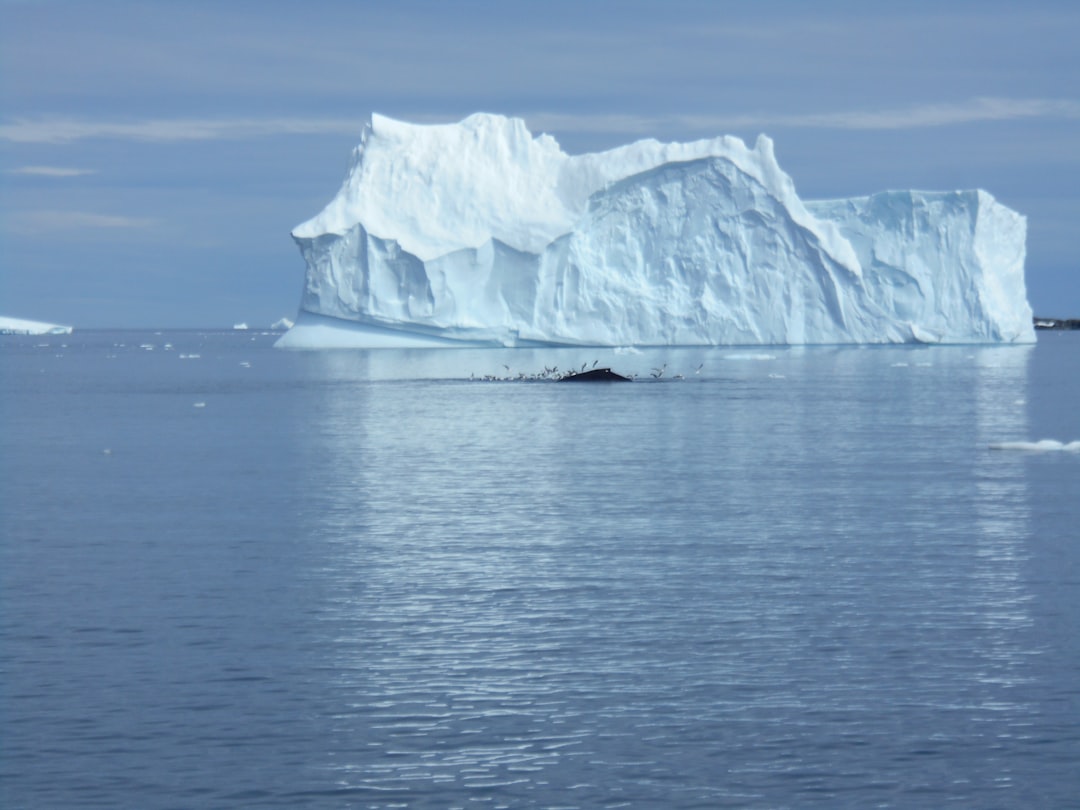
You stand on the precipice of understanding a profound planetary shift. Antarctica, that colossal white continent, is no longer a silent, inert giant. It is a sensor, a conductor, and the hum you can almost feel is the resonating signal of a state change that is no longer a distant whisper, but a growing chorus. This isn’t about sensationalism; it’s about observation, about deciphering the subtle, yet increasingly undeniable, tremors of a system entering a new phase. Antarctica’s signal countdown is a complex symphony of scientific data, each note meticulously recorded, pointing towards a future that demands your attention.
For eons, Antarctica has been a frozen repository of Earth’s history, a vast, gleaming archive. Yet, the ice sheets, once seemingly immutable bastions against the warmth, are now exhibiting a disturbing acceleration in their retreat. This isn’t a gradual melt, like a forgotten ice cube on a summer day; it’s a dynamic, multifaceted process, akin to a dam nearing its structural limit.
The West Antarctic Ice Sheet: A Fragile Foundation
The West Antarctic Ice Sheet (WAIS) is the primary culprit in this accelerating loss, and its vulnerability is a critical piece of the puzzle. Unlike the East Antarctic Ice Sheet, much of the WAIS rests on bedrock that lies below sea level, making it inherently susceptible to the ingress of warmer ocean waters.
Marine Ice Sheet Instability: A Tipping Point Approaching
This geological configuration is the bedrock of the marine ice sheet instability theory. Imagine a bathtub where the drain is at the lowest point. If you can somehow introduce warm water into the bathtub, it begins to erode the submerged foundations of the ice. In Antarctica’s case, the “warm water” is the ocean, and the “eroding foundation” is the ice sheet’s base. As warmer ocean currents penetrate beneath the ice shelves – the floating extensions of the glaciers – they melt them from below. This thinning weakens the ice shelves, which act as buttresses, holding back the flow of glaciers on land. When these buttresses weaken or collapse, the glaciers surge forward, dumping more ice into the ocean at an unprecedented rate. You are witnessing the physical manifestation of this instability as research stations meticulously measure increased ice discharge.
Pine Island Glacier and Thwaites Glacier: Harbingers of Change
Two particular glaciers within the WAIS have become focal points of concern: Pine Island Glacier and Thwaites Glacier. Often referred to as the “doomsday glacier,” Thwaites is particularly alarming due to its sheer size and the potential for its collapse to trigger a cascade of instability in adjacent ice. Your understanding of their glacial dynamics is crucial; their every movement, their every creak and groan, is a data point in this planetary countdown. Satellite imagery and airborne radar surveys paint a stark picture of their accelerated retreat and thinning. The sheer volume of ice contained within these two systems represents a significant potential contribution to global sea-level rise, and their current trajectory is a clear signal.
The East Antarctic Ice Sheet: A Sleeping Giant Stirring?
While the WAIS is the immediate concern, the East Antarctic Ice Sheet (EAIS), the largest and traditionally considered more stable ice mass, is not entirely immune. While its average elevation is higher, some regions are also showing signs of vulnerability.
Sub-glacial Ocean Warming: A Hidden Threat
Recent research has illuminated the presence of warmer ocean currents reaching the undersides of East Antarctic ice shelves, particularly in some coastal regions. This suggests that even the EAIS is not completely insulated from the warming ocean. You might imagine this as a subterranean river of warmth slowly seeping into the foundations of a seemingly impenetrable fortress. While the overall impact is currently less pronounced than in West Antarctica, the potential for future destabilization cannot be ignored. Studies utilizing oceanographic sensors deployed beneath the ice shelves are providing crucial data on these hidden thermal influences.
Basal Melting: A Slow Unraveling
The process of basal melting – melting occurring at the base of the ice sheet – is a critical factor. In areas where warmer ocean water can access the ice sheet’s base, it initiates a slow but relentless erosion. This is a different kind of attack than the direct surface melt you might imagine from a heatwave; it’s a persistent, unseen weakening from below. Your comprehension of these processes is vital for understanding the long-term implications.
Recent studies have highlighted the alarming signal countdown to a potential state change in Antarctica, which could have significant implications for global sea levels and climate patterns. For more in-depth analysis and findings on this critical issue, you can refer to the related article available at XFile Findings. This resource provides valuable insights into the ongoing research and the potential consequences of these environmental shifts.
The Ocean’s Embrace: Warmer Waters and Their Impact
The primary driver behind Antarctica’s state change is undeniably the warming of the global ocean. This isn’t a localized phenomenon; it’s a systemic heat absorption that has profound consequences for the ice.
Heat Absorption: A Global Sponge
The ocean acts as a massive heat sink for the Earth’s atmosphere, absorbing over 90% of the excess heat generated by greenhouse gas emissions. This has buffered the atmosphere’s temperature rise, but at the cost of warming the ocean itself. You are witnessing the consequences of this oceanic embrace as heat penetrates deeper and further into the Southern Ocean.
Circumpolar Deep Water: An Invasive Force
A key element in this oceanic influence is the increased presence and pathway of Circumpolar Deep Water (CDW). This relatively warm, salty water mass, typically found at greater depths, is increasingly reaching the Antarctic continental shelf and then penetrating beneath the ice shelves. Think of it as a warm current that has found a way to bypass the natural barriers and reach the tender underbelly of the ice. Scientific expeditions are deploying moorings and remotely operated vehicles to monitor the temperature and salinity of these waters with unprecedented precision.
Melting from Below: The Invisible Erosion
The interaction between warmer ocean waters and the ice shelves leads to melting from below. This is often the most insidious form of melting, as it is largely invisible from the surface.
Ice Shelf Thinning and Collapse: The Weakening Buttresses
Ice shelves are analogous to the supportive arches of a bridge. They hold back the immense weight of the glaciers on land. As warmer ocean waters melt them from below, they thin and weaken. When an ice shelf collapses, it is like a supporting arch giving way, allowing the glacial ice behind it to accelerate its flow into the ocean. You are observing the measurable thinning of these vital structures through satellite altimetry and radar interferometry. This process is not a hypothetical scenario; it’s a documented reality with direct consequences for sea level.
Increased Calving: The Icebergs’ Release
The weakening of ice shelves also leads to increased calving – the breaking off of large icebergs. While calving is a natural process, the rate and size of icebergs being produced by Antarctica are becoming a concern. These are not just floating sculptures; they are massive chunks of ice entering the ocean, contributing to sea-level rise and impacting marine ecosystems. The visual evidence of this is undeniable, with satellite images capturing the detachment of colossal ice islands.
Geophysics and Glaciology: The Data Stream
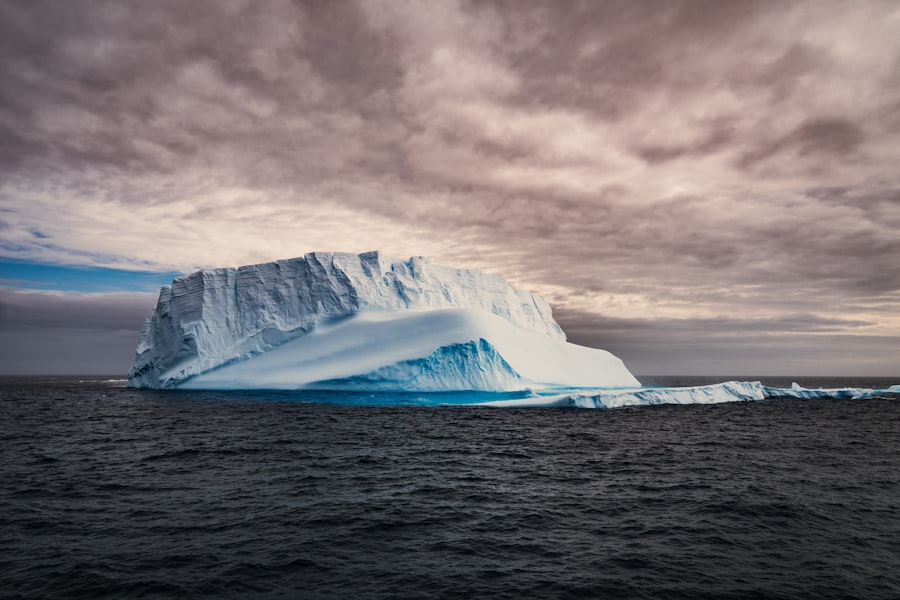
The scientific community has established an intricate network of observation and research to monitor Antarctica’s transformation. This data stream is the “signal” you must interpret.
Satellite Monitoring: The Global Watchtower
Satellites have become indispensable tools for observing Antarctica. They provide a bird’s eye view, allowing scientists to track changes across vast and inaccessible areas.
Radar Altimetry: Measuring Ice Surface Height
Radar altimetry missions, such as those flown by the European Space Agency’s CryoSat-2 and NASA’s Ice, Cloud, and land Elevation Satellite (ICESat-2), measure the height of the ice sheet’s surface. By comparing these measurements over time, scientists can determine whether the ice sheet is thickening or thinning. You are essentially looking at the changing contours of a colossal, frozen landscape, its elevation a direct indicator of its mass.
Gravimetry: Weighing the Ice Mass
Gravimetry missions, like NASA’s Gravity Recovery and Climate Experiment (GRACE) and its successor GRACE Follow-On, measure minute changes in Earth’s gravity field. These changes are directly related to the mass of ice on the continent. As ice melts and flows into the ocean, the gravitational pull of Antarctica decreases. You are witnessing the continent being weighed, and its weight is diminishing.
Ground-Based Observations: The Deep Dive
While satellites provide a broad perspective, ground-based observations offer crucial, high-resolution data.
Ice Core Drilling: Reading Earth’s Frozen Diary
Ice core drilling is a fundamental practice. By extracting long cylinders of ice, scientists can analyze trapped air bubbles and isotopic composition to reconstruct past climate conditions and atmospheric composition. These cores are like reading the pages of Earth’s frozen diary, offering insights into the long-term stability of the Antarctic ice sheet. You are looking at the physical history of our planet, preserved in crystalline form.
Oceanographic Moorings: Probing the Depths
Oceanside moorings equipped with sensors are deployed in strategic locations around Antarctica to measure ocean temperature, salinity, and currents. This data is crucial for understanding the influx of warm water beneath the ice shelves. Imagine these as underwater sentinels, tirelessly collecting data on the very forces that are driving change.
The Cascading Effects: Beyond the Ice
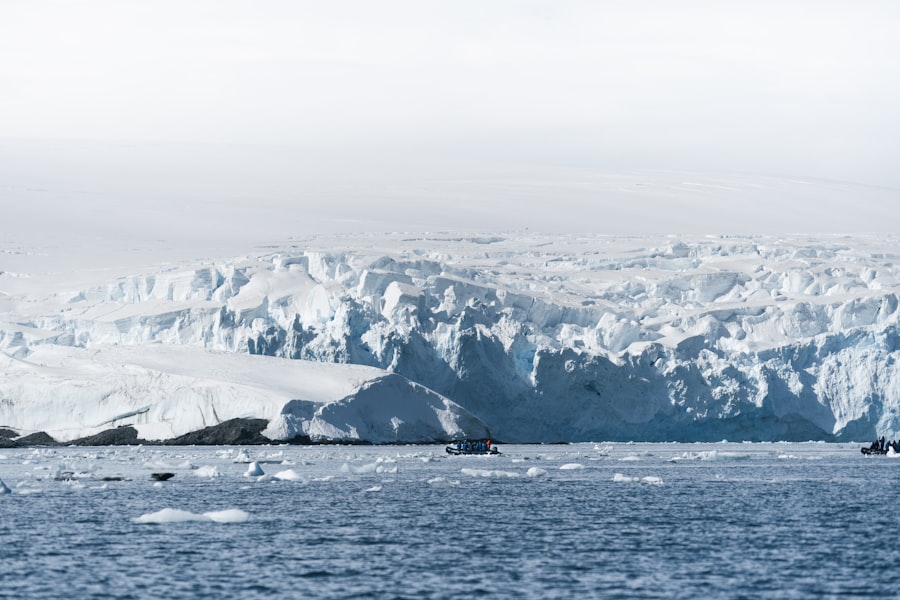
Antarctica’s state change has ramifications that extend far beyond its icy shores, impacting global systems in ways that are still being fully understood.
Sea-Level Rise: The Tide of Change
The most direct and impactful consequence of Antarctic ice loss is global sea-level rise.
Coastal Inundation: The Relentless Advance
As the volume of ice on land decreases, its contribution to the world’s oceans increases, leading to a steady rise in sea levels. This is not a distant threat for future generations; it is a present reality for coastal communities worldwide, leading to increased flooding, erosion, and saltwater intrusion into freshwater sources. You are witnessing the potential for coastal cities becoming synonymous with water.
Ice Sheet Collapse Synergies: Amplified Impacts
The potential for cascading ice sheet collapse in West Antarctica, driven by marine ice sheet instability, represents a significant amplification of sea-level rise potential. If multiple glaciers and ice sheets destabilize in succession, the rate of rise could become much more rapid and challenging to adapt to. This is the domino effect, where the falling of one ice sheet triggers the toppling of others.
Global Ocean Circulation: A Planetary Thermostat Disrupted
The massive influx of fresh meltwater from Antarctica can disrupt global ocean circulation patterns. The Southern Ocean plays a crucial role in driving ocean currents that distribute heat and nutrients around the planet, acting as a vital thermostat.
The Atlantic Meridional Overturning Circulation (AMOC): A Slowdown Warning
One of the key systems at risk is the Atlantic Meridional Overturning Circulation (AMOC), a large system of ocean currents that transports warm water from the tropics northward and cold water southward. Changes in Antarctic meltwater can affect the density of Southern Ocean waters, potentially slowing down or altering the AMOC, with far-reaching implications for regional climates. You are observing the potential for a critical engine of global climate regulation to falter.
Climate Feedback Loops: A Vicious Cycle
The melting of Antarctic ice can also trigger positive feedback loops that further accelerate warming.
Albedo Effect: The Bare Earth’s Embrace
As bright, reflective ice melts, it exposes darker land or ocean surfaces beneath. These darker surfaces absorb more solar radiation, leading to further warming. This is known as the ice-albedo feedback, a vicious cycle where melting ice leads to more melting. Imagine you’re shedding a white coat on a sunny day: the bare skin absorbs more heat.
Permafrost Thaw: Unleashing Ancient Reserves
While not directly an Antarctic phenomenon, the broader implications of global warming, including the thawing of Arctic permafrost, are linked. The release of methane and carbon dioxide from thawing permafrost adds further greenhouse gases to the atmosphere, intensifying the warming that is driving Antarctic ice loss. This is a planetary interconnectedness you cannot ignore.
Recent studies have highlighted the alarming changes occurring in Antarctica, signaling a potential state change in the region’s climate and ecosystem. This topic is further explored in a related article that discusses the implications of these shifts on global sea levels and weather patterns. For more insights, you can read the full article here. Understanding these developments is crucial as they may have far-reaching effects on our planet’s future.
The Call to Action: Your Role in the Countdown
| Parameter | Current Value | Unit | Description | Time to State Change |
|---|---|---|---|---|
| Signal Strength | 78 | dBm | Current signal power level | 00:12:45 |
| Frequency | 145.8 | MHz | Operating frequency of the signal | 00:12:45 |
| Signal-to-Noise Ratio | 35 | dB | Quality of the received signal | 00:12:45 |
| Temperature | -55 | °C | Ambient temperature at signal source | 00:12:45 |
| Countdown Timer | 765 | Seconds | Time remaining until state change | 00:12:45 |
| State | Stable | N/A | Current operational state | 00:12:45 |
Antarctica’s signal countdown is not an abstract scientific observation; it is a clarion call for attention and action. The state change that is looming is a testament to your collective impact on the planet.
Understanding the Data: Your Intellectual Engagement
Your engagement with the scientific data is the first step. Understand the implications of ice loss, ocean warming, and the potential for cascading effects. Seek out reputable sources of information and critically evaluate the evidence. You are the interpreter of these signals; your informed understanding is paramount.
Mitigation Strategies: Reducing the Heat
The most effective way to slow down Antarctica’s state change is to address the root cause: greenhouse gas emissions. This requires a global commitment to transitioning to renewable energy sources, improving energy efficiency, and reducing deforestation. The choices you make in your daily life, and the policies your governments enact, are the levers that can influence this trajectory.
Adaptation and Resilience: Preparing for the Inevitable
While mitigation is crucial, some degree of sea-level rise is already locked in due to past emissions. This necessitates adaptation strategies for coastal communities, such as building defenses, relocating infrastructure, and developing early warning systems. Building resilience is not an act of surrender, but a pragmatic response to a changing reality.
Advocacy and Awareness: Amplifying the Signal
Educate yourselves and others about the importance of Antarctica and the threats it faces. Support organizations working on climate change research and policy. Your voice, amplified by others, can be a powerful force for change. You are not a passive observer; you are a participant in the planet’s future. Antarctica’s signal countdown is your warning, your evidence, and your responsibility. The state change is not a distant possibility; it is a present unfolding. The question is not if it’s happening, but what you will do with this knowledge.

▶️ WARNING: The CIA Just Lost Control of the Antarctica Signal
FAQs
What does the term “state change” refer to in the context of Antarctica?
State change in Antarctica refers to significant and potentially irreversible shifts in the continent’s climate, ice sheet stability, or ecosystem, which can impact global sea levels and climate patterns.
What kind of signals indicate a countdown to a state change in Antarctica?
Signals include measurable changes such as accelerated ice melt, increased surface temperatures, shifts in ocean currents, and alterations in atmospheric conditions that suggest the Antarctic environment is approaching a critical threshold.
Why is monitoring Antarctica important for understanding global climate change?
Antarctica plays a crucial role in regulating Earth’s climate and sea levels. Changes in its ice sheets can contribute to global sea level rise, and its climate patterns influence weather systems worldwide, making it essential to monitor for early warning signs.
What are the potential consequences if Antarctica undergoes a state change?
Potential consequences include significant sea level rise, disruption of ocean circulation, loss of habitat for native species, and broader impacts on global climate systems, which can affect human populations and ecosystems globally.
How do scientists collect data to detect signals of state change in Antarctica?
Scientists use satellite observations, ice core sampling, climate models, remote sensing technology, and on-site research stations to gather data on temperature, ice thickness, atmospheric composition, and ocean conditions around Antarctica.