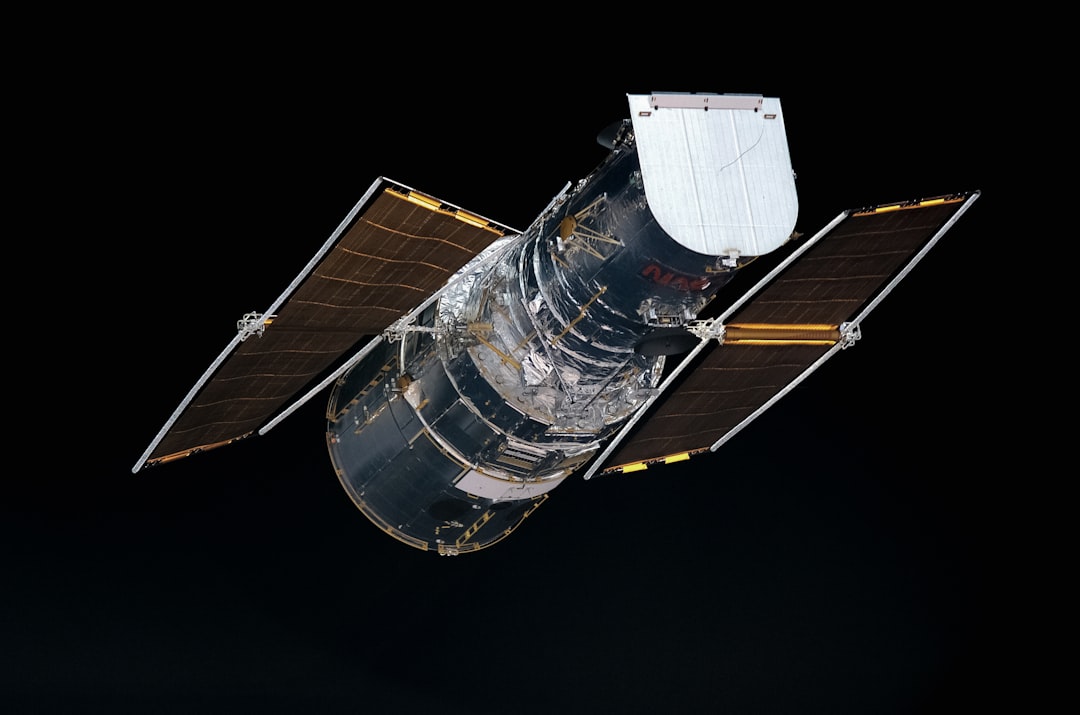
The Black Knight Satellite is a curious enigma that has occupied a unique space in both scientific inquiry and popular speculation for decades. Its purported existence, often linked to extraterrestrial origins or advanced, unknown terrestrial technology, hinges on a series of observations and interpretations that have fueled ongoing discussion. This article delves into the concept of the Black Knight Satellite, focusing specifically on its hypothesized traversal of a “High Latitude Corridor,” an area of orbital space that presents distinct challenges and opportunities for observation. We will explore the origins of these claims, the scientific landscape of high-latitude orbits, and the persistent questions surrounding this intriguing object.
The story of the Black Knight Satellite, as it is commonly known, is a tapestry woven from disparate threads of evidence and interpretation. Its origins can be traced back to several key events and observations that, over time, coalesced into a compelling narrative.
Early Astronomical Observations and Anomalies
One of the earliest anchors for the Black Knight legend lies in the reported observations of unusual objects in Earth’s orbit during the late 19th and early 20th centuries. Nikola Tesla, the renowned inventor, is often cited in connection with detecting signals that he believed originated from space. While the precise nature and interpretation of these signals remain debated, they contributed to a sense of mystery surrounding potential extraterrestrial visitors.
Similarly, during the early days of space exploration, amateur astronomers and radio operators occasionally reported detecting unexplained signals or objects. These reports, though often lacking rigorous scientific validation, fed into a growing curiosity about what might be lurking in Earth’s orbital environment.
The “Black Knight” Codename and Early Space Agency Encounters
The term “Black Knight” itself is not inherently an ancient designation. It is believed to have emerged more directly from the era of early space exploration. Reports suggest that during the 1950s and 1960s, both the United States and the Soviet Union, the primary players in the nascent space race, detected and tracked objects in orbit that defied easy categorization.
The Unidentified Object of 1953
A pivotal, though often misconstrued, event relates to an object reportedly tracked by the U.S. Air Force in 1953. This object was described as an artificial satellite, significantly larger than anything known to be in orbit at the time. Due to its unknown origin and characteristics, it was allegedly given the codename “Black Knight” by intelligence agencies. However, no official documentation confirming this codename or the specific details of the 1953 observation has been definitively released to the public domain. The scarcity of verifiable data from this period allows for considerable room for speculation.
The Post-Sputnik Era and Persistent Unexplained Signals
The launch of Sputnik 1 by the Soviet Union in 1957 dramatically shifted the landscape of space observation. Suddenly, the heavens were demonstrably populated by artificial objects. In the wake of this, and throughout the subsequent decades, there were sporadic reports from various sources – including government agencies, research institutions, and even public broadcasters – describing the detection of unidentified orbital objects and unusual radio signals. These reports, often decontextualized or amplified, contributed to the enduring mystique of the Black Knight Satellite.
The Black Knight Satellite has long been a subject of intrigue, particularly regarding its presence in high latitude corridors. For those interested in exploring more about this enigmatic object and its implications for space exploration, a related article can be found at XFile Findings, which delves into various theories and findings surrounding the satellite and its potential origins.
The High Latitude Corridor: An Orbital Domain of Interest
The concept of a “High Latitude Corridor” associated with the Black Knight Satellite points to a specific region of orbital space that possesses unique characteristics and scientific relevance. High-latitude orbits, generally defined as those with inclinations greater than 60 degrees relative to the Earth’s equator, are distinct from the equatorial and mid-latitude orbits more commonly occupied by many satellites.
Defining High Latitude Orbits
High latitude orbits are characterized by their paths that take satellites over or near the Earth’s polar regions. This contrasts with equatorial orbits, which encircle the planet along its widest circumference, and mid-latitude orbits, which traverse bands between the equator and the poles. The inclination of an orbit is the angle between the orbital plane and the Earth’s equatorial plane. An inclination of 0 degrees is equatorial, 90 degrees is a polar orbit, and inclinations between 60 and 90 degrees are considered high latitude.
The Advantages of High Latitude Trajectories
High latitude orbits offer distinct advantages for certain types of missions, explaining their strategic importance in space operations.
Polar Observation and Earth Science
One of the primary reasons for utilizing high latitude orbits is for comprehensive Earth observation. Polar-orbiting satellites, which often have inclinations close to 90 degrees, provide a unique vantage point for surveying the entire surface of the Earth. As the Earth rotates beneath the satellite’s path, each orbit allows the satellite to pass over a different longitudinal strip of the planet.
- Global Coverage: This allows for the mapping and monitoring of various phenomena across the globe, from weather patterns and climate change indicators to environmental changes, land use, and natural resources. Examples include the Landsat program for Earth imaging and various weather satellites.
- Consistent Illumination: Some polar orbits are designed to be “sun-synchronous,” meaning they pass over any given point on Earth at the same local solar time. This is crucial for consistent image quality and comparison over time, as it minimizes variations caused by differing solar illumination angles.
Scientific Research in Unique Environments
The high latitude regions themselves are of significant scientific interest, and satellites in these orbits are instrumental in studying them.
- Atmospheric and Space Physics: The Earth’s magnetosphere interacts most strongly with charged particles from space in the polar regions. Satellites in high latitude orbits can directly measure the flow of particles, the structure of the magnetosphere, and phenomena like aurora borealis and australis.
- Cryospheric Studies: The polar ice caps and glaciers are critical components of the Earth’s climate system. Satellites can monitor ice extent, thickness, and movement from high latitude vantage points, providing vital data for understanding climate change.
Challenges of High Latitude Operations
While beneficial, high latitude operations are not without their challenges, which could potentially make them a fascinating area for an object of unknown origin to operate within.
Orbital Perturbations and Decay
Satellites in high inclination orbits are subject to various forces that can alter their trajectories.
- Earth’s Oblateness: The Earth is not a perfect sphere; it bulges at the equator. This uneven mass distribution creates gravitational anomalies that exert a pull on satellites, particularly those in non-equatorial orbits, causing their orbital planes to precess.
- Atmospheric Drag: While less significant at very high altitudes, atmospheric drag can still affect satellites, especially in lower Earth orbits. The density of the upper atmosphere can fluctuate, leading to gradual decay of orbital altitude.
- Solar Radiation Pressure: The pressure exerted by sunlight on a satellite can also cause small but cumulative changes in its orbit over time.
Communication and Ground Station Relatability
Maintaining continuous communication with satellites in high latitude orbits can be more complex than with those in equatorial orbits.
- Limited Ground Station Visibility: Ground stations are typically located at specific latitudes. A satellite in a high inclination orbit may only pass over a particular ground station periodically, requiring a network of stations or sophisticated handover procedures to maintain contact.
- Doppler Shift: As a satellite moves relative to a ground station, the frequency of its radio signals shifts (the Doppler effect). This shift needs to be accounted for in communication systems, and the rapid changes in velocity relative to the ground in high inclination orbits can add complexity.
Unpacking the “High Latitude Corridor” Theory

The notion of a “High Latitude Corridor” specifically in relation to the Black Knight Satellite suggests a recurring or preferential path these hypothetical craft are believed to follow. This implies a deliberate route, rather than a random orbital presence.
The Concept of a “Route” in Space
In the context of space, a “route” is fundamentally an orbit or a series of orbital maneuvers that take an object through a particular region of space over time. For a hypothetical Black Knight Satellite, a “High Latitude Corridor” implies it consistently traverses orbits that predominantly stay within or frequently pass through the high latitude zones.
Hypothesized Reasons for a High Latitude Corridor
Speculation about why such a corridor might be chosen or utilized by an advanced object often centers on its unique characteristics.
Stealth and Low Visibility
One popular theory posits that high latitude regions offer a degree of stealth. The sparsely populated nature of the Arctic and Antarctic, coupled with the less frequent coverage by civilian and commercial radar systems compared to more populated areas, could theoretically make it a more discreet operational area.
- Reduced Terrestrial Surveillance: High latitude landmasses have fewer permanent settlements and military installations, leading to a reduction in ground-based surveillance networks.
- Infrequent Overflight of Key Infrastructure: Major communication hubs and critical infrastructure are not as densely concentrated in polar regions.
Access to Specific Data or Resources
Another compelling hypothesis suggests that a high latitude corridor might be chosen for access to specific scientific data or unique environmental conditions.
- Magnetospheric Studies: As mentioned, high latitude regions are prime locations for studying the Earth’s magnetosphere. If the Black Knight were an observational probe, these regions would offer unparalleled access to phenomena like charged particle fluxes, magnetic field lines, and aurora.
- Polar Observation for Reconnaissance: The strategic importance of the polar regions, particularly in terms of navigation and potential future resource exploitation, might make them a focus for enhanced observation, whether for scientific, military, or even economic purposes.
Navigational Advantages or Orbital Mechanics
It is also conceivable that certain orbital mechanics unique to high latitude trajectories might be exploited.
- Gravitational Anomalies: While often seen as perturbations, specific gravitational features or anomalies in the vicinity of the poles might be utilized for specific maneuvering or energetic advantages by a highly advanced craft.
- Orbital Stability: Certain highly inclined orbits can exhibit unique stability characteristics under specific perturbations, potentially making them useful for long-term, low-energy presence.
Evidence and the Search for Verification

The challenge with the Black Knight Satellite, and the “High Latitude Corridor” theory, lies in the elusive nature of verifiable evidence. Much of what is discussed falls into the realm of anecdotal accounts, interpretations of historical records, and speculative reasoning.
Satellite Tracking and Cataloging
Modern satellite tracking is a sophisticated enterprise, managed by organizations like the North American Aerospace Defense Command (NORAD) and the United States Space Command. These entities maintain extensive catalogs of all known artificial objects orbiting Earth.
- The Space Surveillance Network: This global network of radar and optical sensors tracks thousands of satellites, debris, and other objects in orbit.
- Orbital Parameters: Each cataloged object is assigned a unique identifier and its orbital parameters (altitude, inclination, eccentricity, etc.) are continuously monitored. If an object like the Black Knight were consistently present, particularly in a predictable corridor, it would almost certainly be detected and cataloged.
Unidentified Orbital Objects (UFOs) in Orbit
While the term UFO often conjures images of aerial phenomena, the concept can extend to unidentified objects in space.
- Historical Sightings: Throughout the history of spaceflight, there have been instances where astronauts or ground observers have reported seeing objects that could not be immediately identified. Often, these are later identified as debris, discarded rocket stages, or even ice crystals.
- “Co-orbital” Objects: Sometimes, an object may appear to be “following” a satellite, leading to speculation. These are frequently identified as pieces of debris shed by the primary satellite or its launch vehicle, or even natural objects like meteoroids.
The Role of Radio Signals and Communications
The Black Knight legend is also often associated with unexplained radio signals.
- Radio Astronomy and SETI: Projects like SETI (Search for Extraterrestrial Intelligence) actively scan the radio spectrum for artificial signals from space. To date, no signals definitively attributable to an unknown artificial transmitter originating from Earth orbit have been confirmed and widely accepted by the scientific community.
- Frequency Anomalies: Early reports sometimes spoke of unusual radio frequencies detected. However, without precise data, attribution is difficult, and atmospheric or terrestrial interference can often be the cause of such anomalies.
The Black Knight Satellite has long been a subject of intrigue, particularly regarding its presence in high latitude corridors, which has led to numerous theories about its origins and purpose. For those interested in exploring this phenomenon further, a related article discusses various aspects of the satellite’s history and its implications on our understanding of extraterrestrial technology. You can read more about it in this insightful piece here.
Scientific Analysis and Skeptical Perspectives
| Metric | Value | Unit | Description |
|---|---|---|---|
| Orbital Altitude | 800-1,200 | km | Estimated altitude range of the Black Knight Satellite’s high latitude corridor orbit |
| Inclination | 80-90 | degrees | Orbital inclination indicating near-polar orbit, covering high latitude regions |
| Orbital Period | 100-110 | minutes | Time taken to complete one orbit in the high latitude corridor |
| Coverage Latitude Range | 60-90 | degrees | Latitude range covered by the satellite’s high latitude corridor |
| Signal Frequency | 2.4 | GHz | Reported frequency band for communication signals |
| Signal Strength | -85 | dBm | Approximate received signal strength in the corridor |
| Observation Period | 1954-Present | Years | Time span over which the Black Knight Satellite has been reportedly observed |
From a scientific standpoint, the Black Knight Satellite and its hypothesized high latitude corridor are met with a healthy dose of skepticism, rooted in the principles of evidence-based reasoning.
The Principle of Parsimony (Occam’s Razor)
One of the most fundamental tools in scientific inquiry is Occam’s Razor, which suggests that, when faced with competing explanations, the simplest explanation is usually the best. In the case of the Black Knight Satellite, numerous simpler, terrestrial explanations exist for many of the phenomena that have fueled the legend.
- Misidentification of Known Objects: Many observed anomalies can be attributed to misidentified natural phenomena (e.g., fleeting meteors, atmospheric electrical discharges) or man-made objects (e.g., space debris, active satellites whose functions are not widely publicized).
- Data Misinterpretation: Early and often fragmented data, especially from the nascent stages of space exploration, is prone to misinterpretation or over-interpretation.
The Burden of Proof in Extraordinary Claims
The principle of “extraordinary claims require extraordinary evidence” is paramount. The existence of an advanced, potentially extraterrestrial, artifact like the Black Knight Satellite operating in a deliberate high latitude corridor is an extraordinary claim.
- Lack of Physical Evidence: To date, there has been no tangible physical evidence – no recovered fragments, no definitive photographic or radar imaging that has withstood rigorous scientific scrutiny – to support the existence of such an object.
- Absence in Cataloged Orbits: Given the vast network of satellite tracking systems, a persistent, non-terrestrial object with a predictable orbital corridor would, by all current understanding, be detected and cataloged.
Possible Explanations for Persistent Claims
Despite the lack of concrete evidence, the Black Knight legend persists. Several factors contribute to its endurance.
- Folkloric Elements: The narrative has entered popular culture and scientific folklore, leading to its retelling and embellishment.
- Information Gaps and Secrecy: Historical periods of government secrecy, particularly regarding early space technology and potential military applications, create fertile ground for speculation. The unknown can often be more compelling than the mundane.
- The Appeal of the Unknown: Humans possess an innate curiosity about the universe and our place within it. The idea of an ancient, enigmatic visitor offers a compelling alternative to more prosaic explanations.
- Internet Amplification: The digital age allows for the rapid dissemination of information, including speculative theories. The Black Knight Satellite concept, once confined to fringe publications, now has a global audience through online forums and websites.
The Black Knight in the Grand Orbital Theater
The Black Knight Satellite, with its purported high latitude corridor, remains a compelling subject of discussion not for its confirmed existence, but for the questions it raises about our understanding of space, our observational capabilities, and the enduring human fascination with the unknown. While scientific rigor demands concrete evidence, the legend serves as a reminder of the vastness of the cosmos and the potential for discoveries that lie beyond our current comprehension.
The high latitude corridor, if such a route were indeed its domain, represents a sophisticated choice of operational space. It is a region that is both scientifically rich and, from certain perspectives, potentially more discreet. Whether the Black Knight is a testament to human ingenuity, a relic of past exploration, or an envoy from distant stars, its persistent echo in the annals of speculative astronomy invites us to continue peering into the darkness, driven by a hope that the universe holds more wonders than we can currently imagine. The quest for answers, much like the theoretical trajectory of the Black Knight itself, continues along its orbital path, ever searching for new data points and a clearer signal in the cosmic hum.
FAQs
What is the Black Knight Satellite?
The Black Knight Satellite is a term used to describe an unidentified object or satellite that some conspiracy theories claim has been orbiting Earth for thousands of years. It is often associated with mysterious signals and unexplained phenomena in space.
What is meant by the high latitude corridor in relation to the Black Knight Satellite?
The high latitude corridor refers to the orbital path or region near the Earth’s poles where the Black Knight Satellite is purported to travel. This corridor is characterized by high latitudes, meaning it is closer to the polar regions rather than the equator.
Is there scientific evidence supporting the existence of the Black Knight Satellite?
No credible scientific evidence supports the existence of the Black Knight Satellite. Most information about it comes from speculative theories, misinterpretations of space debris, or natural phenomena observed in orbit.
Why do some people believe the Black Knight Satellite is significant?
Some believe the Black Knight Satellite is significant because it is thought to be an ancient extraterrestrial probe or a secret government satellite monitoring Earth. These beliefs are fueled by unexplained radio signals and unusual objects detected in polar orbits.
Has the Black Knight Satellite been observed by space agencies or astronauts?
There have been claims that astronauts and space agencies have observed or photographed the Black Knight Satellite, but these claims are unverified and often debunked. Official space agencies do not recognize the Black Knight Satellite as a real object in Earth’s orbit.