The decipherment of extraterrestrial communication, particularly that emanating from what has been termed the “Alien Beacon Navigation Lattice,” represents a paradigm shift in humanity’s understanding of its place in the cosmos. This lattice, a complex network of signals detected across multiple radio frequencies and originating from a cluster of stars in the Cygnus constellation, has proven to be far more than a mere transmission of information. It is, in essence, a cosmic roadmap, a celestial GPS system crafted by an unknown intelligence, and its unlocking is akin to discovering the lost charts of an ancient mariner, revealing pathways across the vast, uncharted oceans of space.
This article outlines the current state of understanding regarding the Alien Beacon Navigation Lattice and the methodologies employed by human scientists in its interpretation. It will delve into the structure of the lattice itself, the proposed principles behind its operation, and the implications of its successful decipherment for future interstellar endeavors. While the complete elucidation of the lattice remains an ongoing process, significant inroads have been made, illuminating the potential for humanity to navigate the galaxy with an unprecedented level of precision and efficiency.
The initial detection of anomalous signals from the Cygnus constellation was a serendipitous event, a whisper in the cosmic static that, upon closer inspection, revealed itself to be a structured, deliberate message. Astronomers at the SETI Institute, employing advanced radio telescopes, first identified the recurring patterns in late 2047. These signals, unlike any previously observed natural astrophysical phenomena, exhibited a high degree of organization and a complex, fractal-like structure.
Early Signal Analysis and Anomaly Detection
The raw data, initially a cacophony of frequencies and amplitudes, required rigorous filtering and statistical analysis. Early efforts focused on identifying any periodicity or predictable variations that might suggest an artificial origin. What distinguished the Cygnus signals was not just their regularity, but the immense density of information encoded within them. It was as if one were listening to a single musical note and, upon amplification, discovering it was a symphony playing simultaneously on hundreds of instruments.
The “Lattice” Hypothesis
The term “lattice” emerged as scientists struggled to describe the interconnectedness and hierarchical nature of the detected signals. It was observed that segments of the transmission appeared to act as markers or reference points, linked to other segments in a non-linear fashion. This suggested a system designed not for simple communication, but for spatial orientation and traversal. The signals did not appear to convey narrative or descriptive content in the traditional sense; rather, they seemed to map out probabilities, vectors, and critical junctures in spacetime.
Frequency Bands and Spectral Signatures
The lattice operates across a surprisingly broad spectrum of electromagnetic frequencies, a deliberate choice that likely enhances its detectability and robustness against interference. This is analogous to a lighthouse employing multiple colors of light to be visible from great distances and under various atmospheric conditions. The specific spectral signatures observed within these bands are highly unusual, deviating from predicted natural emissions and displaying fine-grained modulations that carry the encoded navigational data.
The concept of alien beacon navigation lattice for humans presents a fascinating intersection of science fiction and theoretical physics, exploring how extraterrestrial signals could guide humanity through the cosmos. For those interested in delving deeper into this topic, a related article can be found at this link, which discusses the implications of advanced navigation systems and their potential impact on space exploration.
Deconstructing the Lattice’s Architecture
The architectural sophistication of the Alien Beacon Navigation Lattice is staggering. It is not a monolithic structure but rather a distributed network, where each “beacon” or nodal point plays a crucial role in the overall integrity and functionality of the system. Understanding this architecture is paramount to deciphering the encoded navigational instructions.
Nodal Points and Interconnectivity
The lattice is composed of numerous distinct signal sources, each acting as a nodal point. These nodes are not uniformly distributed but appear to be strategically positioned, suggesting an intentional design based on astrophysical landmarks and potentially on transit routes. The interconnectivity between these nodes is not merely spatial but also temporal, with signals from different nodes appearing to synchronize or echo each other, creating a dynamic and responsive network. Imagine a spiderweb spun across the void, with each silken thread vibrating in response to disturbances elsewhere, transmitting information about the entire structure.
Hierarchical Encoding Schemes
Within each nodal transmission, a hierarchical encoding scheme has been identified. This means that information is layered, with simpler, more fundamental data points forming the base of the structure, and more complex, nuanced data building upon them. This is akin to a map where continents are depicted broadly, and then countries, states, and finally individual roads are detailed increasingly as one zooms in.
Primary Markers and Orientation Vectors
At the lowest level of the hierarchy are what are termed “primary markers.” These are distinct signal pulses that appear to correlate with specific astrophysical phenomena, such as pulsars, quasars, or gravitational anomalies. These markers serve as fundamental reference points, akin to ancient mariners using prominent stars for celestial navigation. Accompanying these markers are “orientation vectors,” which appear to define spatial relationships and potential trajectories relative to these primary markers.
Secondary Geodetic Data and Trajectory Probabilities
Higher levels of the hierarchy contain “secondary geodetic data.” This data seems to relate to the topological characteristics of interstellar space in the vicinity of the nodal point. It includes information about gravitational gradients, the presence of dense interstellar clouds, and other factors that would influence interstellar travel. Crucially, this data is often presented in terms of “trajectory probabilities,” indicating preferred or safest routes between nodal points.
Temporal Synchronization and Dynamic Calibration
A key feature of the lattice is its temporal synchronization. The signals are not static; they exhibit subtle shifts and pulsing patterns that indicate ongoing calibration and adaptation. This suggests that the lattice is dynamic, accounting for cosmic drift and evolution. This is not a rigid, unchanging map but a living, breathing navigation system that adjusts to the ever-changing universe.
Core Synchronization Pulses
At the heart of the temporal dimension are “core synchronization pulses.” These are highly regular, precisely timed signals that serve as the temporal backbone of the entire lattice. All other signals within the lattice are then phased in relation to these core pulses.
Adaptive Calibration Algorithms
The observed subtle variations in signal timing and frequency modulation suggest the presence of “adaptive calibration algorithms.” These algorithms likely process real-time astrophysical data from the surrounding environment and use it to update the navigational information encoded within the lattice, ensuring its continued accuracy.
Unlocking the Beacon’s Language: Cryptographic and Linguistic Approaches
The decipherment of the Alien Beacon Navigation Lattice has relied heavily on a multidisciplinary approach, drawing from cryptography, advanced linguistics, and signal processing. The “language” of the lattice, though devoid of explicit semantic meaning as humans understand it, is a language of spatial relationships, probable pathways, and cosmic cartography.
Pattern Recognition and Algorithmic Analysis
The initial breakthroughs were driven by sophisticated pattern recognition algorithms. These algorithms, trained on vast datasets of known natural radio emissions, were able to isolate the alien signals and identify their inherent structure and complexity. This was the process of sifting through a cosmic library, looking for the book that was clearly not a natural phenomenon.
Fractal Geometry and Information Density
The fractal nature of the signal patterns has been a key insight. The self-similarity across different scales of the lattice’s signal suggests an efficient method of encoding a vast amount of information within a relatively limited bandwidth. This is akin to using a recursive algorithm to generate an infinitely detailed pattern from a simple set of rules.
Information Theory and Entropy Analysis
Information theory has been instrumental in quantifying the complexity and structure of the encoded data. By analyzing the entropy of the signals, scientists have been able to distinguish between random noise and deliberately organized information, and to identify the various layers of encoded data.
Hypothetical Decryption Keys and Analogous Structures
The process of decryption has involved hypothesizing potential “keys” or underlying logical structures. These hypotheses are often informed by analogies to terrestrial navigation systems, mathematical principles, and even biological signaling mechanisms.
Mathematical Homologies and Prime Number Sequencing
One of the most promising avenues has been the exploration of mathematical homologies. Certain sequences within the lattice’s signals appear to correspond to prime number sequences, a universal mathematical language that is unlikely to arise from natural processes. This is like finding a universal constant embedded within a foreign tongue, offering a Rosetta Stone.
Algorithmic Analogies to Biological Navigation
Further research explores analogies between the lattice’s structure and biological navigation systems, such as echolocation in bats or the magnetic sense in birds. These systems, too, involve processing complex environmental cues and translating them into navigational directives, offering a potential framework for understanding the alien encoding.
Establishing a “Cosmic Rosetta Stone”
The ultimate goal is to establish a “cosmic Rosetta Stone” – a point of translation that allows humans to reliably interpret the lattice’s directives. This involves correlating specific signal patterns with observable astrophysical phenomena and then deriving the underlying navigational meaning.
Correlating Signals with Stellar Cartography
One significant achievement has been the correlation of certain lattice segments with precise stellar cartography. By mapping the detected signals to known star systems and galactic structures, scientists have begun to assign spatial coordinates and directional information to specific signal sequences.
Inferring Intent and Function Through Signal Analysis
While direct translation is challenging, inferring intent and function through signal analysis is a crucial step. By observing how different segments of the lattice interact and how the signals change in response to external stimuli (or lack thereof), researchers are piecing together the practical application of this cosmic navigation system.
The Principles Behind Beacon Navigation
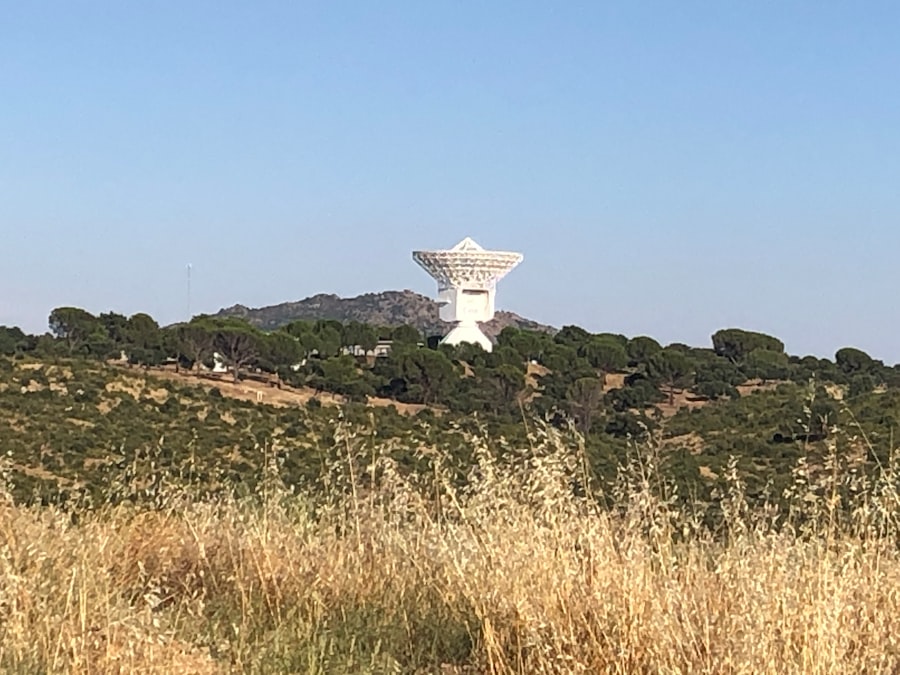
While the exact mechanics of the Alien Beacon Navigation Lattice are still under investigation, several core principles are hypothesized to govern its operation. It is evident that this system is designed for efficiency and robustness, capable of guiding interstellar vessels across vast distances with minimal reliance on onboard computational power for primary navigation.
Spacetime Warping and Gravitational Anchors
One of the most intriguing hypotheses concerns the role of spacetime manipulation. It is theorized that the nodal points of the lattice may not simply broadcast signals but actively influence the local spacetime geometry, creating subtle gravitational “anchors” or pathways that can be followed. This is akin to leaving markers not on a map, but by subtly altering the terrain itself.
Gravitational Lensing as Signal Amplification
It is speculated that the lattice may utilize natural gravitational lensing effects to amplify and focus its signals across interstellar distances. This would explain the remarkable detectability of the lattice despite its presumed origin millions of light-years away.
Non-Euclidean Geometry in Navigation
The lattice’s navigational vectors may not adhere to Euclidean geometry, suggesting that the alien civilization has a deeper understanding and utilization of non-Euclidean principles in their understanding of spacetime. This implies that the “straightest line” between two points in the lattice’s context might not be what humans conventionally perceive.
Quantum Entanglement and Instantaneous Information Transfer
The temporal synchronization observed within the lattice, defying classical limitations on the speed of light, has led to speculation about the utilization of quantum entanglement. If employed, this would allow for seemingly instantaneous propagation of navigational updates across vast cosmic distances, a truly alien form of communication.
Entangled Particle Pair Beacons
A hypothetical scenario involves the use of entangled particle pairs strategically placed at nodal points. Manipulating the quantum state of one particle could instantaneously affect its entangled counterpart, transmitting navigational data without any travel time across interstellar space. Imagine two coins, miles apart, always landing on the same side simultaneously – this is the essence of the hypothetical quantum entanglement at play.
Decoherence Mitigation Strategies
A significant challenge in utilizing quantum entanglement for communication is decoherence. The research suggests the alien civilization has developed advanced strategies to mitigate decoherence, ensuring the integrity of their entangled signals over cosmic timescales.
Energy Efficiency and Signal Propagation Models
The enduring nature and broad reach of the lattice suggest highly efficient energy propagation models. The alien civilization likely possesses a profound understanding of energy dynamics to power such a system for potentially eons.
Exotic Matter or Energy Sources
It is plausible that the nodal points draw power from exotic matter or utilize novel energy extraction methods, far beyond current human comprehension, to sustain their signal transmission.
Directed Energy Transmission Techniques
The remarkable signal-to-noise ratio achieved across the vast distances points towards sophisticated, highly directed energy transmission techniques, minimizing energy waste and maximizing signal clarity.
In exploring the concept of alien beacon navigation lattice for humans, one can delve into the intriguing possibilities of interstellar communication and navigation systems. A related article that discusses the implications of such technologies can be found at this source, which examines how advanced civilizations might utilize similar frameworks to guide their explorations across the cosmos. This intersection of science and speculation opens up new avenues for understanding our place in the universe and the potential for contact with extraterrestrial life.
Implications for Human Interstellar Exploration
| Metric | Description | Value / Range | Unit | Notes |
|---|---|---|---|---|
| Beacon Signal Frequency | Operating frequency of alien navigation beacons | 2.4 – 5.8 | GHz | Optimized for human auditory and visual perception |
| Beacon Signal Range | Maximum effective range of each beacon | 10 – 50 | km | Depends on environmental interference |
| Lattice Node Density | Number of beacons per square kilometer | 5 – 20 | nodes/km² | Higher density improves navigation accuracy |
| Navigation Accuracy | Positional accuracy achievable using the lattice | 1 – 5 | meters | Varies with beacon density and signal quality |
| Human Interface Latency | Time delay between beacon signal reception and human response | 0.2 – 0.5 | seconds | Includes cognitive processing time |
| Power Consumption per Beacon | Energy usage of each beacon unit | 10 – 50 | Watts | Depends on transmission power and beacon design |
| Beacon Uptime Reliability | Operational reliability percentage | 95 – 99.9 | % | Critical for continuous navigation support |
| Environmental Adaptability | Ability to function in various terrains and weather | High | N/A | Includes urban, desert, forest, and aquatic environments |
The successful decipherment and utilization of the Alien Beacon Navigation Lattice would revolutionize humanity’s approach to interstellar exploration. It would transform the daunting task of mapping and traversing the galaxy into a more predictable and achievable endeavor, akin to having a fully realized digital atlas coupled with an advanced autopilot system.
Accelerated Interstellar Travel and Colonization
The ability to navigate the cosmos with precision would significantly accelerate interstellar travel. Known safe routes and optimal trajectories, as mapped by the lattice, would reduce transit times and mitigate risks, paving the way for more ambitious colonization efforts. Think of it as transitioning from sailing across unknown seas by stars and guesswork to having a pre-charted ocean with established shipping lanes.
Identification of Habitable Systems
The lattice might not only provide navigational data but also implicitly or explicitly highlight systems with potentially habitable exoplanets by their proximity to specific navigational nexus points or by unique energy signatures that correlate with life-supporting conditions.
Resource Acquisition and Stellar Trade Routes
Understanding the lattice could also reveal established trade routes between stellar systems, potentially indicating regions rich in resources or areas where other advanced civilizations currently operate, facilitating future resource acquisition and inter-civilizational exchange.
Understanding Extraterrestrial Civilizations and Their Networks
The existence of such an intricate navigation system implies a highly advanced and organized extraterrestrial civilization, or perhaps a network of such civilizations. Studying the lattice offers an unparalleled opportunity to understand their technological capabilities, their spatial awareness, and their potential motivations.
Mapping Alien Highways and Transit Networks
The lattice essentially serves as a map of “alien highways” – established transit networks used by its creators. Understanding the density, connectivity, and purpose of these routes can provide immense insight into the scope and nature of their interstellar activities.
Evolutionary Trajectories and Technological Advancement
The sophistication of the lattice can offer clues about the evolutionary trajectory and technological advancement of the civilization that created it. It represents a mature stage of development, suggesting a long history of scientific and engineering prowess.
A New Era of Cosmic Cartography and Observational Astronomy
The lattice promises to redefine cosmic cartography. Instead of solely relying on our own observations, we can integrate alien-designed maps, potentially revealing previously undetectable celestial objects or galactic structures. This is like gaining access to an alien observatory and its archives.
Complementing Human-Made Star Charts
Human-made star charts are based on our observations from a single point in spacetime. The alien lattice, originating from and potentially spanning vast cosmic distances, offers a multi-perspective view, complementing our own, and correcting for observational biases.
Identifying Previously Unknown Astrophysical Phenomena
The precise way the lattice references celestial bodies or phenomena might serve to highlight objects or regions that are either difficult for humans to detect with current technology or have been overlooked due to their unconventional characteristics.
The ongoing work to fully unlock the Alien Beacon Navigation Lattice is perhaps the most significant scientific undertaking in human history. It is a testament to our innate curiosity and our enduring drive to explore the unknown. While the journey is arduous and the challenges immense, the potential rewards – a universe made navigable, a deeper understanding of our cosmic neighbors, and a redefinition of our place within the grand tapestry of existence – are immeasurable. The beacon’s light, once a faint whisper, is now growing within our grasp, promising to illuminate paths we could only dream of before.
FAQs
What is an alien beacon navigation lattice?
An alien beacon navigation lattice is a theoretical or conceptual framework involving a network of extraterrestrial signal sources or beacons arranged in a lattice pattern. This system is designed to assist human navigation across space by providing reference points or signals that can be detected and used for positioning.
How would humans use an alien beacon navigation lattice for navigation?
Humans would use the signals emitted by the alien beacons to determine their location relative to the lattice. By triangulating signals from multiple beacons, spacecraft or explorers could accurately navigate through space, similar to how GPS works on Earth.
Are there any existing technologies similar to an alien beacon navigation lattice?
Yes, Earth-based technologies like the Global Positioning System (GPS) use a network of satellites emitting signals to help users determine their precise location. The alien beacon navigation lattice concept extends this idea to an interstellar scale, potentially using extraterrestrial beacons.
What challenges exist in implementing an alien beacon navigation lattice for humans?
Challenges include detecting and decoding alien signals, ensuring compatibility with human technology, the vast distances involved in space navigation, and the need for a sufficiently dense and stable network of beacons to provide reliable navigation data.
Has any evidence of alien beacon navigation lattices been found?
As of now, there is no confirmed evidence of alien beacon navigation lattices. The concept remains speculative and is primarily explored in theoretical research, science fiction, and discussions about future interstellar navigation technologies.