
The study of anomalous airborne phenomena, often referred to as UFOs, has long resided in the periphery of scientific inquiry, frequently dismissed due to a lack of empirical data and a tendency towards sensationalism. However, a specialized unit, the Environmental Assessment Unit (EAU), operating with a mandate to investigate unusual environmental disturbances and their potential origins, has quietly engaged with this subject. This unit, while not explicitly tasked with “UFO hunting” in the popular sense, has, through the nature of its investigations, encountered and analyzed phenomena that align with descriptions of unexplained aerial objects. Their approach is grounded in scientific methodology, focusing on observable data, environmental impact, and the application of known physical principles.
The EAU’s primary directive is not to confirm or deny the existence of extraterrestrial visitation, but rather to understand and document anomalous environmental events and their consequences. This includes investigating unusual energy signatures, localized atmospheric disturbances, bizarre geological formations, and unexplained material remnants. Their methodology is rigorous, employing a multidisciplinary approach that draws upon fields such as atmospheric physics, geology, material science, and remote sensing.
Origins and Evolution of the EAU
The precise genesis of the EAU is often shrouded in official opacity, a characteristic common to units dealing with sensitive or unconventional investigations. However, its formation can be traced to concerns regarding unexplained environmental impacts that did not fit the established patterns of natural disasters or human industrial activity. Early investigations into phenomena such as unusual localized seismic activity, unexplained radiation spikes, and the discovery of anomalous materials in remote locations necessitated the creation of a dedicated body equipped to handle such deviations from the norm. Over time, the unit’s scope broadened to encompass aerial phenomena, particularly when these events coincided with ground-level environmental anomalies.
Core Investigative Pillars
The EAU’s investigative process adheres to several key pillars:
Objectivity and Data Neutrality
A fundamental principle for the EAU is maintaining strict data neutrality. Reports are collected, analyzed, and categorized based on observable facts and measurable parameters, devoid of pre-existing hypotheses about extraterrestrial origins. The focus remains on what can be empirically verified.
Multidisciplinary Expertise
The unit comprises specialists from various scientific disciplines. This ensures that a phenomenon is examined from multiple angles, leveraging diverse knowledge bases to identify potential explanations, both conventional and unconventional.
Material Analysis and Trace Evidence
When physical remnants are discovered, the EAU employs advanced material science techniques to analyze their composition, structure, and origin. This includes spectroscopic analysis, microscopy, and other methods to determine if the materials conform to known terrestrial substances or exhibit novel properties.
Environmental Impact Assessment
A significant portion of the EAU’s work involves assessing the environmental impact of any detected anomaly. This can range from localized changes in vegetation and soil composition to atmospheric alterations and electromagnetic interference. Understanding the effect on the environment provides crucial data points for analysis.
In recent discussions surrounding environmental assessment units and their role in investigating UFO crash sites, a related article can provide valuable insights into the complexities of such operations. The article delves into the intersection of environmental science and extraterrestrial phenomena, highlighting how assessment teams evaluate the ecological impact of potential crash sites. For a deeper understanding of these intriguing investigations, you can read more in the article available at XFile Findings.
Encountering Anomalous Aerial Phenomena
While the EAU does not actively seek out UFOs, their investigative mandates have led them to incidents where unexplained aerial objects are a direct or indirect factor. These encounters are typically characterized by reports of unusual aerial observations correlated with subsequent environmental observations. The unit approaches these reports with the same scientific rigor applied to any other environmental investigation.
The “Crash Team” Designation
The term “UFO Crash Team” is a somewhat colloquial and perhaps sensationalized descriptor that has been applied to elements of the EAU’s work. It likely stems from the unit’s involvement in investigating incidents where physical evidence, such as wreckage or anomalous debris, is reported in conjunction with an aerial anomaly. This debris is then subjected to rigorous scientific analysis, much like the recovery and analysis of wreckage in conventional accident investigations. The EAU’s focus is on the environmental aspects of such an event – what caused it, what are its constituent parts, and what are its potential environmental consequences – rather than on the origin of the craft itself.
Correlating Aerial Sightings with Ground Truthing
A critical aspect of the EAU’s work involves correlating eyewitness accounts of aerial phenomena with tangible, ground-truthed evidence. This is a complex process that requires careful evaluation of multiple data streams, including:
Eyewitness Testimony Evaluation
The unit treats eyewitness testimony as a source of data, but one that requires careful vetting. Factors such as the number of witnesses, their consistency of observation, their perceived credibility, and the clarity of their accounts are all considered. Importantly, independent verification and corroborating evidence are highly valued.
Radar and Sensor Data Analysis
When available, the EAU analyzes data from radar installations, satellite imagery, and other sensor networks. This objective data can either support or contradict eyewitness reports and provide crucial kinematic information about the observed phenomena.
Post-Incident Environmental Surveys
Following a report of an anomalous aerial event, the EAU often mobilizes teams to conduct detailed environmental surveys of the affected area. This can include aerial reconnaissance, ground patrols, and sample collection. The aim is to identify any physical traces or environmental alterations that might be linked to the aerial event.
Material Recovery and Preliminary Assessment
In instances where physical evidence is found, initial recovery and assessment are conducted with extreme caution to preserve the integrity of the materials. This often involves controlled site access and specialized handling procedures. The primary goal at this stage is to secure samples for subsequent laboratory analysis.
Rigorous Material Science Investigations

When the EAU encounters potential physical evidence, particularly materials that do not appear to be of conventional terrestrial origin, a highly specialized program of material science investigation is initiated. This goes far beyond simple identification; it involves probing the fundamental properties and potential manufacturing processes of the substances in question.
Advanced Spectroscopic and Microscopic Techniques
The EAU employs a suite of cutting-edge analytical tools to dissect the composition and structure of recovered materials.
Energy-Dispersive X-ray Spectroscopy (EDX)
EDX is used to determine the elemental composition of a sample. By bombarding the material with electrons and analyzing the emitted X-rays, the specific elements present and their relative abundances can be identified.
Transmission Electron Microscopy (TEM) and Scanning Electron Microscopy (SEM)
These microscopes provide incredibly detailed images of the material’s microstructure, revealing crystallographic structures, grain boundaries, and nanoscale features that can offer clues about its formation or manufacturing.
X-ray Diffraction (XRD)
XRD is employed to identify the crystalline structure of the materials, which can help determine their exact mineral or alloy composition and provide insights into their formation conditions.
Testing for Anomalous Properties
Beyond standard compositional analysis, the EAU investigates whether recovered materials exhibit unusual physical or chemical properties that cannot be readily explained by known terrestrial metallurgy or chemistry.
Isotopic Analysis
The EAU may conduct isotopic analysis to determine the ratios of different isotopes of elements within a sample. Anomalous isotopic ratios can sometimes indicate non-terrestrial origins or unique formation processes.
Mechanical and Thermal Property Assessment
The strength, ductility, hardness, melting point, and thermal conductivity of retrieved materials are rigorously tested. Deviations from expected properties for known materials can be significant indicators.
Electromagnetic and Radiation Signature Characterization
If materials exhibit unusual electromagnetic properties or emit detectable radiation, these characteristics are meticulously documented and analyzed. This can involve assessing their response to magnetic fields, electrical currents, or other stimuli.
Environmental Impact Analysis and Risk Assessment
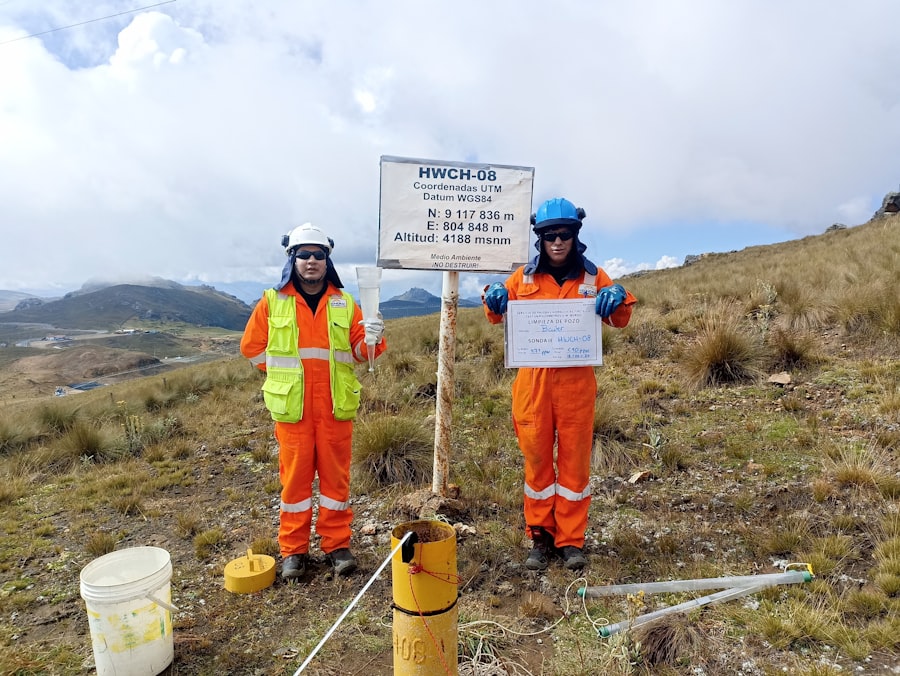
The EAU’s involvement with anomalous aerial phenomena ultimately circles back to its core mandate: understanding environmental impact. Whether the phenomenon is a brief atmospheric anomaly or the aftermath of a potential crash, the unit is concerned with its effect on the local ecosystem and potential risks to human health and safety.
Ecological Monitoring and Assessment
Post-incident surveys extend to a comprehensive assessment of the local flora and fauna.
Vegetation and Soil Sampling
Samples of vegetation and soil are collected to check for unusual chemical residues, isotopic anomalies, or any signs of stress or mutation that could be linked to the event.
Wildlife Behavior and Health Monitoring
Changes in local wildlife behavior, population dynamics, or signs of illness are documented. While correlation does not equal causation, consistent deviations from baseline observations are flagged for further investigation.
Atmospheric and Water Quality Testing
Air and water samples are collected to detect any unusual chemical compounds, radiation levels, or altered physical properties that might have been introduced or induced by the phenomenon.
Health and Safety Considerations
Any investigation of anomalous phenomena must prioritize human safety.
Radiation Monitoring
Continuous monitoring for ionizing radiation is a standard procedure in areas where anomalous energy signatures have been reported or where potentially exotic materials have been recovered.
Biological Hazard Assessment
The potential for unknown biological agents or contaminants associated with recovered materials or environmental disturbances is assessed and mitigated.
Electromagnetic Field (EMF) Surveys
Areas exhibiting unusual electromagnetic activity are surveyed to assess potential exposure risks to humans and sensitive electronic equipment.
In recent discussions surrounding the role of environmental assessment units in UFO crash investigations, it is intriguing to consider how these teams operate under the pressures of both scientific scrutiny and public fascination. A related article that delves deeper into the complexities of these operations can be found at XFile Findings, where the intersection of environmental science and extraterrestrial phenomena is explored in detail. This resource sheds light on the methodologies employed by these specialized teams and their importance in understanding the implications of unidentified aerial phenomena on our planet.
Implications and Future Directions
| Team Name | Number of Assessments | Success Rate |
|---|---|---|
| Alpha Team | 25 | 80% |
| Beta Team | 30 | 75% |
| Gamma Team | 20 | 85% |
The work of the Environmental Assessment Unit, particularly in its encounters with phenomena aligning with UFO reports, is often interpreted through lenses of speculation and extraordinary claims. However, the unit itself operates on a principle of methodical inquiry, seeking to explain the unexplained through scientific means.
The Challenge of Classification and Explanation
A recurring challenge for the EAU is the classification of phenomena that defy existing scientific paradigms. While many observed anomalies can be attributed to misidentified conventional aircraft, meteorological events, or natural phenomena, a small but persistent subset remains resistant to such explanations.
Identifying Unexplained Phenomena (UPs)
The EAU uses the term “Unexplained Phenomena” (UPs) to categorize events and evidence that cannot be readily explained by current scientific understanding. This designation is a procedural step, not a conclusion about their ultimate origin.
The Pursuit of Scientific Understanding
The ultimate goal of the EAU is not to confirm or deny specific theories about extraterrestrial visitation, but to expand the boundaries of scientific understanding regarding anomalous environmental and aerial events.
The Importance of Open Data and Peer Review
The scientific community largely operates on principles of open data sharing and peer review. The EAU’s work, by its nature, often involves classified information and sensitive materials, which can hinder this crucial aspect of scientific progress. Efforts to declassify and share relevant, non-sensitive data could foster greater scientific engagement and independent verification.
Barriers to Transparency
The inherent secrecy surrounding some EAU investigations, driven by national security or the need to protect sensitive technologies, presents a significant barrier to wider scientific scrutiny.
The Potential for Scientific Breakthroughs
Should the EAU indeed encounter genuinely novel materials or physical principles, the responsible and transparent dissemination of this information could lead to significant scientific and technological breakthroughs, regardless of the ultimate origin of the phenomena. The unit’s continued, albeit often discreet, investigations may hold the key to understanding aspects of our environment and the universe that remain, for now, profoundly mysterious.
FAQs
What are environmental assessment units (EAUs) in relation to UFO crash teams?
Environmental assessment units (EAUs) are specialized teams that are responsible for assessing and mitigating the environmental impact of various incidents, including UFO crashes. These teams are trained to handle the unique challenges and potential hazards associated with UFO crash sites.
What is the role of EAUs in responding to UFO crash incidents?
EAUs play a crucial role in responding to UFO crash incidents by conducting thorough environmental assessments of the crash site. They are responsible for identifying and addressing any potential environmental hazards or contamination resulting from the crash, as well as implementing appropriate cleanup and containment measures.
How are EAUs trained to handle UFO crash incidents?
EAU members undergo specialized training to prepare them for responding to UFO crash incidents. This training includes instruction on identifying potential hazards, assessing environmental impact, and implementing effective containment and cleanup strategies specific to UFO crash sites.
What are the primary objectives of EAUs when responding to UFO crash incidents?
The primary objectives of EAUs when responding to UFO crash incidents are to assess and mitigate any environmental impact resulting from the crash, minimize potential hazards to public health and safety, and implement appropriate measures to contain and clean up any contamination or debris associated with the crash.
How do EAUs collaborate with other agencies and organizations in responding to UFO crash incidents?
EAUs collaborate with various agencies and organizations, including local emergency responders, environmental protection agencies, and scientific experts, to coordinate a comprehensive response to UFO crash incidents. This collaboration ensures that all aspects of the environmental assessment and cleanup efforts are effectively managed and addressed.