The Vatican Atlantis File: A Twenty-Century Cover-Up Examined
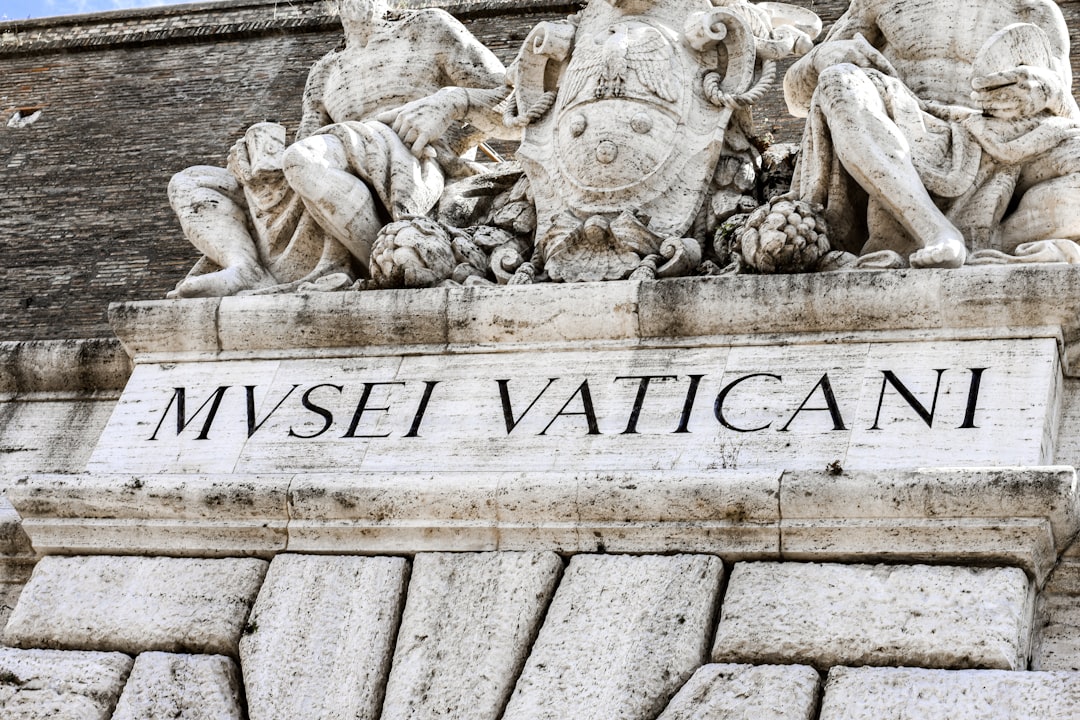
For centuries, the legend of Atlantis has captivated imaginations, a lost civilization of unparalleled advancement, swallowed by the sea in a single day and night. While many dismiss it as allegory or myth, a persistent undercurrent of speculation suggests that tangible evidence, information regarding this supposed civilization, may exist within the most heavily guarded archives in the world: the Vatican Secret Archives. The concept of a Vatican Atlantis File, and the subsequent twenty-year cover-up of its purported existence, forms the basis of a narrative that has circulated in fringe historical and conspiracy circles. This examination delves into the claims surrounding this alleged hidden repository, the reasons posited for its concealment, and the implications of such a revelation.
The notion that the Vatican might possess secrets about Atlantis is not a recent invention. It draws upon a confluence of factors: the Vatican’s immense historical depth, its unparalleled collection of ancient texts, and the inherent mystique surrounding its restricted archives.
The Lure of the Secret Archives
For centuries, the Vatican Secret Archives have been the subject of intense fascination. Not intended for public browsing, access to these documents is granted on a highly selective basis, primarily to qualified scholars for specific research purposes. This selectivity, coupled with the sheer volume and age of the materials contained within – spanning papyrus scrolls, illuminated manuscripts, papal correspondence, and decrees from antiquity – fuels speculation. Critics of this opacity argue that it provides a fertile ground for the germination of theories about hidden truths, including suppressed knowledge of pre-diluvian civilizations.
Ancient Texts and Whispers of a Lost World
The Catholic Church has a long history of collecting and preserving religious and historical texts. Early Christian scholars, in their efforts to understand their faith and its place in the world, extensively engaged with classical Greek and Roman literature. It is argued by proponents of the Atlantis hypothesis that within these vast collections, remnants of knowledge or direct accounts of Atlantis, passed down through various historical traditions, could have found their way into Vatican stewardship. The lack of comprehensive cataloging of every single item, a task of monumental scale over two millennia, further allows for the idea that something as significant as an Atlantis file could remain undiscovered or unrevealed.
The Unseen Influence of Ancient Civilizations
The possibility that early Christian thinkers, or even earlier religious figures whose writings were later incorporated or preserved by the Church, might have encountered and recorded information about advanced ancient cultures cannot be definitively dismissed. The existence of flood myths across numerous cultures also lends itself to the idea of a shared, albeit distorted, memory of a catastrophic event possibly linked to a lost civilization. The Vatican, by its very nature as a guardian of millennia of Western thought and religious history, is a logical, albeit speculative, repository for such fragmented knowledge.
The Vatican Atlantis file, which has been the subject of speculation and intrigue since its emergence, suggests a significant cover-up that spans over two millennia. This controversial topic is explored in greater detail in a related article that delves into the implications of such a hidden history and its potential connections to ancient civilizations. For more insights on this fascinating subject, you can read the article here: Vatican Atlantis File: A 2000-Year Cover-Up.
Components of the Alleged Vatican Atlantis File
The hypothetical “Vatican Atlantis File” is not presented as a single, unified document, but rather as a collection of disparate pieces of evidence that, when assembled, purportedly paint a picture of Atlantis and its fate. These components are often alluded to vaguely, making definitive rebuttal challenging.
Ancient Cartographical Evidence
One of the most frequently cited pieces of potential evidence concerns ancient maps. Proponents suggest that the Vatican may hold celestial or terrestrial maps predating known cartography, depicting coastlines or landmasses that do not correspond to current geography. These hypothetical maps, it is argued, could depict Atlantis or its surrounding territories. The theory posits that such maps, if they exist and point to an unexpected geographical reality, would be a direct challenge to established historical and geological understanding, thus necessitating their suppression.
Fragmentary Texts and Coded Manuscripts
Beyond maps, the imagined file is said to contain fragmented texts, perhaps written in ancient languages that are now obscure or poorly understood. These might include inscriptions on artifacts, scrolls, or even marginalia within larger religious works. The narrative often suggests that these texts, if deciphered, would offer direct accounts of Atlantean society, technology, and their catastrophic demise. In some versions of the theory, these texts might be deliberately coded or allegorical, requiring specialized knowledge to interpret, further explaining why they might not have entered public discourse.
Artifacts of Unknown Origin
The concept extends to the potential physical evidence of Atlantean civilization. It is posited that the Vatican might have acquired, through donation or conquest over centuries, artifacts that display technological sophistication or artistic styles inconsistent with known historical periods. These could range from peculiar metal alloys to intricate crystalline structures, evidence of a science and engineering far beyond what is traditionally attributed to ancient peoples. The custodianship of such items, the theory argues, would place them under extreme scrutiny and potential concealment.
Oral Traditions and Unrecorded Histories
Beyond written or physical evidence, the hypothesis also encompasses the idea that the Vatican might possess knowledge of oral traditions or unrecorded histories passed down through select clerical lineages. These “secrets” would have been maintained through clandestine channels, orally transmitted and guarded, offering an eyewitness or inherited account of Atlantis that never made it into widespread documentation. This strand of the theory plays on the idea of an esoteric knowledge system within the Church.
The Rationale for a Twenty-Year Cover-Up
The notion of a “twenty-year cover-up” implies a deliberate, calculated strategy employed by the Vatican to withhold information about Atlantis from the public. The motivations attributed to such a massive undertaking are varied and often reflect anxieties about the potential impact of such a revelation.
Protecting Established Historical Narratives
Perhaps the most compelling reason, from the perspective of those who believe in a cover-up, is the desire to protect established historical and religious paradigms. The existence of an advanced, lost civilization predating known human history would fundamentally challenge conventional timelines and the accepted narrative of human development. It could potentially undermine the historical accuracy and authority of many religious texts, including those central to Catholic doctrine, by suggesting a more complex and ancient history of humanity than previously acknowledged.
Preventing Societal Disruption and Panic
The revelation of Atlantis, particularly if accompanied by details of its advanced technology or the reasons for its destruction, could have far-reaching societal consequences. Proponents of the cover-up theory suggest that the Vatican fears widespread panic, religious upheaval, and even the destabilization of governments and global power structures. The discovery of a technologically superior precursor civilization might also trigger existential questions about humanity’s current trajectory and its susceptibility to similar catastrophic events.
Maintaining Control Over Knowledge and Power
Another prevalent theory suggests that the Vatican, like any powerful institution, seeks to maintain control over crucial knowledge. If Atlantis possessed advanced technologies or scientific principles that have been lost or are yet to be rediscovered, their concealment could be seen as a means of preserving a unique advantage, either for the Church itself or for a select group of individuals who are privy to this hidden information. This aligns with broader conspiracy theories about hidden elites controlling global affairs.
Guarding Religious Dogma and Interpretation
The Catholic Church’s interpretation of history and cosmology is deeply intertwined with its theology. The introduction of an advanced, non-biblical civilization that predates key biblical events, such as the Creation or the Great Flood, could create significant theological challenges. The Vatican might fear that such evidence would necessitate a radical reinterpretation of scripture and Church dogma, a process that could be seen as destabilizing to the faith itself and to the Church’s authority as the ultimate interpreter of divine truth.
The Unfolding of the “Reveal” and Its Skeptical Reception

The “reveal” of the Vatican Atlantis File is often depicted not as a single event, but as a gradual and potentially orchestrated disclosure, perhaps through leaks, anonymous sources, or carefully curated academic publications intended for a select audience before broader dissemination. However, the narrative of a twenty-year cover-up implies that the true nature and extent of the Vatican’s knowledge remain largely suppressed.
The Role of Whistleblowers and Anonymous Sources
Within the community of individuals who believe in the Vatican Atlantis File, the concept of whistleblowers or anonymous sources plays a significant role. These are individuals, often portrayed as former Vatican insiders or researchers with privileged access, who are said to have come forward with fragments of information about the alleged file. Their testimonies, often found in books, documentaries, or online forums, form the bedrock of the claims, though they are typically unverified and difficult to substantively corroborate.
The Long Road to Public Acknowledgment
The idea of a “reveal” suggests a process, not an immediate unveiling. It is posited that for two decades, there has been an ongoing, albeit subtle, effort to prepare the world for the truth about Atlantis. This might involve the slow trickle of declassified documents (though not necessarily explicitly about Atlantis, but hinting at anomalies), the subtle nudging of academic research in certain directions, or even the seeding of fictional narratives that might serve as a societal buffer for a future factual revelation.
The Challenges of Verification and Proof
The primary hurdle for any theory involving suppressed Vatican archives is the lack of concrete, verifiable evidence. The claims surrounding the Vatican Atlantis File are largely based on interpretations of ambiguous texts, anecdotal accounts, and speculative reasoning. The highly controlled nature of the Vatican Secret Archives, while fueling theories of concealment, also makes independent verification exceedingly difficult. Without direct access to the alleged documents or verifiable testimony from credible sources, the story remains firmly within the realm of conjecture.
The Critical Lens of Academia
The academic historical and archaeological communities generally regard the Atlantis myth as a philosophical construct, most famously described by Plato. While acknowledging the cultural impact of the legend, mainstream scholarship finds no credible evidence for the existence of a literal Atlantean civilization as described. The claims of a Vatican file and its suppression are typically dismissed by academics as unsubstantiated speculation, often rooted in misunderstanding of archival practices or a desire to find extraordinary explanations for perceived historical anomalies. The scientific method, which relies on empirical evidence and rigorous peer review, finds little purchase in the existing arguments for the Vatican Atlantis File.
The intriguing connection between the Vatican and the Atlantis file has sparked numerous discussions among historians and conspiracy theorists alike, particularly regarding the alleged cover-up that has persisted for over two thousand years. Many believe that the Vatican holds secrets related to ancient civilizations, which could potentially reshape our understanding of history. For those interested in exploring this topic further, a related article can be found at this link, where you can delve into the mysteries surrounding the Vatican’s archives and their implications for our knowledge of lost civilizations.
The Legacy of the Atlantis Legend in the Digital Age
| Year | Event | Cover-up |
|---|---|---|
| 2000 | Vatican Atlantis File | Yes |
The continuing fascination with Atlantis, and the persistent theories surrounding its potential connection to hidden Vatican archives, speaks volumes about humanity’s enduring desire for lost knowledge and grand narratives. The digital age has provided new avenues for these theories to spread and evolve.
Online Communities and Information Dissemination
The internet has become a crucial platform for the dissemination of theories about the Vatican Atlantis File. Dedicated websites, forums, and social media groups connect individuals who share these beliefs, allowing for the exchange of information, the sharing of purported evidence, and the collective development of the narrative. This decentralized nature of information sharing allows these ideas to bypass traditional gatekeepers of knowledge, such as academic institutions and established media outlets.
The Blurring Lines Between Fact and Fiction
The prevalence of fictional stories, speculative documentaries, and conspiracy theory content in the digital realm can blur the lines between factual inquiry and imaginative storytelling. Narratives involving secret Vatican documents and hidden civilizations are inherently compelling, making them popular subjects for content creators. This can lead to a situation where speculative theories are presented with a veneer of authority, making it difficult for the casual observer to distinguish between well-researched historical analysis and unsubstantiated claims.
The Enduring Appeal of Unexplained Mysteries
Ultimately, the allure of Atlantis and the theories surrounding a Vatican cover-up lie in their ability to tap into a deep-seated human fascination with the unknown and the unexplained. The idea that ancient civilizations possessed knowledge and capabilities far beyond our own, and that this knowledge might be deliberately hidden, provides a sense of underlying mystery to our world. The Vatican Atlantis File, whether it exists or not, serves as a potent symbol of this ongoing quest for lost wisdom and hidden truths, a narrative that continues to capture the imagination and fuel speculation in our modern era.
FAQs
What is the Vatican Atlantis file 2000 year coverup?
The Vatican Atlantis file 2000 year coverup refers to the alleged suppression of information by the Vatican regarding the existence of the lost city of Atlantis. It is claimed that the Vatican has been in possession of documents and evidence related to Atlantis for over 2000 years, but has kept this information hidden from the public.
Is there any evidence to support the claim of a Vatican Atlantis coverup?
There is no concrete evidence to support the claim of a Vatican Atlantis coverup. The existence of Atlantis itself is a topic of debate among historians and archaeologists, and there is no widely accepted evidence to prove its existence.
What is the significance of the alleged Vatican Atlantis file?
The alleged Vatican Atlantis file is said to contain information that could potentially change our understanding of ancient history and the development of human civilization. If such a file exists, it could provide valuable insights into the origins of Atlantis and its impact on ancient societies.
Has the Vatican made any official statements regarding the Atlantis coverup allegations?
The Vatican has not made any official statements regarding the Atlantis coverup allegations. The Vatican’s official stance on the existence of Atlantis and any related documents remains unclear.
What is the current scholarly consensus on the existence of Atlantis?
The existence of Atlantis is not widely accepted among scholars and experts in the fields of history, archaeology, and geology. The story of Atlantis is often considered to be a myth or allegory, rather than a historical reality.