The completion of the Human Reference Genome, an endeavor spanning decades and involving international collaboration, represents a significant milestone in biological and medical science. This comprehensive map of the human genetic blueprint, officially finalized through the Telomere-to-Telomere (T2T) Consortium, provides an unprecedented understanding of our DNA, filling in previously inaccessible regions and offering a more complete picture than ever before.
The initial sequencing of the human genome, published at the turn of the millennium, was a monumental achievement. It laid the groundwork for countless biological investigations and the development of new diagnostic and therapeutic strategies. However, this early version, while groundbreaking, contained significant gaps. These gaps primarily existed in highly repetitive regions of the genome, areas that proved technically challenging to sequence with the technologies available at the time. Such regions, often dismissed as genomic “dark matter,” are now understood to play critical roles in gene regulation, chromosome structure, and evolutionary processes.
The Era of First-Generation Sequencing
The Human Genome Project (HGP), initiated in 1990 and declared complete in 2003, utilized Sanger sequencing technology. This method, while accurate for its era, had limitations in resolving long stretches of repeating DNA sequences. The resulting genome assembly was therefore fragmented, with significant portions lacking definitive sequences.
The Impact of Technological Advancements
The advent of next-generation sequencing (NGS) technologies introduced higher throughput and lower costs, enabling researchers to generate vast amounts of sequence data. However, the short read lengths characteristic of most NGS platforms still presented challenges in accurately assembling repetitive genomic regions. Overcoming these limitations required further advancements.
Recent advancements in genomic research have shed light on the complexities of non-coalescent elements within the human reference genome. These elements, which do not follow the traditional coalescent theory of ancestry, play a crucial role in understanding human evolution and genetic diversity. For a deeper exploration of this topic, you can refer to the article available at XFile Findings, which discusses the implications of non-coalescent elements in genomic studies and their potential impact on personalized medicine.
Bridging the Gaps: The T2T Consortium and Its Innovations
The Telomere-to-Telomere (T2T) Consortium emerged as a collective effort to complete the human genome by accurately sequencing the remaining gaps, particularly those within centromeres and other highly repetitive satellite DNA regions. This ambitious goal was achieved through the strategic integration of novel sequencing technologies and sophisticated computational methods.
Long-Read Sequencing: A Paradigm Shift
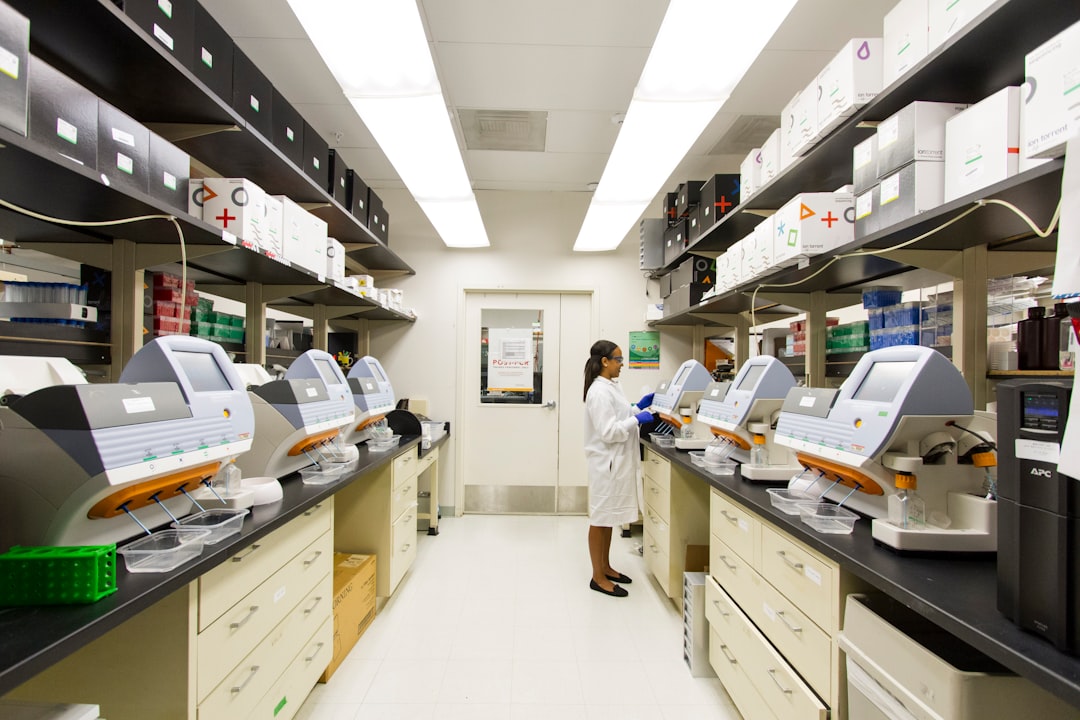
A key innovation enabling the T2T project was the development and widespread adoption of long-read sequencing technologies, such as Pacific Biosciences (PacBio) and Oxford Nanopore Technologies. Unlike the short reads of NGS, long-read sequencing can generate reads tens of thousands, or even hundreds of thousands, of base pairs long. This capability is crucial for traversing and accurately assembling repetitive sequences, which can span millions of base pairs.
Computational Assembly Strategies
Even with long reads, assembling complex genomic regions requires advanced bioinformatics tools. The T2T consortium developed and refined algorithms specifically designed to handle the unique challenges posed by repetitive DNA, such as distinguishing between homologous repeats and resolving variations within them.
The Significance of Centromeric and Telomeric Regions
Centromeres are critical chromosomal structures that play a vital role in cell division by acting as attachment points for the spindle fibers. Telomeres, located at the ends of chromosomes, protect them from degradation and fusion. These regions are characterized by highly repetitive DNA sequences that were notoriously difficult to sequence and assemble in the initial genome sequencing efforts. The T2T completion has provided the first contiguous sequences of these essential genomic elements.
The Completeness Factor: What “Complete” Truly Means

The T2T consortium’s achievement signifies the sequencing of six previously unmapped chromosomes: the acrocentric chromosomes 13, 14, 15, 21, and 22, as well as the Y chromosome. This “complete” genome refers to the sequencing of the euchromatic portions of all chromosomes, effectively filling in the remaining gaps in the reference genome. It represents a significant increase in the amount of unique sequence information that has been definitively placed on the human genome map.
Euchromatin vs. Heterochromatin
The human genome is broadly divided into euchromatin and heterochromatin. Euchromatin is generally more gene-rich and transcriptionally active, while heterochromatin is more gene-poor and transcriptionally silent. The initial genome sequence was primarily composed of euchromatic regions. The T2T effort has focused on filling in the remaining euchromatic gaps and, crucially, has begun to unravel the complex structure of some heterochromatic regions, including centromeres.
Addressing the “Missing” Repeats
For years, large segments of the human genome were absent from the reference sequence due to their highly repetitive nature. The T2T project has now provided the first complete andgapless sequences for these regions, offering unprecedented insights into their structure and function. This includes the accurate assembly of complex satellite DNA arrays that make up centromeres.
Unlocking New Avenues: Implications for Genetic Research
The availability of a truly complete human reference genome has profound implications for virtually every field of genetic research. It offers a more robust foundation for understanding genetic variation, disease mechanisms, and human evolution.
Enhanced Understanding of Genetic Variation
With a more complete reference, researchers can more accurately identify and characterize genetic variations across the human population. This includes single nucleotide polymorphisms (SNPs), insertions, deletions, and structural variations, especially in previously inaccessible regions. This enhanced resolution is critical for understanding the genetic basis of complex diseases.
Revolutionizing Disease Gene Discovery
Many diseases have been linked to variations in repetitive DNA regions, including those within centromeres and telomeres. The complete genome sequence will facilitate the discovery and study of genes and regulatory elements located in these areas, potentially leading to new diagnostic markers and therapeutic targets for conditions such as developmental disorders and certain cancers.
Advancing Evolutionary Biology
Repetitive DNA sequences play a significant role in genome evolution, driving the formation of new genes and influencing genome structure. The complete sequence allows for a more detailed comparative genomic analysis, providing deeper insights into human evolutionary history and the genetic divergence between humans and other primates.
Recent advancements in genomics have shed light on the complexities of non-coalescent elements within the human reference genome, revealing their significant roles in genetic diversity and evolution. A related article discusses the implications of these findings and offers insights into how non-coalescent elements contribute to our understanding of human genetics. For more information, you can read the article here. This exploration not only enhances our comprehension of genetic variation but also opens new avenues for research in personalized medicine and evolutionary biology.
The Path Forward: Continuous Refinement and Application
| Element | Location | Size | Function |
|---|---|---|---|
| Alu elements | Various locations | 300 bp | Regulation of gene expression |
| L1 elements | Interspersed throughout genome | 6-8 kb | Mobile genetic elements |
| SINE elements | Various locations | 100-300 bp | Regulation of gene expression |
The completion of the T2T genome is not an endpoint but rather a new beginning. The availability of this comprehensive resource will fuel a new wave of research, leading to further discoveries and applications in medicine and biology.
The Concept of a “Pangenome”
While the T2T consortium has provided a more complete reference genome, it is important to recognize that no single genome can represent the full spectrum of human genetic diversity. The concept of a “pangenome,” which aims to capture the genetic variation present in a diverse population, is the next frontier. This will involve sequencing numerous individuals from various ancestral backgrounds.
Applications in Personalized Medicine
A complete and accurate reference genome is fundamental for the advancement of personalized medicine. Understanding an individual’s complete genetic makeup, including variations in all genomic regions, can inform treatment decisions, predict disease risk, and guide the development of tailored therapies.
Ethical and Societal Considerations
As our understanding of the human genome deepens, so too do the ethical and societal considerations. The widespread availability of comprehensive genetic information raises questions about data privacy, potential for discrimination based on genetic predispositions, and the responsible use of this knowledge. Ongoing dialogue and the development of robust ethical frameworks are essential as this research progresses. The T2T consortium’s accomplishment represents a crucial step in unlocking the secrets of our genetic heritage, providing a more complete and accurate foundation for future scientific exploration and medical innovation.
FAQs
What are non-coalescent elements in the human reference genome?
Non-coalescent elements in the human reference genome are regions of DNA that do not have a common ancestor and therefore do not follow the typical pattern of genetic inheritance.
How do non-coalescent elements differ from other genetic elements?
Non-coalescent elements differ from other genetic elements in that they do not exhibit the typical patterns of genetic inheritance and are not passed down from a common ancestor.
What is the significance of non-coalescent elements in the human reference genome?
Non-coalescent elements in the human reference genome are significant because they provide insights into the complex evolutionary history of human populations and can help researchers better understand genetic diversity and population dynamics.
How are non-coalescent elements identified and studied in the human reference genome?
Non-coalescent elements are identified and studied in the human reference genome using advanced genomic sequencing and analysis techniques, such as whole-genome sequencing and population genetic studies.
What implications do non-coalescent elements have for human genetics and evolutionary studies?
Non-coalescent elements have implications for human genetics and evolutionary studies by providing a more comprehensive understanding of human genetic diversity, population history, and evolutionary dynamics. This can lead to advancements in fields such as personalized medicine and evolutionary biology.