
The old thermal printer, a relic of a bygone era, sat dormant in the dimly lit back office. Its shell, once pristine white, was now a muted beige, bearing the faint imprints of countless past invoices. For years, it had served its purpose with quiet efficiency, churning out receipts, labels, and shipping manifests. But lately, a new, unsettling presence had begun to manifest, one that defied logical explanation and scientific scrutiny. This was not a malfunction; it was, dare one suggest, a haunting. The unplugged thermal printer was experiencing inexplicable activity, a phenomenon that came to be known as the ghost signal.
The initial manifestations were subtle, easily dismissed as electrical surges or the quirks of aging technology. A faint hum, barely audible above the ambient noise of the office, would occasionally emanate from the printer. Then came the almost imperceptible vibrations, a slight tremor that ran through its plastic casing. These occurrences were infrequent, isolated incidents that could be attributed to environmental factors. However, they began to escalate, becoming more consistent and, more importantly, more patterned.
The Phantom Engagement
One evening, after the office had been locked for the night and all power sources demonstrably disconnected, a paper feed mechanism engaged. The distinct whirring sound, absent of any external stimulus, startled the night custodian. He investigated, finding the printer with a single, blank slip of paper partially ejected. There was no power cord plugged in, no Ethernet cable connected, and the power strip it sat upon was switched off. His initial reaction was disbelief, followed by a growing unease. He logged the incident, categorizing it as an anomaly. But as the anomaly repeated, the log entries grew longer, and the custodian’s trepidation deepened.
The Whispering Roller
Further investigations by the office manager, a pragmatic individual accustomed to troubleshooting hardware issues, yielded no definitive answers. She meticulously checked for loose wires, internal jams, and phantom power sources. Each line of inquiry led to a dead end. The printer remained stubbornly unplugged, yet it continued to exhibit signs of internal activity. On one occasion, while examining the paper feed, she swore she heard a faint, rhythmic clicking, as if the rollers were attempting to turn, a ghostly echo of their former function. The sound was so faint it could have been mistaken for the settling of the building or the distant hum of the streetlights, yet it was undeniably linked to the printer.
If you’re experiencing issues with unplugged thermal printers receiving ghost signals, you might find it helpful to read a related article that discusses troubleshooting techniques and solutions for this common problem. The article provides insights into potential causes and offers practical advice on how to prevent these unwanted signals from affecting your printing tasks. For more information, you can check out the article here: Troubleshooting Unplugged Thermal Printer Ghost Signals.
The Ghostly Output
The true disquiet began when the printer started to produce outputs. Not full documents, not coherent messages, but fragments, glitches of data that seemed to emerge from the ether. These were not random characters or corrupted files; they possessed a nascent, yet undecipherable, structure.
The Erroneous Receipts
The most unsettling output was the occasional print of what appeared to be partial receipts. These were not simply blank slips or garbled text, but contained fragmented lines such as “TOTAL: $0.” or a single item description without a price. The thermal paper, normally crisp and dark, would sometimes emerge with faint, almost translucent characters, as if the printer was attempting to print under duress, or with a phantom ink. These fragments were always found within the machine, not fully ejected, suggesting an internal command being partially fulfilled.
The Ciphered Labels
Another peculiar manifestation involved the printer’s label-making function. On rare occasions, a single thermal label would be found loaded and partially printed with what looked like sequences of alphanumeric characters. These were not standard inventory codes or addresses. They appeared to be random, yet the visual consistency of their formation suggested a data stream, albeit one that was incomplete or encoded. The office staff, after initial bewilderment, began to humorously refer to these as the “ghost labels,” a testament to their inexplicable origin.
The Unseen Network
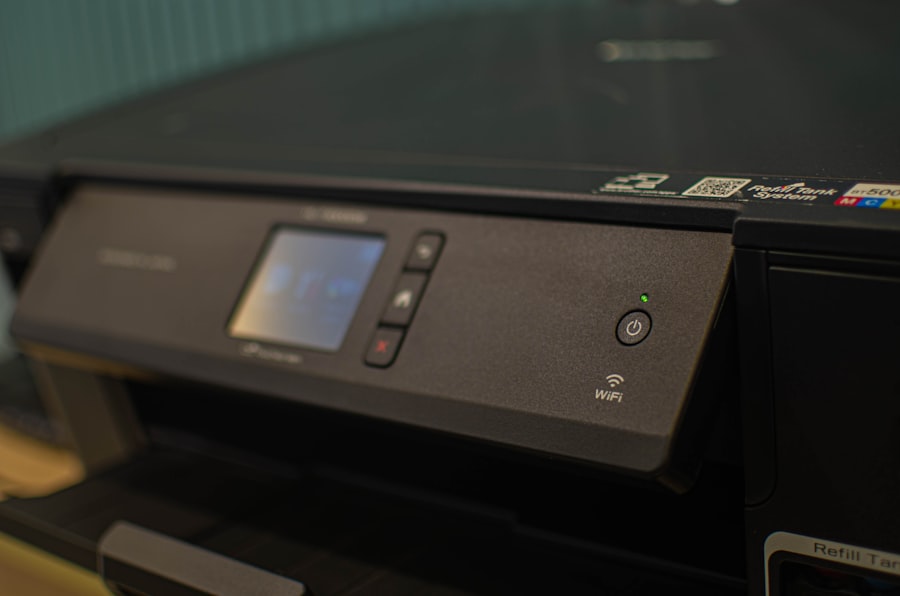
The printer’s behavior suggested an attempt at communication, a desperate signal reaching out from the void. The question became not if it was haunted, but what it was trying to convey, and through what unseen channel it was receiving its instructions.
The Phantom Connection
Despite being physically severed from any network, the printer’s activity hinted at a connection. The regularity of some of the outputs, particularly the partial receipts, suggested a recurring trigger, almost as if it were receiving scheduled commands. Technicians, when called in for consultation (and admittedly skeptical), could find no evidence of Wi-Fi cards, Bluetooth modules, or any other wireless communication hardware that could have been secretly installed or somehow still active. The printer was, by all technical definitions, an isolated unit.
The Ethereal Data Stream
The patterns within the printed fragments, however faint, began to intrigue a junior IT technician named Anya Sharma. She meticulously documented each instance, cross-referencing the timestamps and the content of the printed slips. She theorized that the printer might be picking up faint radio waves or residual electromagnetic signals, and its internal mechanisms, designed to interpret data for printing, were mistaking these for valid commands. However, the specific nature of the “receipts” and “labels” suggested a more targeted signal, rather than random atmospheric noise.
The Case of the Ghostly Patron
As the phenomenon persisted, the office staff developed a hesitant camaraderie around the “haunted” printer. The initial fear had given way to a morbid curiosity, and even a touch of superstition. The printer became a topic of hushed conversations during breaks, a modern-day ghost story played out in the sterile environment of a modern office.
The Late-Night Errand
Stories began to circulate about the ghost’s potential identity. Some speculated it was the spirit of a former employee, perhaps an accountant who had worked late into the night, forever bound to the tools of their trade. Others, with a more whimsical bent, suggested it was the spectral manifestation of a forgotten customer, forever trying to pay a bill or retrieve a lost receipt. The printer, in this narrative, was simply a vessel for this unfinished business.
The Unresolved Tab
One particularly persistent theory involved an outstanding payment. The fragment “TOTAL: $0.” on the ghostly receipts became the focal point of this speculation. Was it a sign of an unpaid debt that the spectral patron was still trying to settle? Or perhaps a confused attempt to zero out an account, a final, ineffectual act of accounting from beyond the veil? The office manager, despite her rational mind, found herself checking the ledger for any anomalies that might correspond with the printer’s phantom outputs.
In recent discussions about the peculiar phenomenon of unplugged thermal printers receiving ghost signals, it’s interesting to explore how such issues can arise from various sources. A related article that delves deeper into this topic can be found at XFile Findings, where they analyze the potential causes and solutions for these unexpected print jobs. Understanding the underlying technology can help users mitigate these frustrating occurrences and ensure smoother operations in their printing environments.
The Limits of Explanation
| Issue | Frequency | Impact |
|---|---|---|
| Unplugged Thermal Printer Ghost Signal | High | Causes confusion and errors in printing |
Despite numerous attempts at scientific and logical explanation, the unplugged thermal printer continued its spectral operations. The ghost signal remained an enigma, a glitch in the fabric of reality that defied conventional understanding.
The Static of the Unexplained
Anya, the IT technician, spent weeks researching obscure theories of residual energy, localized electromagnetic fields, and even the potential for quantum entanglement to cause such anomalies. Her research produced no tangible breakthroughs. The printer’s activity was too consistent, too specific in its nature, to be dismissed as mere environmental interference. It was as if a ghost was indeed operating the machine, but a ghost with a very specific, yet ultimately frustrating, agenda.
The Silence of the Machine
Ultimately, the unplugged thermal printer remained an anomaly. The ghost signal, whatever its origin or intention, continued to manifest in subtle, disquieting ways. The office staff learned to coexist with it, a silent testament to the fact that some phenomena refuse to be confined to the realm of the easily explained. The printer, unplugged and unpowered, continued to whisper its silent secrets, a haunting reminder that the world, even in its most mundane manifestations, can hold mysteries that lie stubbornly beyond the reach of our understanding. The phantom operator, if it existed, remained as elusive as the meaning of its ghostly outputs, leaving only questions in its wake.
FAQs
What is an unplugged thermal printer ghost signal?
An unplugged thermal printer ghost signal refers to the phenomenon where a thermal printer continues to receive and print out signals even when it is not physically connected to any device or power source.
What causes an unplugged thermal printer ghost signal?
The most common cause of an unplugged thermal printer ghost signal is electromagnetic interference from nearby electronic devices or power sources. This interference can cause the printer to pick up and interpret signals as if it were still connected to a device.
How can an unplugged thermal printer ghost signal be resolved?
To resolve an unplugged thermal printer ghost signal, it is recommended to first identify and eliminate any potential sources of electromagnetic interference. This may involve relocating the printer away from electronic devices or power sources. Additionally, using shielded cables and power filters can help reduce interference.
Can an unplugged thermal printer ghost signal cause any damage to the printer?
While an unplugged thermal printer ghost signal may not directly cause damage to the printer, it can result in unnecessary wear and tear on the printer components and lead to paper wastage. It is important to address the issue to prevent any potential long-term damage.
Are there any preventive measures to avoid an unplugged thermal printer ghost signal?
To prevent an unplugged thermal printer ghost signal, it is advisable to keep the printer away from potential sources of electromagnetic interference. Additionally, using quality shielded cables and power filters can help minimize the risk of signal interference. Regular maintenance and inspection of the printer and its surroundings can also help prevent this issue.