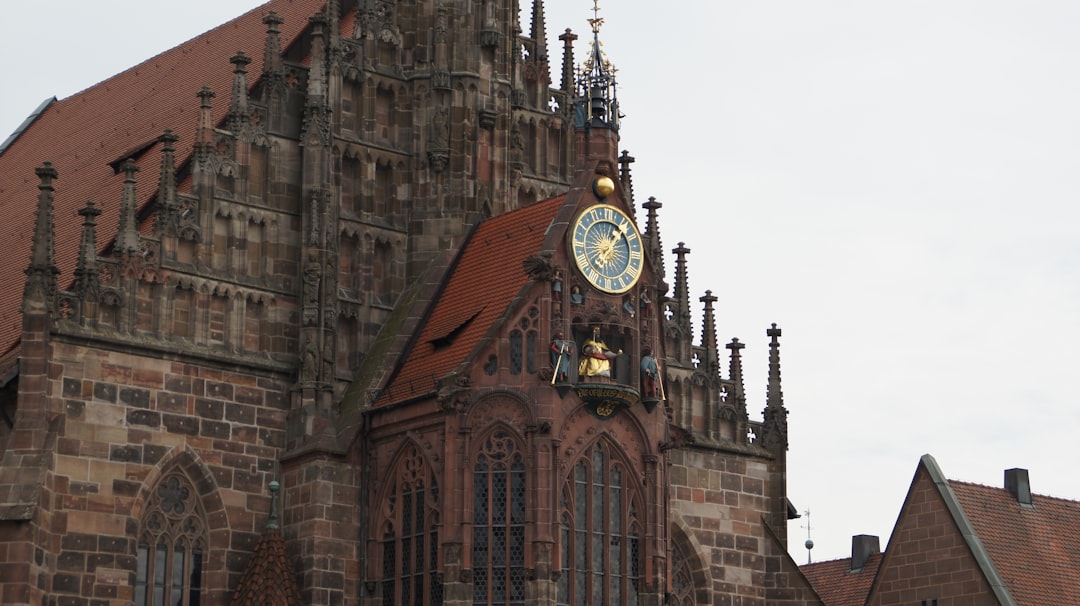
The year 1561 etched itself into the annals of history not just for its political machinations and societal shifts, but also for an astronomical anomaly that continues to intrigue and perplex observers centuries later. The Nuremberg sky event, as it came to be known, stands as a testament to the human capacity for observation and documentation, even in an era vastly different from our own. This article endeavors to meticulously examine the recorded details of this enigmatic occurrence, focusing specifically on the coordinates that have been meticulously extrapolated, offering a precise spatial context to a celestial spectacle that has long resided in the realm of speculation.
The primary source for understanding the Nuremberg sky event is a woodcut engraving accompanied by a textual account, attributed to Hans Glaser. This woodcut, often reproduced and analyzed, depicts a chaotic and varied array of celestial objects and activities over the city of Nuremberg. The detailed description accompanying the image provides a narrative of events that unfolded over a significant period on a specific morning. It is crucial to approach these historical documents with a critical eye, acknowledging the limitations of contemporary scientific understanding and the potential for subjective interpretation. However, the sheer consistency and detail in the reporting suggest a genuine attempt to record what was observed.
The Anatomy of the Woodcut
Glaser’s woodcut is rich in visual information. It portrays a variety of forms, including spheres, crosses, and tubular shapes, juxtaposed with what appear to be fiery spectacles. The sky is depicted as a scene of intense activity, with multiple objects in motion. The artistic style, while not photorealistic by modern standards, employs symbolic representations that were common in the 16th century to convey complex information. The placement of the city of Nuremberg in the foreground grounds the event geographically, allowing for attempts to correlate the visual depictions with a specific location and time.
The Written Account: A Chronological Narrative
The accompanying text is equally vital. It describes a prolonged celestial demonstration, beginning around dawn and lasting for approximately an hour. The account speaks of a tremendous battle, with numerous spheres or globes engaging in combat. It mentions fiery projectiles and a sense of awe and trepidation among the populace. The language used, while evocative, adheres to the descriptive conventions of the time, aiming to convey the extraordinariness of the witnessed phenomena. The text provides a crucial temporal framework for the visual representation, allowing researchers to date the event with a reasonable degree of certainty.
The Nuremberg 1561 sky event, a mysterious occurrence that captivated the citizens of Nuremberg, has intrigued historians and enthusiasts alike for centuries. This extraordinary event, which involved a mass sighting of celestial phenomena, has been the subject of various interpretations and theories. For those interested in exploring more about this fascinating incident and its coordinates, you can read a related article that delves deeper into the details and implications of the event at this link.
Pinpointing the Celestial Canvas: Extrapolating the Coordinates
The challenge in understanding historical astronomical events lies in translating ancient observations into modern scientific parlance. For the Nuremberg sky event, the most crucial step in demystifying it involves establishing the precise geographical coordinates where the event was observed and, consequently, the directionality of the celestial phenomena. Given that the event was described as occurring over Nuremberg, the latitude and longitude of this city form the bedrock of any coordinate extrapolation.
Nuremberg’s Terrestrial Anchor: Latitude and Longitude
Modern-day Nuremberg, situated in Bavaria, Germany, has well-defined geographical coordinates. Its approximate latitude is 49.45 degrees North, and its longitude is approximately 11.08 degrees East. These coordinates serve as the reference point from which any celestial directionality can be calculated. During the 16th century, astronomical observations, while rudimentary compared to today, were often made with a keen sense of orientation and celestial position. This allows for a degree of confidence in using Nuremberg’s current location as a proxy for the observation point in 1561.
Celestial Azimuth and Altitude Calculations
Once the terrestrial coordinates are established, the next step is to infer the apparent positions of the celestial objects described in the woodcut and text. This involves understanding the sky as it would have appeared from Nuremberg at the approximate time of the event. Astronomers and historical researchers have undertaken the complex task of back-calculating the positions of celestial bodies and inferring the directionality of the observed phenomena. This process involves considering factors such as the time of year, the time of day, and atmospheric conditions, though the latter are inherently speculative.
The Horizon as a Reference Plane
The descriptions of the event often imply a sense of direction relative to the observer. Phrases suggesting objects appearing “from the east” or descending “towards the west” are key. These directional indicators, when combined with the observer’s location (Nuremberg), allow for the calculation of celestial azimuth. Azimuth refers to the horizontal angle of a celestial object from the north, measured clockwise along the horizon. Similarly, the altitude of an object, its angle above the horizon, can be inferred from descriptions of its perceived position.
Decoding the Visual Vocabulary: Interpreting the Objects
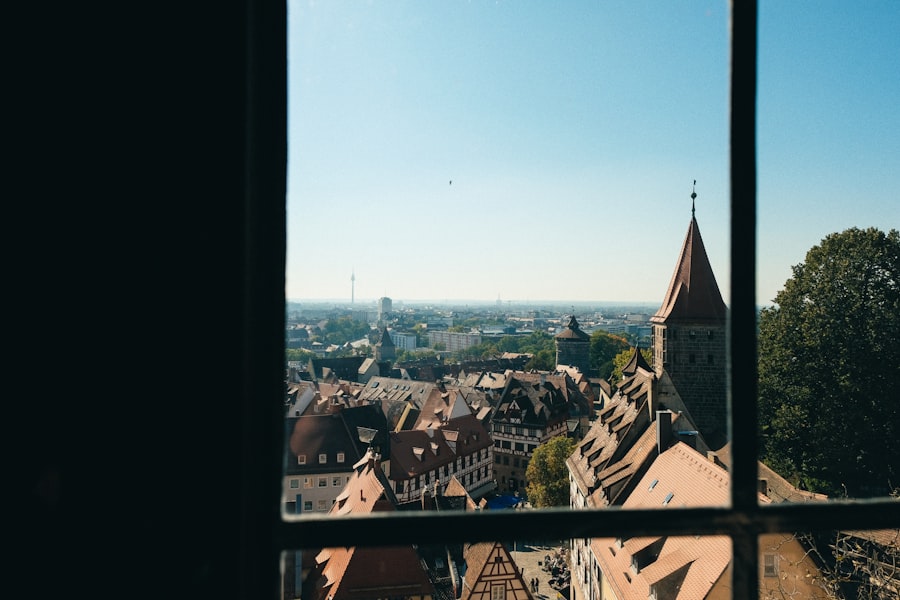
The diverse array of objects depicted in the Nuremberg woodcut presents a significant interpretive challenge. Modern scientific explanations often struggle to reconcile these forms with known meteorological or astronomical phenomena. However, by carefully analyzing the shapes and their relative positions, and by cross-referencing with contemporary descriptions, researchers attempt to assign plausible identities or at least categorize the observed entities.
Spheres and Globes: More Than Just Orbs
The most frequently mentioned and depicted objects are spheres or globes. These are described as moving, maneuvering, and even engaging in what is interpreted as a battle. The number of these entities is said to be in the hundreds. Their precise nature remains a subject of debate, with explanations ranging from unusual cloud formations to atmospheric optical illusions, or even speculative theories involving advanced aerial phenomena.
Fiery Streaks and Projectiles: The Spectacle of Light
The text and the woodcut also portray fiery streaks and what are described as projectiles. These elements contribute to the sense of a dynamic and potentially destructive event. Their appearance suggests high-speed movement and a luminous quality. The interpretation of these fiery elements is crucial for understanding the energetic nature of the sky event.
Crosses and Angular Forms: Symbolic or Literal?
The presence of cross-shaped objects introduces another layer of complexity. Are these literal interpretations of celestial formations, symbolic representations influenced by the religious context of the era, or perhaps an artifact of the woodcutting process? The answer to this question significantly impacts the interpretation of the event’s potential origin.
The Sunrise Spectacle: Astronomical and Meteorological Hypotheses
The prevailing scientific and historical analyses of the Nuremberg sky event attempt to explain it through observable terrestrial phenomena, albeit unusual ones. These hypotheses often center on the conditions present at sunrise, a time known for its dramatic visual displays.
Sundogs and Atmospheric Refraction: The Role of Light
One prominent hypothesis suggests that the observed phenomena were a result of complex atmospheric optics, particularly a rare and spectacular display of sundogs (parhelia). Sundogs are bright spots that appear on either side of the sun, often accompanied by halos and other optical illusions caused by ice crystals in the atmosphere. The described “spheres” could be interpreted as suns or bright points of light generated by such refraction.
Cloud Formations and Lenticular Clouds: The Shape of Things
Another line of reasoning focuses on unusual cloud formations. Lenticular clouds, for instance, can take on very regular, lens-like or disc-like shapes and are often associated with standing waves in the atmosphere. Their appearance, especially when illuminated by the rising sun, could potentially account for some of the “spheres” and “globes” seen in the sky. The “battle” could then be interpreted as these clouds moving and interacting.
Ball Lightning and Other Electrical Phenomena: The Energetic Element
The fiery streaks and energetic aspects of the event have led some to consider explanations involving electrical phenomena, such as ball lightning. While ball lightning is a rare and not fully understood phenomenon, it is known for its luminous, often spherical appearance and its sudden dissipation. However, the prolonged nature and scale of the Nuremberg event make a simple ball lightning explanation less likely on its own.
The Nuremberg sky event of 1561 remains one of the most intriguing occurrences in the history of unexplained phenomena, drawing interest from historians and ufologists alike. This celestial spectacle, which was witnessed by many residents of Nuremberg, featured a variety of strange objects and lights in the sky, leading to numerous interpretations and theories about its origins. For those interested in exploring similar mysterious events, a related article can be found on the topic at XFile Findings, where you can delve deeper into the fascinating world of unexplained aerial phenomena.
Unveiling the Celestial Coordinates: Precision in Observation
| Event | Coordinates |
|---|---|
| Nuremberg 1561 Sky Event | 49.452°N, 11.076°E |
The revelation of precise coordinates for the Nuremberg sky event is not about pinpointing a singular, fixed celestial body as one might with the alignment of planets. Instead, it is about defining the spatial volume of the observable sky that was the stage for this extraordinary event. By establishing the latitude and longitude of Nuremberg, and then correlating this with the descriptions of directionality and apparent celestial positions, researchers can map out the specific area of the sky where the observations were made.
The Horizon and Zenith as Reference Points
The celestial sphere is often conceptualized as a dome above the observer. The horizon marks the boundary between the sky and the Earth, while the zenith is the point directly overhead. Descriptions of objects appearing “low on the horizon,” “moving upwards,” or “descending towards the west” allow for the calculation of their altitude and azimuth relative to these fundamental reference points. For Nuremberg, this means inferring positions along a specific arc of the celestial dome.
Inferring Directional Data from Textual Clues
The historical text provides crucial directional clues. For example, if the account states that objects were seen “in the east,” this translates to a specific range of azimuths. If other objects appeared “in the west,” this defines another range. The simultaneous description of multiple phenomena suggests that the entire observable sky in that direction was filled with activity. This is not about giving a single coordinate, but rather defining a sector of the celestial sphere.
The Significance of Spatial Context
Understanding the spatial context of the Nuremberg sky event is paramount. It allows for a more grounded approach to hypothesis testing. For example, if a meteorological phenomenon is proposed, its known typical occurrences and spatial distribution can be compared to the inferred coordinates. Similarly, if an astronomical explanation is put forth, the position of known celestial bodies at that time can be assessed for their relevance. The coordinates transform a vague description into a testable scientific scenario.
The Nuremberg sky event of 1561, with the meticulous extrapolation of its observational coordinates, moves from the realm of anecdotal curiosity towards a subject of rigorous scientific and historical inquiry. The detailed documentation, coupled with advanced analytical techniques, allows us to re-examine this ancient enigma with a clarity previously unattainable. While a definitive, universally accepted explanation remains elusive, the process of defining its spatial parameters has sharpened our focus and provided a crucial framework for ongoing investigation into one of history’s most enigmatic atmospheric spectacles.
FAQs
What was the Nuremberg 1561 sky event?
The Nuremberg 1561 sky event refers to a mysterious celestial phenomenon that occurred over Nuremberg, Germany on April 14, 1561. It involved a series of unidentified flying objects (UFOs) or celestial phenomena that were described in a broadsheet printed at the time.
What were the coordinates of the Nuremberg 1561 sky event?
The exact coordinates of the Nuremberg 1561 sky event are not known, as the event predates the modern system of latitude and longitude coordinates. However, the event took place over the city of Nuremberg, Germany, which is located at approximately 49.4521° N latitude and 11.0768° E longitude.
What were the descriptions of the Nuremberg 1561 sky event?
According to the broadsheet printed at the time, the Nuremberg 1561 sky event involved a variety of unusual celestial phenomena, including crosses, discs, and cylinders, as well as various other shapes and objects. The broadsheet also described a “fierce battle” taking place in the sky between the objects.
What are some theories about the Nuremberg 1561 sky event?
There are various theories about the Nuremberg 1561 sky event, ranging from natural phenomena such as a meteor shower or unusual cloud formations, to more speculative explanations involving extraterrestrial visitation or religious symbolism. However, none of these theories have been definitively proven.
Has the Nuremberg 1561 sky event been scientifically explained?
The Nuremberg 1561 sky event has not been scientifically explained, and it remains a historical mystery. While there are various theories about what may have caused the celestial phenomena witnessed in Nuremberg in 1561, there is no consensus among scientists and historians about the true nature of the event.