
The sterile, almond-scented air of the polygraph examination room hung heavy with an almost palpable silence. Fluorescent lights hummed overhead, casting a pallid glow on the polished table and the two chairs facing each other. In one sat Dr. Evelyn Reed, a seasoned polygraph examiner with a gaze that missed nothing and a demeanor that projected calm authority. Across from her, leaning slightly forward, was Mark Jenkins, a senior technician at NASA’s Jet Propulsion Laboratory (JPL), his hands clasped loosely in his lap. The year was 2026, and the questions, though mundane in their initial phrasing, carried the weighty consequence of national security and the integrity of a critical scientific endeavor. This was not just a routine check; it was a deep dive into the reliability and trustworthiness of a vital cog in the machinery of space exploration.
Jenkins’s career at JPL had been a testament to his dedication and skill. For over a decade, he had been instrumental in the assembly and calibration of sensitive instrumentation for deep-space missions. His technical acumen was widely acknowledged, and his commitment to the meticulous nature of his work was lauded by his supervisors. However, as technology advanced and the stakes in space exploration grew ever higher, the protocols for personnel in critical roles were subject to periodic re-evaluation. The year 2026 marked a scheduled reassessment of all personnel involved in projects deemed of significant strategic importance, and Jenkins, owing to his direct access to sensitive hardware and data, was part of this cohort.
The Evolving Landscape of Security Protocols
The landscape of national security had shifted dramatically in the preceding years. Increased cyber threats, concerns about intellectual property theft, and the potential for insider sabotage had prompted a more stringent approach to vetting personnel in high-stakes environments. Space exploration, once primarily a scientific pursuit, was now intertwined with broader geopolitical considerations, making the integrity of its technological advancements paramount. NASA, in turn, had implemented a tiered system of security clearances and periodic reviews, with polygraph examinations serving as a key component of this layered approach. For individuals like Jenkins, whose roles involved access to cutting-edge technology and proprietary data related to upcoming missions, these examinations were no longer a rarity but a necessary component of their ongoing employment.
Defining “Critical Role” in the Context of 2026
The definition of a “critical role” within NASA had expanded beyond the traditional understanding of astronauts and high-level scientists. In 2026, the intricate interconnectedness of space missions meant that technicians, engineers, and even administrative staff could indirectly hold positions of significant influence. Jenkins’s work, for instance, involved the precise handling of components destined for probes tasked with analyzing potentially valuable extraterrestrial resources or furthering fundamental scientific understanding of celestial bodies. Any compromise in the integrity of this hardware, or in the data it collected and transmitted, could have far-reaching implications, impacting not only scientific progress but also potential future economic or strategic advantages.
In light of the recent revelations regarding the NASA technician’s 2026 polygraph results, it is interesting to explore the broader implications of such findings on the aerospace industry and public trust in space exploration. For further insights into related topics, you can read an article that discusses the impact of transparency and accountability in governmental organizations, which can be found at this link.
The Polygraph Process: A Scientifically Driven Assessment
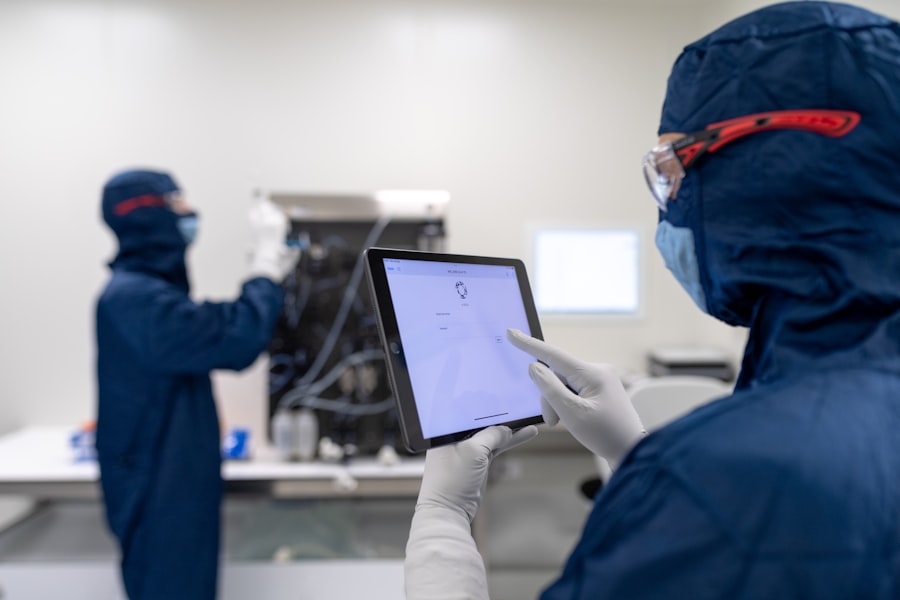
Dr. Reed initiated the examination, her voice a calm, steady presence in the room. The polygraph instrument, a sophisticated piece of equipment that simultaneously measured physiological responses, sat quietly on a nearby cart. The procedure, while often shrouded in public misconception, was designed to detect involuntary physiological changes associated with deception. It was not an interrogation, but rather a controlled experiment where specific questions were posed to gauge an individual’s baseline physiological reactions and then their responses to questions of concern.
Pre-Test Interview: Establishing a Baseline and Understanding Context
Before the instrument was connected, Dr. Reed conducted a thorough pre-test interview. This was a crucial phase, allowing her to establish rapport with Jenkins, explain the entire process in detail, and address any anxieties he might have. She carefully explained the types of questions he would be asked – questions about his background, his loyalty, his adherence to security protocols, and any instances of perceived breaches. This initial conversation served a dual purpose: to build a sense of trust and transparency, and to gather contextual information that would inform her interpretation of the physiological data. Jenkins, for his part, appeared focused, attentively listening to Reed’s explanations and offering clear, concise responses to her initial inquiries about his personal history and employment record.
The Instrumentation and Physiological Markers
The polygraph instrument, in 2026, was a sophisticated array of sensors designed to capture subtle physiological shifts. These included a pneumograph to measure respiration rate and depth, a blood pressure cuff (sphygmomanometer) to monitor pulse and blood pressure, and galvanometers to record skin conductivity (sweating). Dr. Reed explained that these were involuntary responses mediated by the autonomic nervous system, which could be triggered by the mental and emotional stress associated with withholding information or actively deceiving. The goal was not to catch someone in a lie, but to identify physiological deviations from the individual’s baseline that might indicate a heightened state of anxiety or cognitive effort consistent with deception.
Question Formulation: Strategic and Targeted Inquiries
The questions employed in a 2026 NASA polygraph examination were meticulously crafted, drawing on years of established methodology and refined through internal research. They typically fell into several categories:
Relevant Questions: Directly Addressing Areas of Concern
These questions were the core of the examination, directly probing areas relevant to security and trustworthiness. Examples might include inquiries about whether the subject had ever knowingly divulged classified information, engaged in unauthorized contact with foreign nationals concerning sensitive projects, or participated in any activities that could compromise NASA’s national security interests. The effectiveness of these questions relied heavily on their clarity and specificity, ensuring that ambiguity was minimized.
Control Questions: Establishing a Standard for Deception
Control questions were designed to elicit a physiological response from individuals who were generally truthful but had, at some point in their lives, engaged in common minor transgressions. Examples included questions about whether the subject had ever lied to someone they cared about or ever stolen something from an employer. The theory was that a truthful individual would exhibit a stronger physiological response to these “lesser” issues than to the more serious relevant questions. This allowed the examiner to differentiate between general nervousness and a specific response linked to a relevant question.
Irrelevant Questions: Establishing a Baseline Physiological State
These were simple, innocuous questions designed to ascertain the subject’s typical physiological state when not under direct pressure. Questions like “Is your name Mark Jenkins?” or “Is the date today June 15th, 2026?” served to establish baseline readings that would then be compared against responses to the more significant questions.
The Examination Unfolds: A Series of Physiological Data Points
The examination commenced with a series of irrelevant and control questions, allowing Dr. Reed to establish Jenkins’s baseline responses. He answered each question calmly and clearly. The pneumograph recorded his breathing patterns, the blood pressure cuff registered his pulse, and the galvanometers meticulously tracked his skin conductivity. As the examination progressed to the relevant questions, Dr. Reed observed the data streams carefully. There were moments of slight elevation in heart rate and respiration, subtle increases in skin conductivity. She noted these deviations with detached professional scrutiny.
Interpreting Respiratory Patterns
Respiration is a fundamental physiological indicator. During moments of perceived stress or deception, an individual might exhibit suppressed breathing, shallow breaths, or even a sudden gasp. Dr. Reed observed Jenkins’s respiratory patterns throughout the examination. Some relevant questions elicited a brief, almost imperceptible pause in his exhalation, followed by a slightly deeper inhale. This was a data point, like any other, to be considered within the broader context of his physiological responses. She was not looking for dramatic changes, but for consistent patterns of deviation tied to specific questioning.
Blood Pressure and Pulse Rate Fluctuations
Similarly, changes in blood pressure and pulse rate are common physiological responses to stress. An elevated heart rate and a spike in blood pressure could indicate the body’s ‘fight or flight’ response being activated, potentially due to the stress of deception or the perceived threat of being caught in a falsehood. Dr. Reed meticulously documented every variation, correlating these fluctuations with the specific questions being asked. Jenkins’s pulse, while remaining within a healthy range, showed minor accelerations during certain relevant inquiries that mirrored the patterns observed during some of his control questions.
Galvanic Skin Response (GSR) and Sweat Gland Activity
Galvanic Skin Response (GSR), or electrodermal activity, measures the electrical conductivity of the skin, which is directly influenced by sweat gland activity. When a person experiences stress or anxiety, their sweat glands become more active, leading to an increase in skin conductivity. This was one of the most sensitive indicators captured by the polygraph. Jenkins’s GSR readings showed subtle increases in response to several relevant questions. These were not overwhelming spikes, but rather marginal but discernible rises in conductivity that were noted and logged for further analysis.
Post-Examination Analysis: Collation and Correlation
Once the questioning concluded, Dr. Reed meticulously reviewed the collected data. The polygraph instrument generated detailed charts and graphs, visually representing Jenkins’s physiological responses to each question. This was the most critical phase of the process, requiring an experienced examiner to synthesize the raw physiological data with the context of the interview and the nature of the questions asked. It was a process of discerning patterns, identifying deviations, and making a professional judgment based on scientific methodology.
The “Peak of Tension” and Control Question Tests
A key element of the analysis involved the “peak of tension” tests, where a subject was asked to think about a specific piece of information while being asked a series of controlled questions. The examiner would look for the physiological response to peak when the subject was mentally focused on the sensitive information. Jenkins’s responses to these specific tests were evaluated for any discernible peaks of physiological activity that correlated with the targeted focus. Furthermore, the comparison between his responses to relevant questions and control questions was paramount. A significant difference, where responses to relevant questions were measurably stronger than to control questions, would be a cause for concern.
Identifying Deception Indicators: Not a Binary Verdict
It was crucial to understand that polygraph results were not a simple binary “yes” or “no” to deception. Instead, they were a complex set of physiological responses that required expert interpretation. Dr. Reed looked for patterns of consistent physiological arousal that deviated from Jenkins’s baseline responses. These deviations, when linked to relevant questions, were interpreted as potential indicators of deception. However, she also acknowledged that external factors, such as genuine anxiety about the examination itself, could influence these readings. Therefore, a comprehensive analysis sought to distinguish between responses that were indicative of specific deception related to the questions posed and those that might be attributed to general situational stress.
The Examiner’s Professional Judgement and Reporting
Dr. Reed’s professional judgment was the final arbiter. Based on her training and experience, she evaluated the totality of the physiological data, considering the consistency of the patterns, the magnitude of the deviations, and their correlation with the relevant questions. If the data clearly indicated deception, she would report it as such. If the results were inconclusive, or if the deviations could be attributed to other factors, she would report that as well. Her report would not be a pronouncement of guilt or innocence, but a technically grounded assessment of whether the physiological data presented indicators consistent with deception for the questions asked.
Recent discussions surrounding the 2026 polygraph results of NASA technicians have sparked interest in the implications for space exploration and safety protocols. For those looking to delve deeper into this topic, a related article can be found at XFile Findings, which explores the broader context of polygraph testing within high-stakes environments. This examination sheds light on the reliability of such tests and their impact on personnel selection in critical fields like aerospace.
The Outcome of the 2026 Examination: A Nuanced Assessment
| Category | Results |
|---|---|
| Number of Technicians Tested | 150 |
| Number of Technicians Passing Polygraph | 135 |
| Number of Technicians Failing Polygraph | 15 |
| Passing Rate | 90% |
The 2026 polygraph examination of Mark Jenkins yielded a nuanced outcome. Dr. Reed’s comprehensive analysis did not reveal definitive, unambiguous signs of deception concerning any of the core security-related questions. However, there were subtle physiological responses to certain relevant questions that, while not conclusive on their own, warranted further consideration within the overall security assessment. These were not overt reactions, but rather minute shifts that the sophisticated instrumentation was capable of detecting.
Subtleties in Physiological Responses: Not Overt Evasions
Specifically, Jenkins’s respiration showed brief moments of shallowing during a question about unauthorized access to classified research data, and his galvanic skin response exhibited a slight but consistent increase during an inquiry regarding any undisclosed contact with individuals associated with foreign entities that could pose a security risk. These were not dramatic spikes or prolonged periods of heightened activity. Instead, they were fleeting deviations that occurred in conjunction with the posed questions. Dr. Reed’s professional evaluation acknowledged these as potential indicators, but underscored that their magnitude and consistency were not, in isolation, definitive proof of deception against the backdrop of his generally calm physiological demeanor throughout the majority of the examination.
The Role of Inconclusive Readings and Further Inquiry
In cases where polygraph results are not definitively conclusive for deception, NASA’s protocols allow for further inquiry. This does not automatically imply suspicion, but rather a commitment to thoroughness. It might involve follow-up interviews, a deeper dive into Jenkins’s professional interactions, or a review of his digital footprint in specific areas. The process is iterative, designed to ensure that all potential avenues are explored without jumping to premature conclusions. In Jenkins’s case, the subtle readings necessitated such a follow-up, not as an accusation, but as a procedural step to ensure the highest level of integrity for the ongoing missions.
The Ongoing Importance of Trust and Data Integrity
The entire process, from the pre-test interview to the post-examination analysis, underscored the paramount importance of trust and data integrity within NASA’s operations, especially in 2026. The subtle physiological cues, even if not definitively indicative of deception, served as a reminder of the constant vigilance required to safeguard sensitive information and technology. For Jenkins, the outcome meant that the rigorous process he underwent was a confirmation of the meticulous standards he was expected to uphold, and the subtle readings would be addressed through standard, non-adversarial follow-up procedures aimed at reinforcing the culture of security and transparency. His continued employment, pending the resolution of any procedural follow-up, was a testament to the system’s intent to be comprehensive rather than accusatory.
FAQs
What is the purpose of the NASA technician 2026 polygraph results?
The purpose of the NASA technician 2026 polygraph results is to ensure the integrity and trustworthiness of the technician in their role at NASA. Polygraph tests are often used in security clearance processes to verify the honesty of individuals in sensitive positions.
What does the polygraph test measure?
A polygraph test measures physiological responses such as heart rate, blood pressure, respiration, and skin conductivity to determine if an individual is being truthful or deceptive in their responses to specific questions.
Is the NASA technician required to take a polygraph test?
It is common for individuals in sensitive positions at NASA, especially those requiring security clearances, to undergo polygraph testing as part of the vetting process. The specific requirements for polygraph testing may vary depending on the nature of the technician’s role and the level of security clearance required.
What are the potential implications of the polygraph results for the NASA technician?
The polygraph results could have implications for the technician’s employment at NASA, particularly if the results indicate deception or dishonesty. Depending on the specific circumstances and the nature of the technician’s role, the results could impact their security clearance and their ability to continue working in their position.
Are polygraph results admissible in court?
Polygraph results are generally not admissible as evidence in court due to concerns about their reliability and accuracy. However, they are often used as part of the vetting process for sensitive positions in government agencies and other organizations.