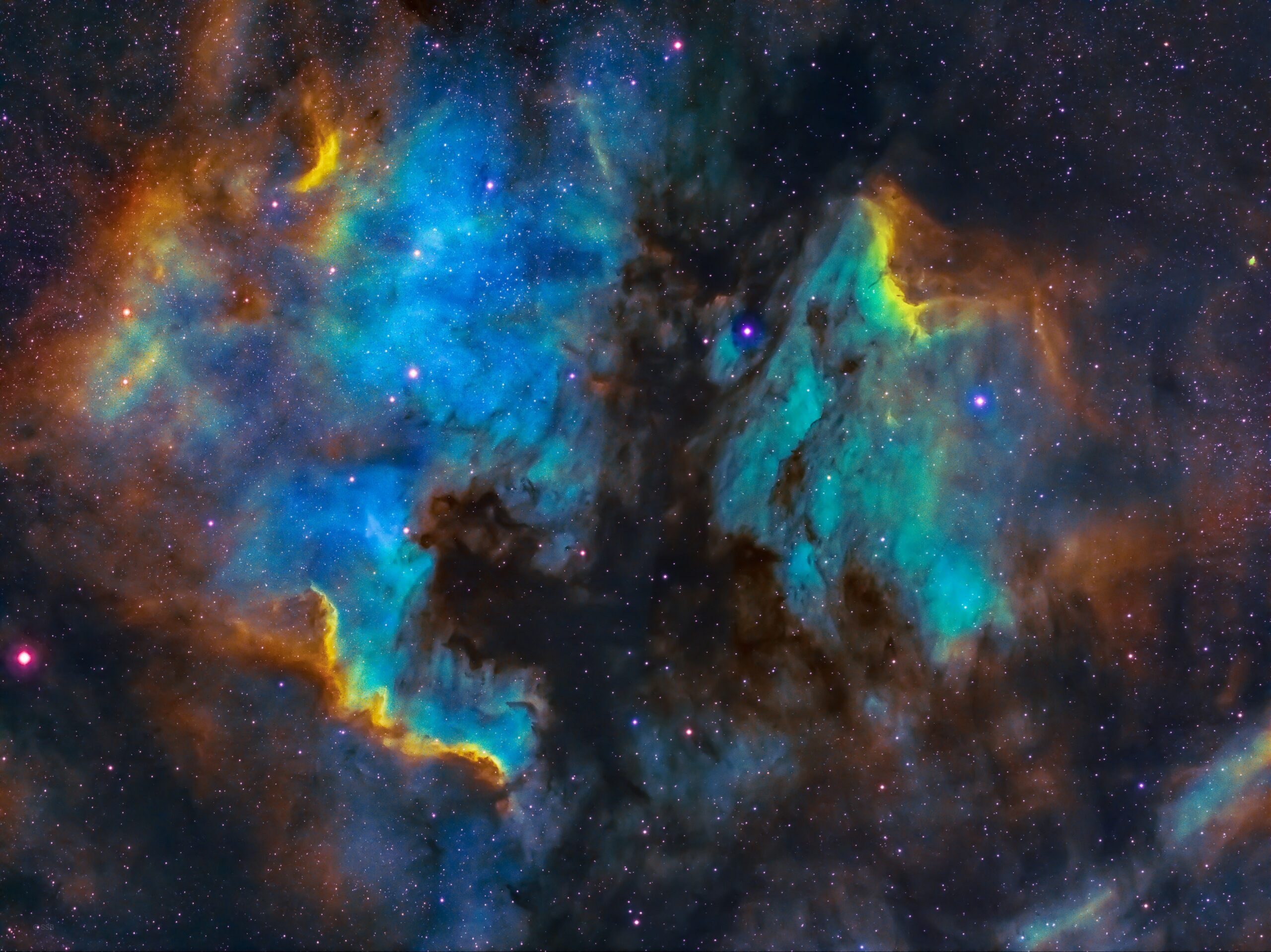
The cosmos, a canvas of unfathomable scale and profound beauty, has long been a wellspring of wonder and inquiry for humanity. While our scientific understanding of the universe has advanced at an astonishing pace, there remain phenomena that stubbornly resist explanation, leaving astronomers and physicists alike in a state of captivated bewilderment. These unexplained astronomical phenomena are not merely gaps in our knowledge; they are invitations to explore the very edges of our comprehension, pushing the boundaries of what we thought possible and fueling the relentless pursuit of cosmic truths. From the ethereal dance of distant lights to the silent titans that shape galaxies, the universe is rife with mysteries that beckon us to look up and ponder.
Perhaps the most pervasive and profound enigmas in modern astrophysics revolve around the invisible components that dominate the universe: dark matter and dark energy. These cosmic entities, so named because they do not interact with light and are therefore undetectable by conventional means, constitute approximately 95% of the universe’s total mass-energy content. Their existence is inferred solely through their gravitational effects on visible matter, a testament to the limitations of our current observational tools and theoretical frameworks.
The Gravitational Ghost: Dark Matter’s Influence
The hypothesis of dark matter emerged from discrepancies observed in the rotation of galaxies. Astronomers discovered that stars in the outer regions of spiral galaxies were orbiting far faster than predicted by the visible matter alone. According to Newtonian physics, these stars should have been flung out into intergalactic space. The only plausible explanation was the presence of an additional, unseen mass providing the necessary gravitational glue to hold galaxies together. This invisible mass became known as dark matter.
Evidence Beyond Galactic Rotation
The evidence for dark matter extends far beyond galactic rotation curves. Observations of galaxy clusters, for instance, reveal that the individual galaxies within them are moving at speeds that would cause the cluster to disperse if only the visible matter were accounted for. The gravitational lensing effect, where the gravity of massive objects bends the path of light from more distant objects, also provides compelling evidence. The degree of lensing observed around galaxy clusters is significantly greater than what can be attributed to their visible mass, pointing to a substantial dark matter component.
The Bullet Cluster: A Cosmic Collision of Evidence
One of the most striking pieces of evidence for dark matter comes from the Bullet Cluster, a system formed by the collision of two galaxy clusters. Observations of this event showed that the hot gas (Compton-) within the clusters, which constitutes the majority of their visible mass, had slowed down and been compressed during the collision. However, gravitational lensing maps revealed that the bulk of the mass, which is attributed to dark matter, had passed through the collision virtually unimpeded, interacting only gravitationally. This spatial separation of the visible baryonic matter from the inferred dark matter provided a powerful, direct visual confirmation of dark matter’s existence and its non-interactive nature with baryonic matter, save for gravity.
The Search for Dark Matter Candidates
Despite the overwhelming indirect evidence, the nature of dark matter remains a profound mystery. Numerous theoretical candidates have been proposed, each with its own set of challenges.
Weakly Interacting Massive Particles (WIMPs)
One of the leading candidates for dark matter is the Weakly Interacting Massive Particle (WIMP). These hypothetical particles, predicted by some extensions of the Standard Model of particle physics, would interact very weakly with ordinary matter, making them incredibly difficult to detect. Experiments deep underground, shielded from cosmic rays, are actively searching for these elusive particles by looking for the faint recoil of atomic nuclei as a WIMP passes through. However, despite decades of searching, no definitive detection has been made.
Axions: Tiny and Elusive
Another promising candidate is the axion, a hypothetical subatomic particle proposed to solve a problem in quantum chromodynamics. Axions are predicted to be very light and interact very weakly, making them exceptionally challenging to find. Experiments are employing sophisticated techniques, often involving strong magnetic fields, to try and convert axions into observable photons.
Sterile Neutrinos: A Fourth Flavor?
The possibility of sterile neutrinos, a hypothetical fourth type of neutrino that does not participate in the weak interaction, is also being explored. Unlike their known counterparts, sterile neutrinos would interact only through gravity, making them ideal dark matter candidates.
The Cosmological Constant Problem
While dark matter explains the missing mass within galaxies and clusters, dark energy is responsible for the accelerated expansion of the universe. This discovery, made independently by two teams of astronomers in the late 1990s, was a paradigm shift in cosmology. The observations of distant supernovae revealed that the universe’s expansion is not slowing down due to gravity, as expected, but is instead speeding up.
The Cosmic Accelerator: Dark Energy’s Repulsive Force
Dark energy is thought to be a form of energy inherent to the vacuum of space itself, exerting a negative pressure that drives the accelerated expansion. While its existence is strongly supported by observational data, its fundamental nature remains one of the greatest puzzles in physics.
The Cosmological Constant: Einstein’s Ghostly Relic
The simplest explanation for dark energy is Einstein’s cosmological constant (Lambda, $Lambda$), a term he initially introduced into his equations of general relativity to allow for a static universe, a concept later abandoned when the universe’s expansion was discovered. If dark energy is indeed the cosmological constant, then it represents a constant energy density of the vacuum. However, theoretical calculations of this vacuum energy based on quantum mechanics yield a value that is staggeringly larger than what is observed, by a factor of $10^{120}$. This immense discrepancy, known as the cosmological constant problem, is one of the most significant unresolved issues in theoretical physics.
Quintessence: A Dynamic Field?
Alternative theories propose that dark energy is not a constant but a dynamic field, often referred to as “quintessence.” This field would evolve over time and space, leading to variations in the expansion rate. While such models can offer more flexibility in explaining observational data, they introduce new parameters and complexities without providing a fundamental explanation for the origin of this energy.
The Confrontation Between Theory and Observation
The ongoing quest to understand dark matter and dark energy is a prime example of the tension between theoretical predictions and observational evidence. Current cosmological models, such as the Lambda-CDM model (Lambda-Cold Dark Matter), which incorporates both a cosmological constant and cold dark matter, are remarkably successful in describing a wide range of cosmological observations. However, the fundamental nature of these dominant components remains elusive, awaiting a breakthrough in our understanding of fundamental physics.
Unexplained astronomical phenomena continue to captivate scientists and enthusiasts alike, as they challenge our understanding of the universe. One intriguing article that delves into some of these mysteries is available at XFile Findings, where researchers explore various anomalies, from unusual cosmic signals to enigmatic celestial objects. This resource provides insights into ongoing investigations and theories that seek to unravel the secrets of the cosmos, making it a must-read for anyone fascinated by the unknown.
Whispers from the Dawn of Time: The Cosmic Microwave Background Anomalies
The Cosmic Microwave Background (CMB) radiation is a faint afterglow of the Big Bang, a snapshot of the universe when it was only about 380,000 years old. This nearly uniform bath of microwave radiation permeates all of space and carries invaluable information about the early universe. While the CMB is remarkably consistent with the standard cosmological model, certain subtle anomalies have been observed that challenge our current understanding.
The Cold Spot: A Mysterious Void
One of the most talked-about anomalies in the CMB is the “Cold Spot.” This region of the sky exhibits a significantly lower temperature than its surroundings, forming a large, cold patch in the otherwise remarkably uniform CMB. Explanations for the Cold Spot range from statistical fluctuations to more exotic theories.
Statistical Fluctuation or a Cosmic Structure?
The standard inflationary model of cosmology, which describes the rapid expansion of the universe shortly after the Big Bang, predicts that the CMB should be remarkably uniform, with small temperature fluctuations due to quantum effects. While the Cold Spot could, in principle, be a rare statistical fluctuation, its size and significant temperature deviation have led some cosmologists to explore alternative explanations.
The Supervoid Hypothesis
One prominent hypothesis suggests that the Cold Spot might be the result of an exceptionally large and empty region of space, a “supervoid,” located between us and the surface of last scattering (where the CMB originated). If such a void existed, the light from the CMB passing through it would lose energy due to the gravitational pull of surrounding matter, leading to a colder observed temperature. However, subsequent surveys of the intervening space have not conclusively identified a void of sufficient size and emptiness to fully account for the observed coldness.
Exotic Explanations: Beyond Standard Cosmology?
More speculative explanations for the Cold Spot involve physics beyond the standard cosmological model. Some theories propose that it might be a signature of collisions with other universes (multiverses) or evidence of topological defects in the fabric of spacetime left over from phase transitions in the early universe. These ideas, while fascinating, are currently difficult to test and remain at the forefront of theoretical speculation.
The Quadrupole and Octupole Alignment: Unexpected Symmetries
Another set of CMB anomalies involves the alignment of certain large-scale patterns in the temperature distribution. The CMB fluctuations can be decomposed into spherical harmonics, with the quadrupole (l=2) and octupole (l=3) representing the largest-scale variations. The surprising finding is that the planes of these quadrupole and octupole patterns appear to be remarkably aligned with each other, and also with the plane of our solar system and the ecliptic.
The “Axis of Evil”: A Challenging Coincidence?
This unexpected alignment has been dubbed the “Axis of Evil” by some scientists, as it suggests a degree of order that is statistically highly improbable within the framework of the standard inflationary model. According to standard inflation, the initial fluctuations in the early universe should be random and isotropic, meaning they should have no preferred direction. The observed alignment challenges this fundamental assumption and has led to a search for alternative explanations or modifications to the inflationary paradigm.
Possible Explanations and Ongoing Debates
Possible explanations for this alignment include the possibility that the universe is not as isotropic as we assume on the largest scales, or that there are unknown physical processes in the very early universe that imposed this symmetry. It is also possible that the alignment is a rare statistical coincidence, but the significance of the observation continues to fuel debate and research. The precise measurement and analysis of the CMB are crucial for probing these early universe mysteries, and future missions aim to improve the resolution and sensitivity of CMB observations, potentially shedding more light on these perplexing anomalies.
enigmatic Galaxies and Cosmic Structures: The Unfolding Tapestry of the Universe

The universe is not just filled with individual stars and planets; it is a vast, interconnected tapestry of galaxies, clusters, and superclusters. The study of these large-scale structures, and the peculiar behaviors of some individual galaxies, continues to unveil cosmic puzzles.
The Fast Radio Bursts: Brief, Brilliant Beacons
Fast Radio Bursts (FRBs) are intense, millisecond-duration bursts of radio waves originating from extragalactic sources. Discovered serendipitously in 2007, these enigmatic signals have captivated astronomers due to their transient nature and immense power. The brevity and strength of FRBs make it challenging to pinpoint their exact origins and the mechanisms that produce them.
The Repetitive and Non-Repetitive Divide
A significant development in the study of FRBs has been the discovery that some FRBs repeat, while others appear to be one-off events. This distinction has led to the hypothesis that there might be different types of FRBs, originating from distinct astrophysical phenomena.
Repeating FRBs: Clues from Pulsars and Magnetars
Repeating FRBs are often associated with more localized sources, and some of these have been linked to extragalactic magnetars – highly magnetized neutron stars. The intense magnetic fields of magnetars are thought to be capable of generating powerful radio emissions. However, the precise mechanism by which these outbursts are triggered and sustained remains an active area of research.
Non-Repeating FRBs: A Wider Array of Possibilities
Non-repeating FRBs, on the other hand, are more challenging to localize, and their origins remain highly speculative. While some theories still point to extreme magnetar events, others consider more cataclysmic phenomena such as the merger of neutron stars or black holes, or even the hypothetical technological signatures of advanced extraterrestrial civilizations. The latter, while highly improbable, cannot be entirely ruled out given our limited understanding of the universe.
The Dispersion Measure Puzzle
Another key characteristic of FRBs is their dispersion measure (DM), which indicates how much the radio waves have been scattered by intervening plasma. The observed DM values for many FRBs are exceptionally high, suggesting that they originate from very distant galaxies. However, some FRBs exhibit DM values that are anomalously low, suggesting they may originate from closer, or even Milky Way-based, sources, a phenomenon that further complicates their interpretation.
The Fermi Bubbles: Galactic Aromas of the Past
The Fermi Bubbles are two giant lobes of gamma-ray emission extending above and below the center of our own Milky Way galaxy. Discovered by the Fermi Gamma-ray Space Telescope, these gargantuan structures are thought to be relics of powerful outbursts from the supermassive black hole at the galactic center billions of years ago.
Outflows from the Galactic Center: A Violent Past?
The current leading theory suggests that the Fermi Bubbles were inflated by energetic outflows from the supermassive black hole, Sagittarius A*, during a period of intense activity in its past. These outflows would have expelled vast amounts of gas and particles, creating the observed gamma-ray emission. However, the exact mechanism and the duration of this past activity are still subjects of debate.
The Nature of the Emitted Particles
The exact composition and origin of the particles generating the gamma-ray emission within the bubbles are also not fully understood. While they are believed to be energetic electrons interacting with magnetic fields, the precise energy range and the source of these electrons are still being investigated. The study of the Fermi Bubbles offers a unique window into the violent history of our galactic core.
Dwarf Galaxies: The Unseen Majority’s Secrets
Dwarf galaxies, characterized by their relatively small size and low luminosity, are the most numerous type of galaxy in the universe. However, their faintness and diffuse nature make them incredibly difficult to detect and study. Despite their small numbers, dwarf galaxies play a crucial role in our understanding of galaxy formation and evolution.
The Missing Satellites Problem
One of the long-standing puzzles in galaxy formation is the “missing satellites problem.” Cosmological simulations predict that massive dark matter halos should be surrounded by a much larger number of smaller dark matter halos that would host dwarf galaxies. However, observations consistently reveal far fewer dwarf satellite galaxies around larger galaxies like our own Milky Way than predicted by these simulations.
Potential Solutions and Ongoing Searches
Various solutions have been proposed, including the possibility that many of these predicted dwarf galaxies are simply too faint to be detected, or that processes in the early universe have prevented star formation in some of these smaller halos. Ongoing efforts to map the Milky Way’s satellite population with increasing sensitivity aim to resolve this discrepancy and refine our models of structure formation.
Gravitational Anomalies in Galaxy Clusters: More Than Just Dark Matter?
While dark matter is the primary explanation for the gravitational anomalies observed in galaxy clusters, some researchers are exploring whether there might be additional, less understood gravitational effects at play. The precise dynamics and mass distributions within these massive structures are complex.
The Core-Cusp Problem
Specifically, observations of the dark matter density profiles in the cores of some dwarf galaxies and low-mass galaxy clusters have revealed a discrepancy between simulations and observations. Simulations often predict a dense “cusp” of dark matter at the center, while observations suggest a flatter “core.” While this may be partially explained by baryonic feedback processes, some scientists ponder whether there could be subtle modifications to our understanding of gravity itself on galactic scales.
The Boundaries of Perception: Mysteries of Relativity and Quantum Mechanics

The universe presents phenomena that challenge our most fundamental theories of physics, the pillars of general relativity and quantum mechanics. These theories, remarkably successful in their respective domains, sometimes yield seemingly contradictory predictions when applied to extreme cosmic environments or when physicists attempt to unify them.
The Event Horizon: A Point of No Return, But What Lies Beyond?
Black holes, regions of spacetime where gravity is so strong that nothing, not even light, can escape, represent some of the most extreme environments in the universe. The boundary of a black hole is known as the event horizon, a point of no return. However, the true nature of what happens within and beyond this horizon remains a profound enigma.
The Information Paradox: A Quantum Conundrum
The event horizon poses a significant challenge to quantum mechanics through the black hole information paradox. According to quantum mechanics, information about the quantum state of a system cannot be truly destroyed. However, when matter falls into a black hole, its quantum information seems to disappear beyond the event horizon, and Hawking radiation, a theoretical form of radiation emitted by black holes, appears to be thermal and therefore devoid of specific information. This leads to a fundamental conflict between general relativity and quantum mechanics, suggesting a need for a more comprehensive theory of quantum gravity.
Singularities and the Limits of General Relativity
At the heart of a black hole lies a singularity, a point of infinite density and curvature according to classical general relativity. At this point, our current laws of physics break down, rendering them inadequate to describe the conditions. This breakdown highlights the limitations of general relativity at these extreme scales and underscores the urgent need for a theory of quantum gravity to provide a complete picture.
Quantum Entanglement on Cosmic Scales: A Spooky Connection Across Galaxies?
Quantum entanglement, a phenomenon where two or more particles become linked in such a way that they share the same fate, regardless of the distance separating them, has been famously described as “spooky action at a distance” by Albert Einstein. While entanglement is well-established in laboratory settings, the possibility of its occurrence on cosmic scales, connecting distant astronomical objects, remains a fascinating but largely unexplored area.
The Challenge of Observation
Observing and proving cosmic-scale entanglement is an immense experimental challenge due to the vast distances involved and the interaction of quantum states with intervening matter and radiation. However, some theoretical proposals explore how entanglement might manifest in cosmic phenomena, potentially influencing the properties of celestial objects or the propagation of light.
Implications for Cosmology and Fundamental Physics
If cosmic entanglement were to be definitively observed, it could have profound implications for our understanding of the universe’s fundamental structure, the nature of causality, and possibly even provide clues towards a unified theory of physics. It could offer new ways to probe the early universe or the properties of exotic astronomical objects.
In the realm of unexplained astronomy phenomena, researchers continue to uncover intriguing mysteries that challenge our understanding of the universe. One such phenomenon is the enigmatic fast radio bursts, which emit powerful bursts of energy from distant galaxies. These events have sparked numerous theories, yet their origins remain elusive. For those interested in delving deeper into the mysteries of the cosmos, a fascinating article can be found at XFile Findings, where various unexplained astronomical occurrences are explored in detail.
The Boundaries of Our Understanding: The Search for Extraterrestrial Intelligence and the Meaning of Life
| Phenomena | Description | Location |
|---|---|---|
| Fast Radio Bursts (FRBs) | High-energy astrophysical phenomenon of unknown origin | Various locations in the universe |
| Dark Matter | Non-luminous material that is thought to make up about 27% of the universe’s mass-energy density | Throughout the universe |
| Fast Radio Transients (FRATs) | Transient radio signals with unknown origin and nature | Observed in various locations in the universe |
| Ultra-High-Energy Cosmic Rays | Extremely energetic particles of unknown origin | Arriving from various directions in the universe |
Beyond the purely physical phenomena of the cosmos, humanity has long pondered its place within this vast expanse and the possibility of life beyond Earth. These are not just scientific inquiries but also deeply philosophical questions that push the boundaries of our perception and aspirations.
The Fermi Paradox: Where Is Everybody?
The Fermi Paradox, named after physicist Enrico Fermi, highlights the apparent contradiction between the high probability estimates for the existence of extraterrestrial civilizations and the lack of any conclusive evidence for their existence. Given the vastness of the universe, the sheer number of stars and planets, and the billions of years of cosmic history, it seems statistically probable that life, and even intelligent life, should have arisen elsewhere. Yet, we have yet to receive any definitive signals or evidence of such civilizations.
Potential Resolutions to the Paradox
Numerous resolutions have been proposed for the Fermi Paradox, each offering a different perspective on why we might not have encountered extraterrestrial intelligence.
The Great Filter: A Universal Barrier
One prominent hypothesis is “the Great Filter.” This theory suggests that there are significant evolutionary or technological hurdles that life must overcome to reach a stage of interstellar expansion. This filter could lie in our past (e.g., the origin of life itself being extremely rare), or it could lie in our future (e.g., the development of advanced technology inevitably leading to self-destruction).
The Zoo Hypothesis: Isolated Observers
Another intriguing idea is the “Zoo Hypothesis,” which posits that advanced extraterrestrial civilizations are aware of us but have chosen to observe us from a distance without interfering, much like humans observe animals in a zoo. This could be for ethical reasons, to allow for natural development, or for other unknown motivations.
Uniqueness of Earth and Humanity
A more sobering possibility is that humanity and Earth are, in fact, unique, or at least exceptionally rare, in the universe. This could be due to a confluence of highly improbable factors that led to the development of complex life and intelligence on our planet.
The Search Continues: SETI and Beyond
The Search for Extraterrestrial Intelligence (SETI) is a scientific endeavor dedicated to detecting evidence of extraterrestrial civilizations. While primarily focused on listening for radio signals, the scope of the search is expanding to include optical signals and potentially other forms of communication.
The Drake Equation: A Probabilistic Framework
The Drake Equation, proposed by astronomer Frank Drake, provides a probabilistic framework for estimating the number of active, communicative extraterrestrial civilizations in our galaxy. While the equation contains several variables that are highly uncertain, it serves as a valuable tool for organizing our thoughts about the factors involved in the emergence of intelligent life and the likelihood of contact.
Future Prospects and the Deepening Mystery
Despite the lack of definitive extraterrestrial signals, the search for life beyond Earth continues with renewed vigor, fueled by discoveries of exoplanets in habitable zones and advancements in our understanding of astrobiology. The ongoing quest to answer the question “Are we alone?” is one of the most profound and enduring mysteries of the universe, intertwining scientific exploration with our deepest existential questions. Each unexplained phenomenon, from the subtle whispers of the CMB to the deafening silence of the cosmos, serves as a reminder of how much more there is to discover and how vast and wondrous the universe truly is.

They Reopened the Wow! Signal After 48 Years—Here’s What Changed
FAQs
What are unexplained astronomy phenomena?
Unexplained astronomy phenomena are celestial events or observations that cannot be fully explained by current scientific understanding and knowledge. These phenomena often challenge existing theories and require further investigation and research.
What are some examples of unexplained astronomy phenomena?
Examples of unexplained astronomy phenomena include fast radio bursts (FRBs), the unidentified flying objects (UFOs) observed in space, the mysterious dimming of Tabby’s Star, and the existence of dark matter and dark energy, which make up a significant portion of the universe but are not directly observable.
How do scientists approach unexplained astronomy phenomena?
Scientists approach unexplained astronomy phenomena by conducting rigorous observations, experiments, and theoretical modeling to understand and potentially explain these phenomena. They also collaborate with experts in various fields and use advanced technologies and instruments to gather data and analyze the phenomena.
Why is it important to study unexplained astronomy phenomena?
Studying unexplained astronomy phenomena is important because it can lead to breakthroughs in scientific understanding, expand our knowledge of the universe, and potentially uncover new physical laws and principles. Additionally, it can inspire new technologies and innovations that benefit society.
What are the potential implications of solving unexplained astronomy phenomena?
Solving unexplained astronomy phenomena could lead to advancements in astrophysics, cosmology, and space exploration. It could also have broader implications for technology, energy, and our understanding of the fundamental nature of the universe.