The silent whispers of the cosmos, carried on the ethereal waves of radio frequencies, are captured by an often-overlooked yet crucial component of radio telescopes: the feed horn. These seemingly simple metallic structures, perched at the focal point of vast parabolic dishes, act as the universe’s ears, meticulously gathering the faintest signals from distant galaxies, pulsars, and even the echoes of the Big Bang. Understanding the intricate design and function of a radio telescope feed horn is akin to unlocking a fundamental mystery in our quest to comprehend the universe. It is a journey that delves into the physics of electromagnetic waves, precision engineering, and the relentless pursuit of scientific discovery.
The feed horn, at its most basic, is a transducer. It converts the electromagnetic energy collected by the telescope’s primary reflector into an electrical signal that can be processed and analyzed by sophisticated instruments. Without it, the enormous collecting area of the dish would be rendered useless, a silent sentinel awaiting a voice it cannot hear.
Harvesting the Invisible: How Reflectors Direct Signals
Radio telescopes, regardless of their specific design, rely on large, precisely shaped parabolic reflectors. These dishes act like giant mirrors, but instead of reflecting visible light, they concentrate radio waves. The parabolic shape possesses a unique geometric property: all incoming parallel rays (in this case, radio waves) are reflected to a single point, known as the focal point. This is where the feed horn resides, ready to intercept this converging stream of cosmic information. The sheer size of these dishes is a testament to the weakness of the signals they aim to detect; a larger surface area collects more photons, increasing the signal-to-noise ratio and allowing for the detection of fainter sources.
The Focal Point: A Precise Intersection of Signals
The accuracy with which the feed horn is positioned at the focal point is paramount. A slight misalignment can lead to significant loss of signal strength and distortion of the data. This precision is maintained through robust mechanical systems and, in some cases, active tracking mechanisms that compensate for Earth’s rotation and atmospheric disturbances. The focal point is not merely a geometric location; it is the culmination of the reflector’s entire capturing capability, a bustling hub of cosmic chatter where the faintest voices are amplified.
Transducing Waves to Electricity: The Core Function
Once the radio waves are concentrated at the focal point, they enter the feed horn. The horn’s interior geometry is specifically designed to efficiently couple these incoming electromagnetic waves into a transmission line. This transmission line then carries the electrical signal to low-noise amplifiers and other electronic components that will process, digitize, and record the data. This conversion from electromagnetic energy to electrical signal is the feed horn’s primary and most critical function. It is the bridge between the vastness of space and the tangible realm of scientific measurement.
For those interested in the intricacies of radio telescope technology, a related article that delves deeper into the functionality and design of feed horns can be found at XFile Findings. This resource provides valuable insights into how feed horns play a crucial role in capturing radio waves and directing them to the receiver, enhancing our understanding of astronomical phenomena.
Anatomy of an Antenna: The Geometry of the Feed Horn
The seemingly simple shape of a feed horn belies a complex interplay of geometry and electromagnetic principles. Its design is not arbitrary but meticulously crafted to maximize signal capture and minimize unwanted interference.
The Expanding Aperture: Guiding the Waves Inward
Feed horns typically begin with a narrow opening, the throat, which connects to the transmission line. As the waves travel through the horn, the internal cross-section gradually increases, forming an expanding waveguide. This expansion serves to smoothly transition the electromagnetic waves from the waveguide mode to free space, allowing them to efficiently radiate or, in the case of a receiving horn, be efficiently captured. The shape of this expansion is crucial. Common profiles include conical, pyramidal, and sectoral horns, each possessing distinct radiation or sensing characteristics.
The Impedance Match: Ensuring Seamless Energy Transfer
A fundamental concept in electrical engineering is impedance matching. For optimal energy transfer between two systems (in this case, the free space electromagnetic wave and the transmission line), their impedances must be as close as possible. The geometry of the feed horn plays a vital role in achieving this impedance match. The gradual flare of the horn helps to equalize the impedance of the electromagnetic field in free space with that of the waveguide, minimizing reflections and maximizing the amount of signal that enters the transmission line.
The Radiation Pattern: Defining the Telescope’s “View”
The feed horn’s shape also dictates its radiation pattern, which describes how sensitive it is to signals arriving from different directions. For telescope applications, a beamwidth is desired that is narrow enough to pinpoint a specific source but wide enough to encompass the entire collecting area of the reflector. The design of the horn dictates this beamwidth and also controls side lobes, which are regions of sensitivity in directions away from the main beam. Minimizing unwanted side lobes is crucial for preventing interference from other radio sources.
Types of Feed Horns: Tailoring to Cosmic Frequencies and Signals

The universe broadcasts its messages across a vast spectrum of radio frequencies, from the low-frequency hum of distant galaxies to the high-frequency jitters of cosmic microwave background radiation. Different scientific objectives and frequency ranges necessitate different feed horn designs.
Dual-Polarization Feed Horns: Capturing Every Nuance
Radio waves, like light waves, can oscillate in different directions, a property known as polarization. Many astronomical sources emit polarized radiation, and studying this polarization can reveal crucial information about magnetic fields, particle acceleration, and the physical conditions of the source. Dual-polarization feed horns are designed to simultaneously capture signals with two orthogonal polarizations (e.g., horizontal and vertical, or left and right circular). This is achieved by strategically placing probes or slots within the waveguide structure.
Multi-Octave Feed Horns: Exploring a Wide Frequency Range
Some scientific investigations require observations across a broad range of radio frequencies. For instance, studying the evolution of galaxies or the properties of the interstellar medium may involve looking at signals from hundreds of megahertz to tens of gigahertz. Multi-octave feed horns are engineered to maintain good performance over a wide frequency band, often employing a combination of waveguide structures and dielectric lenses. Their design is a testament to the challenge of achieving consistent performance across the electromagnetic spectrum.
Corrugated Feed Horns: The Pinnacle of Performance
For the most demanding applications, where minimizing side lobes and achieving a symmetrical beam pattern are critical, corrugated feed horns are the preferred choice. These horns feature fine corrugations around the inner surface of the flare. These corrugations act as reactive surfaces, effectively reducing unwanted radiation and improving the impedance match over a broader bandwidth compared to smooth-walled horns. Their intricate manufacturing process reflects their superior performance characteristics.
Challenges and Innovations: Pushing the Boundaries of Sensitivity
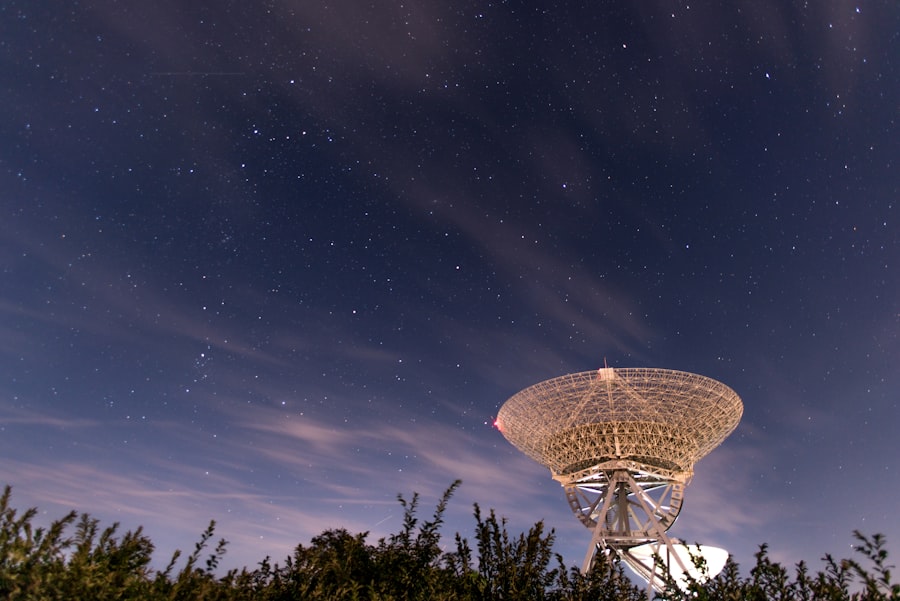
The quest to detect ever fainter cosmic signals is a constant driver of innovation in feed horn technology. Scientists and engineers continually strive to overcome limitations and improve the sensitivity and fidelity of these crucial instruments.
Cryogenic Cooling: Chasing Away Thermal Noise
One of the fundamental limitations in radio astronomy is thermal noise, generated by the heat within the feed horn and subsequent electronics. To combat this, many sensitive radio telescope feed horns are operated at cryogenic temperatures, often near absolute zero. This is achieved through sophisticated cooling systems involving liquid helium or closed-cycle refrigerators. By drastically reducing thermal noise, these cooled feed horns can detect signals that would otherwise be completely masked.
Low-Noise Amplifiers: Boosting the Faintest Whispers
Even with a perfectly designed feed horn, the electrical signal produced is incredibly weak. Therefore, the signal must be amplified before it can be processed. The first stage of amplification, immediately following the feed horn, is critical. Low-noise amplifiers (LNAs) are designed to introduce the least possible amount of additional noise into the signal. Advances in semiconductor technology, such as High Electron Mobility Transistors (HEMTs), have led to LNAs with remarkably low noise figures, further enhancing the sensitivity of radio telescopes.
Advanced Materials and Manufacturing: Precision at Every Level
The materials used in feed horn construction are as important as their design. Materials like specific alloys of copper, aluminum, or even specialized non-metallic composites are chosen for their electromagnetic properties, thermal stability, and machinability. The manufacturing process itself demands extreme precision, often involving numerically controlled machining to achieve the exact tolerances required for optimal performance. In some cases, additive manufacturing techniques are being explored to create complex internal structures.
Radio telescope feed horns play a crucial role in capturing and directing incoming radio waves to the receiver, enhancing the overall sensitivity and performance of the telescope. For a deeper understanding of the intricate designs and functions of these components, you can explore a related article that delves into the various types of feed horns and their applications in radio astronomy. This insightful piece can be found at this link, where you will discover more about how these essential elements contribute to the advancement of astronomical research.
The Future of Feed Horns: Towards Even Deeper Cosmic Exploration
| Feed Horn Type | Advantages | Disadvantages |
|---|---|---|
| Prime Focus | High efficiency, good for wide bandwidth | Large size, susceptibility to blockage |
| Offset | Reduced blockage, good for high-frequency observations | Complex design, lower efficiency |
| Cassegrain | Compact design, good for high-frequency observations | Complex optics, reduced efficiency |
The evolution of radio telescope feed horns is intrinsically linked to the advancement of astronomical research. As new scientific questions emerge and technological capabilities expand, so too will the designs and functionalities of these vital cosmic gateways.
Wideband and Ultra-Wideband Receivers: A Broader Cosmic Palette
The drive towards observing a wider range of frequencies continues. Future feed horns will likely be designed for even broader bandwidths, potentially enabling simultaneous observations across multiple octaves or even decades of the radio spectrum. This will allow astronomers to investigate phenomena that span vast frequency ranges and gain a more holistic understanding of cosmic evolution.
Integrated Receiver Systems: Miniaturization and Efficiency
There is a growing trend towards integrating more of the signal processing electronics directly with the feed horn. This miniaturization and closer integration can reduce signal loss and electromagnetic interference, leading to improved sensitivity and efficiency. This approach also opens up possibilities for more compact and deployable radio telescope systems.
Quantum Technologies and Novel Sensing Mechanisms: A Paradigm Shift
Looking further into the future, the application of emerging quantum technologies could revolutionize feed horn design. Concepts such as quantum amplifiers or detectors might offer unprecedented levels of sensitivity, allowing for the detection of signals currently far beyond our reach. Novel sensing mechanisms, inspired by fundamental physics, could also lead to entirely new ways of capturing and interpreting cosmic radio waves.
In conclusion, the radio telescope feed horn, a seemingly humble component, is a sophisticated instrument of cosmic eavesdropping. Its design is a testament to the ingenuity of engineers and physicists, and its ongoing evolution is a crucial enabler of our deepest exploration of the universe. Each advancement in feed horn technology unlocks new avenues of discovery, bringing us closer to unraveling the most profound mysteries that lie whispered on the radio waves from the farthest reaches of space.

They Reopened the Wow! Signal After 48 Years—Here’s What Changed
FAQs
What is a radio telescope feed horn?
A radio telescope feed horn is a device used to collect and focus radio waves from the sky onto the receiver of a radio telescope. It is an essential component that helps to capture and amplify the weak signals from celestial objects.
How does a radio telescope feed horn work?
The feed horn is designed to gather radio waves and direct them towards the receiver. It typically consists of a metal horn-shaped structure that guides the incoming radio waves to the receiver with minimal loss of signal strength.
What are the different types of radio telescope feed horns?
There are several types of feed horns used in radio telescopes, including prime focus feed horns, offset feed horns, and Cassegrain feed horns. Each type is designed to optimize the collection and transmission of radio waves based on the specific design and requirements of the telescope.
Why are feed horns important in radio telescopes?
Feed horns are crucial in radio telescopes as they determine the sensitivity and performance of the telescope in capturing radio signals from space. They help to minimize signal loss and interference, allowing for more accurate and detailed observations of celestial objects.
What are some challenges in designing and using radio telescope feed horns?
Designing and using radio telescope feed horns can be challenging due to the need for precision in collecting and directing radio waves. Factors such as frequency range, polarization, and signal-to-noise ratio must be carefully considered to optimize the performance of the feed horn and the overall telescope system.