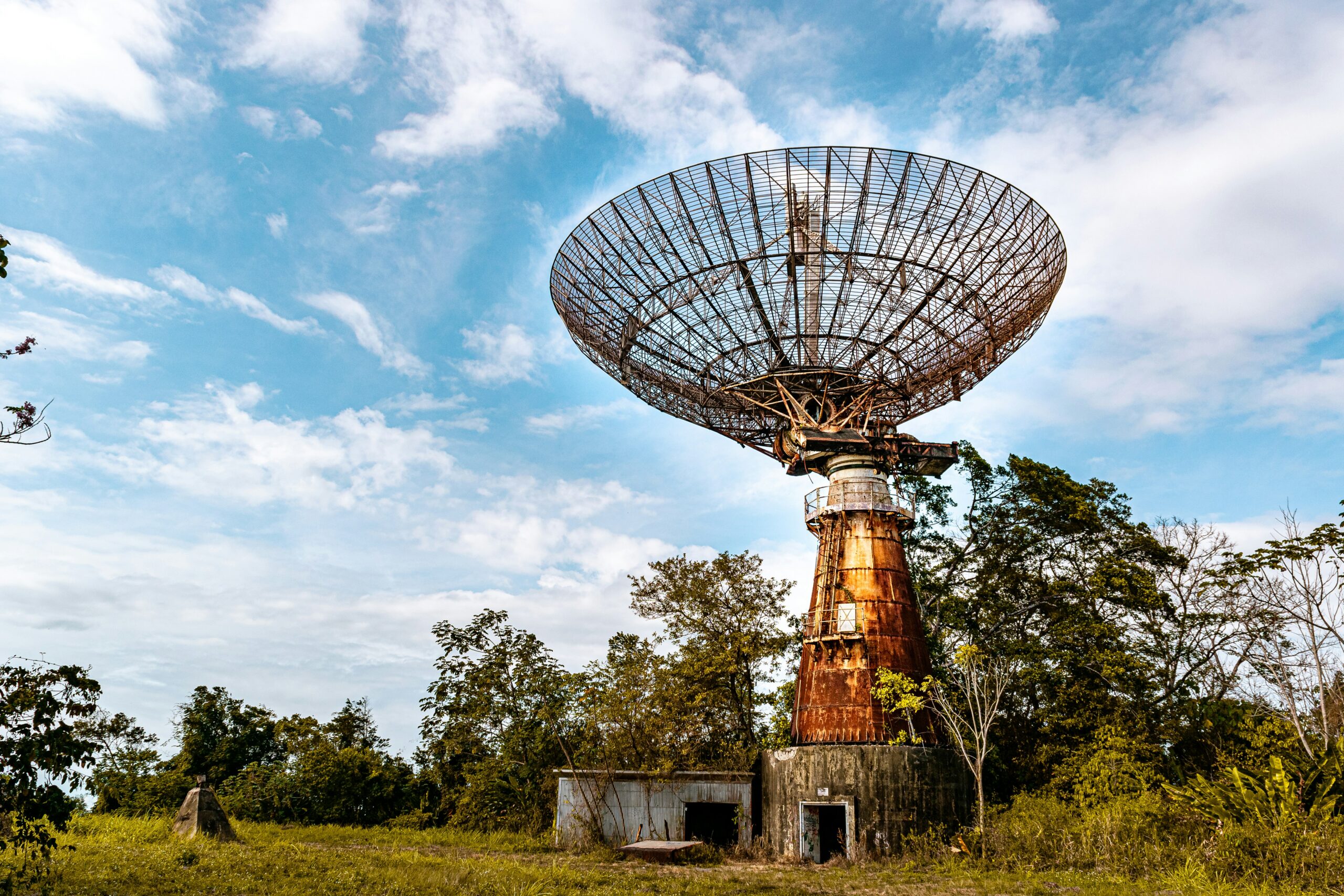
The Arecibo Observatory, a monumental testament to human ingenuity and our insatiable curiosity about the cosmos, stood for over half a century as a beacon of radio astronomy. Its iconic 305-meter dish, a gargantuan receiver nestled within Puerto Rico’s lush landscape, captured faint whispers from the farthest reaches of the universe, translating them into invaluable scientific data. For generations of astronomers, Arecibo was more than just an instrument; it was a gateway, an unparalleled tool that allowed humanity to probe the mysteries of distant galaxies, celestial objects, and even the signatures of potential extraterrestrial life. This article aims to explore the profound impact of the Arecibo Radio Observatory on our understanding of the universe, detailing its groundbreaking discoveries, its technological marvels, and its enduring legacy in the field of astronomy and beyond.
The story of Arecibo begins in the fervor of the Cold War and the burgeoning fields of space research and electronics. Fueled by a desire to explore the ionosphere and search for extraterrestrial intelligence, the National Science Foundation (NSF) initiated a project that would soon redefine the capabilities of radio astronomy.
The Vision: From Ionosphere to the Stars
The initial concept for the Arecibo Telescope was rooted in the study of the Earth’s upper atmosphere. Dr. William E. Gordon, a professor at Cornell University, envisioned a massive, steerable radio antenna capable of detailed observation of the ionosphere. His design utilized the natural topography of a sinkhole to support a fixed spherical reflector, a clever and cost-effective approach that would later prove instrumental in its immense scale. The project, initially conceived in the late 1950s, quickly garnered interest for its potential beyond terrestrial research. The implications for astronomical observation, particularly in detecting weak radio signals from space, became increasingly apparent.
Engineering Marvel: Overcoming Unprecedented Challenges
The construction of the Arecibo telescope was an engineering feat of unparalleled complexity for its time. The sheer size of the dish, spanning 305 meters in diameter, presented immense logistical and structural challenges.
Site Selection and Stabilization
The selection of a suitable sinkhole in the karst landscape of Puerto Rico was crucial. This natural depression provided a stable foundation for the enormous structure. Extensive geological surveys and mitigation efforts were undertaken to ensure the long-term stability of the site, accounting for the unique geological conditions of the region.
The Movable Platform: A Technical Triumph
A critical component of Arecibo’s design was its movable receiver platform, suspended by cables above the fixed dish. This platform housed the secondary and tertiary reflectors, along with the primary receivers, allowing the telescope to focus on different parts of the sky. The intricate system of cables, towers, and the platform itself was a testament to the engineers’ ability to manipulate such massive components with precision. The platform’s design allowed for a limited but crucial range of motion, enabling observations across a significant portion of the celestial sphere.
Construction Materials and Techniques
The dish itself was constructed from thousands of perforated aluminum panels, chosen for their lightweight yet durable properties and their ability to reflect radio waves efficiently. The assembly process was a multi-year endeavor, requiring meticulous planning and execution to ensure the precise alignment of each panel, which was critical for the telescope’s focusing capabilities.
The Arecibo Observatory, once a beacon of radio astronomy, played a crucial role in advancing our understanding of the universe. For those interested in exploring more about the impact of this iconic facility and its contributions to science, you can read a related article that delves into its history and significance in the field of astronomy. Check it out here: Arecibo Observatory and Its Legacy.
A Window into the Cosmos: Groundbreaking Discoveries
Throughout its operational life, the Arecibo Observatory played a pivotal role in a multitude of astronomical discoveries, pushing the boundaries of our knowledge in diverse areas of astrophysics. Its sensitivity and large collecting area made it an indispensable tool for observing faint and distant celestial phenomena.
Exploring the Solar System: Unveiling Planetary Secrets
Arecibo’s proximity to Earth made it ideally suited for radar observations of our own solar system. These observations provided unprecedented insights into the surfaces and environments of our planetary neighbors.
Planetary Radar Astronomy: Mapping Venus and Mercury
One of Arecibo’s most significant contributions was its use in planetary radar astronomy. By bouncing radio waves off planetary surfaces and analyzing the echoes, scientists were able to create detailed maps and study the geology of planets that are often obscured by thick atmospheres or are difficult to observe through visible light. For Venus, Arecibo’s radar revealed the planet’s hellish surface, obscured by its dense clouds, mapping its volcanoes, craters, and mountains with remarkable detail. Similarly, it provided the first detailed radar maps of Mercury, revealing its heavily cratered surface and aiding in the understanding of its complex geological history.
Asteroid and Comet Studies: Defense and Understanding
The observatory was also instrumental in characterizing near-Earth asteroids and comets. Its radar capabilities allowed scientists to determine their size, shape, rotation rates, and surface composition. This information is vital for understanding the potential threat posed by near-Earth objects and for planning future space missions, including asteroid deflection strategies. Arecibo’s observations helped identify and track potentially hazardous asteroids, contributing to our planetary defense efforts.
Unraveling the Secrets of Pulsars: Cosmic Clocks and Gravitational Waves
Pulsars, rapidly rotating neutron stars that emit beams of electromagnetic radiation, are among the most exotic and fascinating objects in the universe. Arecibo’s sensitivity allowed for the detailed study of these celestial phenomena, leading to pivotal discoveries.
The Discovery of Binary Pulsars: Testing General Relativity
Arecibo detected the first binary pulsar system, PSR B1913+16. The precise timing of its pulses allowed scientists Hulse and Taylor to observe subtle changes in its orbital period. These changes were precisely what Einstein’s theory of General Relativity predicted as a consequence of gravitational radiation, the emission of gravitational waves carrying away orbital energy. This groundbreaking observation provided the first indirect evidence for the existence of gravitational waves and earned Hulse and Taylor the Nobel Prize in Physics in 1993, solidifying Arecibo’s place in fundamental physics research.
The First Millisecond Pulsar: Evidence of Celestial Recycling
Arecibo also discovered the first millisecond pulsar, a pulsar that spins hundreds of times per second. These objects were theorized to be older pulsars that had been spun up by accreting matter from a companion star. The discovery of millisecond pulsars provided compelling evidence for this “celestial recycling” process and opened up new avenues for understanding the evolution of neutron stars.
The Search for Extraterrestrial Intelligence (SETI): Listening for Cosmic Conversations
Perhaps one of the most publicly recognized roles of the Arecibo Observatory was its involvement in the Search for Extraterrestrial Intelligence (SETI). Its vast collecting area made it a prime candidate for detecting faint radio signals that could originate from intelligent alien civilizations.
The “Wow!” Signal: A Fleeting Enigma
While not directly discovered by Arecibo, the observatory’s capabilities were crucial in subsequent analyses and the ongoing search for similar signals. The famous “Wow!” signal, detected by the Big Ear radio telescope in 1977, remains a tantalizing but unconfirmed candidate for extraterrestrial communication. Arecibo’s advanced instrumentation and dedicated observation time aided in broader SETI efforts, scanning vast swathes of the sky for any anomalies.
Targeted Searches and Broad Spectrum Monitoring
Arecibo was involved in both targeted searches towards specific star systems deemed more likely to host life and in broad spectrum monitoring of large celestial regions. The observatory’s ability to listen across a wide range of radio frequencies allowed for the detection of potential signals regardless of their originating frequency, a key challenge in the SETI endeavor. The data collected by Arecibo, though yielding no definitive proof of extraterrestrial intelligence, significantly advanced the scientific methodologies and the understanding of the challenges involved in such a search.
Technological Innovations: Pushing the Boundaries of Instrumentation

Beyond its groundbreaking discoveries, the Arecibo Observatory was a continuous hub of technological innovation, constantly upgrading its instrumentation to enhance its observational capabilities and explore new frontiers in radio astronomy.
Advancements in Receiver Technology: Enhancing Sensitivity and Bandwidth
The evolution of Arecibo’s receivers was critical to its success. Over the years, the observatory incorporated increasingly sophisticated radio receivers, improving their sensitivity, reducing noise, and expanding their observable bandwidth.
Cryogenic Receivers: Minimizing Thermal Noise
The implementation of cryogenic receivers, cooled to extremely low temperatures, was a significant leap forward. This minimized thermal noise generated by the electronics themselves, allowing for the detection of even weaker celestial signals. These advancements provided a clearer window into the faint radio emissions from distant cosmic sources.
Multi-Feed Receivers: Increasing Survey Speed
The development of multi-feed receivers allowed Arecibo to observe multiple points in the sky simultaneously. This dramatically increased the efficiency of large-scale sky surveys, enabling astronomers to map larger areas of the universe in less time and to detect transient radio phenomena more rapidly.
The Role of the Gregorian Dome: Enhancing Observational Versatility
The unique design of Arecibo’s Gregorian dome, housing the secondary and tertiary reflectors, played a crucial role in its observational capabilities.
Secondary and Tertiary Reflector Systems: Focusing and Filtering
The movable secondary and tertiary reflectors were essential for focusing the incoming radio waves onto the primary receivers and for filtering out unwanted interference. Their precise movement allowed the telescope to track celestial objects and to make observations across a wide range of frequencies. Subsequent upgrades to these systems enhanced the instrument’s accuracy and adaptability for different scientific investigations.
Polarization Measurements: Unveiling Magnetic Fields
The instrumentation within the Gregorian dome also enabled sophisticated polarization measurements. By analyzing the polarization of radio waves, astronomers could infer the presence and strength of magnetic fields in celestial objects, providing crucial insights into phenomena such as pulsar magnetospheres and the interstellar medium.
A Legacy Beyond Discovery: Education, Outreach, and Inspiration
The Arecibo Observatory was more than just a scientific instrument; it was a vital center for education, public outreach, and an enduring source of inspiration for generations of scientists and the public alike.
Cultivating the Next Generation of Scientists: Educational Programs
Arecibo was deeply committed to fostering scientific education. It hosted numerous students, from high school to postgraduate levels, providing them with hands-on research experience and mentorship.
Internships and Research Opportunities
The observatory offered invaluable internship programs, allowing students to work alongside leading astronomers and engineers, contributing to active research projects. This immersive experience not only provided practical skills but also ignited a passion for scientific inquiry and discovery.
Public Understanding of Science: Outreach and Visitor Center
Arecibo’s visitor center and extensive public outreach programs played a critical role in demystifying astronomy and making science accessible to everyone. Millions of visitors experienced the awe-inspiring scale of the telescope and learned about the universe through engaging exhibits and educational presentations. This commitment to public understanding helped to cultivate a scientifically literate society and inspire future generations.
International Collaboration and Data Sharing: A Global Endeavor
The scientific endeavors at Arecibo were inherently global. The observatory fostered strong international collaborations, bringing together researchers from around the world to tackle complex scientific questions.
Collaborative Research Projects: Pooling Expertise
Arecibo’s observational time was often allocated to international teams, facilitating the pooling of expertise and resources to conduct ambitious research projects. This collaborative spirit maximized the scientific return from the observatory and fostered a sense of shared scientific endeavor.
Open Data Policies: Accelerating Discovery
The observatory adhered to open data policies, making its vast archival data accessible to the global scientific community. This open access approach accelerated discovery by allowing researchers worldwide to analyze Arecibo’s data, further extending its scientific impact long after initial observations.
Cultural Icon: A Symbol of Human Achievement
The Arecibo telescope, with its distinctive appearance, became a cultural icon, featuring in films, television shows, and numerous publications. It symbolized humanity’s drive to explore the unknown and our capacity for monumental scientific achievement. Its tragic collapse in December 2020 marked the end of an era, eliciting widespread sadness and recognition of its profound impact. The image of the immense dish, a symbol of our gaze towards the stars, will forever be etched in our collective memory.
The Arecibo Observatory has been a significant site for radio astronomy, contributing to our understanding of the universe for decades. Recently, an intriguing article on the latest discoveries in radio astronomy highlights the advancements in technology that have allowed scientists to explore deeper into space. You can read more about these exciting developments in the field by visiting this related article, which discusses how these innovations are shaping our knowledge of cosmic phenomena.
The Future of Radio Astronomy: Lessons Learned and New Horizons
| Metrics | Data |
|---|---|
| Location | Arecibo, Puerto Rico |
| Antenna Diameter | 305 meters |
| Frequency Range | 70 MHz to 10 GHz |
| Operational Years | 1963 – 2020 |
| Notable Discoveries | Pulsars, Exoplanets, Radar observations of planets |
The closure of the Arecibo Observatory, while a significant loss for the scientific community, does not spell the end of radio astronomy. Instead, it underscores the vital need for continued investment in next-generation radio telescopes and research initiatives. The lessons learned from Arecibo’s decades of operation will undoubtedly shape the future of the field.
The Need for Next-Generation Telescopes: Expanding Observational Power
The scientific questions that Arecibo helped to illuminate now demand even more powerful instruments. The development of new radio telescopes, both on Earth and in space, is crucial for pushing the boundaries of our knowledge further.
Square Kilometre Array (SKA): A Global Revolution
The Square Kilometre Array (SKA) project, an international collaboration to build the world’s largest radio telescope, represents the next leap forward. With its unprecedented sensitivity and resolution, the SKA will enable scientists to explore the early universe, probe the nature of dark matter and dark energy, and continue the search for life beyond Earth with greater power than ever before.
Advancements in Interferometry: Sharpening the Cosmic View
Continued advancements in radio interferometry, a technique that combines signals from multiple smaller telescopes to create a virtual telescope with a much larger aperture, are also vital. Projects like the Atacama Large Millimeter/submillimeter Array (ALMA) are already providing incredibly detailed images of star-forming regions and other cosmic phenomena.
Arecibo’s Enduring Influence: Shaping Future Research
The scientific legacy of Arecibo is indelible. The discoveries made, the technologies developed, and the scientists trained at the observatory will continue to influence the field of radio astronomy for decades to come. The data archives, the methodologies, and the foundational understanding Arecibo provided will serve as cornerstones for future research. The spirit of curiosity and relentless pursuit of knowledge that Arecibo embodied will continue to inspire new generations of astronomers to explore the vast and awe-inspiring universe. The quest to understand our place in the cosmos, a quest so profoundly advanced by the Arecibo Radio Observatory, continues on, fueled by the echoes of its past triumphs and the promise of future discoveries.

They Reopened the Wow! Signal After 48 Years—Here’s What Changed
FAQs
What is the Arecibo Observatory?
The Arecibo Observatory is a large radio telescope located in Arecibo, Puerto Rico. It was the world’s largest single-aperture telescope until 2016, when the Five hundred meter Aperture Spherical Telescope (FAST) in China surpassed it.
What is the main purpose of the Arecibo Observatory?
The main purpose of the Arecibo Observatory is to conduct radio astronomy, atmospheric science, and radar observations of planets and other solar system bodies. It has been used to study pulsars, galaxies, and the ionosphere, among other things.
What are some of the major discoveries made using the Arecibo Observatory?
Some of the major discoveries made using the Arecibo Observatory include the first binary pulsar, the first exoplanets, and the first direct images of an asteroid. It has also been used to study the rotation of Mercury and to search for extraterrestrial intelligence.
What is the current status of the Arecibo Observatory?
The Arecibo Observatory suffered significant damage in August 2020 when a cable supporting the suspended platform above the dish broke, causing a 100-foot-long gash in the dish. The National Science Foundation announced plans to decommission the observatory, and on December 1, 2020, the suspended platform collapsed, causing further damage.
What is the future of the Arecibo Observatory?
As of now, the future of the Arecibo Observatory is uncertain. The National Science Foundation has announced plans to decommission the observatory, but there are ongoing discussions about the possibility of rebuilding or replacing it with a new facility.