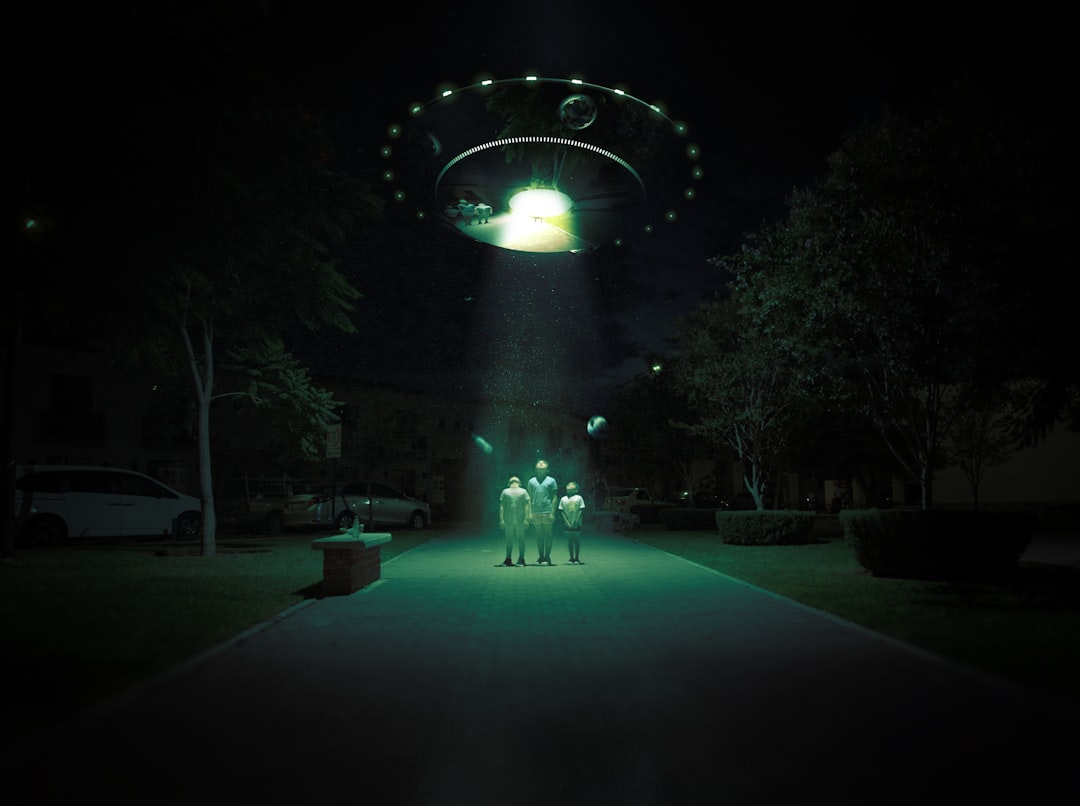
The allure of the unknown has forever captivated the human imagination. Among the most persistent and pervasive of these mysteries are Unidentified Flying Objects, or UFOs. For decades, the skies have been a canvas for whispers of alien spacecraft, clandestine government experiments, and phenomena beyond our current comprehension. The term itself, UFO, simply means something observed in the sky that cannot be immediately identified. However, popular culture and sensationalized reporting have often imbued UFOs with an automatic extraterrestrial connotation. This article aims to sift through the layers of speculation and folklore, employing critical thinking and available evidence to debunk some of the most prevalent UFO myths.
Perhaps the most ingrained myth surrounding UFOs is that any sighting of an object in the sky that defies immediate explanation is, by default, an alien visitation. This leap in logic is a significant hurdle in rational discourse about unidentified aerial phenomena. While the possibility of extraterrestrial life is a fascinating subject for scientific inquiry, attributing unconfirmed sightings to alien technology without concrete proof is a form of speculative reasoning that bypasses rigorous analysis.
The Burden of Proof Lies with the Extraordinary Claim
The principle of “extraordinary claims require extraordinary evidence” is fundamental to scientific and logical inquiry. The claim that alien civilizations are visiting Earth is an extraordinary one. Therefore, the evidence presented must be equally compelling and go far beyond anecdotal reports or blurry photographs. A truly convincing piece of evidence might include detailed, independently verifiable sensor data, the physical remnants of alien technology, or unambiguous communication from an alien source. To date, no such evidence has emerged to definitively support the alien spacecraft hypothesis.
Misinterpretation of Known Phenomena
Many UFO sightings can be attributed to misinterpretations of mundane objects and events. Atmospheric phenomena, such as lenticular clouds or ball lightning, can create unusual visual effects. Astronomical objects, including Venus, the Moon, and even distant aircraft lights reflecting off clouds, are frequently mistaken for something more exotic. The human brain is adept at pattern recognition, and in the absence of clear information, it can sometimes construct narratives based on pre-existing beliefs or expectations.
Weather Balloons and Atmospheric Anomalies
Weather balloons, especially during specific atmospheric conditions, can appear as silent, disc-shaped objects moving erratically. Their altitudes and speeds can sometimes be deceptive. Similarly, the aurora borealis, auroras australis, and other atmospheric optical illusions can create luminous displays that are genuinely baffling to the untrained eye, but are entirely natural occurrences explained by physics and atmospheric science.
Celestial Bodies and Planetary Visibility
The planet Venus, often referred to as the “Evening Star” or “Morning Star,” is exceptionally bright and can be visible for extended periods. Its perceived movement, or stationary appearance depending on the observer’s perspective and the planet’s orbit, can lead to confusion. The Moon, too, can appear in unusual contexts and sizes, especially when near the horizon or observed through certain atmospheric distortions.
Military and Civilian Aircraft Misidentification
Modern aircraft, particularly with their advanced lighting systems, Stealth technology, and unconventional designs, can present a bewildering spectacle to those unfamiliar with them. Drones, both military and civilian, have also proliferated, with their silent operation and varied flight patterns adding to the potential for misidentification. Experimental aircraft, often tested in secret, can also appear in the skies for the first time, leading to plausible but incorrect conclusions about their origin.
Secret Military Projects and Experimental Aircraft
Governments, understandably, conduct classified research and development for defense purposes. These projects often involve cutting-edge technology that is not publicly known. When these experimental craft are tested, they can appear to observers as unusual and unidentifiable, leading to speculation. However, the logical explanation points towards human ingenuity, not extraterrestrial intervention.
Commercial and Private Aviation
The sheer volume of air traffic worldwide means that spotting an aircraft that an individual doesn’t immediately recognize is not an uncommon event. The unique designs of some commercial airliners, small private planes, or even helicopters performing specific maneuvers can be puzzling at first glance.
In the ongoing debate surrounding UFOs, many enthusiasts often find themselves caught between captivating myths and the hard evidence presented by researchers. A compelling article that delves into this topic is available at XFile Findings, where it explores various claims and counterclaims regarding unidentified flying objects. This resource provides a balanced perspective, examining both the sensational stories that have fueled public fascination and the scientific investigations that seek to uncover the truth behind these phenomena.
Myth 2: The Government is Hiding Alien Evidence and Engaging in Cover-ups
A closely related and deeply entrenched myth is the notion that governments worldwide, particularly the United States government, are actively concealing irrefutable evidence of alien visitation. This “cover-up” narrative often involves secret treaties with extraterrestrials, the acquisition of alien technology, and the silencing of whistleblowers. While governments do classify information for national security reasons, the scale and scope of this supposed alien cover-up are highly improbable.
The Scale of the Alleged Cover-up
Consider the sheer number of individuals who would need to be involved in such a global conspiracy. It would necessitate collusion across multiple government agencies, military branches, scientific institutions, and potentially even international bodies for decades. Maintaining such a massive secret, with no credible leaks or verifiable confessions from a significant number of participants, strains credulity. The human tendency towards information sharing, whether for personal gain, a sense of civic duty, or simple gossip, makes such an all-encompassing, perpetual silence incredibly unlikely.
The Improbability of Perfect Secrecy
Human history is replete with examples of classified information and covert operations being exposed. Leaks, whistleblowers, and investigative journalism have repeatedly brought to light government secrets. For an alien cover-up to remain entirely intact for generations, it would require a level of organizational control and inmate fidelity that is virtually unprecedented, especially given the diverse motivations and personalities of the people who would presumably be involved.
The Nature of Government Bureaucracies
Government bureaucracies are often characterized by their complexity, inefficiencies, and internal rivalries. While they can protect sensitive information, they are also prone to miscommunication, data breaches, and the inadvertent dissemination of knowledge. The idea that such a gargantuan secret could be managed without significant failures or accidental disclosures over such a long period is a significant stretch.
Recent Government Interest in UAP: A Sign of Transparency, Not Conspiracy
In recent years, there has been a notable increase in the U.S. government’s acknowledgement of Unidentified Aerial Phenomena (UAPs, the preferred modern term). This has led some to interpret it as a grudging admission of the reality of alien craft. However, the government’s focus is on national security implications, potential threats to air safety, and understanding phenomena that could be advanced foreign technology. The release of UAP reports and the establishment of dedicated offices are more indicative of a desire for transparency and better data collection regarding unexplained aerial activities, rather than a confession of alien presence.
Publicly Released UAP Reports and Task Forces
The establishment of the Office of the Director of National Intelligence’s UAP Task Force and the subsequent release of unclassified reports detailing observed UAP incidents are significant. These reports, while often inconclusive, acknowledge that some observed phenomena remain unexplained. However, they consistently frame these unexplained events within the context of potential threats to military operations and aviation safety, rather than as definitive proof of extraterrestrial vehicles. The language used is cautious, emphasizing the lack of definitive data and the need for further investigation.
National Security Concerns as the Primary Driver
The primary motivation for government interest in UAP is likely driven by national security. If a foreign adversary has developed advanced aerial capabilities that are not understood, this poses a significant threat. Therefore, the investigation of UAP is a logical extension of military intelligence and defense research. The focus on understanding the capabilities and origins of these phenomena, rather than immediately jumping to alien conclusions, underscores a pragmatic and evidence-based approach.
Myth 3: UFO Sightings Are Always Credible and From Reliable Witnesses

The perception of UFO sightings as inherently credible is often fueled by the assumption that witnesses, particularly those in positions of authority like pilots or military personnel, would not misidentify something or fabricate a story. While many witnesses are undoubtedly sincere in their accounts, the fallibility of human perception and memory cannot be disregarded.
The Subjectivity of Perception
Human perception is not a perfect recording device. It is influenced by expectations, emotional states, lighting conditions, distance, and a multitude of other factors. What one person perceives as a cigar-shaped object moving at impossible speeds might, with objective verification, be a different phenomenon viewed under unusual circumstances. Eyewitness testimony, while valuable, is notoriously unreliable, especially in high-stress or unusual situations.
Optical Illusions and Environmental Factors
The way light bends and refracts, the limitations of our peripheral vision, and the tricks that shadows play can all contribute to misperceptions. A distant light source might appear to move erratically due to atmospheric turbulence or the observer’s own movement. The perceived size and speed of an object can be drastically altered by distance and perspective.
Psychological Factors and Suggestibility
The power of suggestion is significant. If an individual is primed to believe in UFOs and aliens, they may be more likely to interpret ambiguous stimuli as fitting that narrative. Collective experiences, such as mass hysteria or shared delusions, can also play a role in the proliferation of certain beliefs.
The Role of Hoaxes and Misinformation
Unfortunately, the realm of UFOs has also been subject to deliberate hoaxes and the spread of misinformation. People create fake photographs and videos for attention, notoriety, or financial gain. This deliberate deception further clouds the already complex issue and makes it harder to discern genuine anomalies from fabricated encounters.
Deliberate Forgeries and Fabrications
Throughout history, there have been documented cases of individuals creating fake UFO photographs and videos. These fabrications, often employing simple photographic techniques or clever editing, have sometimes been widely circulated and accepted as genuine evidence. The ease with which digital manipulation can now be performed only exacerbates this problem.
Sensationalism and Media Influence
The media, in its pursuit of captivating stories, can sometimes sensationalize UFO reports, focusing on the most outlandish interpretations and giving less weight to rational explanations. This can create a feedback loop where sensationalized accounts fuel public interest, leading to more reports, and further fueling sensationalism.
Myth 4: Extraterrestrial Encounters Involve Advanced Technology That Defies Our Understanding

A common narrative in UFO lore is that alien spacecraft possess technology far superior to our own, capable of interstellar travel, defying gravity, and performing maneuvers impossible for human-made craft. While the universe undoubtedly holds wonders that are beyond our current comprehension, attributing these perceived abilities to alien technology often overlooks plausible, albeit advanced, human or natural explanations.
The Limits of Human Observation and Measurement
When someone describes a UFO performing “impossible” maneuvers, the statement is often based on subjective observation and a limited understanding of physics or aerodynamics. We may not fully grasp the capabilities of advanced propulsion systems, cloaking technologies, or other forms of engineering that could be developed by either human ingenuity or, hypothetically, by alien civilizations. However, from a scientific perspective, we must assume that any observed phenomenon, however unusual, adheres to underlying physical laws, even if those laws are not yet fully understood or applied.
The Nature of “Impossible” Maneuvers
Many reported “impossible” maneuvers, such as instantaneous acceleration or sharp, gravity-defying turns, are often exaggerated or misperceived. The perceived speed can be misleading due to atmospheric effects or the observer’s own frame of reference. Furthermore, our current understanding of physics, while extensive, is not necessarily complete. There could be principles we have yet to discover that explain seemingly impossible movements.
The “Advanced Technology” Argument as a Fallacy
The argument that “it must be alien because we can’t explain it with our current technology” is a form of the argument from ignorance. It essentially states that because we don’t currently have an explanation, it must be an alien explanation. This is a logical fallacy. The absence of an explanation does not automatically validate an extraordinary claim.
The Problem of Technological Benchmarking
We are constantly advancing our own technological capabilities. What might seem impossible today could be commonplace in a few decades. To assume that any advanced technology observed must be extraterrestrial is to prematurely limit the potential of human innovation or the possibility of advanced, yet terrestrial, secret projects.
The ongoing debate surrounding UFO myths versus evidence continues to captivate both skeptics and believers alike. Many are drawn to the intriguing stories and alleged sightings, yet a closer examination often reveals a lack of concrete proof. For those interested in exploring this topic further, a fascinating article can be found at XFile Findings, which delves into the various claims and the scientific scrutiny they face. This resource provides a balanced perspective, helping readers discern fact from fiction in the world of unidentified flying objects.
Myth 5: The Little Green Men and Classic UFO Tropes Are Definitive Proof
| Myth | Evidence |
|---|---|
| UFOs are always alien spacecraft | There is no conclusive evidence to prove that all UFOs are alien in origin |
| UFO sightings are always reliable | Many UFO sightings can be explained by natural or man-made phenomena |
| Government cover-ups of UFO evidence | There is no concrete evidence to support widespread government cover-ups of UFOs |
| Ancient aliens visited Earth | There is no scientific evidence to support the claim that ancient aliens visited Earth |
The archetype of the “little green men” or the classic flying saucer is deeply ingrained in popular culture, often presented as the definitive image of an alien visitor. This imagery, largely a product of science fiction and early UFO sensationalism, has shaped public perception so profoundly that it can sometimes blind people to more nuanced possibilities or lead to the misidentification of ordinary objects as alien craft.
The Influence of Science Fiction and Pop Culture
The early days of science fiction, particularly in the mid-20th century, played a significant role in popularizing the image of aliens and their spacecraft. Books, movies, and even comic strips depicted bug-eyed aliens and disc-shaped ships, establishing a visual language for extraterrestrial encounters. This imagery has been so pervasive that it has become a cultural shorthand, influencing how people interpret and describe their experiences.
The Evolution of UFO Depictions
Early UFO reports often described objects that bore little resemblance to the iconic flying saucer. However, as the narrative of alien visitation gained traction, descriptions of UFOs began to conform to the popularised tropes. This convergence of descriptions suggests a cultural influence on how people interpret and report their sightings.
The Lack of Physical Evidence for Stereotypical Aliens
Despite countless reports of alien encounters, there is a striking absence of any verifiable physical evidence to support the existence of the stereotypical “little green men” or other commonly depicted alien forms. No alien artifacts, biological remains, or credible scientific documentation have ever emerged to substantiate these images.
The Importance of Independent Verification
In any scientific investigation, independent verification is crucial. Claims of alien encounters need to be subjected to rigorous scrutiny by multiple, independent sources, including scientists, engineers, and investigators. Without such verification, anecdotal accounts, however compelling, remain speculative.
Moving Forward: A Call for Critical Thinking and Evidence-Based Inquiry
The ongoing fascination with UFOs is a testament to our innate curiosity about the unknown and our place in the cosmos. However, to truly understand the phenomena observed in our skies, we must move beyond myth and embrace critical thinking and a commitment to evidence-based inquiry. This means:
- Adopting a Skeptical but Open Mind: Be willing to consider unusual possibilities but demand robust evidence before accepting extraordinary claims.
- Prioritizing Data Over Anecdotes: Focus on quantifiable data, verifiable observations, and scientific analysis rather than relying solely on personal testimonies.
- Understanding Our Limitations: Recognize the fallibility of human perception and memory, and the inherent biases in interpretation.
- Supporting Scientific Research: Encourage and fund scientific investigations into the nature of the universe and the potential for life beyond Earth, conducted through established scientific methodologies.
By debunking persistent myths with evidence and fostering a culture of critical inquiry, humanity can better navigate the mysteries of the night sky, distinguishing between the extraordinary realities of our universe and the compelling, yet ultimately unfounded, narratives of UFO folklore. The quest for understanding is noble, but it must be guided by reason, evidence, and a steadfast commitment to the truth, wherever it may lead.

The Varginha UFO Incident: What the Evidence Really Shows
FAQs
What are some common UFO myths?
Some common UFO myths include the belief that all UFO sightings are alien spacecraft, that the government is covering up evidence of extraterrestrial life, and that UFOs are always seen in remote or isolated areas.
What evidence exists for UFO sightings?
Evidence for UFO sightings includes eyewitness accounts, photographs, videos, radar data, and physical trace evidence such as soil or vegetation disturbances. However, it’s important to note that not all UFO sightings can be definitively explained.
How does the scientific community view UFOs?
The scientific community generally approaches UFOs with skepticism and seeks to apply critical thinking and evidence-based analysis to investigate sightings. While some scientists are open to the possibility of extraterrestrial life, they emphasize the need for rigorous investigation and empirical evidence.
What are some natural explanations for UFO sightings?
Natural explanations for UFO sightings can include misidentified aircraft, weather phenomena such as ball lightning or lenticular clouds, atmospheric anomalies, and human-made objects such as drones or experimental aircraft.
What is the role of government agencies in investigating UFOs?
Government agencies such as the U.S. military and intelligence community have investigated UFO sightings in the past, often for national security reasons. In recent years, there has been increased transparency and declassification of some UFO-related documents, but the extent of ongoing government involvement in UFO research remains a topic of debate.