
The lingering enigma of Unidentified Flying Objects (UFOs), now more broadly termed Unidentified Anomalous Phenomena (UAP), has captivated and perplexed humanity for decades. What began as a series of isolated sightings and speculative theories has evolved into a persistent, often secretive, global phenomenon. The search for definitive answers is not merely an academic pursuit for a fringe group of enthusiasts; it represents a profound human desire to understand the unknown, to probe the boundaries of scientific comprehension, and perhaps, to confront the possibility of intelligence beyond our terrestrial origins. This article delves into the enduring mystery of UFOs/UAP, exploring the core questions, the historical context, the evolving scientific approaches, the challenges to investigation, and the ongoing quest for resolution.
The modern fascination with UFOs arguably began in the mid-20th century, coinciding with the dawn of the atomic age and the burgeoning interest in space exploration. The popular imagination was primed for the extraordinary, and reports of anomalous aerial phenomena began to gain traction.
The Roswell Incident: A Touchstone of Conspiracy and Speculation
The 1947 Roswell incident in New Mexico remains arguably the most iconic and debated UFO event in history. The initial military statement about a “flying disc” recovered near Roswell, quickly retracted and replaced with an explanation of a weather balloon, fueled decades of speculation about a government cover-up of an extraterrestrial spacecraft crash and the recovery of alien bodies.
The Shifting Narratives
The conflicting official statements and the subsequent relentless pursuit of information by investigators and the public have led to numerous theories, each attempting to explain the discrepancies. The persistent belief by many that the original explanation was a deliberate deception highlights the deep-seated distrust that can arise when official accounts falter.
The Enduring Impact on Popular Culture
Roswell transcended its initial reporting to become a cultural touchstone, deeply embedded in film, literature, and conspiracy theories. It established a template for how UFO incidents were subsequently perceived and scrutinized, often through a lens of pre-existing skepticism towards authority.
The “Flying Saucer” Era: A Wave of Global Sightings
Following Roswell, the 1940s and 1950s witnessed a significant surge in reported sightings of “flying saucers” globally. These sightings were often characterized by descriptions of metallic, disk-shaped craft exhibiting incredible speed and maneuverability beyond the capabilities of contemporary aircraft.
Media Sensationalism and Scientific Skepticism
The media played a crucial role in amplifying public awareness and interest, often with sensationalized headlines and dramatic illustrations. Simultaneously, the scientific community, while acknowledging the reports, struggled to find concrete evidence to support extraterrestrial origins. The prevailing scientific paradigm focused on conventional explanations such as misidentified aircraft, atmospheric phenomena, or psychological factors.
Early Government Investigations: Project Blue Book and its Predecessors
In response to the growing public concern and the sheer volume of reports, governments, particularly the United States Air Force, initiated investigations. Projects like Sign, Grudge, and the most well-known, Project Blue Book, were established to systematically collect and analyze UFO reports.
Project Blue Book’s Mandate and Limitations
Project Blue Book operated for nearly two decades, analyzing thousands of cases. While its official conclusion was that no UFO sightings represented a threat or possessed extraterrestrial origins, the project’s methodology and concluding statements have been criticized by researchers for being too dismissive and for potentially overlooking significant evidence. The inherent limitations of studying phenomena without verifiable physical evidence were also a significant challenge.
The ongoing intrigue surrounding the unresolved UFO mystery continues to captivate both enthusiasts and skeptics alike. For those interested in delving deeper into this enigmatic subject, a related article titled “Exploring the Unexplained: The Latest in UFO Research” offers insightful perspectives and updates on recent findings. You can read the article by following this link: Exploring the Unexplained: The Latest in UFO Research.
The Evolving Landscape of UFO Investigation: From Fringe to Forum
For many years, UFO research was largely relegated to the realm of amateur enthusiasts and organizations operating outside mainstream scientific circles. However, in recent years, the conversation has begun to shift, with increased interest from academics, defense professionals, and even government agencies.
The Shift Towards “Unidentified Anomalous Phenomena” (UAP)
The term “UFO” carries a significant baggage of cultural association with extraterrestrial life, which can sometimes overshadow objective scientific inquiry. The adoption of the term UAP by official bodies like the US Department of Defense reflects a broader, more neutral approach, encompassing any aerial or oceanic phenomena that cannot be immediately identified.
Broadening the Scope of Inquiry
This semantic shift signals a willingness to investigate a wider range of anomalies, not solely focused on extraterrestrial hypotheses. It acknowledges that unexplained phenomena might have diverse origins, including advanced human technology, misidentified natural events, or other, as yet unknown, factors.
The Role of National Security and Defense
A significant driver for this recent shift has been the acknowledgment of UAP by national security establishments. Reports of UAP engaging in maneuvers that challenge conventional understandings of aerodynamics and propulsion have raised concerns about potential foreign adversary technological advancements or, more profoundly, the presence of unknown capabilities.
Increased Academic and Scientific Engagement
While still a developing field, there is a growing trend of academics and scientists engaging with the UAP phenomenon. This includes historians examining the societal impact, physicists exploring potential propulsion mechanisms, and psychologists studying perception and reporting biases.
Interdisciplinary Approaches to UAP Research
The complexity of UAP demands an interdisciplinary approach. Researchers are drawing on expertise from fields such as aerospace engineering, atmospheric science, physics, psychology, and even philosophy to tackle the multifaceted nature of the phenomenon. The challenges lie in securing credible data and establishing rigorous methodologies within these diverse fields.
The Importance of Data Collection and Analysis
The lack of standardized, high-quality data has historically been a major impediment. The current emphasis on collecting empirical data, including sensor readings, radar returns, and credible eyewitness testimony, is crucial for moving towards more scientific analysis. The development of shared databases and collaborative research platforms is vital for this endeavor.
The Persistent Challenges to Resolution: Barriers to Understanding

Despite growing interest and evolving approaches, the investigation into UFOs/UAP faces profound and persistent challenges that have hindered conclusive resolution. These challenges span the nature of the phenomena itself, the societal context, and the limitations of current investigative methods.
The Nature of the Phenomena: Elusivity and Anecdotal Evidence
UAP are inherently elusive. They appear and disappear without warning, often under conditions that preclude detailed scientific observation. The reliance on anecdotal evidence, while valuable, presents significant difficulties in terms of verification, objectivity, and scientific rigor.
The Problem of Verification and Reproducibility
Unlike controlled scientific experiments, UAP sightings are rarely reproducible. This makes it incredibly difficult to gather consistent data that can be subjected to falsification, a cornerstone of the scientific method. Without the ability to replicate observations, hypotheses remain speculative.
The Influence of Perception and Cognitive Biases
Human perception is fallible. Witness testimony, while often sincere, can be influenced by various factors, including expectations, emotional states, and cognitive biases. The interpretation of visual and auditory stimuli can be subjective, leading to discrepancies in eyewitness accounts.
The Shadow of Secrecy and Disinformation
For many decades, governmental agencies and military organizations have been hesitant to publicly disclose information regarding UFOs/UAP, often citing national security concerns. This secrecy, while potentially justified in some instances, has inadvertently fostered an environment of distrust and speculation.
The Impact of Cover-Up Narratives
The perception of a deliberate government cover-up, whether real or imagined, has deeply entrenched itself in public discourse. This narrative often leads individuals to dismiss official explanations outright and to seek alternative interpretations, sometimes bordering on unfounded conspiracy theories.
The Challenge of Disentangling Truth from Fiction
The vast amount of information, and misinformation, surrounding UFOs/UAP makes it challenging to sift through credible evidence and distinguish it from hoaxes, misidentifications, and speculative narratives. This is particularly true in the age of the internet and social media, where information can spread rapidly and without rigorous fact-checking.
The Difficulties of Scientific Instrumentation and Data Gaps
Even with advanced technology, capturing definitive data on UAP remains a significant hurdle. The ephemeral nature of these phenomena means that by the time sophisticated instruments can be deployed, the anomaly may have already vanished.
Limitations of Current Sensor Technologies
While sensors like radar and infrared cameras can detect aerial objects, their ability to definitively identify and analyze objects exhibiting extreme and unconventional flight characteristics is still developing. Furthermore, understanding the origin and operational parameters of such objects remains a challenge.
The Scarcity of Physical Evidence
The lack of consistent, verifiable physical evidence – such as wreckage, residual traces, or biological samples – is a major obstacle. Without tangible material to study, scientific analysis is largely confined to observational data, which is inherently limited.
The Promise of New Technologies and Methodologies: Advancing the Search
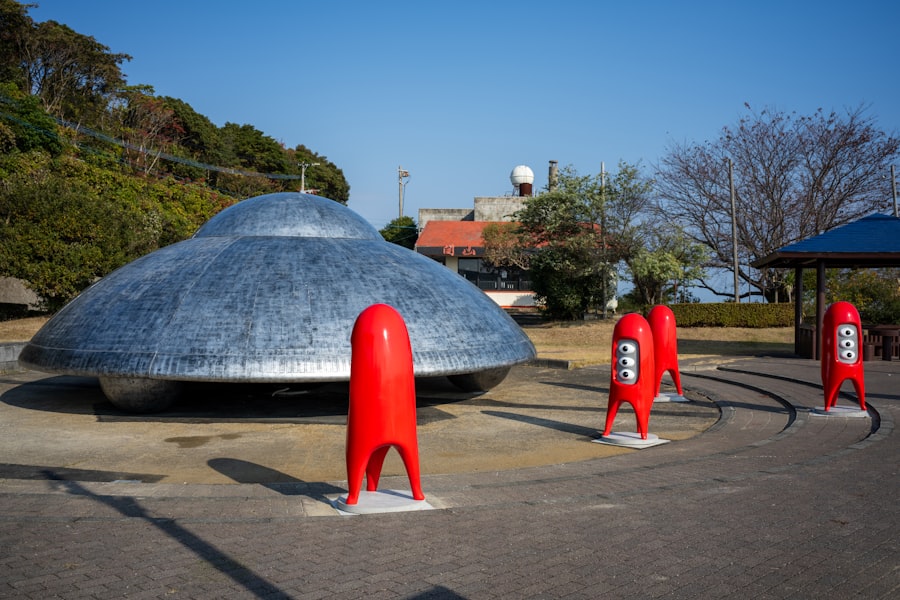
Despite the daunting challenges, the search for answers regarding UFOs/UAP is increasingly benefiting from advancements in technology and the development of more rigorous investigative methodologies. The hope is that these new tools and approaches will finally shed light on these enduring mysteries.
Utilizing Advanced Sensor Technologies and Data Fusion
Modern sensor arrays, including advanced radar systems, infrared and electro-optical cameras, and even acoustic sensors, are capable of capturing more detailed information about aerial phenomena. The trend towards data fusion, integrating information from multiple sensors, offers the potential for a more comprehensive picture.
Multi-Spectrum Analysis and AI-Driven Insights
The analysis of data across multiple electromagnetic spectrums can reveal characteristics of UAP that might be invisible to single-spectrum sensors. Artificial intelligence (AI) and machine learning algorithms are proving invaluable in sifting through vast datasets, identifying patterns, and flagging anomalies that might otherwise be missed by human analysts.
Enhanced Predictive Modeling and Tracking Capabilities
As data collection improves, so too does the potential for developing sophisticated tracking and predictive modeling capabilities. This could allow for a more proactive approach to UAP investigation, enabling the deployment of observation assets when and where anomalies are most likely to occur.
The Importance of Open Data and Collaboration
The historical siloed nature of UFO research has been a significant impediment. The growing movement towards open data sharing and interdisciplinary collaboration holds immense promise for accelerating the pace of discovery.
Global Information Sharing Initiatives
Establishing secure, international platforms for sharing anonymized UAP data among governments, scientific institutions, and reputable research organizations could unlock new insights. This collaborative approach acknowledges that UAP may not be confined to any single nation and that a global perspective is essential.
Cross-Disciplinary Research Networks
Fostering networks that bring together experts from diverse scientific and technical fields is crucial. This allows for the cross-pollination of ideas and the application of cutting-edge techniques from various disciplines to the study of UAP.
The Role of Citizen Science and Decentralized Observation
While official investigations are crucial, the power of citizen science should not be underestimated. Empowered with accessible technology and guided by robust protocols, citizen researchers can contribute valuable observational data.
Standardized Reporting Protocols and Data Validation
Developing standardized protocols for citizen reporting of UAP, emphasizing objective details and reproducible methods, can help ensure the quality and verifiability of the data collected. Independent validation of citizen-generated data is essential to maintain scientific credibility.
Leveraging Distributed Observation Networks
The development of decentralized observation networks, utilizing a broad array of sensors and individual observers, could create a vast, distributed intelligence-gathering system capable of capturing UAP events that might otherwise go unnoticed.
The ongoing fascination with the unresolved UFO mystery continues to capture the public’s imagination, as new reports and investigations emerge regularly. For those interested in delving deeper into this enigmatic subject, a related article provides intriguing insights into recent sightings and government disclosures. You can explore more about these developments in the field by visiting this article, which discusses the implications of these findings and what they might mean for our understanding of unidentified aerial phenomena.
The Philosophical and Societal Implications: Beyond the Unknown
| Date | Location | Witnesses | Description |
|---|---|---|---|
| July 2, 1947 | Roswell, New Mexico | Multiple | Reported crash of a UFO |
| March 13, 1997 | Phoenix, Arizona | Thousands | Mass sighting of lights in the sky |
| November 7, 2006 | Chicago O’Hare Airport | Multiple airport personnel | Reported sighting of a saucer-shaped object |
The persistent mystery of UFOs/UAP extends beyond technical investigation; it touches upon fundamental questions about our place in the universe, the nature of consciousness, and the potential for advanced intelligence. The eventual resolution, whatever form it takes, will undoubtedly have profound philosophical and societal implications.
The Search for Extraterrestrial Intelligence (SETI) and UAP
The study of UAP is intrinsically linked to the broader search for extraterrestrial intelligence (SETI). While SETI primarily focuses on detecting signals from distant civilizations, UAP represents the potential observation of actual physical phenomena associated with advanced intelligences, possibly in our own solar system.
Convergence of SETI and UAP Data
As our understanding of UAP evolves, there may be opportunities to cross-reference findings with SETI data. Identifying correlated patterns or anomalies across different investigative approaches could offer more robust evidence.
Rethinking the Criteria for Intelligent Life
The very nature of UAP, if proven to be of non-terrestrial origin, could force humanity to re-evaluate its definition of intelligent life and the forms it might take. The possibility of non-biological intelligences or civilizations with vastly different technological paradigms is a humbling prospect.
The Impact of Disclosure: A New Era for Humanity?
The prospect of a definitive disclosure regarding the nature of UAP, whether terrestrial or extraterrestrial, carries immense weight. Such an event could reshape our worldview, our religions, our scientific paradigms, and our understanding of history.
Potential for Global Unity or Discord
A verified extraterrestrial presence, or even the credible evidence of unidentified advanced technology, could foster unprecedented global unity in the face of a shared unknown. Conversely, it could also exacerbate existing societal divisions and lead to widespread anxiety or fear.
The Long-Term Societal Transformation
The long-term societal transformation following a disclosure of UAP would be profound. It would necessitate a fundamental reassessment of humanity’s technological development, its historical narratives, and its future trajectory. The “what if” questions surrounding UFOs/UAP are, in essence, explorations of our own potential and limitations.
The search for answers to the unresolved mystery of UFOs/UAP is a testament to humanity’s insatiable curiosity and its enduring quest for knowledge. While definitive resolution remains elusive, the ongoing evolution of investigative methodologies, technological capabilities, and a more open societal discourse suggests that the fog surrounding these anomalous phenomena may, one day, finally lift, revealing truths that could redefine our understanding of the universe and our place within it. The journey, fraught with challenges and brimming with possibilities, continues.

The Varginha UFO Incident: What the Evidence Really Shows
FAQs
What is the Unresolved UFO mystery?
The Unresolved UFO mystery refers to the numerous reported sightings of unidentified flying objects (UFOs) that have not been conclusively explained or debunked by scientific or government authorities.
What are some famous examples of Unresolved UFO sightings?
Some famous examples of Unresolved UFO sightings include the Roswell incident in 1947, the Phoenix Lights incident in 1997, and the USS Nimitz UFO incident in 2004.
What do experts say about Unresolved UFO sightings?
Experts have varying opinions on Unresolved UFO sightings. Some believe that they could be advanced military aircraft or experimental technology, while others argue that they could be extraterrestrial in nature.
What efforts have been made to investigate Unresolved UFO sightings?
Various government agencies, such as the United States Air Force and the Pentagon, have conducted investigations into Unresolved UFO sightings. Additionally, independent organizations and researchers have also studied these phenomena.
What is the current status of the Unresolved UFO mystery?
The Unresolved UFO mystery remains a topic of ongoing interest and debate among the public, scientists, and government officials. While some sightings have been explained as natural or man-made phenomena, others continue to defy conventional explanation.