For decades, reports of unexplained aerial phenomena – commonly known as UFOs – have captured the public imagination, sparking debates that range from scientific curiosity to outright skepticism. While the term “UFO” itself simply means an unidentified flying object, the cultural baggage it carries is immense. It conjures images of extraterrestrial craft, government conspiracies, and an unwillingness to confront the unknown. However, beyond the sensationalism and the ingrained biases, there exists a pressing need for a rigorous, objective approach to investigating these phenomena. The pursuit of truth, regardless of its origin or implications, demands a methodology stripped of preconceptions and driven by evidence. This article delves into the complexities of objective UFO investigation, exploring its challenges, its potential, and the vital importance of its continuation.
For those interested in delving deeper into the realm of Objective UFO investigation, a fascinating article can be found at XFile Findings. This resource explores various methodologies and case studies that aim to approach UFO phenomena with a scientific lens, providing insights that challenge conventional narratives and encourage critical thinking about unidentified aerial phenomena.
The Historical Shadow: How Bias and Stigma Have Hindered Investigation
The history of UFO reporting is intertwined with a narrative often colored by sensationalism, anecdotal evidence, and a deeply ingrained public and scientific skepticism. This has created a significant barrier to objective investigation, making it difficult for genuine researchers to be taken seriously and for valuable data to be collected and analyzed without prejudice.
Anecdotal Evidence and the Unreliability of Eyewitness Testimony
A significant portion of UFO reports relies heavily on eyewitness testimony. While compelling to the individuals experiencing them, these accounts are inherently subjective and susceptible to a multitude of psychological and environmental factors.
Memory Distortion and the Fallability of Human Perception
Human memory is not a perfect recording device. It is a reconstructive process, and recollections can be influenced by time, emotion, suggestion, and even subsequent information. Eyewitnesses may genuinely believe they saw something extraordinary, but the details they recall could be a mosaic of genuine perception, misinterpretation, and unconscious fabrication.
The Power of Suggestion and Cultural Narratives
The widespread cultural narratives surrounding aliens and flying saucers have a powerful influence on how people interpret unusual events. An ambiguous light in the sky, when framed by popular culture, can easily be perceived as a spacecraft rather than a known atmospheric phenomenon or a misidentified aircraft. This makes it challenging to disentangle genuine, independent observations from those shaped by pre-existing beliefs.
The “Flying Saucer” Archetype and its Impact
The very term “flying saucer,” originating from Kenneth Arnold’s 1947 sighting, became an immediate cultural shorthand for extraterrestrial visitation. This archetype, though evocative, has often overshadowed more nuanced and varied descriptions of UAP, leading to a narrow focus and a dismissal of observations that don’t fit the preconceived image.
From “Foo Fighters” to Pop Culture Icon
The initial reports from World War II pilots of “foo fighters” preceding their aircraft were met with scientific interest. However, the emergence of the “flying saucer” narrative quickly transformed the public discourse, shifting the focus from unexplained aerial phenomena to extraterrestrial spacecraft.
The Self-Fulfilling Prophecy of Extraterrestrial Explanations
When the public and even some investigators approach UFOs with the expectation of alien craft, they are more likely to interpret ambiguous data in that light. This can lead to confirmation bias, where evidence supporting the extraterrestrial hypothesis is emphasized, while evidence that might suggest more mundane explanations is overlooked or discounted.
The Scientific Establishment’s Reluctance
For many years, the mainstream scientific community has viewed UFO research with a degree of skepticism, often bordering on disdain. This has led to a lack of funding, a scarcity of dedicated academic study, and a reluctance for researchers in established fields to engage with the topic.
The Stigma of Association
Academics and scientists are often concerned about their reputation and career prospects. Associating with UFO research, historically dismissed as pseudoscience, could jeopardize their credibility and funding opportunities in their primary fields.
Lack of Rigorous Methodology
Early UFO investigations often lacked the scientific rigor expected in established research. This included poor data collection, reliance on anecdotal accounts, and a failure to employ scientific controls. This historical deficit has contributed to the perception that UFO research is inherently unscientific.
The Dawn of a New Era: Renewed Interest and Evolving Methodologies

Despite the historical challenges, the landscape of unexplained aerial phenomena investigation is undergoing a significant transformation. Driven by new developments, a shift in governmental transparency, and a growing recognition of the potential implications, a more objective and scientific approach is finally gaining traction.
Shifting Governmental Attitudes and Increased Transparency
Recent years have witnessed a notable shift in the official stance of several governments, particularly the United States. This has moved from outright denial and dismissal to a more measured acknowledgement of the reality of UAP and the need for further investigation.
The Pentagon’s UAP Task Force and its Successors
The establishment of the Unidentified Aerial Phenomena Task Force (UAPTF), and its subsequent evolution into the All-domain Anomaly Resolution Office (AARO), signifies a profound change. These initiatives signal a governmental commitment to collecting, analyzing, and understanding UAP reports from military personnel.
Declassification of Reports and Public Access to Data
The declassification of government documents and the release of official UAP sighting reports, such as those by the U.S. Navy pilots, have been crucial steps. This increased transparency allows for greater public scrutiny and independent analysis, moving the discussion away from speculation and towards verifiable information.
The Importance of Data-Driven Analysis
The modern approach to UAP investigation emphasizes the collection and rigorous analysis of data. This moves beyond mere eyewitness accounts to incorporate a broader range of evidence, employing scientific instruments and analytical techniques.
Sensor Data as a Primary Source
Modern military aircraft and naval vessels are equipped with sophisticated sensor systems, including radar, infrared cameras, and electro-optical sensors. The data collected by these instruments offers a more objective record of UAP encounters, less prone to the vagaries of human perception.
Leveraging Advanced Technological Capabilities
The integration of artificial intelligence, machine learning, and advanced signal processing offers new tools for analyzing vast datasets of UAP encounters. These technologies can help identify patterns, filter out noise, and potentially reveal characteristics of UAP that might otherwise be missed.
The Role of Citizen Science and Independent Researchers
While government and military involvement is crucial, the contributions of citizen scientists and independent researchers remain invaluable. Their passion, dedication, and ability to explore unconventional avenues can complement official investigations.
Crowdsourced Data Collection and Analysis
Platforms and initiatives that allow for the organized collection and annotation of UAP sightings from the public can be a valuable resource. When combined with rigorous vetting and analysis, this crowdsourced data can contribute to a broader understanding of the phenomenon.
Interdisciplinary Approaches to UAP Research
Engaging experts from diverse scientific disciplines – including atmospheric physics, aerospace engineering, materials science, and even psychology – is essential. A multidisciplinary approach allows for a more comprehensive and nuanced understanding of the potential explanations for UAP.
Deconstructing the Phenomenon: Identifying and Cataloging UAP
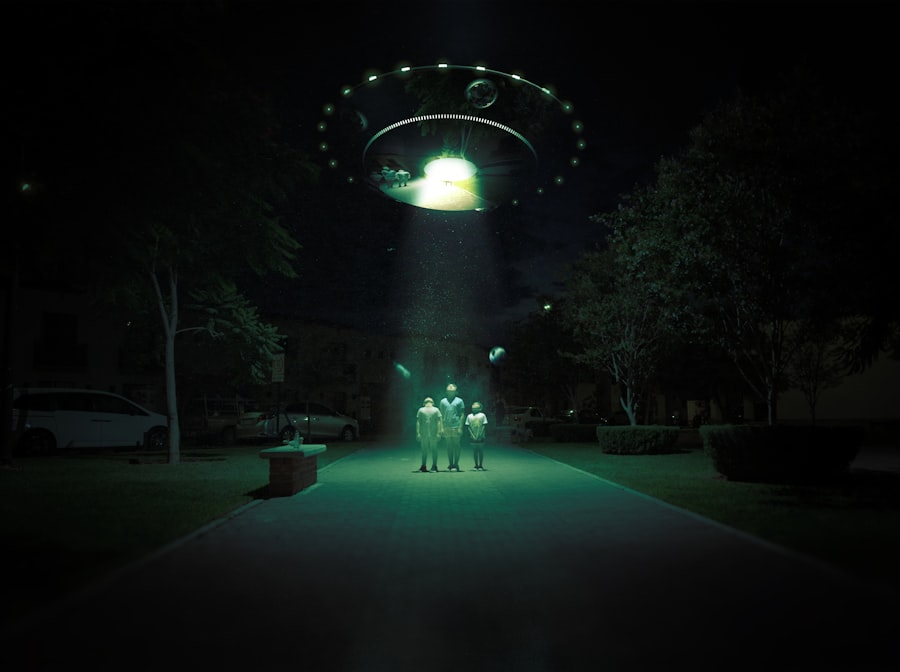
A fundamental aspect of objective UFO investigation lies in the meticulous process of identifying, cataloging, and classifying observed phenomena. This involves a systematic approach to understanding what is being seen and differentiating it from known terrestrial or natural occurrences.
The Challenge of Conventional Explanations
Before any UAP can be considered truly “unexplained,” a thorough process of elimination must be undertaken. This requires a deep understanding of existing technologies and natural phenomena.
Misidentified Aircraft and Drones
A significant percentage of UAP reports can be attributed to misidentified conventional aircraft, including military planes, commercial airliners, and even recreational drones. Factors like unusual flight patterns, lighting conditions, and observer distance can contribute to misidentification.
Atmospheric Phenomena and Celestial Objects
Atmospheric phenomena such as lenticular clouds, ball lightning, and bright meteors can often be mistaken for UAP. Similarly, misidentified stars, planets, and even balloons can contribute to the UAP reports.
Sensor Anomalies and Equipment Malfunctions
In cases involving military or civilian sensor data, it is crucial to consider the possibility of equipment malfunctions or anomalies. False positives can be generated by system errors, environmental interference, or software glitches.
Establishing a Robust Classification System
To move towards objective analysis, a standardized system for categorizing UAP sightings is essential. This allows for consistent data recording and facilitates meaningful comparisons between different encounters.
Preliminary Classification Criteria
Initial classifications might include categories like: Unidentified Aerial Object (UAO), Unidentified Maritime Object (UMO), or Unidentified Transmedium Object (UTO). Further subcategories could denote observable characteristics such as speed, altitude, shape, and observed behavior.
The Spectrum of Unexplained Phenomena
It is important to acknowledge that “unexplained” does not automatically equate to “extraterrestrial.” The classification system should allow for a broad spectrum of possibilities, from known phenomena that were simply misidentified to genuinely anomalous occurrences requiring further investigation.
The Role of Data Verification and Credibility Assessment
Not all reports are created equal. A crucial step in objective investigation is to critically assess the credibility of the source and the reliability of the data presented.
Eyewitness Credibility Scales
While anecdotal evidence should not be the sole basis for conclusions, assessing the credibility of an eyewitness can be part of a broader evaluation. Factors include the witness’s background, training, psychological state, and the consistency of their account.
Corroboration with Multiple Data Sources
The strongest evidence for a UAP encounter often comes from corroboration across multiple independent data sources. This could include multiple eyewitnesses, radar data, photographic or video evidence, and even instrumental readings.
If you’re interested in the topic of Objective UFO investigation, you might find a related article on the latest findings in this field particularly insightful. The piece delves into recent advancements in technology that are enhancing our understanding of unidentified aerial phenomena. For more details, you can read the full article here. This exploration not only highlights the importance of objective analysis but also encourages a more scientific approach to what has often been dismissed as mere speculation.
The Scientific Method Applied: Towards Objectivity in UAP Research
| Category | Metric |
|---|---|
| Sightings | Number of reported UFO sightings |
| Investigations | Percentage of sightings investigated |
| Evidence | Types of evidence collected (photos, videos, eyewitness accounts) |
| Conclusions | Percentage of cases with unidentified conclusions |
The cornerstone of any credible investigation, including that of UFOs, is the unwavering application of the scientific method. This disciplined approach ensures that conclusions are drawn from evidence, hypotheses are rigorously tested, and biases are actively mitigated.
Formulating Testable Hypotheses
The initial step in a scientific investigation is to formulate hypotheses about the observed phenomenon. For UAP, these hypotheses could range from mundane explanations to more exotic possibilities.
The Principle of Parsimony (Occam’s Razor)
When presented with multiple explanations for a phenomenon, the simplest explanation that fits the evidence is generally preferred. This principle guides the initial stages of UAP investigation, prioritizing conventional explanations.
Developing Specific Investigative Questions
Instead of broad pronouncements, objective investigation seeks to answer specific questions. For example, “Can the observed flight path be explained by known atmospheric conditions?” or “Are there any known aircraft with the reported performance characteristics?”
Rigorous Data Collection and Empirical Observation
The scientific method demands meticulous data collection and precise empirical observation. In the context of UAP, this means moving beyond subjective descriptions to capture objective, quantifiable information.
Standardized Reporting Protocols
Implementing standardized reporting protocols is crucial. This ensures that all relevant information – including time, location, atmospheric conditions, witness details, and any associated sensor data – is collected in a consistent manner.
The Use of Controlled Experiments (Where Possible)
While controlled experiments for UAP are inherently difficult, the principles can be applied. For instance, studying the visual perception of lights in various atmospheric conditions can help understand how certain phenomena might be misidentified.
Hypothesis Testing and Peer Review
Once hypotheses are formulated and data is collected, the process of hypothesis testing begins. This is where the scientific method truly distinguishes itself from speculation.
Falsification of Hypotheses
A key aspect of the scientific method is the attempt to falsify hypotheses. If a hypothesis can be disproven by the evidence, it is rejected. This iterative process leads to a refined understanding of the phenomenon.
The Indispensable Role of Peer Review
In any scientific endeavor, peer review is critical for ensuring the validity and objectivity of research. UAP research, more than ever, needs to undergo rigorous scrutiny from experts in relevant fields to identify flaws, biases, and potential errors.
The Future of UAP Investigation: Integration, Innovation, and Open Inquiry
The evolving landscape of UAP investigation is marked by a growing integration of governmental efforts, technological innovation, and a renewed commitment to open inquiry. This confluence of factors promises a more fruitful and objective approach to understanding these persistent enigmas.
Bridging the Gap Between Government and Science
A crucial development is the increasing willingness of governmental bodies to engage with the scientific community and to share data. This collaborative approach is essential for moving beyond isolated investigations.
Public-Private Partnerships for Research
Establishing public-private partnerships can leverage the resources of both government agencies and private research institutions. This can accelerate the collection, analysis, and dissemination of UAP-related information.
Open Data Initiatives and Research Platforms
Making UAP data accessible through open data initiatives and dedicated research platforms fosters transparency and encourages broader scientific participation. This allows independent researchers to contribute to the collective understanding.
Embracing Emerging Technologies and Analytical Tools
The rapid advancement of technology offers unprecedented opportunities for UAP investigation. Harnessing these tools is paramount for achieving objective insights.
Artificial Intelligence and Machine Learning in Data Analysis
AI and machine learning algorithms are proving invaluable in sifting through vast amounts of sensor data, identifying subtle anomalies, and detecting patterns that might elude human analysis.
Simulation and Modeling of Observed Phenomena
Developing sophisticated simulation and modeling capabilities allows researchers to recreate observed UAP characteristics and test hypotheses about their potential origins and behaviors under various conditions.
The Imperative of Open-Mindedness and Unbiased Inquiry
Ultimately, the success of objective UFO investigation hinges on a fundamental commitment to open-mindedness and the rigorous pursuit of truth, regardless of where it leads.
Shunning Preconceived Notions and Biases
It is imperative for investigators to actively identify and dismantle their own preconceived notions and biases. The goal is to understand the phenomenon as it is, not as we wish it to be.
Embracing the Unknown and the Possibility of Novel Discoveries
The study of UAP, by its very nature, involves confronting the unknown. A commitment to open inquiry means being prepared for discoveries that may challenge our current understanding of physics, technology, and even life itself. The pursuit of objective truth in UAP investigation is not merely an academic exercise; it is a crucial step in expanding our knowledge and confronting the profound mysteries that may lie just beyond our current comprehension.

The Varginha UFO Incident: What the Evidence Really Shows
FAQs
What is the purpose of objective UFO investigation?
Objective UFO investigation aims to gather and analyze credible evidence related to unidentified flying objects in a scientific and unbiased manner. The goal is to understand and potentially explain these phenomena through rigorous research and analysis.
What methods are used in objective UFO investigation?
Objective UFO investigation involves the use of scientific methods such as data collection, analysis of eyewitness accounts, examination of physical evidence, and collaboration with experts in various fields such as astronomy, physics, and aviation. Investigators also rely on advanced technology such as radar and infrared cameras to capture potential UFO sightings.
What are the challenges in conducting objective UFO investigation?
Challenges in conducting objective UFO investigation include the stigma associated with the topic, the lack of funding for research, and the difficulty in obtaining access to classified information related to potential UFO sightings. Additionally, the subjective nature of eyewitness accounts and the presence of hoaxes and misinformation pose challenges to conducting credible investigations.
What are the potential benefits of objective UFO investigation?
Objective UFO investigation has the potential to advance our understanding of unexplained aerial phenomena and their potential impact on national security, aviation safety, and scientific knowledge. It also provides an opportunity to engage the public in critical thinking and scientific inquiry.
How can the public contribute to objective UFO investigation?
The public can contribute to objective UFO investigation by reporting credible sightings to reputable organizations and researchers, providing detailed and accurate information about their observations, and supporting efforts to fund and conduct scientific research on the topic. Additionally, individuals can advocate for transparency and open-mindedness in the study of UFO phenomena.