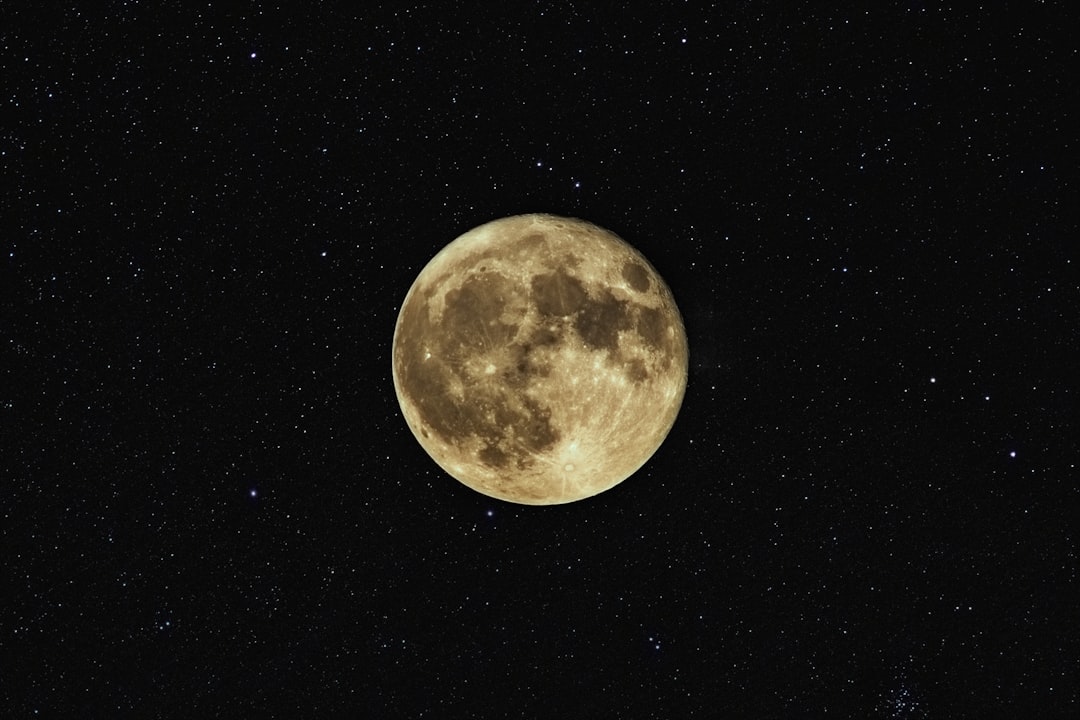
You’ve heard whispers, haven’t you? The hushed tones of conspiracy theorists, the fervent pronouncements on late-night radio shows, the late-night rabbit holes you’ve tumbled down online. And at the heart of many of these discussions, a name often emerges, a figure who dared to look at our celestial neighbor and see something far more… artificial. That name is John Lear, and his perspective on the Moon, particularly the “Hollow Moon Theory,” remains one of the most enduring and, frankly, bizarre, pieces of UFO lore.
The Man Behind the Moon Myth
Before you dive into the supposed hollowness of our satellite, it’s crucial to understand who John Lear was. He wasn’t just some random dude with a telescope. Lear was the son of the founder of Learjet, a man who grew up steeped in aviation and a family legacy of innovation. This background is important, as it lends a certain weight to his claims, even if those claims venture into the realm of the utterly improbable. You might have heard that he was a pilot, and indeed, he was. He claimed to have flown more than 18,000 hours and held numerous pilot certifications. This expertise, he argued, gave him a unique understanding of physics, aerodynamics, and even the mechanics of space travel – knowledge he felt equipped him to question the official narrative about the Moon.
A Family of Innovators, A Son of Questioners
Lear’s lineage is undeniably impressive. His father, Bill Lear, was a celebrated inventor, most famously for the Learjet, a symbol of speed and luxury. This family history of pushing boundaries and challenging the status quo might have created an environment where questioning established norms, even those as fundamental as the nature of the Moon, was not only tolerated but perhaps even encouraged. You can see how this background might lead someone to think, “If my family can reinvent the airplane, why can’t we rethink the Moon?”
From Aviation to the Cosmos: A Shift in Focus
The transition from the skies to the stars wasn’t an immediate one for Lear. His early career was firmly rooted in aviation. However, as you delve into his story, you’ll find that his interest in UFOs and extraterrestrial life began to take center stage later in his life. This wasn’t a lifelong obsession, but rather a developing fascination that, for him, culminated in a radical reinterpretation of our closest celestial companion. It’s a journey that many UFO researchers undertake – starting with unexplained aerial phenomena and eventually expanding their theories to encompass a broader cosmic conspiracy.
John Lear’s Hollow Moon theory posits that the Moon is not a natural satellite but rather an artificial structure, potentially housing extraterrestrial life. This controversial idea has sparked numerous discussions and debates among conspiracy theorists and researchers alike. For those interested in exploring more about unconventional theories surrounding celestial bodies, a related article can be found at X File Findings, which delves into various extraterrestrial phenomena and their implications on our understanding of the universe.
The Genesis of the Hollow Moon Theory
So, what exactly is the Hollow Moon Theory? At its core, it proposes that the Moon isn’t a natural celestial body formed through accretion, but rather an artificial construct. Imagine a giant, hollow sphere, possibly a spaceship or a station, put in orbit around Earth by an advanced civilization. This theory, championed by Lear, posits that the Moon’s internal structure is not solid rock but a cavernous interior, perhaps filled with technology, bases, or even living beings. This is where things get really interesting, and for many, utterly unbelievable.
The “Scientific” Evidence Presented
Lear and his proponents pointed to various observations and anomalies as “evidence” for their theory. You might have encountered some of these points in your own research. For instance, the Moon’s density is often cited. Scientists calculate the Moon’s density based on its mass and volume. Lear argued that the Moon’s density was too low for it to be a solid, natural object. He suggested that this lower density indicated a hollow interior. Furthermore, the Moon’s ringing effect when struck by probes was a significant talking point. When the Apollo missions deliberately crashed spent rocket stages onto the lunar surface, seismometers recorded vibrations that lasted for an unusually long time, leading some to compare it to the sound of a bell. Lear and others interpreted this prolonged ringing as proof of a hollow, metallic structure.
Lunar Density: A Contradiction or a Misinterpretation?
You might be thinking, “But what do scientists say about the Moon’s density?” And that’s a fair question. The scientific consensus is that the Moon’s density is consistent with a rocky, differentiated body, meaning it has a core, mantle, and crust, similar to Earth but on a smaller scale. The measurements are precise and have been refined over decades. Lear’s interpretation, however, involves a leap of faith, suggesting that the calculations don’t account for the possibility of an artificial object with a less dense internal structure. It’s a classic case of interpreting data through a pre-existing theoretical lens, rather than letting the data lead you to a conclusion.
The Resonant Moon: A Bell or a Bubble?
The “ringing” of the Moon is perhaps one of the most compelling pieces of “evidence” for the Hollow Moon Theory. The Apollo 12 seismic experiment, where a lunar module ascent stage was intentionally crashed, caused the Moon to vibrate for hours. While scientists explain this as the result of the Moon’s composition and lack of atmosphere or tectonic activity to dampen seismic waves, Lear and others saw it as definitive proof of hollowness. They envisioned a vast, empty space within the Moon that would allow seismic waves to reverberate indefinitely, much like a colossal gong. You can see why this would be an attractive idea for proponents of the theory. It’s a tangible phenomenon that seems to defy conventional explanation, at least at first glance.
The Apollo Missions: Cover-Up or Confirmation?
Lear, like many conspiracy theorists, viewed the Apollo missions not as proof of humanity’s triumph in space exploration, but as a meticulously orchestrated deception. He claimed that NASA was aware of the Moon’s artificial nature and that the missions were designed to observe and study it, while simultaneously concealing the truth from the public. You might have heard similar accusations leveled against other government agencies in different conspiracy narratives. The idea of a massive cover-up involving a groundbreaking scientific endeavor is a common trope.
Were the Astronauts Deceived?
This is a crucial element of the Hollow Moon Theory. Lear suggested that the astronauts themselves might not have been fully aware of what they were encountering. Perhaps they were briefed on a certain narrative and instructed to report only what fit that narrative. You can imagine the immense pressure and secrecy involved in such a scenario. It’s a scenario that allows for the “truth” to be known by a select few while the rest of the world remains in ignorance.
Anomalies in Lunar Photography and Data
Lear and his followers often pointed to alleged anomalies in photographs and data from the Moon missions. These could range from unusual shadows and lighting to supposed evidence of structures or technology not belonging to the Apollo program. You’ve likely seen some of these images circulated online, sparking heated debates. Are these genuine glitches, misinterpretations, or something more? The Hollow Moon proponents lean towards the latter, seeing them as clues to the Moon’s true nature.
The “Why” Behind the Hollow Moon
If the Moon is indeed artificial, then the question naturally arises: why? What purpose would such a colossal structure serve? This is where the theory branches out into various speculative scenarios, each more elaborate than the last.
A Cosmic Beacon or Observation Post
One popular idea is that the Moon serves as an ancient beacon or an observation post for an advanced extraterrestrial civilization. Imagine it as a giant, silent sentinel, observing humanity’s development throughout history. You might wonder why they would choose the Moon, but it’s a strategically perfect location, close enough to Earth for detailed observation but distant enough to remain hidden in plain sight.
Monitoring Earth’s Progress
This perspective suggests that the Moon’s purpose is to monitor Earth. It’s a celestial surveillance system, recording our technological advancements, our conflicts, and our societal evolution. You can see how this could be a terrifying thought – that an unknown entity has been watching us for millennia, with intentions we can only guess at.
Potential for Intervention
The theory doesn’t stop at observation. Some proponents suggest that the Moon could also be a platform for potential intervention. If humanity were to reach a certain technological threshold or pose a threat, the beings controlling the Moon might decide to act. This adds a layer of suspense and potential danger to the entire concept.
A Refuge or a Seed Ship
Another compelling, albeit equally speculative, idea is that the Moon is a refuge or a seed ship. Perhaps it was constructed by an ancient race fleeing a dying world, or it’s a vessel designed to carry life to other planets. You might find this idea a bit more hopeful, suggesting a noble purpose for this artificial satellite.
Preserving Ancient Knowledge
In this scenario, the Moon could be a repository of ancient knowledge, a time capsule preserving the wisdom and history of a lost civilization. It’s a romantic notion, implying that the Moon holds secrets that could unlock humanity’s own past or future.
A Noah’s Ark in Space
The “seed ship” concept often evokes the image of Noah’s Ark. The idea is that the Moon contains the genetic material or even living beings of a species, waiting for the opportune moment to colonize a new world or re-seed a devastated one. This adds a biological and evolutionary dimension to the theory.
The Impact and Legacy of John Lear’s Claims
John Lear’s Hollow Moon Theory, despite its outlandish nature, has had a surprisingly persistent impact on the fringes of ufology and popular culture. You might encounter its influence in books, documentaries, and online forums dedicated to the unexplained.
Fueling the UFO Conspiracists’ Fire
Lear’s claims provided a tangible, albeit controversial, focal point for the UFO community. It offered a “solution” to the question of where aliens are, or why they haven’t made open contact. The Moon, so familiar yet so distant, became a perfect canvas for these intricate theories. You can see how the allure of a hidden truth, a monumental secret, would resonate deeply.
Inspiring Further Speculation and Research
While dismissed by mainstream science, Lear’s theory has inspired countless other speculations. It has prompted others to look for additional “evidence” and to develop their own intricate narratives about the Moon’s true nature and its alien inhabitants. You might find that many of these theories are interconnected, building upon Lear’s initial premise.
The Scientific Rebuttal: A Firm Stance
Of course, the scientific community has consistently and unequivocally rejected the Hollow Moon Theory. The overwhelming body of evidence from lunar geology, seismology, and direct observation from space missions supports the Moon’s natural formation.
Geological Evidence and Composition
Scientists point to the Moon’s gravitational field, its composition as revealed by lunar samples, and its orbital mechanics as irrefutable proof of its natural origin. You can find extensive data and research that details the Moon’s formation through a giant impact event with the early Earth.
The Impossibility of a Hollow Structure of that Size
The sheer physics involved in maintaining a hollow sphere of the Moon’s size are astronomically prohibitive. Without an internal structure to provide support, such an object would collapse under its own gravity or be unstable in orbit. This is a fundamental challenge that the Hollow Moon Theory struggles to overcome.
John Lear’s Hollow Moon theory presents a fascinating perspective on the nature of our lunar satellite, suggesting that it may be an artificial construct rather than a natural celestial body. This idea has sparked considerable debate among enthusiasts of conspiracy theories and alternative science. For those interested in exploring similar topics, a related article can be found at Xfile Findings, which delves into various intriguing theories surrounding extraterrestrial life and unexplained phenomena.
You and the Moon: A New Perspective?
So, where does this leave you? As you gaze up at the Moon tonight, do you see it as a familiar, rocky satellite, or is there a sliver of doubt, a whisper of Lear’s controversial perspective, that might alter your perception? The Hollow Moon Theory might be dismissed by science, but its enduring presence in popular culture speaks to a fundamental human curiosity about the unknown, a desire to believe that there’s more to reality than meets the eye. You might find that exploring these unconventional ideas, even if you ultimately reject them, can be a fascinating journey into the depths of human imagination and our enduring quest for answers. The Moon, in all its perceived mysteries, continues to capture our attention, and perhaps, for some, it will forever hold the echo of John Lear’s audacious claim.

The Moon’s Soul Trap: John Lear’s Chilling Revelation
FAQs
What is the Hollow Moon theory?
The Hollow Moon theory, proposed by John Lear, suggests that the moon is actually a hollow, artificial structure created by an advanced alien civilization.
What evidence does John Lear present to support the Hollow Moon theory?
John Lear presents several pieces of evidence to support his theory, including anomalies in seismic data from moonquakes, unusual patterns in lunar craters, and reports of strange lights and structures on the moon’s surface.
What do scientists say about the Hollow Moon theory?
The scientific community widely rejects the Hollow Moon theory, citing a lack of credible evidence and the overwhelming body of scientific research that supports the moon’s natural formation.
How did the moon form according to scientific consensus?
According to the most widely accepted scientific theory, the moon formed approximately 4.5 billion years ago from the debris left over after a giant impact between Earth and a Mars-sized body called Theia.
Is there any credible evidence to support the Hollow Moon theory?
As of now, there is no credible evidence to support the Hollow Moon theory. The majority of the evidence presented by John Lear and other proponents of the theory has been widely debunked by the scientific community.