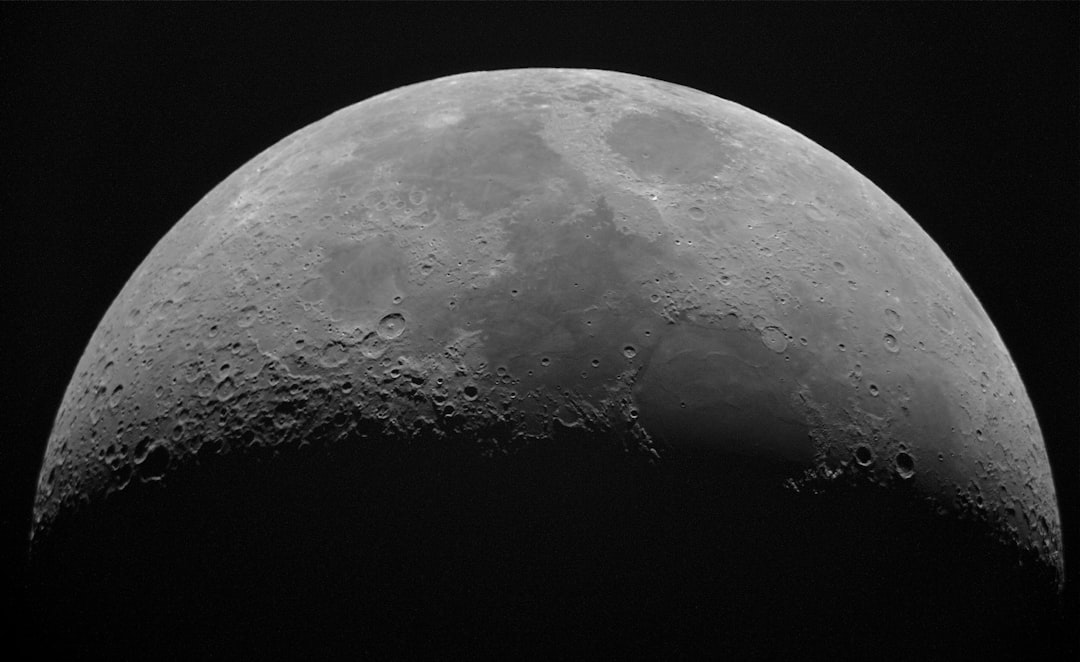
You’re sitting in a darkened room, the only light emanating from the screen before you. A title card fades in: “The Hollow Moon Theory: A Documentary Exploration.” You lean back, intrigued. For decades, humanity has gazed at the Moon, this silent, enigmatic companion in our night sky. We’ve sent missions, landed on its surface, and collected its dust, yet fundamental questions about its true nature continue to persist. This documentary promises to dive deep into one of the most compelling, and perhaps unsettling, of those questions: is the Moon hollow?
You’ve likely heard the official story. The Moon, a celestial body forged in the fiery crucible of the early solar system, a rogue planetoid slammed into Earth, flinging debris that coalesced into our natural satellite. It’s a neat, scientifically accepted explanation. But as the documentary unfolds, you’ll find yourself questioning the very foundations of this narrative. The filmmakers, with a keen eye for detail and a relentless pursuit of anomalies, begin to chip away at the established dogma, presenting a cascade of evidence that, at the very least, suggests a far more complex and perhaps engineered reality.
The Seismic Anomaly: When the Moon Rang Like a Bell
The first major pillar of doubt the documentary introduces revolves around the seismic activity of the Moon. You’re shown footage and interviews with scientists, some of whom express a quiet astonishment that has been largely suppressed by mainstream science. The key event: the Apollo missions. You learn about the seismometers left behind by the astronauts. When the missions were active, and even for years after, these instruments recorded vibrations that defied conventional understanding.
The Lunar Ring: A Sound That Echoed for Days
You’re shown graphical representations of seismic waves. Unlike earthquakes on Earth, which dissipate relatively quickly, Moonquakes, as they are called, would linger. The documentary emphasizes the remarkable duration of these reverberations. One particular event, the “ringing” of the Moon, is highlighted. When a lunar module impacted the surface, or when a large meteor struck, the Moon didn’t just shudder and settle. It rang. For hours, and in some instances, for days, seismic sensors recorded vibrations that suggest the Moon acted like a colossal bell, resonating with an unusual clarity and longevity. This, the filmmakers argue, is not what you would expect from a solid, dense body.
The Echoes of an Impact: A Solid Body’s Response
The documentary explores the physics of sound and vibration. You’re reminded that solid objects absorb and dissipate energy. Imagine dropping a bowling ball onto a pile of sand versus dropping it onto a solid steel plate. The sand would absorb much of the impact, while the steel plate would transmit vibrations. The Moon’s sustained ringing implies a structure that is far less dense and far more resilient to seismic damping than a solid, homogeneous rock ball. The filmmakers pose a direct question: what kind of celestial body would behave in such a way?
The Gravity Puzzle: A Disproportionate Pull
As the documentary progresses, the focus shifts to the Moon’s gravitational field and its peculiar density. You’re presented with data and analysis that challenges the accepted mass and volume of the Moon. The established scientific model predicts a certain gravitational pull based on its presumed density. However, observations and measurements don’t always align.
The Unexpected Density: More Than Meets the Eye?
You’re shown calculations and comparisons. The Moon’s overall density is surprisingly low for its size, especially when compared to other terrestrial bodies in our solar system. This suggests that it might not be uniformly dense, or perhaps, it contains vast internal voids. The filmmakers explore the implications of this. If the Moon were solid rock, its density would be much higher. The discrepancy, they propose, is a significant clue.
The Lunar Mass: Where Does It All Come From?
The documentary delves into the implications of this lower-than-expected density. If the Moon’s mass is what we perceive it to be, and its density is lower, then it must contain significant internal spaces. The filmmakers don’t shy away from suggesting that these spaces could be vast, internal caverns, hollowed out spaces that dramatically reduce the Moon’s overall density. This idea, though fantastical on its surface, is presented as a logical deduction from observable data.
The Hollow Moon theory has intrigued many conspiracy enthusiasts and scientists alike, suggesting that our moon may not be a solid celestial body but rather a hollow structure. For those interested in exploring this theory further, a related article can be found at XFile Findings, which delves into various aspects of the Hollow Moon hypothesis, including historical perspectives and scientific arguments surrounding this captivating idea.
The Anomaly of the Lunar Surface: Scars and Structures
The visual evidence, too, plays a crucial role in the documentary’s argument. While we often see the Moon as a pockmarked, ancient surface, a closer look, amplified by the documentary’s meticulous research, reveals patterns and features that seem out of place for a purely natural formation.
The Unexplained Formations: Geometric Oddities and Artificiality?
You’re shown high-resolution images of the lunar surface, zoomed in on areas that have been the subject of much speculation. The filmmakers highlight unusual geological formations that appear too regular, too geometrically precise to be solely the product of random geological processes. They point to straight lines, unnaturally smooth surfaces, and formations that resemble structures rather than mere craters.
The ‘Bridges’ and ‘Walls’: Signs of Intelligent Design?
The documentary focuses on specific examples, like formations that resemble bridges spanning vast chasms or structures that appear to be walls or ramparts. These features, when analyzed against the backdrop of natural lunar geology, stand out as anomalies. The filmmakers present the possibility that these aren’t natural geological phenomena, but rather remnants of something far more deliberate.
Craters and Contradictions: The Debate Over Impact Origins
The documentary also tackles the issue of craters. While impact craters are a well-understood phenomenon, the filmmakers suggest that some lunar craters exhibit characteristics that are difficult to explain solely by asteroid impacts. They might be too perfectly circular, too shallow, or have internal features that defy conventional impact mechanics. This leads to the provocative question: could some of these “craters” be something else entirely?
The Electromagnetic Enigma: Signals from Within?
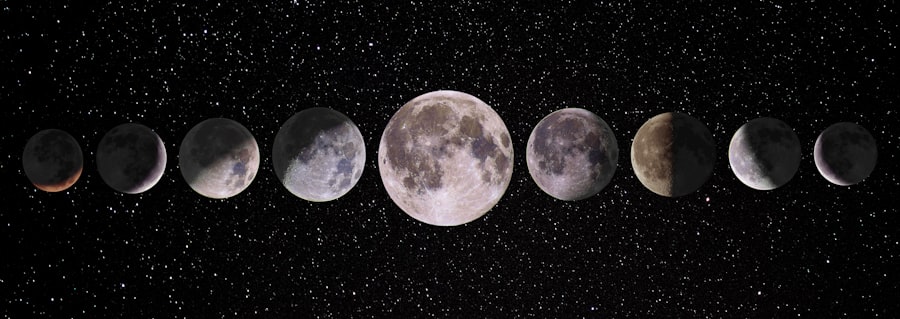
Beyond the physical and gravitational anomalies, the documentary delves into the less tangible, yet equally compelling, electromagnetic properties of the Moon. This is where the theory takes on a more speculative, yet undeniably intriguing, dimension.
The Lunar Magnetic Field: An Unexpected Shield
You’re introduced to the concept of magnetic fields and their importance for planetary bodies. Earth, for instance, has a strong magnetic field that protects us from harmful solar radiation. The Moon, however, has been generally understood to have a very weak, patchy magnetic field, if any at all. But the documentary presents evidence that challenges this assumption.
The Mysterious Magnetism: Anomalous Readings and Unexplained Sources
The filmmakers highlight data from various lunar missions that indicate localized areas of surprisingly strong magnetic activity on the Moon. These anomalies are not easily explained by the conventional model of a Moon without a global magnetic field. The question arises: what could be generating these localized magnetic fields? The documentary suggests that the presence of internal structures, perhaps metallic in nature, could account for these readings.
The ‘Shield’ Hypothesis: Protection or Purpose?
This leads to a more profound speculation. If the Moon possesses significant internal structures, and these structures are generating magnetic fields, could this have served a purpose? The documentary explores the hypothesis that these magnetic fields could have acted as a form of shield, protecting something within the Moon from cosmic radiation. This, in turn, leads to the most audacious question of all: what, or who, might have needed such protection?
The Unidentified Signals: Whispers in the Electromagnetic Spectrum
Perhaps the most captivating, and controversial, aspect of the documentary’s exploration of the hollow Moon theory lies in its examination of unidentified signals emanating from the Moon. You’re presented with historical accounts and scientific analyses of peculiar electromagnetic transmissions.
The ‘Whistle-Punk’ and Other Anomalies: Sounds of the Unknown
The documentary revisits the Apollo missions, not just for their seismic data, but also for anecdotal evidence and records of unusual radio signals. The infamous “whistle-punk” phenomenon, a peculiar whistling sound picked up by lunar module microphones, is discussed. While often dismissed as instrument malfunction or atmospheric anomalies, the filmmakers argue that the patterns and characteristics of these sounds are not easily explained away.
The Unidentified Transmissions: A Language of the Cosmos?
Beyond the “whistle-punk,” the documentary presents evidence of other unexplained transmissions originating from the Moon. These are not random bursts of static; they are described as having structure and patterns, suggesting a deliberate origin. The filmmakers propose that these signals could be a form of communication, or perhaps residual transmissions from a long-gone technological civilization.
The Theoretical Frameworks: From Natural Origins to Extraterrestrial Engineering
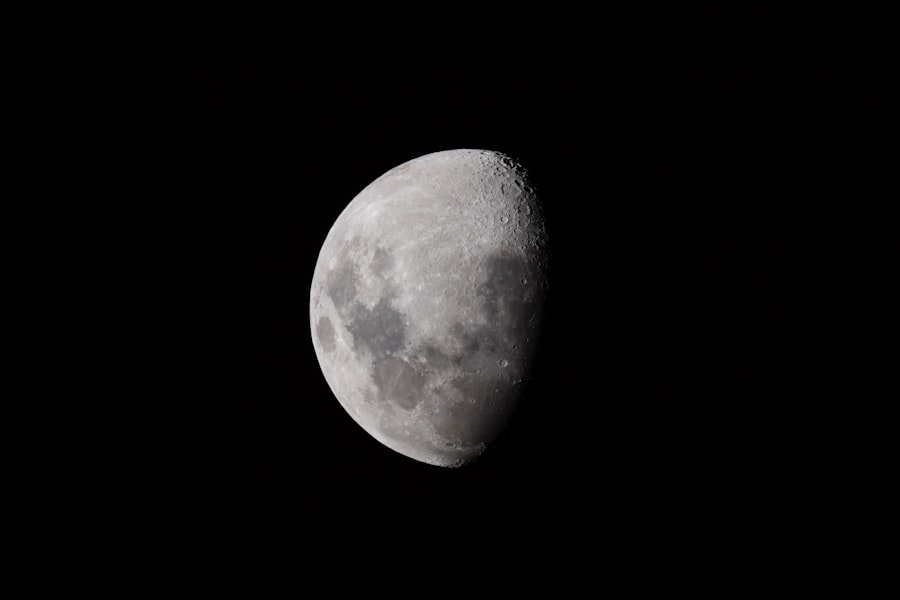
Having laid out the evidence, the documentary then pivots to exploring the theoretical frameworks that attempt to explain the hollow Moon phenomenon. It’s a journey from the realm of plausible, albeit unconventional, natural explanations to the more speculative, yet undeniably compelling, idea of extraterrestrial intervention.
Naturalistic Hypotheses: Beyond Conventional Geology
The filmmakers begin by exploring whether the hollow Moon theory can be explained by natural processes, albeit extreme ones. They consider various scenarios, pushing the boundaries of known geological and astronomical science.
Extreme Volcanism and Internal Gas Pressure: A Bubbling Moon?
One hypothesis explored is the possibility of extreme ancient volcanic activity or immense internal gas pressure that could have hollowed out the Moon from the inside. The documentary delves into the conditions of the early solar system and whether such cataclysmic events could have resulted in a hollowed-out Moon. However, they also present counterarguments, suggesting that the Moon’s current geological state doesn’t fully support these explanations.
The Accretion Process: A Different Kind of Formation
Another avenue explored is the idea that the Moon might have formed through a different accretion process, perhaps accumulating from less dense materials or at a faster rate, leading to an inherently less dense and potentially hollow structure. The documentary examines the various theories of planetary formation and whether any of them could lead to a hollow Moon.
Extraterrestrial Engineering: The Ultimate Construct?
This is where the documentary truly pushes the boundaries of conventional thought. If natural explanations fall short, then what else could be responsible for a hollow Moon? The filmmakers don’t shy away from the idea of advanced extraterrestrial intelligence.
The ‘Artificial Satellite’ Hypothesis: A Purpose-Built Object
The documentary presents the “artificial satellite” hypothesis, suggesting that the Moon might not be a natural formation at all, but rather an object deliberately constructed or modified by an advanced civilization. They draw parallels to hypothetical megastructures that could be built by advanced civilizations, posing the Moon as potentially the ultimate example.
Motivations and Mechanics: Why and How?
The question of “why” and “how” becomes paramount here. Why would an advanced civilization create or modify a hollow Moon? The filmmakers speculate on various possibilities: as a base of operations, a terraforming project, a repository of knowledge, or even a giant observatory. They also ponder the technological prowess required to achieve such a feat, hinting at capabilities far beyond our current understanding.
The Hollow Moon theory has intrigued many enthusiasts and researchers alike, sparking debates about the possibility of our moon being an artificial structure. For those interested in exploring this captivating topic further, a related article can be found at XFile Findings, which delves into various theories and evidence surrounding the moon’s enigmatic nature. This documentary not only presents the Hollow Moon theory but also examines the broader implications of such ideas on our understanding of space and celestial bodies.
The Implications for Humanity: Rethinking Our Place in the Cosmos
| Metrics | Data |
|---|---|
| Documentary Title | Hollow Moon theory |
| Release Date | [Insert release date] |
| Director | [Insert director’s name] |
| Duration | [Insert duration in minutes] |
| Viewership | [Insert number of viewers] |
| Rating | [Insert rating out of 10] |
As the documentary draws to a close, it leaves you with a profound sense of wonder and, perhaps, a touch of unease. The implications of a hollow Moon, whether a natural anomaly or an artificial construct, are staggering.
The Shifting Paradigm: A New Understanding of the Moon
The documentary fundamentally challenges your perception of the Moon. It’s no longer just a silent rock in the sky. It becomes a cosmic enigma, a potential testament to forces and intelligences we’ve only begun to imagine. The established narrative, which you’ve likely taken for granted, is thrown into question, forcing you to re-evaluate your understanding of our solar system.
Scientific Re-evaluation: The Need for New Perspectives
The filmmakers implicitly call for a re-evaluation of existing scientific paradigms. They argue that the persistent anomalies surrounding the Moon demand a fresh look, a willingness to explore unconventional hypotheses, and a move beyond the limitations of established theories. The documentary suggests that the scientific community, in its pursuit of verifiable data, may have overlooked or dismissed crucial pieces of evidence.
Philosophical and Existential Questions: Our Cosmic Context
Beyond the scientific, the implications are deeply philosophical and existential. If the Moon is hollow, and potentially artificial, it suggests that we are not alone in the universe, and that advanced civilizations may have been present in our cosmic backyard long before humanity’s recorded history. This realization forces you to confront questions about our own place in the cosmos, the nature of intelligence, and the potential for a grander, more complex reality than we’ve previously conceived.
The Future of Lunar Exploration: A New Frontier of Discovery?
The documentary concludes with a forward-looking perspective, suggesting that the hollow Moon theory, far from being a fringe conspiracy, could serve as a catalyst for a new era of lunar exploration.
Unanswered Questions: A Call to Further Investigation
You’re left with a multitude of unanswered questions. What truly lies within the Moon? Are there hidden chambers, ancient artifacts, or even evidence of past inhabitants? The documentary argues that these questions are not merely fodder for science fiction, but urgent calls for further, more comprehensive, investigation.
The Search for Truth: Embracing the Unknown
Ultimately, “The Hollow Moon Theory: A Documentary Exploration” is an invitation. It’s an invitation to question, to explore, and to embrace the unknown. It’s a reminder that the universe is vast and mysterious, and that sometimes, the most profound truths lie just beyond the edge of our current understanding, waiting to be discovered. You leave the darkened room with your gaze drawn upwards, looking at the Moon with new eyes, forever changed by the possibilities it now holds.

The Moon’s Soul Trap: John Lear’s Chilling Revelation
FAQs
What is the Hollow Moon theory?
The Hollow Moon theory suggests that the moon is actually hollow and may be an artificial satellite placed in orbit around the Earth by an advanced extraterrestrial civilization.
What evidence supports the Hollow Moon theory?
Supporters of the Hollow Moon theory point to anomalies in seismic data from moonquakes, as well as unusual mass concentrations and surface features observed by spacecraft. They also cite the moon’s low density and the presence of large, hollow caverns as potential evidence.
What are some criticisms of the Hollow Moon theory?
Critics argue that the evidence cited by supporters of the Hollow Moon theory can be explained by natural geological processes. They also point out that the theory lacks a plausible mechanism for how an artificial moon could have been placed in orbit around the Earth.
Has the Hollow Moon theory been explored in a documentary?
Yes, there have been documentaries that explore the Hollow Moon theory, presenting both the evidence and the criticisms of the theory. These documentaries often feature interviews with scientists, researchers, and proponents of the theory.
What is the current scientific consensus on the Hollow Moon theory?
The scientific consensus is that the Hollow Moon theory is not supported by credible evidence and is considered to be a fringe or pseudoscientific idea. Mainstream scientists maintain that the moon is a natural satellite formed from the debris of a giant impact with Earth billions of years ago.