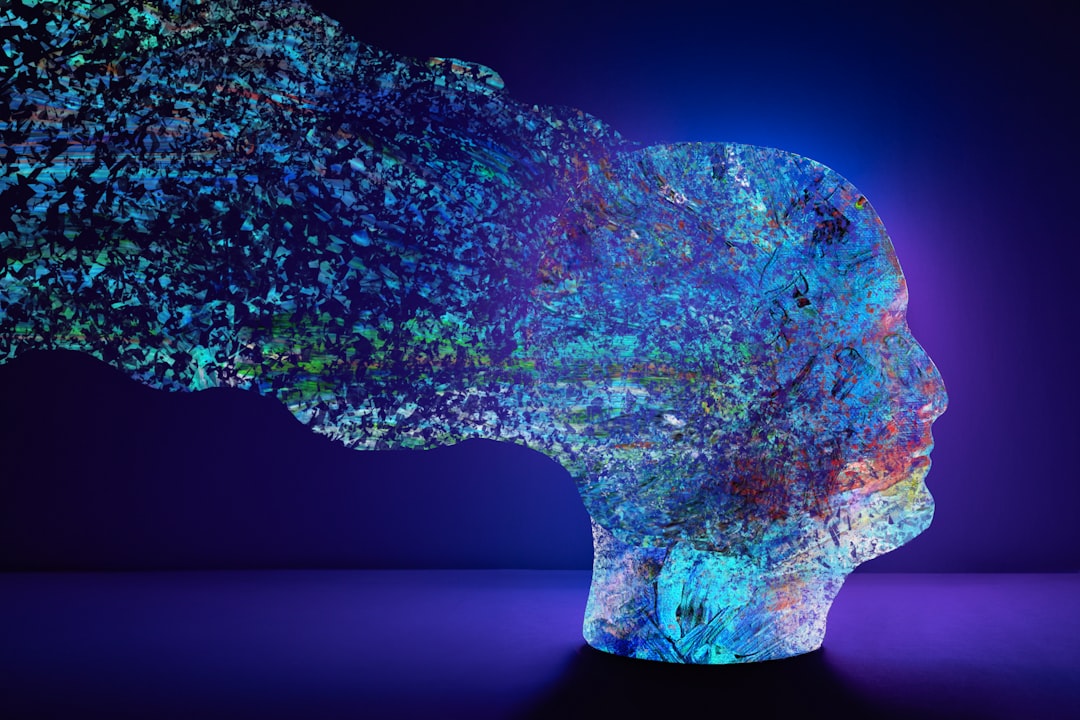
You’ve likely pondered it at some point: the great mystery of consciousness. What is it? Where does it come from? And perhaps most intriguingly, where does it go when your physical form ceases to function? For millennia, humanity has grappled with these questions, offering a tapestry of beliefs and theories, from the eternal soul to the ephemeral spark of sentience. Now, imagine a new thread being woven into this ancient fabric, a perspective that proposes something both familiar and profoundly novel: Consciousness Recycling Theory. This isn’t simply a rehash of reincarnation as you might understand it; it’s a scientific and philosophical exploration into the very nature of consciousness as a recyclable, reconfigurable entity, rather than a static, immortal soul.
You might be accustomed to thinking of consciousness as intrinsically linked to your brain, a product of biological processes that dissolves upon death. Consciousness Recycling Theory, however, challenges this fundamental assumption. It posits that consciousness isn’t a byproduct, but rather a fundamental aspect of reality, akin to energy or matter, that can be conserved and transformed.
Challenging the Biological Determinism of Consciousness
The dominant paradigm in neuroscience often points to the brain as the sole originator of consciousness. Damage to specific brain regions demonstrably alters or extinguishes conscious experience, leading many to conclude that consciousness is purely a biological phenomenon.
The Brain as an Interface, Not a Generator
Consciousness Recycling Theory proposes a different interpretation. Instead of viewing the brain as the generator of consciousness, it suggests the brain acts as a sophisticated biological interface, a receiver and broadcaster for a more fundamental form of consciousness that exists independently. Think of your television: it displays images and sounds, but the broadcast signal originates elsewhere. Your brain, in this analogy, is the television.
The Quantum Entanglement Analogy
Drawing parallels with quantum mechanics, specifically entanglement, offers a compelling avenue for understanding this non-local aspect of consciousness. When particles become entangled, they remain connected regardless of the distance separating them. Could consciousness, in some way, exist in a state of quantum entanglement with a universal consciousness field?
The Concept of a Universal Consciousness Field
To grasp Consciousness Recycling Theory, you must first entertain the idea of a universal consciousness field. This isn’t a mystical, nebulous concept, but rather a hypothetical underlying substratum of reality that permeates all existence. It’s the canvas upon which all experiences are painted.
Is Consciousness Fundamental?
Philosophers and physicists alike have long debated whether consciousness is fundamental to the universe or an emergent property of complex systems. Consciousness Recycling Theory leans heavily towards the former, suggesting that consciousness, in its most basic form, is an intrinsic feature of the cosmos.
Information as the Currency of Consciousness
If consciousness is a field, then information is its fundamental currency. Your personal consciousness, as you experience it, is a unique configuration of this universal field, shaped by your life experiences, memories, and genetic makeup. When your physical form dies, this specific configuration, while no longer bound to a single brain, doesn’t simply vanish.
The Consciousness Recycling Theory posits that consciousness is not a one-time phenomenon but rather a process of recycling experiences and knowledge across different lifetimes. This intriguing concept is further explored in a related article that delves into the implications of consciousness on personal identity and the continuity of self. For more insights into this fascinating topic, you can read the article here: Exploring the Depths of Consciousness Recycling Theory.
The Mechanics of Consciousness Recycling
So, if consciousness isn’t destroyed, what happens to it? Consciousness Recycling Theory suggests a process of dissolution and reintegration, a cosmic recycling program for your unique essence.
The Dissolution of the Individual Configuration
Upon death, the biological interface – your brain – ceases to function. This means the specific arrangement of neural pathways and electrochemical signals that constituted your individual conscious experience begins to break down.
The Release of Conscious Information
Imagine your consciousness as a complex data stream. When your physical body dies, this data stream is no longer being actively processed by your brain. However, the information itself, the intricate patterns and connections that made you you, is not erased. It is released back into the universal consciousness field.
The Role of Entropic Decay
While the information isn’t destroyed, it does undergo a form of entropic decay within the individual configuration. The sharp edges of your memories and personality begin to soften, much like a sculpted ice figure slowly melting back into the water from which it was formed. This isn’t a loss, but a rebalancing.
Reintegration into the Universal Consciousness Field
Once released, your conscious information doesn’t dissipate into nothingness. Instead, it rejoins the universal field, becoming part of the raw material for future conscious experiences.
The Infinite Pool of Potentiality
The universal consciousness field is an infinite pool of potentiality, containing all possible configurations of consciousness. Your individual consciousness, upon dissolution, enriches this pool with its unique patterns and experiences.
The Echoes of Past Lives
This reintegration process provides a scientific framework for the concept of reincarnation. The recycled conscious information doesn’t disappear; it remains available to be reconfigured and manifest in new forms, potentially leading to what individuals might perceive as past lives. The “echoes” of your past experiences, not as precise memories but as subtle influences, could shape the predispositions and inclinations of a new consciousness.
Evidence and Analogies: Bridging the Gap

While Consciousness Recycling Theory remains a speculative framework, several lines of inquiry and analogies offer intriguing support for its core tenets. You might be surprised to find connections in fields you wouldn’t immediately associate with consciousness.
The Conservation of Energy and Information
The fundamental laws of physics, particularly the conservation of energy, offer a powerful analogy. Energy cannot be created or destroyed, only transformed. If consciousness is a form of energy or deeply intertwined with it, then its conservation becomes a plausible concept.
Information Theory and Consciousness
Modern information theory suggests that information itself is a fundamental aspect of reality. If consciousness is intrinsically linked to information processing and storage, then the idea of information being conserved, even when the physical system processing it ceases to exist, gains traction.
The Observer Effect in Quantum Physics
The observer effect in quantum mechanics, where the act of observation influences the state of a quantum system, hints at a more active role for consciousness in shaping reality. This suggests consciousness isn’t merely a passive recipient of sensory input but an integral part of the quantum landscape.
Near-Death Experiences (NDEs) and Out-of-Body Experiences (OBEs)
Anecdotal accounts of NDEs and OBEs often describe experiences of consciousness seemingly separating from the physical body. These phenomena, while difficult to scientifically verify, align with the idea of consciousness existing independently of the brain.
Dissociation from the Physical Form
During NDEs, individuals often report a sense of detachment from their physical bodies, observing events from an external perspective. This could be interpreted as a temporary decoupling of consciousness from its biological interface, a glimpse into its potential for independent existence.
The Sense of a Unified Field
Some NDE accounts include a feeling of merging with a loving, radiant light or an all-encompassing presence. This resonates with the concept of the universal consciousness field, a state of unified awareness that transcends individual identity.
Reincarnation: A New Interpretation
Consciousness Recycling Theory offers a radical reinterpretation of reincarnation, moving it from the realm of religious dogma to a potentially observable, albeit complex, natural phenomenon. You might have always associated reincarnation with the transmigration of a fixed soul, but this theory suggests a more fluid process.
Beyond the Fixed Soul
The traditional concept of reincarnation often involves a permanent, unchanging soul that inhabits different bodies. Consciousness Recycling Theory proposes a more dynamic model where it’s not a fixed entity, but rather a configuration of information that is reformed.
The “Fingerprint” of Consciousness
Your unique consciousness is like a complex, intricate fingerprint. When recycled, elements of that fingerprint – the patterns of your experiences, your inclinations, your very way of perceiving the world – can be incorporated into new configurations.
Not a Direct Copy, But an Influence
It’s crucial to understand that this isn’t about a direct copy-paste of your entire being into a new individual. Instead, it’s about the recycled conscious information influencing the formation of new conscious experiences. You might, for example, have a predisposition towards music, a talent for languages, or a certain emotional sensitivity that isn’t fully explained by your current genetic lineage. These could be subtle echoes of past configurations.
The Purpose of Recycling: Evolution and Growth
Why would consciousness be recycled? Consciousness Recycling Theory suggests this process serves a grander purpose: the continuous evolution and growth of consciousness itself.
The Universe as a Learning Organism
Imagine the universe as a vast, evolving organism, with individual consciousnesses as its sensory and experiential units. Each life lived contributes to the universe’s learning and development.
Expanding the Spectrum of Experience
Through the recycling of diverse conscious configurations, the universal consciousness field continually expands its repertoire of experiences, learning about the myriad facets of existence from every possible perspective. This leads to a richer, more nuanced understanding of reality.
Consciousness recycling theory presents a fascinating perspective on the nature of consciousness and its potential to be reused across different lifetimes. This concept aligns with various philosophical and scientific discussions about the continuity of consciousness. For those interested in exploring this topic further, a related article can be found on the X File Findings website, which delves into the implications of consciousness and its mysteries. You can read more about it here. This exploration not only enhances our understanding of consciousness but also invites us to reflect on the broader questions of existence and identity.
Implications for Life and Death
| Consciousness Recycling Theory Metrics | Explanation |
|---|---|
| Reincarnation | The belief that consciousness is reborn into a new body after death. |
| Karma | The concept that the consequences of a person’s actions in this life will affect their future lives. |
| Past Life Regression | A technique used to access memories of past lives through hypnosis or meditation. |
| Conscious Evolution | The idea that individuals can actively work towards spiritual growth and development across multiple lifetimes. |
If Consciousness Recycling Theory holds true, it would fundamentally alter your perception of life, death, and your place in the cosmos. The fear of oblivion might be replaced by a sense of cosmic continuity.
Living with Purpose and Awareness
Understanding that your consciousness is part of a larger, ongoing process can imbue your life with a profound sense of purpose. Each experience, each interaction, becomes a valuable contribution to this grand cosmic recycling.
The Importance of Your Unique Contribution
Your individual consciousness is a unique expression of the universal field. The way you live, the choices you make, and the experiences you gather are all valuable contributions that will be recycled and integrated, shaping future consciousnesses.
Embracing the Present Moment
This perspective encourages you to fully embrace the present moment, knowing that your current existence is a precious and temporary configuration. The focus shifts from dwelling on the past or fearing the future to appreciating the richness of the now.
Confronting the Fear of Death
The concept of death as an absolute ending can be a source of immense fear. Consciousness Recycling Theory offers a comforting alternative, suggesting that death is not an annihilation but a transformation.
Death as a Transition, Not an End
Instead of an abrupt cessation, death becomes a transition, a release back into the source from which all consciousness arises. The fear of non-existence is replaced by the understanding of continuity.
A Legacy Beyond the Physical
Your legacy, in this framework, extends far beyond your physical possessions or the impact you have on others during your lifetime. It encompasses the very essence of your consciousness, which will continue to ripple through the universe.
The Future of Consciousness Research
Consciousness Recycling Theory invites further scientific and philosophical exploration. It opens up new avenues for research into the nature of consciousness, its relationship with the physical world, and the possibility of phenomena previously dismissed as purely spiritual.
Interdisciplinary Collaboration
This theory necessitates a collaborative effort between physicists, neuroscientists, philosophers, and even psychologists. By pooling their knowledge and perspectives, these disciplines can begin to unravel the complexities of consciousness.
Developing New Methodologies
New methodologies might be required to investigate these speculative concepts. This could involve exploring subtle energy fields, advanced forms of information processing, or even innovative approaches to studying subjective experiences.
In essence, Consciousness Recycling Theory invites you to view yourself not as a fleeting spark destined to extinguish, but as an integral, recyclable component of a vast and dynamic cosmic consciousness. It’s a perspective that challenges your deepest assumptions about existence, offering a glimpse into a universe where every experience, every life lived, contributes to an ongoing, eternal cycle of becoming. You are a temporary, precious configuration of a fundamental aspect of reality, and when your current form ceases to be, your essence, your unique conscious fingerprint, will not vanish but will return, to be woven anew into the fabric of existence.

The Moon’s Soul Trap: John Lear’s Chilling Revelation
FAQs
What is the Consciousness Recycling Theory?
The Consciousness Recycling Theory proposes that consciousness is not limited to individual beings, but rather is a universal and fundamental aspect of reality that is constantly recycled and redistributed.
Who developed the Consciousness Recycling Theory?
The Consciousness Recycling Theory was developed by philosopher and cognitive scientist David Chalmers, who is known for his work on the philosophy of mind and consciousness.
What are the key principles of the Consciousness Recycling Theory?
The key principles of the Consciousness Recycling Theory include the idea that consciousness is a fundamental feature of the universe, that it is not tied to individual brains, and that it can be recycled and redistributed in various ways.
How does the Consciousness Recycling Theory differ from other theories of consciousness?
The Consciousness Recycling Theory differs from other theories of consciousness in that it posits a more expansive and interconnected view of consciousness, as opposed to the idea that consciousness is solely generated by individual brains.
What are the implications of the Consciousness Recycling Theory?
The implications of the Consciousness Recycling Theory are wide-ranging and have the potential to impact our understanding of consciousness, the nature of reality, and our place within it. This theory could also have implications for fields such as neuroscience, psychology, and philosophy.