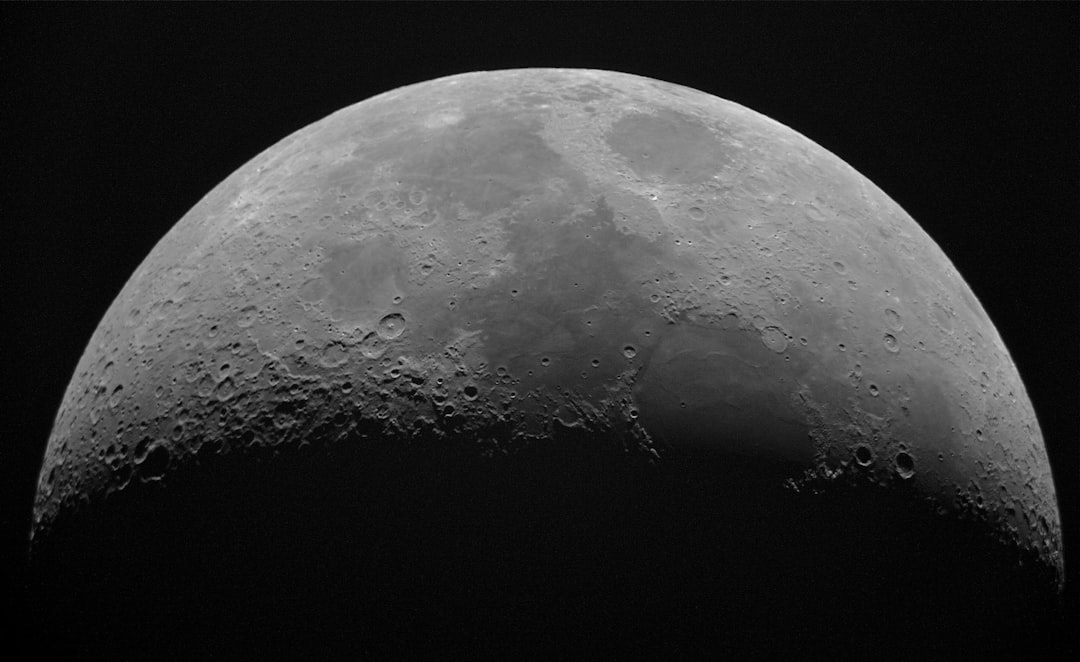
You’ve always been fascinated by the moon, haven’t you? That silent sentinel in our night sky, a constant companion that has inspired poets, lovers, and dreamers for millennia. You’ve gazed at its craters, its maria, its ethereal glow, and perhaps, like countless others, wondered about its origins. For so long, the prevailing scientific consensus has been the Giant Impact Hypothesis – a colossal collision with a Mars-sized protoplanet named Theia, shattering both bodies and eventually coalescing to form our moon. It’s a compelling narrative, a cosmic drama of immense scale. But what if there’s more to the story? What if, for a fleeting, magnificent moment in the dawn of our solar system, the moon didn’t just form, but it rang?
This is the provocative proposition of a new theoretical framework, one that’s sending ripples of excitement and vigorous debate through the astronomical community. It’s a theory that asks you to imagine a celestial body so young, so molten, so energetic, that its very formation could have produced a resonant vibration, a cosmic chime heard across the nascent solar system. This isn’t just a fanciful notion; it’s a rigorously explored idea, grounded in cutting-edge physics and computational modeling, that seeks to explain certain anomalies in lunar composition and dynamics that have long puzzled scientists. You’re about to embark on a journey into this audacious hypothesis, exploring its foundations, its implications, and the potential paradigm shift it represents.
The Conventional Wisdom: The Giant Impact Hypothesis
Before you delve into the novel idea, it’s crucial to understand the bedrock upon which it builds – and sometimes, challenges. For decades, the Giant Impact Hypothesis has been the dominant explanation for the Moon’s formation. You learned about it in school, perhaps seen artistic renditions of the cataclysmic event. It posits that approximately 4.5 billion years ago, a Mars-sized object, dubbed Theia, collided with the proto-Earth. This wasn’t a glancing blow, but a head-on or near-head-on impact of unimaginable force.
The Mechanics of Collision
Imagine the raw power involved. Theia, a celestial body with a mass comparable to Mars, slammed into Earth with an energy that dwarfs anything you can conceive. This collision would have vaporized a significant portion of both Theia and Earth’s outer layers, ejecting a massive debris disk into orbit around our planet.
The Debris Disk
This fiery ring of molten rock and vaporized material wasn’t a stable entity. Under the relentless pull of Earth’s gravity, this debris began to clump together. Think of it like dust motes gathering in a sunbeam, but on a cosmic scale, and fueled by immense gravitational forces and residual heat.
Accretion and Coalescence
Over time, this debris disk would have coalesced, gravitationally attracting more and more material. Smaller chunks would collide and merge, growing larger, until a critical mass was reached. This process, known as accretion, would have led to the formation of a single, large body – your Moon.
Explaining Lunar Characteristics
The Giant Impact Hypothesis has been remarkably successful in explaining several key features of the Moon.
Isotopic Similarities
One of the strongest pieces of evidence supporting the hypothesis is the striking similarity in isotopic composition between Earth and Moon rocks. Isotopes are atoms of the same element with different numbers of neutrons. The near-identical ratios of oxygen isotopes, for example, suggest that the Moon formed from material that was intimately mixed with Earth’s mantle. This intimate mixing is exactly what you’d expect from a violent impact that thoroughly homogenized the colliding bodies’ outer layers.
Lunar Angular Momentum
The hypothesis also accounts for the Moon’s orbital characteristics, including its angular momentum. The immense energy of the impact could have imparted the necessary spin and orbital velocity to the debris disk, which then naturally evolved into the Moon’s current orbit.
Absence of Volatiles
The Moon is notably depleted in volatile elements (those that easily evaporate, like water and potassium) compared to Earth. The intense heat of the giant impact would have vaporized these elements, allowing them to escape the forming Moon.
The intriguing “Moon rang like a bell” theory has captured the imagination of many, suggesting that the Moon may have a hollow structure, which could imply significant implications for our understanding of its formation and history. For a deeper exploration of this theory and its related concepts, you can read more in the article found here: Moon Rang Like a Bell Theory. This article delves into various scientific perspectives and theories surrounding the Moon’s unique characteristics and the mysteries that continue to fascinate researchers and enthusiasts alike.
The “Ringing Moon” Hypothesis: A Symphony of Formation
While the Giant Impact Hypothesis provides a robust framework, it hasn’t fully answered all the questions. Certain observations, particularly regarding the precise composition and internal structure of the Moon, have led some researchers to propose an enhancement, or even a modification, of the traditional model. This is where the “Ringing Moon” hypothesis emerges, suggesting that the Moon’s formation wasn’t a quiescent accretion but a dynamic, oscillatory event.
The Premise of Resonance
The core idea is that as the massive debris disk coalesced around Earth, the process wasn’t a smooth, gradual clumping. Instead, the immense pressures and gravitational forces at play could have induced a powerful resonant vibration within the nascent Moon. Imagine striking a bell – it doesn’t just produce a dull thud; it emits a clear, sustained tone. The “Ringing Moon” hypothesis proposes that the forming Moon, initially a molten sphere of unimaginable heat and density, experienced a similar, albeit vastly more powerful, resonant event.
The Scale of the Event
You need to picture this molten sphere. It’s not a solid rock yet. It’s a sea of liquid magma, stretching and contracting under immense gravitational stress. This stress, particularly in the early stages of accretion, could have been so intense and so synchronized that it set the entire body into a colossal vibration.
The Nature of the “Ring”
This “ring” isn’t an audible sound in the way you understand it. It’s a vibrational mode, a wave of energy propagating through the molten material. Think of it like the way a drumhead vibrates when struck, creating complex patterns of motion. For the Moon, this vibration would have been on a scale that influenced its internal structure and material distribution.
The Role of Theia’s Impact Dynamics
The specific characteristics of Theia’s impact are crucial to this new theory. It’s not just that Theia hit, but how it hit that might have set the stage for the Moon’s resonant formation.
Oblique vs. Direct Impact
Different impact angles and velocities would have resulted in varying amounts of material ejected and different initial configurations of the debris disk. A more oblique impact, for instance, might have created a less uniform disk, potentially leading to more chaotic initial accretion.
The “Tidal Flutter”
This theory suggests that the initial stages of accretion might have been characterized by what the proponents call “tidal flutter.” As the proto-Moon gathered mass, Earth’s strong tidal forces would have constantly stretched and squeezed it. If these forces were applied in a rhythm that resonated with the natural vibrational frequencies of the molten proto-Moon, it could have amplified those vibrations, leading to a sustained “ringing” effect.
The “Lunar Slingshot”
Another intriguing aspect is the idea of a “lunar slingshot” mechanism. As the proto-Moon grew, it might have briefly been captured by Earth’s gravity in a highly elliptical orbit. The rapid passage through perigee (closest approach to Earth) could have subjected the proto-Moon to intense, rapidly changing tidal forces, further exciting its resonant modes.
Evidence and Predictions: What Does the “Ring” Leave Behind?
If the Moon did indeed “ring” during its formation, what observable evidence would be left behind? This is where the theoretical physicists and geologists work hand-in-hand, translating abstract concepts into testable predictions.
Internal Structure and Compositional Anomalies
The resonance could have had a profound impact on how materials settled within the Moon as it cooled.
Layering and Differentiation
Imagine a liquid being stirred vigorously. The denser materials tend to sink to the bottom, while lighter materials rise. The resonant vibrations could have acted as a powerful mixer, influencing the way heavy elements like iron and lighter silicate minerals segregated within the proto-Moon. This could explain certain subtle variations in the Moon’s density and elemental distribution that are difficult to fully account for with a simple impact and accretion model.
The Lunar Core
The size and composition of the Moon’s core are still subjects of active research. The “ringing” process might have played a role in how the metallic core formed and differentiated from the silicate mantle. A sustained, vigorous vibration could have facilitated the efficient sinking of dense iron to the center.
Anomalous Lunar Rocks and Structures
Certain lunar samples, brought back by the Apollo missions, have long presented puzzles.
The Lunar Magma Ocean
The prevailing model suggests the Moon was once covered by a deep magma ocean. The “ringing” hypothesis offers a new perspective on how this ocean might have evolved and solidified. The resonant waves could have created specific patterns of crystallization and cooling within this ocean.
Isotopic Heterogeneities
While overall isotopic similarities are strong evidence for the Giant Impact, there are subtle, localized variations in isotopic ratios found in some lunar rocks. The “ringing” could have led to localized mixing and then differential solidification, trapping these subtle isotopic signatures.
Tidal Interactions and Orbital Evolution
The resonant vibration might have also influenced the Moon’s early orbital evolution.
Tidal Dissipation
The internal friction generated by the resonant vibrations would have caused significant tidal dissipation. This dissipation would have affected the rate at which the Moon receded from Earth and how its orbit evolved. The “ringing” phase could have been a period of intense tidal energy transfer.
Moonquakes and Lunar Seismology
Modern seismometers left on the Moon by the Apollo missions have detected “moonquakes.” While most are attributed to tidal stresses and meteoroid impacts, the “ringing” hypothesis might suggest other deeper, residual vibrational modes that could still be subtly influencing lunar seismicity.
Computational Modeling: Simulating the Cosmic Symphony
To move beyond speculation, the “Ringing Moon” hypothesis relies heavily on sophisticated computational modeling. These are not your average computer programs; they are complex simulations that attempt to replicate the extreme physics of planetary formation.
The Physics of High-Energy Collisions
Simulating the Giant Impact requires capturing the physics of matter under immense pressure and temperature, often described by hydrodynamics and shock physics.
Material Properties Under Extreme Conditions
Scientists need to model how materials behave when they are vaporized, liquefied, and subjected to forces that far exceed anything experienced on Earth. This involves complex equations of state for rock and metal.
Gravitational Dynamics
The gravitational interactions between the Earth, Theia, and the debris disk are paramount. These simulations must accurately track the positions and velocities of countless particles over millions of years.
Modeling Resonant Vibrations
The novel aspect of this hypothesis is the incorporation of resonant vibrational modes into these simulations.
Oscillatory Models
Researchers are developing models that specifically simulate the propagation of seismic waves through a molten, accreting body. They are exploring how specific frequencies and amplitudes of vibration could be generated and sustained.
Material Response to Oscillation
A key challenge is accurately modeling how the molten lunar material would respond to these vibrations. This includes how density gradients would change, how convection currents might be influenced, and how crystallization would proceed in a dynamically oscillating environment.
Comparing Simulation Results with Observations
The ultimate test for any hypothesis is whether its predictions match what we observe.
Density Profiles
The models are used to predict internal density profiles of the Moon and compare them with data from lunar orbiters that measure gravitational anomalies.
Isotopic Distributions
Researchers are trying to see if their simulations can reproduce the subtle isotopic heterogeneities observed in lunar samples.
Thermal History
The energy released by resonant vibrations would have influenced the Moon’s thermal history. Models are being developed to see if this can explain observed thermal gradients and cooling rates.
The intriguing concept of the Moon ringing like a bell has captivated scientists and enthusiasts alike, suggesting that the lunar surface may possess unique geological properties. For those interested in exploring this phenomenon further, a related article can be found at X File Findings, which delves into the various theories surrounding the Moon’s seismic activity and its implications for our understanding of its formation. This exploration not only sheds light on the Moon’s mysteries but also invites us to ponder the broader questions of our universe.
The Future of Lunar Science: A Resonant Inquiry
The “Ringing Moon” hypothesis, while still in its early stages, represents a thrilling new frontier in our understanding of the Moon. It’s a testament to the power of scientific inquiry, pushing boundaries and challenging established paradigms.
Refining the Giant Impact Hypothesis
This new theory doesn’t necessarily discard the Giant Impact Hypothesis entirely. Instead, it offers a more nuanced and dynamic picture of the Moon’s formation. You can think of it as adding a new movement to the cosmic symphony.
A More Dynamic Formation Narrative
Instead of a purely passive accretion process, the “ringing” adds an active, energetic phase to the Moon’s birth. This could help explain some of the more peculiar features of the Moon that have previously been difficult to reconcile.
Connecting Impact Parameters to Lunar Characteristics
The hypothesis provides a potential bridge between the specific details of Theia’s impact (angle, velocity, composition) and the resulting characteristics of the Moon.
Potential for New Discoveries
If validated, this hypothesis could open up entirely new avenues of research.
Re-examination of Lunar Samples
Existing lunar samples might hold clues that were previously overlooked. Scientists may need to re-examine them with the “ringing” in mind, looking for specific patterns or signatures.
Future Lunar Missions
Future missions to the Moon could be designed to specifically test the predictions of this theory, perhaps with more advanced seismic instruments or geophysical probes.
The Ongoing Scientific Dialogue
As with any groundbreaking scientific idea, there is vigorous debate and ongoing scrutiny. This is a healthy and necessary part of the scientific process.
Peer Review and Replication
The theory will undergo rigorous peer review, and other research groups will attempt to replicate its findings and models. This iterative process of challenge and refinement is what drives scientific progress.
Interdisciplinary Collaboration
This hypothesis necessitates collaboration between astrophysicists, planetary geologists, seismologists, and computational scientists, fostering a rich and multifaceted approach to understanding our celestial neighbor.
You stand at the precipice of a new understanding, where the silent moon may have once vibrated with an unimaginable cosmic song. The idea that the Moon, in its fiery infancy, might have “rung like a bell” is not just a captivating thought; it’s a scientifically grounded proposition that promises to deepen your appreciation for the dramatic and intricate story of our solar system’s origins. As you gaze up at that familiar orb, you might just hear the echoes of that ancient, celestial resonance.

The Moon’s Soul Trap: John Lear’s Chilling Revelation
FAQs
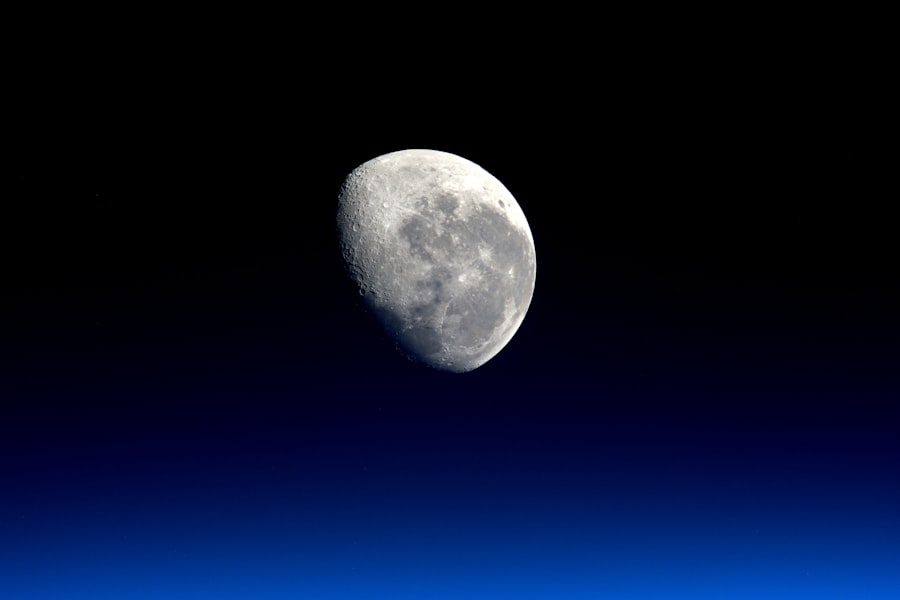
What is the “Moon rang like a bell” theory?
The “Moon rang like a bell” theory suggests that the moon may have a hollow core, based on seismic data collected during the Apollo missions.
What evidence supports the “Moon rang like a bell” theory?
Seismic data collected by seismometers placed on the moon’s surface by the Apollo missions showed that the moon reverberated like a bell for an extended period of time after being struck by the lunar module’s ascent stage.
What are the implications of the “Moon rang like a bell” theory?
If the moon does indeed have a hollow core, it could have significant implications for our understanding of the moon’s formation and evolution, as well as for our understanding of planetary formation in general.
What are some alternative explanations for the moon’s ringing behavior?
Some scientists have proposed alternative explanations for the moon’s ringing behavior, such as the presence of dense, solid layers beneath the moon’s surface that could reflect seismic waves and produce the observed ringing effect.
What further research is needed to confirm or refute the “Moon rang like a bell” theory?
Further research, including additional seismic measurements and analysis of lunar samples, is needed to confirm or refute the “Moon rang like a bell” theory and gain a better understanding of the moon’s internal structure.