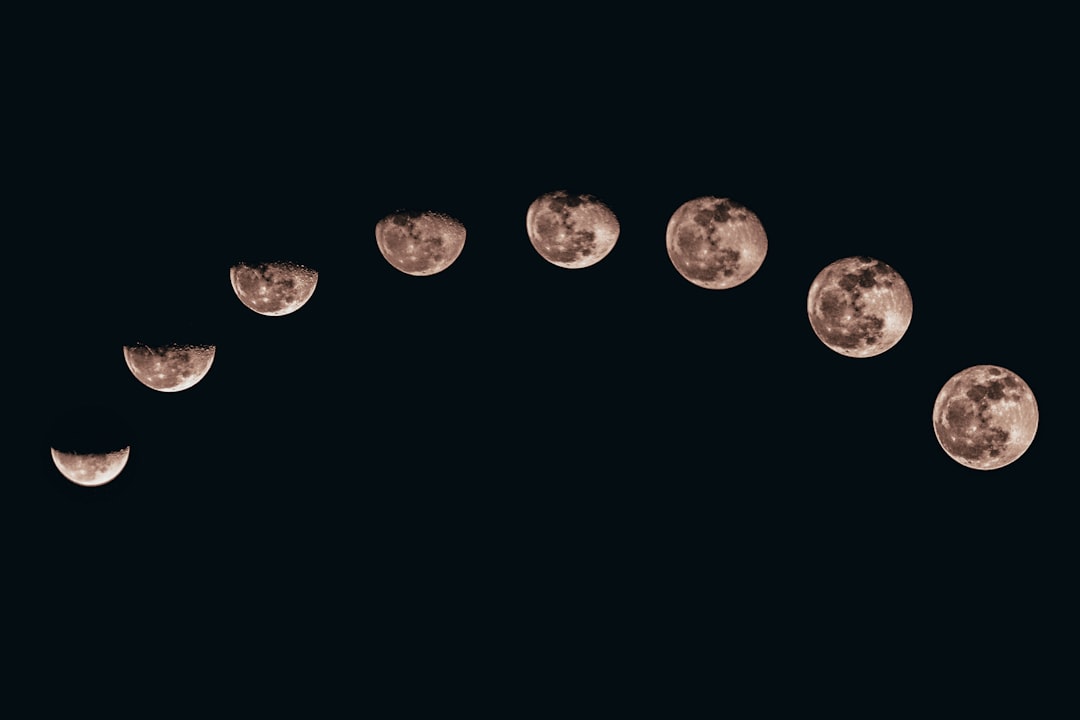
You’ve likely gazed at the Moon, that celestial pearl gracing your night sky. You’ve seen its phases, its familiar face waxing and waning. But have you ever considered what lies beyond that familiar visage? You might think you know the Moon, but there’s a profound mystery, a hidden half, that continues to fascinate and provoke the imagination: the “Dark Side of the Moon Theory.”
This isn’t about a place devoid of light, as the name might misleadingly suggest. Instead, it refers to the lunar hemisphere that is perpetually turned away from Earth. It’s a phenomenon born from a peculiar cosmic dance, a dance you’ve witnessed countless times without fully grasping its implications. This theory, or rather, this observable reality, opens up a universe of scientific inquiry, historical intrigue, and even a touch of speculative wonder. You’re about to embark on a journey to truly understand this enigmatic aspect of our closest celestial neighbor.
You’ve seen it your entire life. The Moon is there, a constant presence, and its face never changes. You see the craters, the maria, the same familiar features. This isn’t a trick of the light, nor is it a matter of cosmic coincidence. It’s a fundamental consequence of gravity and time, a phenomenon known as tidal locking.
The Gravitational Embrace
Imagine two bodies in space, like the Earth and the Moon. They exert gravitational pulls on each other. While you might think of gravity as a uniform force, it’s actually stronger on the side of an object closer to another celestial body and weaker on the farther side. For the Earth and Moon, this difference in gravitational pull across the Moon’s diameter created tidal bulges.
How Tidal Forces Stretch and Squeeze
The Moon’s near side experiences a stronger gravitational tug from Earth than its far side. This differential force effectively stretches the Moon along the Earth-Moon axis, creating two bulges: one facing Earth and one facing away. Think of it like pulling on a stretchy ball from both ends. These bulges are not solid rock; they represent a slight deformation of the Moon’s shape.
The Slowing Down of Rotation
Initially, the Moon likely rotated much faster. However, these tidal bulges, constantly being pulled by Earth’s gravity, exerted a torque, a twisting force, on the Moon. This torque acted like a brake, gradually slowing down the Moon’s rotation. Over billions of years, this braking effect slowed the Moon’s spin until its rotational period perfectly matched its orbital period around Earth.
The Perfect Synchronization
This perfect synchronization means that as the Moon orbits the Earth once, it also rotates on its axis exactly once. It’s like a dancer performing a pirouette while simultaneously walking a circle around their partner. Because the rotation period is equal to the orbital period, the same side of the Moon always faces Earth. You’re witnessing a celestial ballet of synchronized motion.
The Implication: A Permanently Hidden Face
The direct consequence of this tidal locking is that a substantial portion of the Moon’s surface remains perpetually hidden from your direct view from Earth. This is the “dark side” that sparks so much curiosity, not because it’s inherently dark (it receives sunlight just like the side you see), but because it’s hidden from our earthly perspective. This unseen hemisphere has been a source of speculation and scientific endeavor for decades.
The “Dark Side of the Moon” theory has intrigued many, suggesting that there may be hidden secrets and extraterrestrial activity on the far side of the moon. For those interested in exploring this topic further, a related article can be found at X File Findings, which delves into various conspiracy theories and unexplained phenomena surrounding lunar exploration. This resource provides a comprehensive overview of the theories and speculations that have emerged over the years, making it a fascinating read for enthusiasts of the unknown.
Early Speculation and the “Dark Side” Misconception
The idea of a hidden side of the Moon wasn’t born out of scientific observation but rather out of the very fact that we couldn’t see it. Before the space age, any discussion of the “dark side” was inherently speculative, fueled by the unknown. This led to a common misconception about what “dark side” truly meant.
The Allure of the Unknown
For centuries, humanity has looked up at the Moon with a sense of wonder and a desire to explore. The fact that a significant portion of it remained hidden from view naturally fueled imagination. What wonders or horrors might lie on that unseen surface? This sense of mystery is a powerful driver of human curiosity.
From Ancient Myths to Early Astronomy
While the term “dark side” is relatively modern, the concept of a hidden lunar face has roots in ancient cultures. Some mythologies might have attributed the unseen portions to mythical beings or realms. Early astronomers, even with their rudimentary telescopes, could only observe the same features repeatedly, solidifying the understanding that we only ever saw one side.
The Misnomer: It’s Not Permanently Dark
The term “dark side” is, in itself, a misnomer that has contributed to popular misconceptions. The Moon is a sphere, and like any sphere illuminated by a light source (the Sun), all of its sides will experience periods of day and night. The side facing away from Earth experiences the same cycle of sunlight and darkness as the side facing us.
The Lunar Day and Night Cycle
A lunar day (which includes both lunar day and lunar night) lasts approximately 29.5 Earth days, the same duration as the Moon’s orbital period. This means that the “dark side” experiences sunlight for about two Earth weeks, followed by two Earth weeks of darkness. It’s a world of extreme temperature fluctuations, from scorching heat under direct sunlight to frigid cold in the lunar night.
The Birth of Science Fiction and Conspiracy Theories
The mystery of the unseen hemisphere provided fertile ground for science fiction writers and, later, conspiracy theorists. The “dark side” became a convenient canvas upon which to project all sorts of imaginative scenarios, from hidden alien bases to secret human settlements. These narratives, while often entertaining, often blurred the lines between speculation and scientific fact.
Early Literary Explorations
Writers like H.G. Wells and Jules Verne, in their fantastical tales, often alluded to the unexplored reaches of space. While not always directly referencing the “dark side,” their stories capitalized on the inherent allure of the unknown and the possibilities that lay beyond our immediate reach.
The Dawn of the Space Age: Probing the Hidden Hemisphere
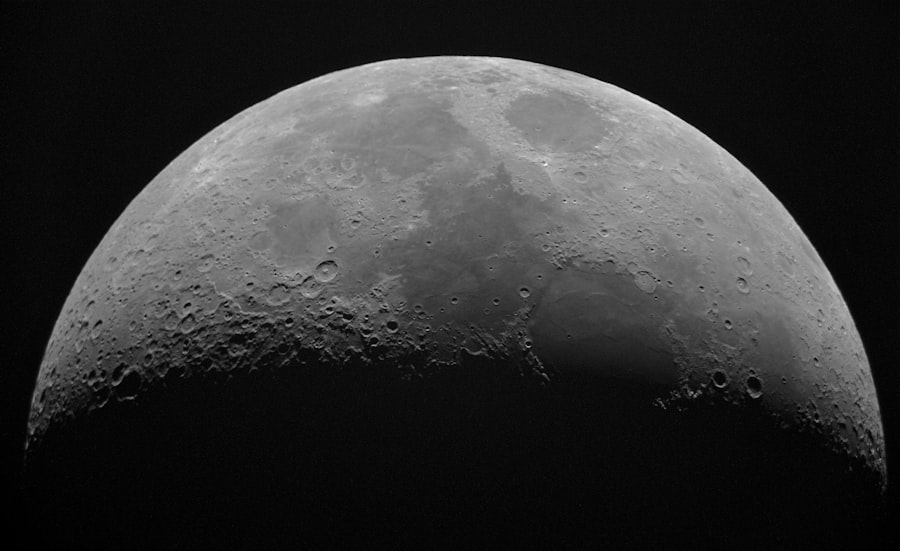
The true unveiling of the Moon’s far side began not with Earth-bound telescopes, but with the audacious ambition of space exploration. It was a monumental undertaking, a testament to human ingenuity and a desire to conquer the unknown.
Soviet Ingenuity: Luna 3 and the First Glimpse
The race to the Moon was not just between nations; it was a race against our own ignorance. In 1959, the Soviet Union’s Luna 3 spacecraft achieved a historic feat. It was the first mission to successfully photograph the far side of the Moon.
The Historic Images
Luna 3 was equipped with cameras and was designed to orbit the Moon and transmit images back to Earth. The fuzzy, grainy images it returned were revolutionary. They revealed a landscape that was significantly different from the near side, with fewer visible maria (the large, dark plains) and a more heavily cratered surface. These images were a crucial first step in demystifying the hidden hemisphere.
American Efforts and Lunar Orbiters
Following the Soviet success, NASA embarked on its own ambitious lunar exploration programs. The Ranger, Surveyor, and especially the Lunar Orbiter programs played a critical role in mapping and imaging the entire lunar surface.
Mapping the Unseen
The Lunar Orbiter missions, in particular, were designed to systematically photograph the lunar surface from orbit, providing much higher resolution images than Luna 3. These missions were essential for identifying potential landing sites for the Apollo program and for gaining a comprehensive understanding of the Moon’s topography.
The Apollo Missions: Human Footprints on the Unseen
The pinnacle of lunar exploration, the Apollo missions, finally allowed humans to set foot on the Moon. While the landing sites were primarily on the near side, the astronauts orbiting the Moon had direct visual access to the far side.
The Astronauts’ Perspective
Astronauts often described the stark beauty and unfamiliarity of the far side. From orbit, they could see the vast, rugged terrain, the deep craters, and the absence of the prominent maria that characterize the near side. These firsthand accounts added a human dimension to the scientific data.
The Geological Differences: A Contrasting Landscape

As we obtained more detailed images and data, a fascinating picture emerged: the far side of the Moon is geologically distinct from the near side. These differences are not random but are thought to be the result of early lunar evolution and the unique conditions present during its formation.
The Scarce Maria
One of the most striking differences is the scarcity of lunar maria on the far side. The near side is dominated by these vast, dark plains, formed by ancient volcanic eruptions that flooded impact basins. On the far side, these features are much less prevalent, giving it a more uniform, heavily cratered appearance.
The Role of Earth’s Shielding
A leading theory for this difference is that Earth’s gravity and its own substantial iron core acted as a shield for the near side of the Moon during its early history. This shielding may have allowed more heat-generating radioactive elements to concentrate in the Moon’s crust on the near side. This concentrated heat would have facilitated larger and more frequent volcanic eruptions, leading to the formation of the extensive maria.
A More Heavily Cratered Surface
Conversely, the far side is generally more heavily cratered than the near side. This suggests that it has experienced more impacts over its history, or perhaps that the impacts that did occur on the near side were partially obscured or altered by volcanic resurfacing.
Impact History and Preservation
The lack of widespread volcanic activity on the far side means that impact craters, once formed, have been preserved for much longer periods. This allows scientists to study the Moon’s impact history in greater detail.
Thicker Crust on the Far Side
Studies have also indicated that the crust on the far side of the Moon is generally thicker than that on the near side. This thicker crust would have made it more difficult for magma to reach the surface and erupt, further contributing to the scarcity of maria.
Implications for Lunar Formation Theories
These geological disparities are crucial for refining our understanding of how the Moon formed and evolved. Theories about the Moon’s formation, such as the giant-impact hypothesis, must account for these observable differences between the near and far sides.
The intriguing concept of the Dark Side of the Moon theory has captivated many, suggesting that there may be hidden secrets and unexplored phenomena on the lunar surface. For those interested in delving deeper into this topic, a related article can be found that explores various theories and findings surrounding the moon’s enigmatic nature. You can read more about it in this insightful piece on X File Findings, which provides a comprehensive overview of the mysteries that continue to surround our closest celestial neighbor.
Unanswered Questions and Future Exploration
“`html
| Aspect | Details |
|---|---|
| Album Title | The Dark Side of the Moon |
| Band | Pink Floyd |
| Release Date | March 1, 1973 |
| Genre | Progressive rock |
| Themes | Mental illness, greed, conflict, time |
| Commercial Success | One of the best-selling albums of all time |
“`
Despite the significant progress made in understanding the “dark side” of the Moon, mysteries still linger. The vastness of space, even our closest celestial neighbor, holds secrets waiting to be uncovered. Future missions are poised to delve deeper into these enigmas.
The Search for Resources
The far side of the Moon is of particular interest for its potential resources. For example, the permanently shadowed regions near the lunar poles are believed to harbor significant deposits of water ice.
Water Ice: A Crucial Resource
Water ice is invaluable for future lunar missions and potential human settlements. It can be used for drinking water, for producing oxygen for breathing, and for rocket fuel (by splitting it into hydrogen and oxygen). The far side’s polar craters, shielded from direct sunlight, offer the best hope for finding these frozen reserves.
Understanding Lunar Evolution
The geological differences between the near and far sides are still being fully analyzed. Future missions can conduct more detailed geological surveys, seismic studies, and sample return missions to gain a deeper understanding of the processes that shaped the Moon over billions of years.
Investigating the Interior
Understanding the Moon’s internal structure, including the composition and activity of its mantle and core, is another area of active research. Seismic data from future missions could provide unprecedented insights.
The Quest for Scientific Discovery
Beyond practical applications, the far side of the Moon offers unique scientific opportunities. Its relative remoteness from Earth’s radio interference makes it an ideal location for radio telescopes, potentially allowing astronomers to observe the universe in ways never before possible.
A Radio Quiet Zone
The far side of the Moon is often referred to as the “radio quiet zone.” Because the Moon itself blocks terrestrial radio transmissions, it provides an exceptionally quiet environment for sensitive radio astronomy. This could open up new windows into the early universe and the detection of faint cosmic signals.
The Next Steps in Lunar Exploration
With renewed interest in lunar exploration, fueled by both scientific curiosity and the potential for commercialization, future missions to the far side are inevitable. These missions will likely involve sophisticated robotic landers, rovers, and potentially even human missions.
The Artemis Program and Beyond
Programs like NASA’s Artemis program aim to establish a sustainable human presence on the Moon. As we expand our lunar presence, exploration of the far side will undoubtedly become a priority, offering unparalleled opportunities for discovery and scientific advancement. The “dark side” of the Moon is no longer a mere mystery; it’s a frontier waiting to be explored.

The Moon’s Soul Trap: John Lear’s Chilling Revelation
FAQs
What is the Dark side of the Moon theory?
The Dark side of the Moon theory is a popular belief that the Moon’s far side, which is never visible from Earth, is shrouded in mystery and potentially harbors alien bases or other unexplained phenomena.
Is there any scientific basis for the Dark side of the Moon theory?
No, there is no scientific evidence to support the Dark side of the Moon theory. The far side of the Moon is not permanently dark, and it has been extensively studied by spacecraft and is well understood by scientists.
Why is the far side of the Moon never visible from Earth?
The Moon is tidally locked to the Earth, meaning that it rotates on its axis at the same rate that it orbits the Earth. This causes the same side of the Moon to always face towards Earth, while the far side remains hidden from view.
What have spacecraft missions revealed about the far side of the Moon?
Spacecraft missions, such as the Soviet Luna missions and NASA’s Lunar Reconnaissance Orbiter, have provided detailed images and data about the far side of the Moon. These missions have shown that the far side is geologically different from the near side, with a thicker crust and fewer maria, or dark plains.
Why does the Dark side of the Moon theory persist despite scientific evidence to the contrary?
The Dark side of the Moon theory persists due to its appeal in popular culture and science fiction, as well as the human tendency to be intrigued by the unknown. Despite the lack of scientific evidence, the idea of a mysterious and unexplored far side of the Moon continues to capture the imagination of many people.