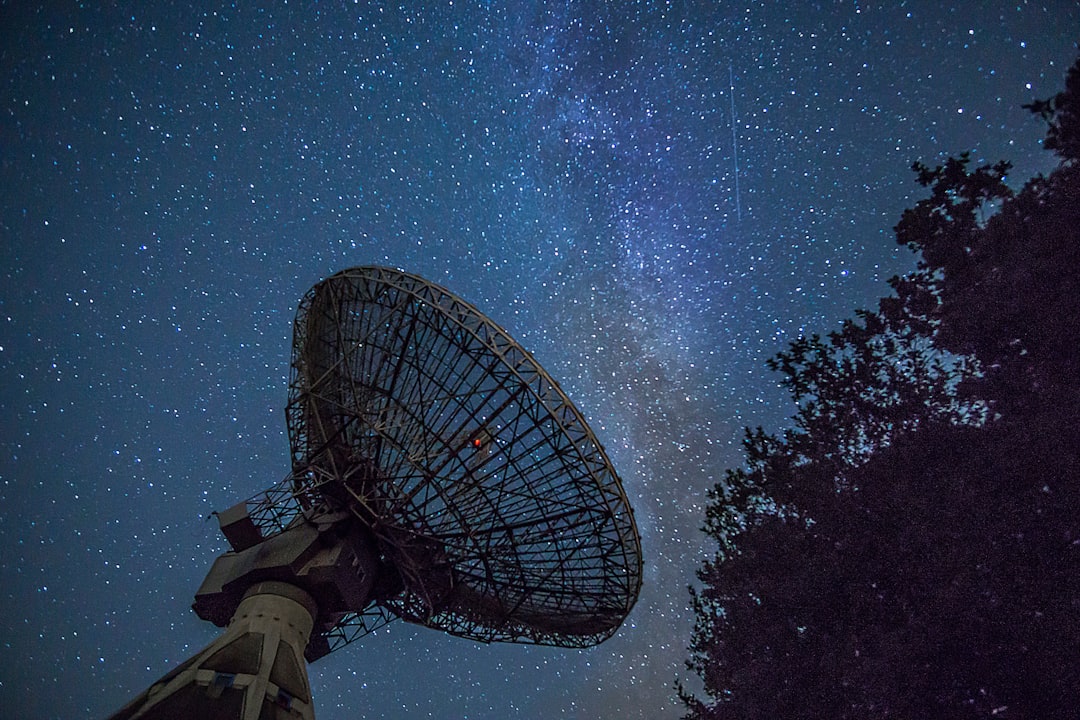
The European Space Agency (ESA) has consistently been at the forefront of astronomical discovery, pushing the boundaries of our understanding of the universe through its ambitious missions and groundbreaking observations. Its fleet of space telescopes and observatories, meticulously designed and operated, continue to deliver a wealth of data, unraveling cosmic mysteries and providing unprecedented insights into the celestial realm. From the furthest reaches of the cosmos to the intricate details of stellar evolution and the search for exoplanets, ESA’s latest astronomical endeavors are shaping our perception of our place in the universe. This article delves into some of the most significant recent observations made by ESA’s instruments, highlighting key findings and the ongoing scientific endeavors that are charting new territories in our cosmic exploration.
ESA’s instruments have been instrumental in peering back to the earliest epochs of the universe, a period known as the cosmic dawn when the first stars and galaxies began to ignite. These observations are crucial for understanding the formation and evolution of cosmic structures and the processes that led to the universe we observe today.
JWST’s Unprecedented Infrared Vision and Early Galaxy Formation
While the James Webb Space Telescope (JWST) is a collaborative effort led by NASA, ESA’s significant contributions, including the MIRI (Mid-Infrared Instrument) and NIRSpec (Near-Infrared Spectrograph) instruments, have been pivotal in its success. These instruments, operating in the infrared spectrum, are uniquely suited for detecting the faint light from the universe’s earliest and most distant objects.
Identifying the First Luminous Objects
Recent JWST observations, empowered by ESA’s instruments, have pushed the boundaries of redshift detection, identifying galaxies that existed just a few hundred million years after the Big Bang. These early galaxies, observed in the infrared, appear as faint smudges of light, their light stretched and reddened by the expansion of the universe.
- Early Galaxy Morphologies and Properties: Scientists are now able to study the shapes and sizes of these nascent galaxies, revealing that some were surprisingly compact and massive, challenging existing models of galaxy formation which predicted a more gradual build-up of stellar mass. The spectral data from NIRSpec is allowing astronomers to determine the chemical composition of these early galaxies, revealing the presence of heavy elements that were forged in the first generations of stars.
- The Role of Stellar Feedback in Early Galaxies: The infrared light captured by MIRI is shedding light on the dust content and star formation rates within these early galaxies. Understanding the interplay between star formation and the feedback mechanisms (like supernovae and stellar winds) that regulate it is crucial for comprehending how galaxies grew and evolved in the early universe.
Euclid’s Mission to Map the Dark Universe
The ESA-led Euclid mission is specifically designed to investigate the mysterious dark energy and dark matter that constitute approximately 95% of the universe’s total mass-energy content. By mapping the large-scale structure of the universe with unprecedented precision, Euclid aims to shed light on their nature and influence.
Understanding the Expansion Rate of the Universe
Euclid’s primary objective is to measure the expansion rate of the universe and how it has changed over time. This is achieved by observing the shapes and distances of billions of galaxies.
- Cosmic Expansion History: By analyzing the subtle distortions in the shapes of distant galaxies caused by gravitational lensing, Euclid can map the distribution of dark matter and infer the expansion history of the universe. This data will provide crucial constraints on cosmological models, particularly those related to dark energy.
- The Nature of Dark Energy: Dark energy is the enigmatic force driving the accelerated expansion of the universe. Euclid’s detailed mapping will help determine if dark energy is a constant cosmological constant or if its properties evolve over time, providing vital clues to its underlying physics.
Probing the Distribution of Dark Matter
Dark matter, though invisible, exerts gravitational influence on visible matter. Euclid’s observations are vital for mapping its distribution.
- Gravitational Lensing Studies: The mission’s ability to detect weak gravitational lensing – the slight bending of light from distant galaxies by intervening mass – allows astronomers to create maps of dark matter distribution across vast cosmic scales. This will reveal how dark matter clusters and influences the formation of galaxies and larger structures.
- Comparison of Dark Matter and Baryonic Matter Distribution: By comparing the distribution of dark matter with that of visible matter (galaxies), scientists can gain insights into the relationship between these two components of the universe and how they co-evolved.
Recent advancements in ESA astronomy observations have shed light on the mysteries of the universe, particularly in understanding exoplanets and their atmospheres. For a deeper dive into these fascinating developments, you can read more in this related article: Exploring the Cosmos: ESA’s Latest Discoveries. This article highlights the innovative techniques used by ESA to gather data and the implications of their findings for future space exploration.
Studying Our Stellar Neighbors: Unraveling Stellar Life Cycles
ESA’s solar observatories and missions focused on stellar physics are providing invaluable data on the life and death of stars, from their birth in nebulae to their explosive demise as supernovae.
Solar Orbiter’s Close-Up Views of the Sun
ESA’s Solar Orbiter mission, a collaboration with NASA, is providing the closest-ever observations of the Sun, venturing into regions of space never before explored. This unique vantage point allows scientists to study solar phenomena in unprecedented detail.
Investigating Solar Flares and Coronal Mass Ejections
These energetic events on the Sun can have significant impacts on Earth, including disruptions to satellite communications and power grids. Solar Orbiter’s observations are crucial for understanding their origins and predicting their behavior.
- Source Regions of Solar Activity: By observing the Sun from various angles and with advanced instruments, Solar Orbiter is helping to pinpoint the exact locations on the Sun where flares and CMEs originate. This allows for a deeper understanding of the magnetic field configurations that drive these explosive events.
- Propagations and Evolution of CMEs: The mission’s instruments are capable of tracking the journey of CMEs as they erupt from the Sun and travel through the solar wind. This data is essential for developing more accurate space weather forecasts.
Exploring the Solar Wind and Heliosphere
The solar wind is a continuous stream of charged particles emanating from the Sun, creating the heliosphere – a vast bubble that encompasses our solar system. Solar Orbiter is providing new insights into this crucial region.
- Composition and Dynamics of the Solar Wind: By directly sampling the solar wind with its in-situ instruments, Solar Orbiter is revealing its detailed composition and how it changes as it flows away from the Sun. This information is vital for understanding particle acceleration and transport within the heliosphere.
- Magnetic Field Structure of the Heliosphere: The mission’s magnetometers are measuring the Sun’s magnetic field and how it extends into the heliosphere. This helps to understand the complex magnetic landscape that influences space weather and the propagation of cosmic rays.
Gaia’s Precision Astrometry: Mapping the Milky Way
The ESA Gaia mission is revolutionizing our understanding of the Milky Way by creating the most accurate and comprehensive 3D map of our galaxy to date. Its precise measurements of star positions, motions, and properties are providing a wealth of data for galactic astronomy.
Unveiling Stellar Populations and Dynamics
Gaia’s vast dataset is allowing astronomers to identify and characterize different stellar populations within the Milky Way, from ancient stars to young star clusters.
- Stellar Kinematics and Galactic Structure: By measuring the precise 3D positions and velocities of billions of stars, Gaia is revealing the intricate motions of stars within the Milky Way. This allows for the reconstruction of past galactic mergers and the identification of distinct stellar streams and structures.
- Star Formation History of the Milky Way: Gaia’s ability to measure stellar ages and compositions helps to trace the history of star formation within our galaxy, revealing when and where stars were born.
Discovering and Characterizing Exoplanets
While not its primary mission, Gaia’s precise astrometric measurements are also leading to the discovery and characterization of exoplanets.
- Astometric Detection of Exoplanets: By detecting tiny wobbles in a star’s position caused by the gravitational tug of an orbiting planet, Gaia is identifying thousands of exoplanet candidates. This method is particularly effective for detecting larger planets orbiting further from their host stars.
- Characterization of Exoplanet Host Stars: Gaia’s comprehensive data on the properties of stars – their mass, temperature, and luminosity – allows for a more detailed characterization of the exoplanets orbiting them, helping to understand their formation and potential habitability.
The Search for Other Worlds: Exploring Exoplanetary Systems
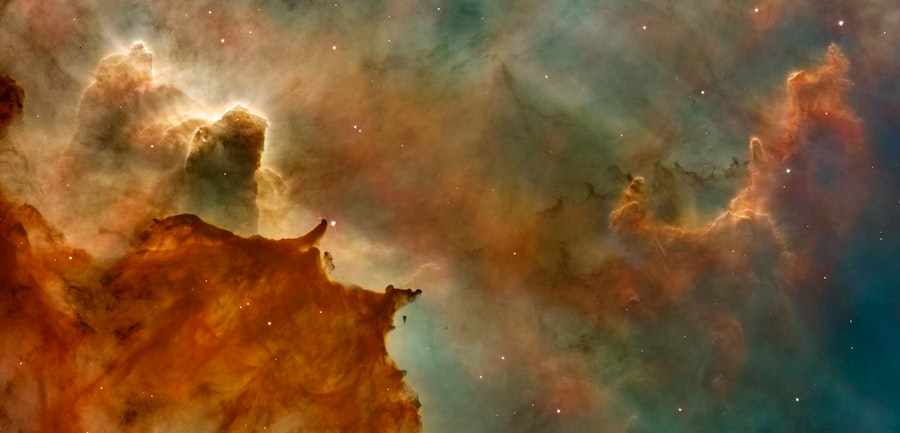
ESA’s commitment to the search for exoplanets, planets orbiting stars other than our Sun, has been a cornerstone of its astronomical endeavors. These missions are not only discovering new worlds but also characterizing their atmospheres and searching for signs of life.
Recent advancements in ESA astronomy observations have shed light on various celestial phenomena, enhancing our understanding of the universe. For those interested in exploring more about the implications of these findings, a related article can be found at this link, which delves into the significance of these observations and their impact on future space missions. The insights gained from these studies not only broaden our knowledge but also inspire new questions about the cosmos.
CHEOPS’s Mission to Study Known Exoplanets
The ESA CHEOPS (Characterising Exoplanet Satellite) mission is dedicated to precisely measuring the properties of known exoplanets, focusing on those discovered by ground-based surveys and other space telescopes.
Refining Exoplanet Sizes and Masses
CHEOPS’s high-precision photometry allows it to measure subtle dips in starlight as planets transit in front of their stars, enabling accurate determination of their sizes. When combined with radial velocity measurements, this allows for the calculation of exoplanet masses.
- Bulk Density and Composition: By determining both the size and mass of an exoplanet, scientists can calculate its bulk density, which provides crucial clues about its composition – whether it is rocky, gaseous, or icy.
- Atmospheric Characterization: CHEOPS’s observations can also provide initial insights into exoplanet atmospheres. By studying how light from the star is filtered through a planet’s atmosphere during a transit, astronomers can identify the presence of certain gases.
Investigating Planetary Atmospheres and Habitability
The detailed study of exoplanet atmospheres is a key step in the search for potentially habitable worlds.
- Detection of Atmospheric Signatures: CHEOPS’s sensitive instruments can detect the spectral signatures of molecules like water vapor, methane, and carbon dioxide in exoplanet atmospheres, offering clues about their chemical makeup and climate.
- Assessing the Potential for Life: While CHEOPS is not designed to detect life directly, the characterization of atmospheres, particularly the search for biosignatures, is a crucial precursor to future, more advanced missions that will be able to perform this task.
PLATO’s Search for Earth-like Planets in Habitable Zones
The ESA PLATO (PLAnetary Transits and Oscillations of Stars) mission, currently under development, will be dedicated to discovering and studying a large number of Earth-like planets orbiting Sun-like stars, particularly those located within their stars’ habitable zones.
Detecting and Characterizing Rocky Exoplanets
PLATO’s advanced capabilities will allow it to detect smaller, rocky planets with high precision, contributing significantly to the census of exoplanets in our galactic neighborhood.
- Transit Photometry and Stellar Oscillations: PLATO will employ precise transit photometry to detect exoplanets and study stellar oscillations (asteroseismology) to determine the mass and radius of host stars with unprecedented accuracy. This will allow for robust characterization of the detected exoplanets.
- Focus on Sun-like Stars: The mission’s emphasis on Sun-like stars increases the probability of finding planets with similar conditions to Earth, making them prime candidates for further investigation.
Identifying Potentially Habitable Worlds
The habitable zone is the region around a star where liquid water could exist on a planet’s surface. PLATO’s focus on this region is central to its scientific goals.
- Prioritizing Targets for Future Missions: PLATO’s discoveries will identify a significant number of exoplanets residing in the habitable zones of their stars, providing a crucial target list for future missions, such as the upcoming Ariel mission, that will conduct detailed atmospheric studies.
- Understanding Planetary System Architectures: By studying the orbits and properties of multiple planets within a single system, PLATO will help us understand the diversity of planetary system architectures and the factors that influence the formation and evolution of planets.
Advancing Our Understanding of Cosmic Phenomena: Beyond the Conventional
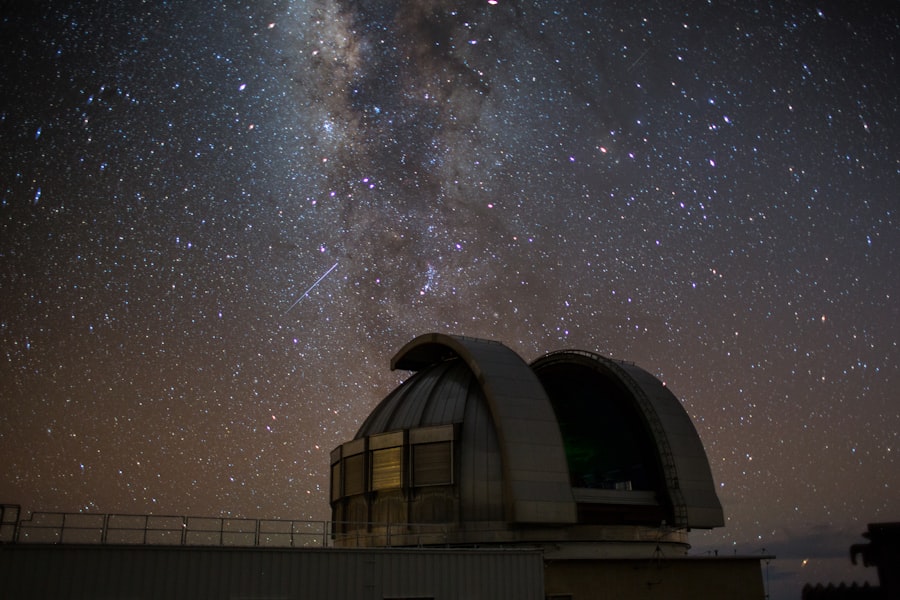
ESA’s astronomical missions extend beyond the direct study of stars and planets, delving into more fundamental cosmic phenomena that shape the universe.
XMM-Newton and Integral: Probing High-Energy Universe
ESA’s XMM-Newton and Integral observatories continue to provide invaluable data on the high-energy components of the universe, including X-rays and gamma rays, revealing extreme astrophysical processes.
Studying Black Holes and Active Galactic Nuclei
These powerful cosmic engines, powered by supermassive black holes at the centers of galaxies, emit vast amounts of energy across the electromagnetic spectrum.
- Accretion Processes Around Black Holes: XMM-Newton’s X-ray observations allow scientists to study the detailed processes of matter falling into black holes, including the formation of accretion disks and the emission of powerful jets. This helps to understand the physics of these extreme environments.
- Gamma-Ray Emission from Cosmic Sources: Integral’s gamma-ray observations are crucial for identifying and studying the most energetic phenomena in the universe, such as supernovae, pulsars, and active galactic nuclei, providing insights into particle acceleration and high-energy astrophysics.
Investigating Cosmic Rays and Dark Matter Annihilation
High-energy observations are also playing a role in the ongoing search for the nature of dark matter.
- Indirect Detection of Dark Matter: Some theoretical models predict that dark matter particles could annihilate or decay, producing observable gamma rays. Integral’s sensitive gamma-ray detectors are used to search for such signals, providing constraints on dark matter properties.
- Origin and Propagation of Cosmic Rays: Understanding the origin and journey of high-energy cosmic rays, particles that bombard Earth from outer space, is a complex puzzle. XMM-Newton and Integral data contribute to this understanding by identifying potential sources and studying their interactions with interstellar matter.
Euclid’s Contribution to Dark Energy and Dark Matter Research (Continued)
As mentioned earlier, Euclid’s primary focus on dark energy and dark matter is a significant undertaking that warrants further emphasis on its broader implications for cosmology.
Testing Cosmological Models
The precise measurements provided by Euclid will allow scientists to rigorously test and refine existing cosmological models, particularly the Standard Model of Cosmology (Lambda-CDM).
- Precision Measurement of Cosmological Parameters: Euclid will provide unprecedented precision in measuring key cosmological parameters, such as the Hubble constant, the matter density, and the dark energy equation of state. These measurements are crucial for understanding the evolution and composition of the universe.
- Searching for Deviations from Standard Cosmology: By comparing Euclid’s observations with predictions from current models, scientists will be able to identify any significant deviations, which could point towards new physics beyond the Standard Model.
Understanding the Growth of Structure in the Universe
The distribution of galaxies and matter in the universe provides a snapshot of its evolution. Euclid’s detailed mapping will offer crucial insights into this process.
- Mapping the Cosmic Web: Euclid’s survey will reveal the intricate “cosmic web” – the filamentary structure of dark matter and galaxies that permeates the universe. Studying the evolution of this web over cosmic time will shed light on the role of gravity and dark matter in structure formation.
- Impact of Dark Energy on Structure Formation: By understanding how dark energy influences the expansion of the universe, scientists can better understand its impact on the growth of cosmic structures. Euclid’s data will provide crucial constraints on this relationship.
The continuous stream of data from ESA’s diverse astronomical missions paints a vivid and evolving picture of our universe. From the faint light of the earliest galaxies to the energetic outbursts of our Sun and the enigmatic forces shaping cosmic expansion, ESA’s observational prowess is fundamentally altering our understanding of the cosmos. The ongoing analysis of this data promises further breakthroughs, pushing the frontiers of knowledge and inspiring future generations of scientists and explorers to continue their quest to unravel the universe’s deepest secrets. The collaborative spirit of space exploration, embodied by ESA’s contributions, ensures that humanity’s reach into the unknown continues to expand, revealing the wonders of the universe, one observation at a time.
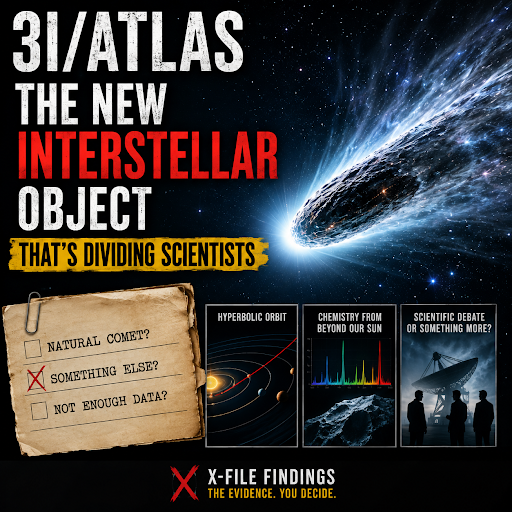
The New Interstellar Object That’s Dividing Scientists
FAQs
What is ESA astronomy observations?
ESA astronomy observations refer to the space-based observations and research conducted by the European Space Agency (ESA) to study celestial objects and phenomena in the universe.
What are the objectives of ESA astronomy observations?
The objectives of ESA astronomy observations include studying the formation and evolution of galaxies, stars, and planetary systems, as well as investigating the nature of dark matter and dark energy, and exploring the potential for life beyond Earth.
What tools and instruments does ESA use for astronomy observations?
ESA utilizes a range of space telescopes and observatories, such as the Hubble Space Telescope, the XMM-Newton X-ray observatory, the Herschel Space Observatory, and the Planck satellite, to conduct astronomy observations.
What are some notable discoveries made through ESA astronomy observations?
ESA astronomy observations have led to significant discoveries, including the detection of exoplanets, the mapping of the cosmic microwave background radiation, the identification of supermassive black holes, and the study of distant galaxies and their evolution.
How does ESA share the findings from its astronomy observations?
ESA shares the findings from its astronomy observations through scientific publications, press releases, public outreach activities, and collaborations with international research institutions and space agencies.