
Project Horizon, a monumental undertaking by NASA, etched its name into the annals of human endeavor by bravely aiming for the Moon with the Apollo program. It was not merely a series of rocket launches and lunar landings; it was a testament to human ingenuity, a culmination of scientific and engineering brilliance, and a profound expression of the global desire to explore the unknown. This ambitious project, born from the crucible of the Cold War and fueled by a spirit of innovation, transcended political boundaries and captured the imagination of the world.
The genesis of Project Horizon, and specifically the Apollo program, was deeply intertwined with the geopolitical landscape of the mid-20th century. The Soviet Union’s launch of Sputnik 1 in 1957 sent shockwaves across the United States, igniting fears of technological inferiority and national security vulnerabilities. This event, known as the “Sputnik crisis,” galvanized American society and spurred a national commitment to advancing science and technology.
The Dawn of the Space Age and the Sputnik Shock
The successful orbital insertion of Sputnik 1 by the Soviets, a relatively simple satellite, was perceived as a significant propaganda victory for the communist bloc. It demonstrated that the Soviet Union possessed rocket technology capable of delivering payloads into space, raising concerns about the potential for intercontinental ballistic missiles to reach American soil. This perceived technological gap spurred a frantic response from the United States.
Kennedy’s Bold Declaration: A Nation United by a Vision
In response to the growing pressure and the burgeoning space race, President John F. Kennedy delivered a pivotal speech to a joint session of Congress on May 25, 1961. In this speech, he declared a bold, audacious goal: “I believe that this nation should commit itself to achieving the goal, before this decade is out, of landing a man on the Moon and returning him safely to the Earth.” This declaration transformed the nascent space exploration efforts into a national imperative, a singular objective that would unite a nation and mobilize its resources like never before.
The Role of the National Aeronautics and Space Administration (NASA)
Established in 1958, NASA was thrust into the forefront of this ambitious endeavor. Tasked with the monumental responsibility of executing Kennedy’s vision, NASA became the central hub for all civilian space exploration activities. It brought together the brightest minds in science, engineering, and management to tackle the unprecedented challenges of sending humans to another celestial body. The agency’s mission was clear: to achieve the lunar landing objective and, in doing so, demonstrate American technological prowess and leadership.
Before the Apollo missions, Project Horizon was a significant initiative aimed at establishing a military base on the Moon. This ambitious project was part of a broader exploration strategy during the Cold War era, reflecting the intense competition between the United States and the Soviet Union in space technology. For more insights into the context and implications of Project Horizon, you can read a related article that delves into the early space race and its impact on subsequent lunar missions at this link.
Engineering the Impossible: The Apollo Spacecraft and Rocketry
The technological hurdles to overcome for Project Horizon were immense. The Apollo program required the development of entirely new systems, from the powerful rockets capable of lifting immense payloads into orbit to the sophisticated spacecraft that would carry astronauts through the vacuum of space and safely return them to Earth.
The Saturn V: A Colossus of Engineering
At the heart of the Apollo program’s success lay the Saturn V rocket, an engineering marvel of its time. Standing taller than the Statue of Liberty and weighing over 6 million pounds when fully fueled, the Saturn V was the most powerful rocket ever built. Its three stages were meticulously designed to generate the colossal thrust needed to propel the Apollo spacecraft beyond Earth’s gravitational pull and towards the Moon. The development of the Saturn V involved thousands of engineers and technicians working tirelessly, pushing the boundaries of materials science, combustion engineering, and structural integrity.
The Apollo Command and Service Modules (CSM): The Astronauts’ Home and Steed
The Apollo spacecraft itself comprised two main components: the Command Module (CM) and the Service Module (SM). The CM, affectionately known as “Columbia” on Apollo 11, was the habitable portion where the three-man crew lived and operated during the mission. It was equipped with life support systems, navigation instruments, and communication equipment. The SM, attached to the CM, contained the main engine, fuel, and other essential systems for maneuvering in space, performing lunar orbit insertion, and returning to Earth. The design and construction of these modules demanded an unprecedented level of precision and reliability.
The Lunar Module (LM): The Eagle Has Landed
Perhaps the most iconic and uniquely designed component of the Apollo program was the Lunar Module (LM), famously known as “Eagle” during the historic Apollo 11 mission. This ungainly-looking, four-legged craft was specifically engineered for one purpose: to descend to the lunar surface, allow astronauts to explore, and then ascend back to rendezvous with the orbiting CSM. Its lightweight construction and dual-stage design (descent and ascent stages) were critical for its specialized mission. The LM was a testament to creative problem-solving, as its unconventional design was dictated by the harsh realities of operating in a vacuum and on a low-gravity environment.
Training for the Unknown: The Astronaut Corps and Their Ordeal

Beyond the technological marvels, Project Horizon relied on the extraordinary courage and rigorous training of its astronaut corps. These men, selected for their exceptional piloting skills, scientific acumen, and mental fortitude, underwent years of intensive preparation to face the immense risks associated with lunar travel.
The Selection Process: Hand-Picked for the Mission
The astronauts of the Apollo program were not simply pilots; they were a handpicked elite. The selection process was incredibly rigorous, demanding not only superior flying abilities but also strong academic backgrounds, excellent physical and mental health, and the ability to work effectively under extreme pressure. Many came from military test pilot backgrounds, possessing invaluable experience in high-stakes aviation environments.
Simulators and Survival: Preparing for Every Eventuality
The training regimen for Apollo astronauts was grueling and comprehensive. They spent countless hours in simulators, practicing every conceivable phase of a lunar mission, from launch and orbital maneuvers to lunar landing and rendezvous. Beyond the simulated environment, they underwent extensive survival training, preparing them for potential emergency landings on Earth. They also received in-depth instruction in geology, astronomy, and spacecraft systems, ensuring they were not just pilots but also capable scientists and engineers.
The psychological Toll: Facing the Abyss
The psychological demands on the astronauts were as significant as the physical ones. They were venturing into an environment utterly alien to humanity, with no possibility of immediate rescue should something go wrong. The psychological resilience and unwavering composure of these men were crucial to the success of the missions. They had to trust their training, their equipment, and each other implicitly as they journeyed to a desolate, silent world.
The Climax of Ambition: Lunar Landings and the Giant Leap

The culmination of Project Horizon was the series of successful lunar landings orchestrated by the Apollo program. These missions were not merely scientific expeditions; they were powerful symbols of human achievement and the realization of a long-held dream.
Apollo 11: “The Eagle Has Landed”
The most iconic mission, Apollo 11, etched itself into history on July 20, 1969. After a journey of over 240,000 miles, the Lunar Module “Eagle,” carrying astronauts Neil Armstrong and Buzz Aldrin, touched down on the Sea of Tranquility. Armstrong’s immortal words, “That’s one small step for man, one giant leap for mankind,” resonated across the globe, marking a pivotal moment in human history. They planted the American flag, collected lunar samples, and conducted experiments, fulfilling Kennedy’s ambitious goal.
Subsequent Missions: Expanding the Frontiers of Lunar Exploration
Following the triumph of Apollo 11, NASA continued its lunar exploration with five more successful landings: Apollo 12, Apollo 14, Apollo 15, Apollo 16, and Apollo 17. Each mission built upon the successes of its predecessors, pushing the boundaries of what was known about the Moon. Later missions utilized the Lunar Roving Vehicle (LRV), allowing astronauts to cover greater distances and conduct more extensive geological surveys. These subsequent missions brought back hundreds of pounds of lunar rocks and soil, providing invaluable data for scientific research that continues to this day.
The Scientific Legacy: Unlocking Lunar Secrets
The scientific returns from the Apollo missions were profound. The lunar samples brought back to Earth provided unprecedented insights into the Moon’s formation, its geological history, and its composition. Scientists were able to date lunar rocks, confirming theories about the Moon’s origin from a giant impact event. The data collected also shed light on the early solar system and the processes that shaped terrestrial planets. The Apollo missions fundamentally altered our understanding of our celestial neighbor.
Before the ambitious Apollo missions took flight, Project Horizon was a significant step in the exploration of space, focusing on the establishment of a military lunar base. This project aimed to enhance the United States’ capabilities in space and served as a precursor to the more well-known Apollo program. For those interested in the historical context and details surrounding these early endeavors, a related article can be found at this link, which delves into the intricacies of Project Horizon and its implications for future space exploration.
Beyond the Footprints: The Lasting Impact of Project Horizon
| Metrics | Values |
|---|---|
| Duration | 1958-1969 |
| Objective | Explore the feasibility of manned space missions |
| Spacecraft | Mercury, Gemini |
| Key Achievements | First American in space, first American to orbit the Earth |
Project Horizon, through its Apollo program, left an indelible mark on humanity, extending far beyond the footprints left on the lunar surface. Its influence permeated scientific advancement, technological innovation, and the very way humanity perceived its place in the cosmos.
Technological Spin-offs: Innovation for Earth
The immense technological challenges overcome by Project Horizon led to a multitude of innovations that have since found their way into everyday life. From advancements in computing and miniaturization to improvements in materials science, telecommunications, and medical imaging, the ripple effects of Apollo are still felt today. Technologies developed for spacecraft life support systems have been adapted for medical applications, and the sophisticated communication networks designed for lunar missions paved the way for modern global communication.
Inspiring a Generation: The Power of a Shared Dream
Project Horizon ignited a passion for science, technology, engineering, and mathematics (STEM) in generations of aspiring scientists and engineers. The sheer audacity of the Apollo program and the visible triumphs of its missions inspired countless individuals to pursue careers in these fields. The images of astronauts walking on the Moon became icons of human potential and a powerful reminder that seemingly impossible dreams can be realized through collective effort and determination.
A New Perspective on Earth: The “Overview Effect”
For the astronauts who journeyed to the Moon, the experience of looking back at Earth from space was profoundly transformative. This phenomenon, known as the “overview effect,” fostered a deep sense of awe and a renewed appreciation for the fragility and interconnectedness of our planet. The iconic “Earthrise” photograph taken during Apollo 8 became a potent symbol of environmental consciousness and a global reminder of our shared responsibility for its preservation. Project Horizon, by venturing outward, ultimately brought humanity closer together in its understanding of its home.
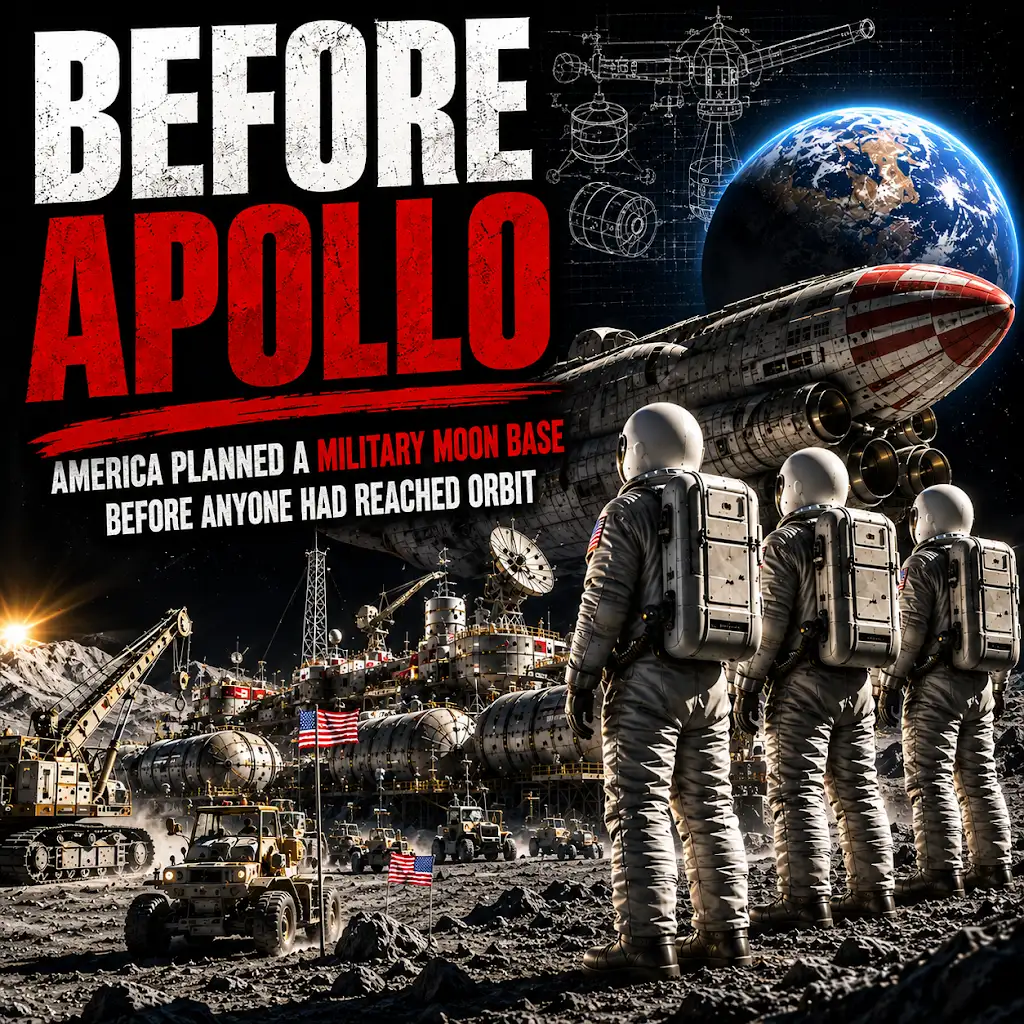
America Planned a Military Moon Base Before Anyone Had Reached Orbit
FAQs
What was Project Horizon before Apollo?
Project Horizon was a proposed human spaceflight program developed by the U.S. Army in the late 1950s. It aimed to establish a manned lunar military outpost by 1966, before the Apollo program was initiated.
What were the goals of Project Horizon?
The primary goal of Project Horizon was to establish a permanent manned military outpost on the Moon. This outpost would serve as a base for surveillance, communication, and potential military operations.
Why was Project Horizon before Apollo not pursued?
Despite the ambitious goals of Project Horizon, it was ultimately not pursued due to budget constraints, technical challenges, and shifting priorities within the U.S. government. The focus shifted to the Apollo program, which was initiated by NASA in 1961.
What were some of the proposed features of the lunar outpost in Project Horizon?
The proposed lunar outpost in Project Horizon was envisioned to include living quarters, laboratories, power sources, and communication systems. It was also planned to have a nuclear reactor for power generation.
How did Project Horizon before Apollo influence future space exploration efforts?
While Project Horizon itself was not realized, it laid the groundwork for future space exploration efforts and contributed to the development of technologies and strategies that would later be used in the Apollo program and beyond. The concept of a lunar outpost also influenced discussions about the potential for human presence on the Moon.