The cold, silent expanse of the Moon, once a distant dream and later a symbol of human achievement, is now poised to become the next frontier of strategic military presence. The very notion of a “Military Base on the Moon” conjures images from science fiction, yet it is a concept increasingly being discussed by defense strategists, aerospace engineers, and policymakers around the globe. This endeavor, far from being a whimsical pursuit, represents a logical, albeit ambitious, evolution of terrestrial military capabilities into the circumlunar domain. The reasons for such a significant undertaking are multifaceted, spanning from resource acquisition and scientific advancement to the establishment of a critical geopolitical foothold and the ultimate deterrent in an increasingly complex strategic environment. The establishment of a permanent lunar base, particularly one with military applications, signifies a paradigm shift in humanity’s relationship with its celestial neighbor, transforming it from a subject of exploration into a strategic asset and a potential theatre of operations.
The Moon’s allure for military planners is not a sudden revelation. Its proximity to Earth, its unique environment, and its potential resources have long been recognized as significant factors in any future strategic calculus. The establishment of a permanent presence on the Moon would represent a monumental leap in humanity’s ability to project power and influence beyond Earth’s atmosphere. This is not merely about planting a flag; it is about securing capabilities that could shape the future of global security and technological development.
Geopolitical Dominance and First Mover Advantage
The nation or consortium of nations that successfully establishes a robust, self-sustaining lunar base will undoubtedly gain a significant geopolitical advantage. This is often referred to as the “first mover advantage,” a concept that emphasizes the benefits of being the first to establish a significant presence in a new domain.
Establishing a Lunar Foothold
A lunar base would serve as a tangible and undeniable symbol of technological prowess and strategic ambition. Its existence would broadcast a clear message to potential adversaries about a nation’s commitment to space dominance. This physical presence could translate into diplomatic leverage and influence on Earth.
Preventing Adversarial Control
Conversely, allowing an adversary to establish a dominant military presence on the Moon would be a strategic miscalculation of immense proportions. Such a scenario could lead to the weaponization of the lunar environment and the potential for Earth to be held hostage by lunar-based assets. Therefore, preemptive establishment is seen by some as a necessity for maintaining global stability.
Resource Control and Strategic Scarcity
The Moon is not an empty celestial body devoid of value. Its regolith contains significant quantities of helium-3, a rare isotope on Earth that is a potential fuel source for advanced nuclear fusion reactors. It also harbors water ice, crucial for life support, rocket propellant, and other industrial processes. Controlling these resources could provide a nation with unparalleled energy independence and a significant economic advantage.
Helium-3: The Fuel of the Future
The potential of helium-3 as a clean and abundant energy source for future fusion power plants is a significant driver for lunar exploration and potential settlement. Nations investing in lunar bases are not just looking at immediate military applications but also at securing a stake in the future of global energy.
Water Ice: A Foundation for Sustainability
The presence of water ice in permanently shadowed craters at the lunar poles is a game-changer for any long-term human presence. It can be electrolyzed to produce hydrogen and oxygen, essential for breathing, drinking water, and the production of rocket fuel. This reduces reliance on expensive resupply missions from Earth, making a lunar base more sustainable.
Terrestrial Security Enhancement and Deterrence
A lunar base would not solely exist for its own sake. Its capabilities could directly enhance Earth-based security and serve as a powerful deterrent against aggression. The unique vantage point of the Moon offers unparalleled opportunities for surveillance and early warning systems.
Enhanced Surveillance and Reconnaissance
Orbiting the Earth and positioned on its surface, a lunar base offers an unparalleled vantage point for global surveillance. This allows for the continuous monitoring of terrestrial activities, the tracking of missile launches, and the detection of any potential threats with unprecedented accuracy and lead time.
Early Warning Systems and Missile Defense
A lunar-based radar and optical sensor network could provide near real-time detection of ballistic missile launches, significantly enhancing early warning capabilities and improving the effectiveness of missile defense systems. This could deter preemptive strikes and provide crucial response time in crisis situations.
Intelligence Gathering and Analysis
The ability to observe and analyze activities on Earth from a distance, free from atmospheric interference, would revolutionize intelligence gathering. Detailed imagery and communication intercepts from lunar vantage points could provide critical insights into the intentions and capabilities of potential adversaries.
Projecting Power and Deterrence
The very existence of a military presence on the Moon would serve as a potent deterrent. The ability to deploy and operate advanced weaponry from lunar platforms, or to threaten an adversary’s space-based assets, would create a significant strategic dilemma for any potential aggressor.
Lunar-Based Weapon Systems: A Hypothetical Scenario
While the weaponization of space is a sensitive topic, the strategic implications of lunar-based platforms capable of projecting force cannot be ignored. This could range from kinetic bombardment capabilities to directed energy weapons, providing a formidable deterrent against terrestrial aggression.
The Ultimate “High Ground”
In military doctrine, “control of the high ground” is a fundamental principle. The Moon represents the ultimate high ground, offering an unmatched strategic advantage to whoever can effectively occupy and utilize it.
The concept of establishing a military base on the Moon has gained traction in recent years, as nations look to expand their presence in space. For a deeper understanding of the implications and potential developments surrounding this topic, you can read a related article that explores the strategic advantages and challenges of lunar military installations. Check it out here: Military Bases on the Moon: A New Frontier.
Technological Challenges and Engineering Marvels
The establishment of a military base on the Moon is not a matter of simply packing a suitcase and heading for orbit. It presents a colossal set of technological and engineering challenges that push the boundaries of current human ingenuity. Overcoming these hurdles will necessitate groundbreaking advancements across a multitude of disciplines.
Life Support and Habitat Construction
Sustaining human life in the harsh lunar environment requires sophisticated and reliable life support systems. Building habitats that can withstand extreme temperature fluctuations, radiation, and micrometeoroid impacts is paramount.
Radiation Shielding and Environmental Control
The Moon lacks a significant atmosphere and a magnetic field, leaving its surface exposed to harmful cosmic and solar radiation. Effective shielding for habitats and any surface infrastructure is a critical engineering challenge. Maintaining a stable, breathable atmosphere within these habitats also requires advanced closed-loop life support systems.
In-Situ Resource Utilization (ISRU) for Construction
To reduce the immense cost and logistical burden of transporting all materials from Earth, the development and implementation of ISRU technologies are crucial. This includes extracting water ice for life support and propellant, and utilizing lunar regolith for construction materials.
3D Printing with Lunar Regolith
The concept of using 3D printing technologies to construct habitats and infrastructure directly from lunar soil (regolith) is a promising area of research. This would significantly reduce the need for Earth-based materials, making lunar construction more feasible.
Building Materials from Lunar Soil
Exploring methods to process and bind lunar regolith into strong and durable building materials, such as bricks, concrete-like substances, or even ceramics, is essential for creating permanent and resilient structures.
Power Generation and Energy Management
A lunar base will require a consistent and reliable source of power. The unique conditions of the Moon, with its long periods of darkness and intense solar radiation, present specific challenges for energy generation.
Solar Power: The Dominant, Yet Intermittent, Source
Solar power is the most readily available energy source on the Moon, especially in equatorial regions. However, the lunar night, lasting approximately 14 Earth days, necessitates robust energy storage solutions or alternative power sources to ensure continuous operation.
Advanced Battery Technologies and Energy Storage
Developing high-capacity, long-lasting batteries capable of storing vast amounts of solar energy generated during the lunar day to power the base during the lunar night is a critical necessity.
Nuclear Power: A Potential Game Changer
Small, modular nuclear reactors could provide a consistent and reliable power source, independent of sunlight. While presenting its own set of safety and logistical considerations, nuclear power offers a compelling solution for long-term, high-energy demand lunar operations.
Transportation and Logistics
Establishing and maintaining a lunar base will involve complex logistical operations, from transporting personnel and equipment to and from the Moon, to moving resources and personnel on the lunar surface.
Lunar Surface Mobility Systems
Developing robust and adaptable vehicles capable of traversing the challenging lunar terrain is essential for exploration, construction, and operational activities. This includes pressurized rovers for long-duration surface excursions and unpressurized vehicles for cargo transport.
Autonomous and Remote Operation Capabilities
The ability for lunar vehicles to operate autonomously or be remotely controlled from Earth or a lunar command center will be crucial for maximizing efficiency and minimizing risks to human astronauts.
In-Orbit Assembly and Lunar Landers
The construction of large lunar infrastructure may require components to be assembled in orbit before being transported to the lunar surface. Advanced lunar lander designs capable of carrying significant payloads will also be essential.
Communication and Navigation
Maintaining reliable communication links with Earth and within the lunar environment is vital for operational coordination, safety, and data transmission.
Lunar Communication Networks
Establishing a robust communication network, potentially involving orbiting satellites and surface relays, will be necessary to ensure continuous contact with Earth and between different lunar installations.
Laser Communication Systems
Laser communication offers the potential for higher bandwidth and more secure data transmission compared to traditional radio frequencies, making it an attractive option for lunar communication.
Lunar Navigation Systems
Similar to GPS on Earth, a lunar navigation system will be required for precise positioning and guidance of spacecraft, rovers, and personnel on the lunar surface.
Operational Capabilities and Mission Objectives

A military base on the Moon would be far more than just a stationary outpost. Its operational capabilities would be diverse, serving a range of strategic and tactical objectives, from scientific research to defensive postures.
Scientific Research and Exploration
While the focus is on military applications, a lunar base would inevitably become a premier platform for scientific research, offering unparalleled opportunities to study the Moon, Earth, and the wider solar system.
Lunar Geology and Astrobiology
The Moon’s geological history holds clues about the early solar system. Studying lunar rocks and regolith could unlock secrets about planetary formation, the origin of life, and the potential for extraterrestrial life.
Earth Observation and Climate Science
The unique vantage point of the Moon provides an ideal platform for observing Earth’s climate systems, atmospheric changes, and geological processes in unprecedented detail. This could contribute significantly to our understanding of climate change and natural disaster prediction.
Astronomy and Space Observation
The Moon’s lack of atmosphere and stable surface make it an ideal location for astronomical observatories, free from atmospheric distortion. This could revolutionize our ability to observe distant galaxies and phenomena in the universe.
Resource Extraction and Industrial Development
As previously mentioned, the Moon’s resources hold immense potential for future industrial development, not just for lunar operations but also for potential export back to Earth.
Water Ice Harvesting and Processing
The systematic extraction and processing of water ice will be a foundational element for supporting human life, producing rocket propellant, and potentially for industrial applications.
Helium-3 Mining and Its Implications
The long-term prospect of mining helium-3 for fusion power represents a potentially transformative energy solution for humanity, driving significant investment and technological development in lunar resource extraction.
Defensive Capabilities and Strategic Deterrence
The primary driver for a military base on the Moon, for many strategic thinkers, lies in its defensive and deterrent potential.
Missile Defense Platforms
The ability to deploy advanced missile defense systems from lunar orbit or the surface could provide a powerful deterrent against ballistic missile attacks on Earth.
Space Domain Awareness and Control
A lunar base would enhance Space Domain Awareness (SDA) by providing persistent observation of Earth orbit and beyond, allowing for the tracking of satellites, potential space debris, and the monitoring of adversarial space activities. This control of the lunar environment could also extend to controlling access to and from lunar orbit.
Counter-Space Capabilities
The development and deployment of counter-space capabilities from a lunar base, while controversial, could be seen as a means of deterring aggression in space and protecting terrestrial assets.
Forward Operating Base and Expeditionary Operations
A lunar base could serve as a crucial forward operating base, enabling a range of expeditionary operations in space and potentially on other celestial bodies.
Staging Point for Deep Space Missions
The Moon’s lower gravity makes it an ideal staging point for launching missions to Mars and beyond, significantly reducing the energy required for interplanetary travel.
Emergency Response and Crisis Management
In the event of a global crisis, a lunar base could serve as a refuge or a command center, ensuring the continuity of critical operations and providing a secure location for decision-making.
Ethical, Legal, and Governance Frameworks

The establishment of a military base on the Moon raises profound questions regarding international law, ethics, and governance. Without a clear framework, the potential for conflict and misuse of lunar territory is significant.
The Outer Space Treaty and its Limitations
The Outer Space Treaty of 1967, the foundational document of international space law, prohibits the national appropriation of outer space, including the Moon, and mandates its use for the benefit of all mankind. However, its provisions on military activities and resource exploitation are open to interpretation and may not adequately address the complexities of a permanent military presence.
National Appropriation vs. Military Presence
The treaty’s prohibition on national appropriation is a key point of contention. While it prevents a nation from claiming sovereignty over the Moon, the establishment of a military base, with its infrastructure and operational control, raises questions about de facto control and potential territorial claims.
Peaceful Purposes and the Ambiguity of “Military”
The treaty states that outer space shall be used for peaceful purposes. However, the definition of “peaceful purposes” in the context of military presence and defense is a subject of ongoing debate. Does a purely defensive military posture qualify as “peaceful”?
Resource Ownership and Exploitation Rights
The potential for substantial resource extraction on the Moon creates significant legal and ethical challenges regarding ownership, access, and equitable distribution.
The Moon Agreement and its Limited Ratification
The Moon Agreement of 1979 attempted to establish the Moon and its resources as the “common heritage of mankind,” prohibiting any national appropriation and requiring an international regime for resource exploitation. However, this agreement has been ratified by very few space-faring nations, leaving a void in the legal framework.
The Debate Over Private vs. National Resource Claims
The growing interest from private space companies in lunar resource extraction further complicates the legal landscape. How will national military bases interact with the resource claims of private entities?
Governance and International Cooperation
The establishment of a military base on the Moon necessitates a robust governance structure and a commitment to international cooperation to prevent conflict and ensure equitable access.
Establishing a Lunar Governing Body
The creation of an international body or consortium responsible for overseeing lunar activities, resolving disputes, and enforcing agreed-upon regulations is likely to be essential.
The Role of the United Nations Committee on the Peaceful Uses of Outer Space (COPUOS)
COPUOS is a key forum for developing space law and policy. Its role could be expanded to address the specific challenges of military presence and resource exploitation on the Moon.
Arms Control and Demilitarization Proposals
The potential for the militarization of the Moon raises concerns about an arms race in space. Proactive proposals for arms control and demilitarization agreements will be crucial to maintaining peace and stability.
Preventing the Weaponization of Lunar Territory
Establishing clear guidelines and prohibitions on the deployment of offensive weapons on the Moon is a critical step in preventing a new theater of conflict.
Ethical Considerations of Military Expansion Beyond Earth
The expansion of military activities beyond Earth raises fundamental ethical questions about humanity’s role in the cosmos and its responsibilities towards celestial bodies.
The Concept of “Planetary Protection”
While primarily focused on preventing biological contamination, the broader ethical consideration of protecting celestial bodies from harmful human activities, including military operations, is paramount.
The Long-Term Impact on Humanity’s Future
The decisions made today regarding military presence on the Moon will have profound implications for humanity’s future as a multi-planetary species. A responsible and ethical approach is crucial.
The concept of establishing a military base on the Moon has been a topic of increasing interest among defense analysts and space enthusiasts alike. As nations look to expand their presence in outer space, the implications of such a base could reshape global security dynamics. For a deeper understanding of the potential developments in lunar military strategy, you can explore a related article that discusses the various challenges and opportunities presented by this ambitious endeavor. To read more about this fascinating topic, visit this article.
The Future of Lunar Military Presence
| Aspect | Details |
|---|---|
| Location | Moon’s surface |
| Construction | Under development |
| Purpose | Military operations and research |
| Facilities | Living quarters, research labs, defense systems |
| Timeline | Expected completion in 2030 |
The journey to establishing a military base on the Moon is fraught with challenges, but the potential rewards and strategic imperatives are significant. The trajectory suggests a gradual evolution, driven by technological advancements, geopolitical considerations, and the ever-present human drive for exploration and security. The future of lunar military presence will likely be shaped by a complex interplay of these factors, demanding careful planning, robust international cooperation, and a profound understanding of the ethical and legal implications.
Incremental Development and Phased Approach
It is unlikely that a fully-fledged military base will be established overnight. Instead, a phased approach is more probable, beginning with scientific outposts that gradually expand their capabilities and infrastructure to incorporate more strategic functions.
Scientific Research Stations Evolving into Strategic Assets
Initial lunar bases may be primarily focused on scientific research, gradually incorporating technologies and infrastructure that can later be leveraged for defensive or strategic purposes.
Dual-Use Technologies and Infrastructure
Many technologies developed for scientific exploration, such as advanced power generation, life support, and communication systems, can have direct military applications, blurring the lines between civilian and military development.
The Role of Public-Private Partnerships
The immense cost of establishing and maintaining a lunar base suggests that public-private partnerships will play a crucial role. Collaboration between national space agencies and private aerospace companies could accelerate development and reduce financial burdens.
Leveraging Commercial Space Capabilities
Private companies are increasingly developing their own launch capabilities, lunar landers, and resource extraction technologies. Integrating these commercial assets into national lunar strategies could be highly beneficial.
Cost Sharing and Risk Mitigation
Partnerships can help share the enormous financial costs and risks associated with lunar endeavors, making ambitious projects more feasible.
The Evolving Landscape of Space Warfare
The very concept of “space warfare” is still in its nascent stages. The establishment of a lunar base will undoubtedly influence its evolution, potentially leading to new doctrines, strategies, and technologies.
The Development of Lunar Warfare Doctrine
As nations establish a presence on the Moon, they will develop specific doctrines and operational procedures for conducting military operations in this unique environment.
Adapting Terrestrial Military Tactics to the Lunar Environment
Translating existing terrestrial military tactics and strategies to the vacuum, low gravity, and extreme temperatures of the Moon will require significant adaptation and innovation.
The Imperative of International Dialogue and Cooperation
Ultimately, the successful and peaceful establishment of a military presence on the Moon hinges on sustained dialogue and cooperation among nations. The potential for conflict is immense, but so is the opportunity for humanity to expand its reach and secure its future in a responsible and collaborative manner. The Moon, once a symbol of peaceful exploration, may become a testament to humanity’s ability to navigate the complexities of extraterrestrial presence and establish a sustainable future beyond Earth, not just for scientific curiosity but for enduring security and prosperity. The next frontier beckons, and its strategic significance is undeniable.
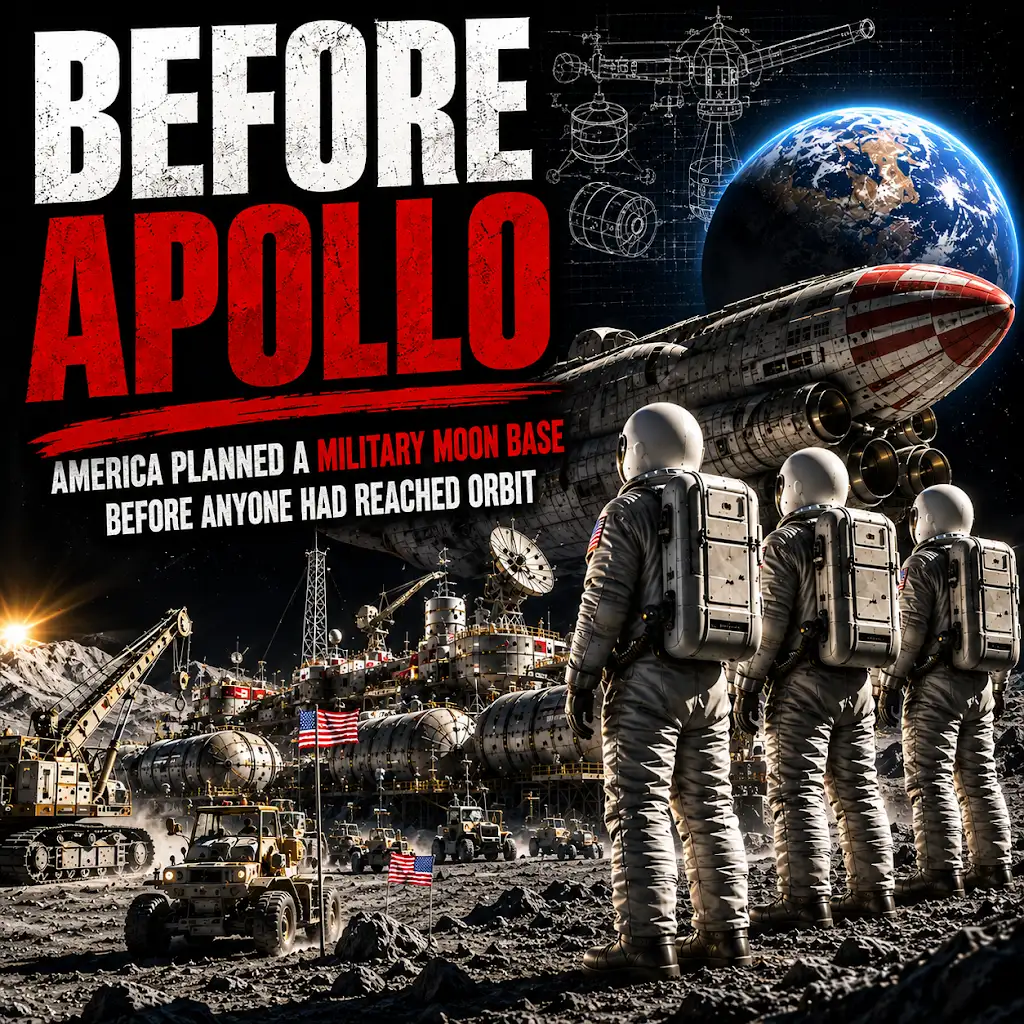
America Planned a Military Moon Base Before Anyone Had Reached Orbit
FAQs
What is the purpose of establishing a military base on the Moon?
The purpose of establishing a military base on the Moon would be to secure strategic advantages, such as surveillance, communication, and potential resource extraction. It could also serve as a platform for defense and security operations.
Is there any current plan to build a military base on the Moon?
As of now, there are no official plans to build a military base on the Moon. However, there has been speculation and discussion about the potential strategic importance of such a base in the future.
What are the potential challenges of building and maintaining a military base on the Moon?
Challenges of building and maintaining a military base on the Moon include the high cost of transportation and construction, the harsh lunar environment, and the need for sustainable life support systems for personnel.
What international laws and treaties would apply to a military base on the Moon?
The Outer Space Treaty of 1967, which prohibits the placement of nuclear weapons and other weapons of mass destruction in space, would likely apply to a military base on the Moon. Additionally, international cooperation and agreements would be necessary for the establishment and operation of such a base.
How would a military base on the Moon impact space exploration and colonization?
A military base on the Moon could potentially support and advance space exploration and colonization efforts by providing infrastructure, resources, and security for future missions and settlements. However, it could also raise concerns about militarization and competition in space.