The whispers of ancient civilizations have long echoed through the annals of human history, inspiring awe and fueling endless speculation. While Earth’s deserts and jungles have yielded countless archaeological treasures, the possibility of life, and by extension, civilizations, beyond our planet has always captivated the human imagination. In recent years, a controversial yet intriguing field known as remote viewing has claimed to offer glimpses into such distant realms, and one particular alleged remote viewing session has sparked considerable debate: the description of pyramids on Mars.
Remote viewing, a purported psychic ability, is the practice of obtaining information about a distant or unseen target by means of extrasensory perception. Proponents suggest that individuals, known as remote viewers, can access information without any conventional sensory input, essentially “seeing” or “knowing” details about a location, object, or event that is physically inaccessible. This information is often presented as images, feelings, or abstract concepts that the remote viewer then attempts to translate into understandable language.
Origins and Methodology
The concept of remote viewing gained significant traction in the mid-20th century, particularly during the Cold War era. Governments, notably the United States and the Soviet Union, reportedly invested in research to explore its potential for intelligence gathering. Methodologies vary, but often involve guided meditations, specific protocols, and structured sessions where a remote viewer is given a target identifier (such as a set of coordinates or a project name) and is asked to describe their perceptions. The information is typically recorded and then analyzed by researchers to identify patterns and correlations with known information about the target.
Skepticism and Scientific Scrutiny
Despite the claims of practitioners and the historical interest from intelligence agencies, remote viewing remains a highly controversial subject within the scientific community. Critics often point to a lack of reproducible results, the subjective nature of the data, and the potential for confirmation bias or analytical error in interpreting the viewer’s descriptions. Many studies that have claimed positive results have been criticized for methodological flaws or for being conducted in non-double-blind conditions, where viewers might have had unconscious access to information about the target. The scientific consensus generally regards remote viewing as a pseudoscience, lacking empirical evidence to support its claims.
In a fascinating exploration of extraterrestrial structures, a related article discusses the intriguing claims made by remote viewers who assert that they have observed pyramids on Mars. These claims have sparked considerable debate within both the scientific community and among enthusiasts of the paranormal. For more insights into this captivating topic, you can read the full article at XFile Findings.
The Martian Landscape: A Canvas of Mystery
Mars, the “Red Planet,” has long been a focal point of human fascination and scientific inquiry. Its reddish hue, coupled with observations of geological features that bear a striking resemblance to terrestrial formations, has fueled speculation about its past and present habitability, and even the possibility of ancient Martian civilizations.
Geological Formations and Anomalies
Mars is characterized by a diverse and dramatic landscape, sculpted by ancient geological processes. Vast plains, towering volcanoes, and intricate canyon systems are common. However, certain formations have captured the public’s imagination and become subjects of intense debate, particularly those that appear to defy natural explanations.
The “Face on Mars” Phenomenon
Perhaps the most famous example is the “Face on Mars,” an image captured by the Viking 1 orbiter in 1976. The formation, located in the Cydonia region, strongly resembled a human face, leading to widespread speculation about its artificial origin. Subsequent, higher-resolution images taken by later missions have revealed the formation to be a natural mesa, its resemblance to a face being a trick of light and shadow. This incident, however, set a precedent for interpreting ambiguous Martian imagery as potentially artificial.
Other Curious Features
Beyond the Cydonia region, Mars boasts other intriguing geological features that have been subject to speculation. These include what appear to be geometric patterns, straight lines, and formations that bear a superficial resemblance to man-made structures. While planetary scientists attribute these to natural geological processes such as erosion, volcanic activity, or impact events, the persistent allure of artificiality continues to fuel public interest.
The Search for Life and Past Civilizations
The question of whether life ever existed on Mars, or even if intelligent civilizations once thrived there, is a driving force behind much of the ongoing exploration of the planet. The presence of water in its past, evidenced by ancient riverbeds and mineral deposits, suggests that Mars may have once possessed conditions suitable for life. The discovery of any definitive signs of past life, microbial or otherwise, would be a monumental scientific achievement.
The Remote Viewer’s Testimony: Unveiling the Pyramids
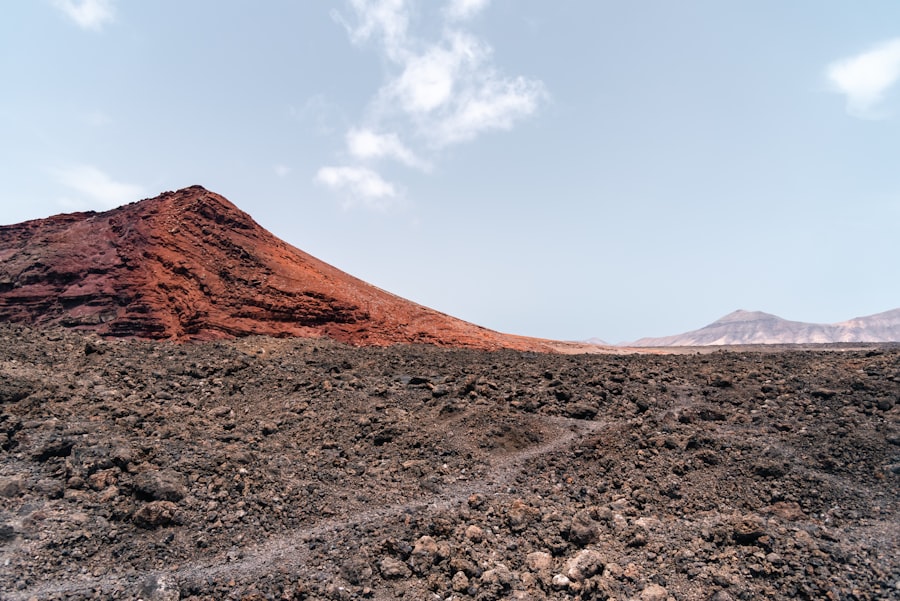
Within this context of Martian mystery and the controversial realm of remote viewing, a particular account by a remote viewer, identified only as “Subject 39,” emerged, describing structures on Mars that bore a striking resemblance to Earth’s ancient pyramids. This testimony, if credible, would carry profound implications for our understanding of the universe and our place within it.
The Initial Target and Protocol
Subject 39 was allegedly tasked with a remote viewing session focusing on a specific set of coordinates on Mars. The protocol used was reportedly standard for remote viewing exercises, designed to minimize sensory input and guide the viewer’s perceptions. The viewer was not provided with any prior information about the target, preventing the possibility of conscious bias or pre-existing knowledge influencing their descriptions.
The Viewer’s Perceptions: A Description of Pyramids
According to the transcripts of the session, Subject 39 began to describe a landscape that was not entirely unfamiliar, but contained distinctly anomalous features. The primary perception that emerged was that of large, geometric structures. The viewer used terms like “pointed,” “layered,” and “massive.” The association with terrestrial pyramids was reportedly made by the viewer themselves, drawing a parallel between their perceptions and known ancient structures on Earth.
Geometric Precision and Scale
The descriptions emphasized the remarkable geometric precision of these perceived structures. Subject 39 spoke of sharp angles, symmetrical sides, and a scale that dwarfed any natural formations. The viewer’s language hinted at deliberate construction rather than random geological occurrences. The sheer size and regularity of these “pyramids” were consistently highlighted as being beyond what could be explained by natural weathering or tectonic activity.
Material and Construction Details
Beyond their shape, the remote viewer also provided details about the perceived materials and construction methods of these Martian structures. Subject 39 described surfaces that were “smooth” and “hard,” possibly made of a material that felt ancient and weathered. There were also allusions to internal passages or chambers, though these were less defined and more abstract in their description. The overall impression was one of immense age and sophisticated engineering.
Analysis and Interpretation: Bridging Perception and Reality

The description provided by Subject 39 presents a compelling narrative, but its interpretation is fraught with challenges. Bridging the gap between subjective psychic perception and objective reality requires careful analysis and a willingness to consider multiple possibilities.
Cross-Referencing with Existing Martian Data
One of the crucial steps in evaluating such a remote viewing claim is to cross-reference the descriptions with existing scientific data and imagery of Mars. This involves comparing the viewer’s perceptions with high-resolution photographs, topographic maps, and geological surveys of the target region.
The Cydonia Hypothesis Revisited
The descriptions by Subject 39, particularly concerning geometric structures, inevitably bring to mind the Cydonia region and the “Face on Mars.” While the “Face” itself has been debunked as a natural formation, the area is known for its unusual topography, including the presence of mesas and other geological features that, under certain lighting conditions, can appear to have unusual shapes.
Potential for Pareidolia
The phenomenon of pareidolia, the tendency to perceive familiar patterns (such as faces or shapes) in random or ambiguous stimuli, is a significant consideration. Critics argue that remote viewers, like anyone else, are susceptible to pareidolia, and their descriptions might be an unconscious projection of familiar human concepts onto ambiguous psychic impressions. The viewer’s own recognition of “pyramids” could be an example of this.
The Role of Analytical Overshadowing
Another critical aspect of remote viewing analysis is the potential for “analytical overshadowing.” This occurs when a remote viewer, consciously or unconsciously, is influenced by preconceived notions, popular theories, or even information they may have inadvertently picked up. If the viewer had prior knowledge, however slight, of theories about artificial structures on Mars, it could shape their perceptions.
Recent discussions about the intriguing pyramids on Mars have sparked interest in various theories surrounding extraterrestrial life and ancient civilizations. A related article explores the fascinating claims made by remote viewers who assert that these structures may hold secrets about the planet’s past. For those interested in delving deeper into this topic, you can read more about it in the article found at XFile Findings, which provides insights into the implications of these findings and the ongoing debate within the scientific community.
The Broader Implications: Redefining Our Cosmic Perspective
| Remote Viewer | Pyramids on Mars | Description |
|---|---|---|
| Ingo Swann | Cydonia region | Described structures resembling pyramids and a face on Mars |
| Joseph McMoneagle | Cydonia region | Reported seeing pyramidal structures and a large, carved face on Mars |
Regardless of the ultimate scientific validation of Subject 39’s claims, the very idea of remote viewing describing pyramids on Mars raises profound questions about our place in the universe and the potential for intelligence beyond Earth.
The Search for Extraterrestrial Intelligence (SETI)
The possibility of ancient Martian civilizations, as suggested by the pyramid claims, aligns with the broader goals of SETI. While SETI primarily focuses on detecting signals from technologically advanced civilizations, the discovery of artifacts or evidence of past intelligent life on our own solar system would be a paradigm-shifting event.
The Nature of Consciousness and Reality
If remote viewing is indeed a genuine phenomenon, it would necessitate a fundamental reevaluation of our understanding of consciousness and reality. It would suggest that the human mind possesses capabilities far beyond our current scientific comprehension, capable of accessing information in ways that defy conventional physics.
A New Chapter in Human Exploration
The enduring mystery of the pyramids on Mars, whether real or imagined, serves as a potent symbol of humanity’s insatiable curiosity and our drive to explore the unknown. It pushes us to question, to investigate, and to continue our cosmic journey, always seeking answers to the most fundamental questions: Are we alone? And what wonders lie hidden in the vast expanse of the universe? The whispers from the Red Planet, whether they echo with the voices of ancient architects or the trickery of light and shadow, continue to inspire our imaginations and propel our quest for knowledge.

The CIA Asked a Man to Look at Mars 1 Million Years Ago
FAQs
What is remote viewing?
Remote viewing is a practice that involves using extrasensory perception (ESP) to gather information about a distant or unseen target, such as a location or object, using the mind.
What did the remote viewer describe about the pyramids on Mars?
The remote viewer described seeing pyramidal structures on the surface of Mars during a remote viewing session. The viewer claimed that the structures resembled those found in Egypt and appeared to be artificial in nature.
Is there any scientific evidence to support the claims of the remote viewer?
There is currently no scientific evidence to support the claims made by the remote viewer regarding the existence of pyramids on Mars. Remote viewing is a controversial practice and is not widely accepted within the scientific community.
What are the mainstream scientific views on the possibility of pyramids on Mars?
Mainstream scientific views do not support the existence of pyramids on Mars. The images captured by various Mars rovers and orbiters have not shown any conclusive evidence of artificial structures resembling pyramids.
What are some alternative explanations for the remote viewer’s claims?
Some alternative explanations for the remote viewer’s claims include the possibility of pareidolia, which is the tendency for the human brain to perceive familiar patterns, such as faces or geometric shapes, in random or ambiguous stimuli. It is also possible that the remote viewer’s experience was influenced by their own beliefs or expectations.