UFO Witnesses Silenced in Australia
The vast, sparsely populated landscapes of Australia have long been fertile ground for tales of the unexplained, with UFO sightings being a recurring theme in the nation’s folklore. From the Outback’s starry skies to the coastal plains, reports of strange aerial phenomena have emerged for decades. Yet, a persistent narrative of suppression and discrediting has accompanied these accounts, leaving many witnesses feeling silenced and their experiences dismissed. This article delves into the complex phenomenon of UFO witnesses in Australia, exploring the reasons behind their alleged silencing, the historical context, and the ongoing implications for public understanding and scientific inquiry.
Australia’s unique geographical and historical context has contributed to a rich tapestry of UFO lore. The sheer size and remoteness of many regions mean that unusual events can occur far from prying eyes, leading to isolated and often uncorroborated accounts.
The Maralinga Incident: A Nuclear Shadow Over the Skies
One of the earliest and most compelling instances often cited in discussions of Australian UFO phenomena is linked to the British atomic testing conducted at Maralinga in South Australia during the 1950s and 1960s. While the official narrative focuses on the scientific and military objectives of these tests, a subtext of unsettling eyewitness accounts persists.
Reports of Unidentified Aerial Objects During Bomb Detonations
During the testing of nuclear devices, a number of personnel, including military staff and civilian workers, reported observing peculiar aerial phenomena that were not readily explained by conventional aircraft or atmospheric conditions. These observations often occurred in the immediate vicinity of the test sites or in the skies above during the critical moments of detonation. Eyewitnesses described lights that moved erratically, objects that defied gravity, and formations that were unlike anything they had previously encountered. Some accounts even suggested that these objects appeared to be observing the nuclear explosions themselves.
Official Explanations and Lingering Doubts
Official explanations for these sightings typically attributed them to atmospheric effects caused by the blasts, such as unusual cloud formations or light refractions. The intense energy released by nuclear detonations could indeed create a variety of optical illusions and atmospheric disturbances. However, for many who claimed to have witnessed these events firsthand, these explanations felt inadequate, failing to account for the reported speed, maneuverability, and distinct characteristics of the observed objects. The secrecy surrounding the Maralinga tests, coupled with the sensitive nature of the work being conducted, also fostered an environment where questions about unusual phenomena might have been discouraged or met with skepticism. The lingering doubts surrounding these early encounters have contributed to the perception that unusual aerial events, particularly those occurring in sensitive or classified areas, were and perhaps still are, subject to a degree of official downplaying.
The Kelly-Abbott Report and the Role of the RAAF
The Royal Australian Air Force (RAAF) has historically been the primary agency tasked with investigating reports of unidentified aerial phenomena within Australian airspace. The Kelly-Abbott Report, a compilation of such investigations from 1950 to 1960, stands as a significant, albeit controversial, document in the history of Australian UFOlogy.
Documenting Sightings: A Glimpse into the Unknown
The report, declassified in the late 1990s, details a substantial number of UFO sightings reported by military personnel, civilians, and even commercial pilots. The sheer volume and diversity of these reports, ranging from disc-shaped objects and cigar-shaped craft to luminous orbs and silent, fast-moving aerial anomalies, suggest a consistent pattern of unexplained observations. The report itself, while not definitively concluding the extraterrestrial origin of these phenomena, acknowledges the existence of a significant number of cases that defied conventional explanation at the time. For many enthusiasts and researchers, the report serves as a testament to the reality of UFO encounters in Australia, suggesting that these were not mere isolated incidents or mass hysteria.
The “Unidentified” Tag: A Double-Edged Sword
The RAAF’s primary classification for many of these observed phenomena was “unidentified.” While this designation may seem straightforward, it has often been interpreted in different ways. For some, “unidentified” signifies a genuine unknown, potentially hinting at advanced technology or phenomena beyond current scientific understanding. For others, particularly those within official circles, “unidentified” can be a pragmatic classification for events that lack sufficient data for definitive identification, rather than an endorsement of extraordinary explanations. This ambiguity has led to a perception that the RAAF, while cataloging sightings, was also inadvertently contributing to their marginalization by failing to pursue more in-depth, or publicly transparent, investigations that might lead to more concrete conclusions. The very act of classifying something as “unidentified” can, in itself, serve to defer further scrutiny and public engagement.
In recent discussions surrounding the phenomenon of UFO sightings, a notable article titled “UFO Witnesses Silenced in Australia” sheds light on the experiences of individuals who claim to have encountered unidentified flying objects but faced skepticism and silence from authorities. This article explores the implications of such experiences and the societal pressures that often lead to the suppression of these testimonies. For further insights, you can read the full article here: UFO Witnesses Silenced in Australia.
The Culture of Discrediting: Why Witnesses Stay Silent
The reasons behind the alleged silencing of UFO witnesses in Australia are multifaceted, encompassing societal attitudes, media portrayals, and the inherent challenges of presenting extraordinary claims.
Media Portrayals: From Fascination to Ridicule
The media’s role in shaping public perception of UFOs has been a significant factor. While early media coverage might have displayed a degree of curiosity, over time, a more dismissive and even mocking tone often emerged, contributing to a climate where reporting a UFO sighting could invite ridicule rather than serious consideration.
The ‘Flying Saucer’ Hysteria and its Aftermath
The initial wave of UFO sightings in the mid-20th century, often termed the “flying saucer” era, was met with a mixture of fascination and sensationalism. While this generated public interest, it also cemented a somewhat cartoonish image of UFOs in the public consciousness, often associated with science fiction rather than serious observation. As the phenomenon continued, a concerted effort by some authorities and scientific bodies to debunk or explain away sightings as misidentifications, weather balloons, or mass delusion began to take hold. This created a narrative that positioned UFO believers as gullible or imaginative, thereby discouraging more credible individuals from coming forward.
The Influence of ‘The X-Files’ and its Double-Edged Sword
The global phenomenon of “The X-Files” in the 1990s brought UFOs back into mainstream popular culture, sparking renewed interest. However, the show, while entertaining, often portrayed government conspiracies and government cover-ups in a dramatic and sometimes exaggerated manner. While this fueled the narrative of suppression for some, it also, for others, blurred the lines between reality and fiction, making it harder to distinguish genuine witness accounts from speculative storytelling. The show’s success, in a way, normalized the idea of a “cover-up,” but it also did so within a fictional framework, potentially leading some to dismiss all UFO-related discussions as mere entertainment.
Societal Stigma and Professional Consequences
Beyond media portrayals, a powerful societal stigma surrounds the topic of UFOs, leading to a reluctance among many to share their experiences for fear of professional repercussions or social ostracism.
The “Crazy” Label: Fear of Ridicule and Disbelief
The deeply ingrained societal skepticism towards UFOs often leads to individuals who report sightings being labeled as eccentric, attention-seeking, or even mentally unstable. This “crazy” label acts as a potent deterrent, particularly for those in professional fields where credibility is paramount. A pilot reporting an unusual aerial object, for instance, might fear damaging their career if their account is met with disbelief or patronizing dismissal by their superiors or peers. Similarly, scientists or academics who express open interest in the UFO phenomenon can find their professional reputations questioned, making it difficult to secure funding or publish research in mainstream journals.
The Impact on Credible Witnesses: Pilots, Police, and Professionals
While many anecdotal reports come from ordinary citizens, a significant number of compelling sightings have been reported by individuals in positions that typically demand reliability and observational skill, such as commercial airline pilots, law enforcement officers, and military personnel. These individuals, by virtue of their training and responsibilities, are often perceived as more credible witnesses. However, the potential for damage to their careers and reputations means that even these individuals may choose to remain silent, or their accounts, if reported, are subject to intense scrutiny designed to find conventional explanations, often to the exclusion of considering the extraordinary. The fear of professional retribution can be a powerful silencing mechanism, creating an environment where official reports of credible sightings are rare, or when they do emerge, are heavily scrutinized for any potential for conventional explanation.
The Government’s Hand: Secrecy, Disclosure, and Denials
The role of governments, both Australian and international, in responding to UFO phenomena is a contentious topic, with accusations of secrecy and deliberate obfuscation frequently raised by researchers and witnesses.
Historical Government Involvement: From Investigation to Inaction
Historically, governments have engaged with UFO reports, though the extent and transparency of this involvement have varied significantly over time.
Project Blue Book and its Australian Counterparts: A Legacy of Doubt
In the United States, Project Blue Book, a decades-long investigation by the U.S. Air Force into UFO sightings, is a well-known example. While Australia did not have a single, publicly named project of such magnitude, the RAAF did maintain records and conduct investigations. The perceived outcome of these investigations, often concluding with conventional explanations or classifying phenomena as “unidentified,” has led to a persistent belief among some that governments were more interested in dismissing or explaining away sightings than in uncovering the truth. The lack of public access to many of these historical records for extended periods only fueled these suspicions.
The “Need to Know” Principle: Secrecy in Sensitive Areas
The principle of “need to know” is a fundamental aspect of national security. In Australia, as in many countries, this has meant that information deemed sensitive, particularly regarding military activities, airspace surveillance, and advanced technology, is subject to strict control. When UFO sightings occur in proximity to military installations, or involve phenomena that might be misconstrued as foreign espionage or advanced technological capabilities, the instinct for secrecy can be amplified. This can lead to the classification of relevant data and a reluctance to share information that could be interpreted as revealing vulnerabilities or sensitive information, even if the primary interest lies in the unusual nature of the sighting itself.
The Disclosure Dilemma: From Dismissal to Measured Admissions
In recent years, there has been a global shift in the way governments approach the UFO topic, moving from outright dismissal to a more cautious engagement, and in some cases, even limited admissions of unexplained phenomena.
The UAP Task Force and a New Era of Investigation?
The establishment of Unidentified Aerial Phenomena (UAP) task forces by the U.S. Department of Defense marked a significant departure from decades of official reticence. While Australia has not publicly announced a formal UAP task force akin to its American counterpart, there are indications of a renewed, albeit subtle, interest within defence and intelligence circles in understanding these phenomena. This shift, driven by concerns about national security and the potential for advanced adversarial technology, has encouraged a more open, though still guarded, discussion. However, the extent to which this newfound openness translates to genuine transparency and public disclosure remains a key question.
The “National Security” Veil: A Shield Against True Transparency?
While the focus on national security provides a legitimate rationale for some level of governmental discretion, critics argue that it also serves as a convenient veil to avoid confronting uncomfortable truths or public scrutiny. The argument often put forth is that if governments are truly interested in understanding UFOs for national security reasons, then greater transparency with the public, and with credible researchers, would be beneficial in gathering a more complete picture. The fear is that “national security” can become a catch-all excuse to withhold information that, while potentially sensitive, might also be crucial for public understanding and scientific advancement.
The Impact on Scientific Inquiry: Bridging the Gap Between Anecdote and Evidence
The enduring skepticism surrounding UFOs has created significant hurdles for scientific inquiry, making it challenging to gather and analyze credible data.
The Challenge of Empirical Evidence: From Eyewitness to Data
The nature of UFO sightings, often fleeting, unpredictable, and occurring in remote locations, makes them inherently difficult to study using traditional scientific methods.
The Limitations of Anecdotal Accounts: Subjectivity and Memory
The primary form of evidence in UFO research has historically been anecdotal accounts from eyewitnesses. While these accounts can be compelling and provide valuable starting points for investigation, they are also subject to the inherent limitations of human perception, memory, and interpretation. Factors such as psychological state, prior beliefs, environmental conditions, and even suggestion can influence what a witness reports seeing. The challenge for scientists lies in differentiating between genuine, misidentified phenomena and true anomalies, using subjective reports as a basis for objective scientific conclusions.
The Scarcity of Tangible Evidence: Photographs, Videos, and Physical Traces
Tangible evidence, such as clear photographs, unedited video footage, radar data, or physical traces left behind, is crucial for scientific validation. However, such evidence is often scarce, ambiguous, or subject to debunking. When compelling evidence does emerge, it is frequently met with immediate skepticism and intense scrutiny, with researchers often accused of fabricating or misinterpreting data. The rarity of irrefutable evidence makes it difficult for the scientific community to dedicate significant resources to UFO research, perpetuating a cycle of limited investigation and continued skepticism.
The Role of Civilian Research and the Pursuit of Credibility
Despite the challenges, a dedicated community of civilian researchers and UFO organizations has emerged in Australia, striving to collect data and promote a more scientific approach to the phenomenon.
Dedicated Organizations and Data Collection Efforts
Numerous UFO research organizations have been established across Australia, meticulously collecting witness testimonies, cataloging sightings, and attempting to correlate them with various databases, including astronomical events, military exercises, and atmospheric phenomena. These groups often operate with limited funding and rely heavily on volunteer efforts. Their work, while often overlooked by mainstream scientific institutions, represents a crucial effort to document and analyze the phenomenon from a ground-up perspective, attempting to build a more robust dataset over time.
Bridging the Gap: Towards a More Interdisciplinary Approach?
The future of UFO research in Australia, and globally, may lie in fostering a more interdisciplinary approach. This could involve collaboration between civilian researchers and scientists in fields such as aerospace engineering, atmospheric physics, psychology, and data analysis. By employing a rigorous, evidence-based methodology and encouraging open dialogue, it might be possible to move beyond the stigma and sensationalism that have long surrounded UFOs and to investigate these phenomena with the scientific objectivity they deserve. The current landscape, however, suggests that the whispers of Australia’s UFO witnesses are still struggling to break through the pervasive silence.
In recent discussions surrounding UFO sightings in Australia, many witnesses have reported feeling silenced or dismissed by authorities. This phenomenon raises questions about the broader implications of how such experiences are treated in society. For those interested in exploring this topic further, a related article can be found at XFile Findings, which delves into the experiences of individuals who have encountered unexplained aerial phenomena and the challenges they face in sharing their stories.
The Future of UFOs in Australia: Towards Openness or Continued Secrecy?
| Date | Location | Number of Witnesses | Government Response |
|---|---|---|---|
| April 5, 1993 | Clayton, Victoria | Multiple | Reports dismissed as weather phenomena |
| September 14, 2006 | Perth, Western Australia | 3 | No official response |
| May 20, 2019 | Sydney, New South Wales | 5 | Witnesses advised not to speak to media |
The question of whether UFO witnesses in Australia will ever feel truly heard and whether the phenomenon will be approached with greater scientific rigor remains a subject of considerable debate.
A Global Shift in Perception: The UAP Phenomenon
The recent increase in official interest in UAP in countries like the United States has undoubtedly had an impact on the global conversation surrounding UFOs. This shift, driven by national security concerns, has begun to legitimize the discussion, at least within government and military circles.
The “National Security” Imperative: A Catalyst for Change?
The recognition that UAP could represent advanced technology from adversarial nations, or indeed unknown capabilities, has served as a powerful catalyst for governmental re-engagement. This pragmatic approach, focused on threat assessment rather than outright dismissal, may create opportunities for greater transparency. If governments are investigating UAP for national security reasons, the argument can be made that withholding information from the public, especially concerning potential technological advancements or atmospheric anomalies, is counterproductive. The current trend suggests a move towards acknowledging that “something is out there,” even if the ultimate explanation remains elusive.
The Australian Context: Echoes of International Developments
While Australia may not be at the forefront of UAP disclosure, it is inevitably influenced by global trends. There are indications that Australian defence and intelligence agencies are also taking a closer look at UAP reports, though this is often done with a degree of discretion. The public in Australia, now more exposed to international discussions about UAP, may also be more inclined to question official narratives and to demand greater openness. The question remains whether this will translate into concrete governmental action and a willingness to engage with civilian researchers and the public in a more meaningful way.
The Path Forward: Transparency, Research, and Public Trust
Ultimately, breaking the cycle of silence for Australian UFO witnesses will require a concerted effort towards greater transparency, rigorous scientific research, and the rebuilding of public trust.
Advocating for Open Data and Public Forums
Continued advocacy for the declassification of relevant government documents, the establishment of accessible public databases for UAP reports, and the creation of open forums for discussion are crucial steps. Civilian researchers play a vital role in this process, by continuing their data collection and analysis, and by engaging with the public in an informative and credible manner. It is through these persistent efforts that the voices of witnesses, often dismissed as mere anecdotes, can begin to form a more coherent and impactful body of evidence.
Embracing Scientific Curiosity and Interdisciplinary Collaboration
The scientific community has a responsibility to engage with the UFO phenomenon with open curiosity, rather than outright skepticism. While the standards of scientific evidence must be upheld, the dismissal of all unusual observations as misidentifications or hoaxes can hinder progress. Encouraging interdisciplinary collaboration, where scientists from various fields can apply their expertise to the study of UAP, is essential. This could lead to innovative research methodologies and a more comprehensive understanding of the data. The current situation, where UFO witnesses often feel silenced and their experiences marginalized, is a disservice to both the individuals who have had these encounters and to the potential for scientific discovery. The journey towards a more open and informed future regarding UFOs in Australia is ongoing, and the silencing of witnesses remains a significant obstacle to overcome.
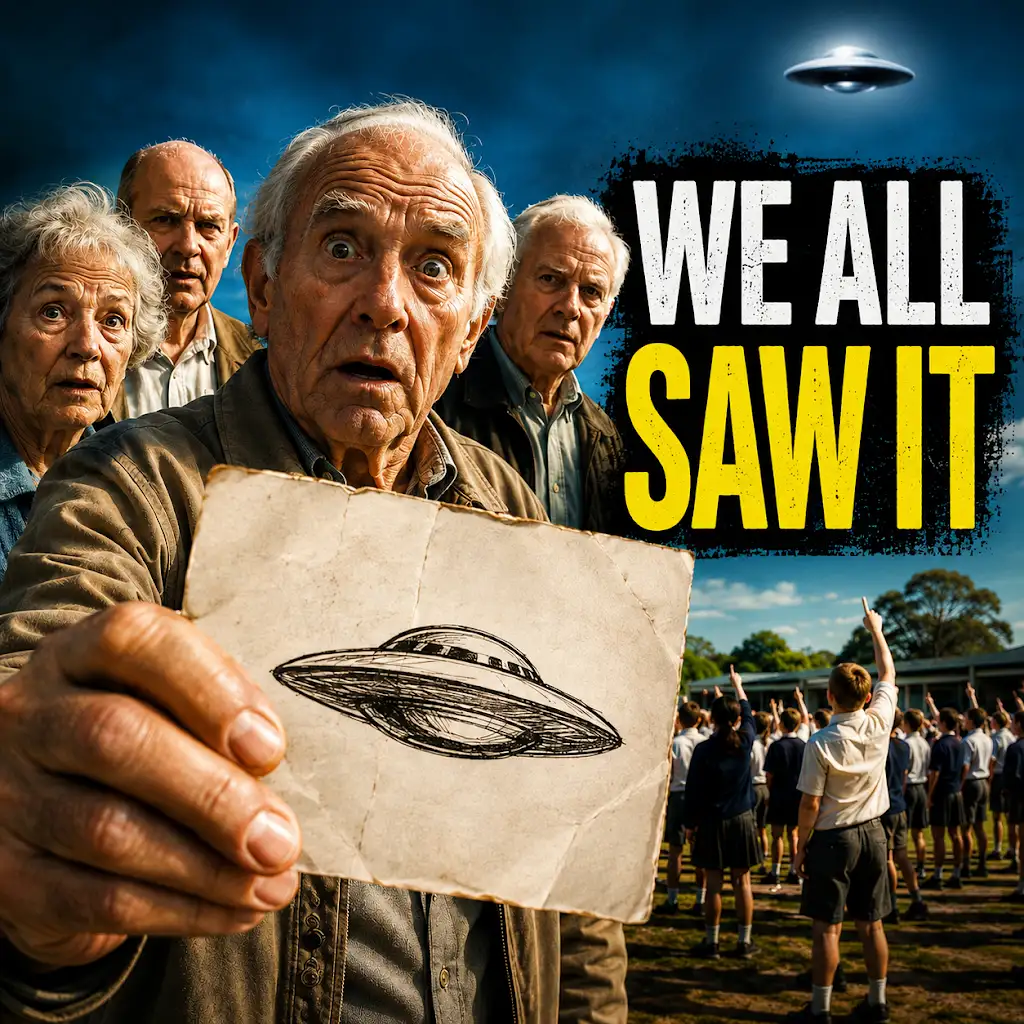
200 Students Saw a UFO. Then They Were Told to Stay Silent.
FAQs
What is the article “UFO witnesses silenced Australia” about?
The article “UFO witnesses silenced Australia” discusses the alleged suppression of UFO sightings and related information by the Australian government and military.
What evidence is presented in the article regarding the silencing of UFO witnesses in Australia?
The article presents testimonies from individuals who claim to have witnessed UFO sightings and experienced intimidation and threats from government and military officials to keep silent about their experiences.
Are there any official statements from the Australian government or military regarding the suppression of UFO information?
The article does not mention any official statements from the Australian government or military regarding the suppression of UFO information. It primarily focuses on the testimonies of the witnesses.
What impact does the silencing of UFO witnesses have on the public’s perception of UFO sightings in Australia?
The article suggests that the silencing of UFO witnesses contributes to a culture of secrecy and skepticism surrounding UFO sightings in Australia, making it difficult for individuals to come forward with their experiences.
What are the implications of the alleged suppression of UFO information in Australia?
The article raises questions about transparency and accountability within the Australian government and military, as well as the potential implications for public trust and the pursuit of scientific inquiry into UFO phenomena.