Ingo Swann’s Moon Remote Viewing: A Fascinating Story
Ingo Swann, a name synonymous with the controversial yet captivating field of remote viewing, left behind a legacy that continues to spark debate and inspire intrigue. His experiences, particularly those involving the Moon, represent a pivotal chapter in the history of parapsychology and government-sponsored psychic research. The story of Swann’s alleged ability to perceive distant locations and objects with his mind, especially his claims concerning the Moon, is not merely a collection of anecdotes; it is a fascinating narrative woven from personal accounts, scientific inquiries, and the enduring human fascination with the unknown. This exploration delves into the life and work of Ingo Swann, focusing on his purported moon remote viewing sessions and their broader implications.
Ingo Swann’s journey into the realm of psychic phenomena was not a sudden revelation but a gradual unfolding of what he and others believed to be innate abilities. Born in Brooklyn, New York, in 1933, Swann’s early life was marked by a nomadic existence, living in various military bases and foster homes. These experiences, he later claimed, contributed to his heightened sensitivity and awareness of subtle energies. While not initially recognized as a psychic prodigy, Swann’s life took a decisive turn in the late 1960s and early 1970s when he encountered researchers at the American Society for Psychical Research (ASPR) and later at the Stanford Research Institute (SRI). It was here that his alleged abilities were subjected to rigorous, albeit often debated, experimentation, laying the groundwork for what would become the formalized practice of remote viewing.
Early Life and Developing Sensitivity
Swann’s upbringing was far from conventional. His father was a career army officer, leading to frequent relocations for the family. This constant upheaval, coupled with his own introverted nature, may have fostered a unique way of perceiving the world. He described a childhood characterized by vivid dreams and a feeling of being connected to something beyond the ordinary. These early experiences, while subjective, are often cited by proponents of remote viewing as foundational to his later psychic development. He reportedly discovered his abilities more consciously in his adulthood, leading him to seek out individuals and institutions interested in such phenomena.
The Stanford Research Institute (SRI) Connection
The turning point for Ingo Swann’s public and academic recognition came with his involvement at SRI. Founded in 1946, SRI was, and still is, a renowned research institution. In the early 1970s, under the patronage of government agencies like the Central Intelligence Agency (CIA) and the Defense Intelligence Agency (DIA), SRI became a hub for parapsychological research, driven by a Cold War-era desire to explore potential technological and intelligence advantages offered by psychic abilities. It was within this context that Swann met researchers like Dr. Hal Puthoff and Dr. Russell Targ, who were instrumental in developing and documenting the methodology of remote viewing. Their collaboration with Swann would define a significant portion of the field’s early history.
The Birth of Remote Viewing
Remote viewing, as conceptualized and developed by Swann and his collaborators, is the purported ability to gain information about a distant or unseen target using extrasensory perception (ESP). The methodology typically involves a “viewer” who is given a randomized target (often a location or object) and asked to describe it without any prior knowledge. The descriptions are then compared to the actual target. Swann’s role at SRI was crucial in refining this process. He was not merely a subject but an active participant in shaping the protocols and understanding the nuances of the phenomenon. His insights into subjective experience and his ability to articulate his perceptions were invaluable in creating a framework for what would become a formalized discipline.
Ingo Swann’s intriguing story of Moon remote viewing has captivated the interest of many, shedding light on the potential of human consciousness and its connection to the universe. For those looking to delve deeper into the subject, a related article can be found at XFile Findings, which explores various aspects of remote viewing and its implications for our understanding of reality. This resource provides valuable insights and further context to Swann’s groundbreaking experiences.
The Lunar Connection: A Celestial Canvas for ESP
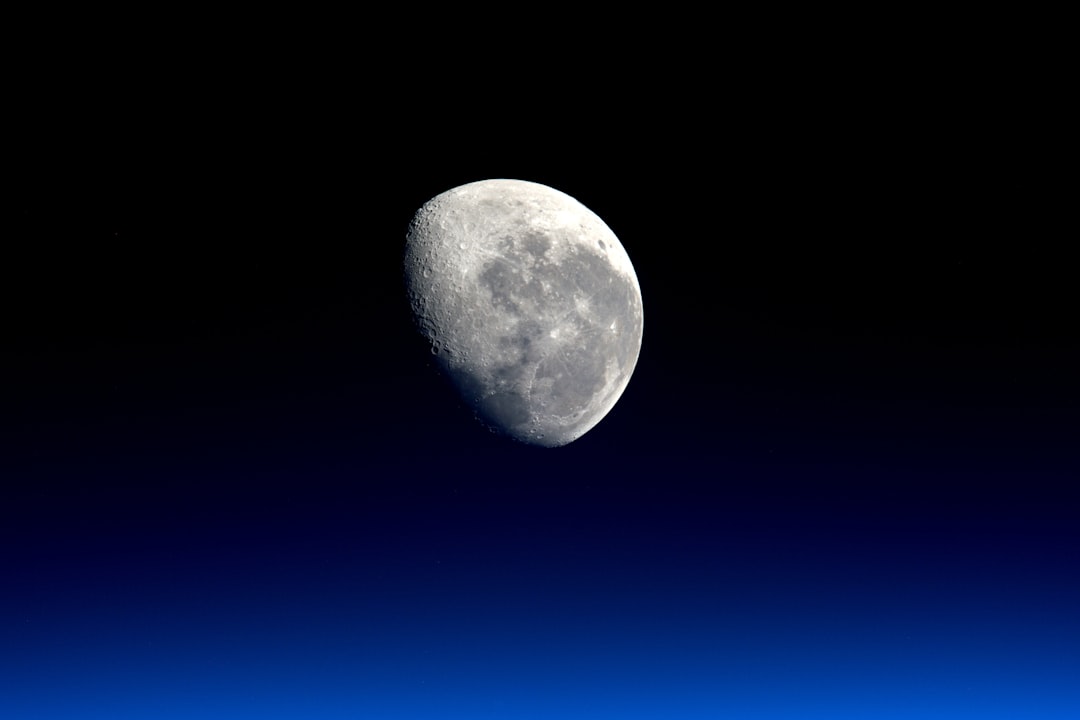
Ingo Swann’s alleged abilities extended to locations far beyond Earth, with his purported remote viewing of the Moon being among his most extraordinary claims. These sessions, often conducted under controlled conditions, aimed to explore the possibility of gathering information about celestial bodies using psychic means. The Moon, with its enigmatic presence and relative proximity, served as a compelling target for such ambitious investigations. Swann’s descriptions of the lunar surface, its features, and even what he claimed were hidden structures, became a cornerstone of the remote viewing narrative and a focal point for skepticism and fascination alike.
The “Far Sight” Protocol
A key element of Swann’s lunar remote viewing involved what he termed “far sight.” This was an extension of the standard remote viewing protocol, designed to push the boundaries of perception beyond terrestrial limitations. The idea was that if remote viewing could penetrate terrestrial barriers, it could theoretically reach any point in the universe. Swann’s descriptions of the Moon under this protocol were remarkably detailed and, at times, highly unusual, leading to much discussion and interpretation. He spoke of vast, geometrically precise structures and unusual geological formations that were not aligned with mainstream scientific understanding of the Moon at the time.
Structures Beneath the Surface
One of Swann’s most persistent and provocative claims was the existence of artificial structures on and beneath the lunar surface. He described vast, intricate networks, akin to buried cities or complex subterranean installations. These claims were not merely fleeting impressions; Swann provided detailed sketches and written descriptions of these alleged lunar features. He suggested that these were not natural formations but evidence of ancient, possibly extraterrestrial, civilizations that had once inhabited or utilized the Moon. These assertions, naturally, generated significant controversy, as they ran counter to all existing lunar geological data.
Scientific Scrutiny and Skepticism
The claims of artificial lunar structures naturally attracted intense scrutiny from the scientific community. Mainstream geologists and astronomers, armed with photographic evidence from lunar missions and established scientific principles, largely dismissed Swann’s descriptions as fanciful or misinterpretations. The lack of any corroborating evidence from orbital probes and landers that had extensively mapped the Moon’s surface, including both visible and subsurface features through radar and other methods, fueled this skepticism. Critics argued that if such large-scale structures existed, they would have been readily detected.
The Stargate Project and Government Interest
Ingo Swann’s lunar remote viewing activities were not isolated personal endeavors. They were deeply intertwined with government-funded research programs aimed at exploring the potential military and intelligence applications of psychic phenomena. The “Stargate Project,” a collective term for a series of U.S. government programs from the 1970s to the 1990s, sought to investigate the efficacy of remote viewing and other psychic abilities for intelligence gathering. Swann’s participation and his extraordinary claims, including those related to the Moon, played a significant role in shaping the direction and funding of these controversial projects.
The CIA and DIA’s Pursuit of Psychic Intelligence
The Cold War was a period of intense competition between the United States and the Soviet Union, not only in terms of military might and technological advancement but also in the realm of the unknown. The possibility that adversaries might be harnessing psychic abilities for espionage or other strategic advantages prompted U.S. intelligence agencies to investigate the matter themselves. The CIA and the DIA, through their involvement with SRI and other research institutions, funded extensive research into remote viewing, with the hope of developing a new form of intelligence gathering that could bypass traditional methods.
Project Grill Flame and Sun Streak
Within the broader umbrella of government-sponsored psychic research, specific projects focused on remote viewing. Projects like “Grill Flame” and “Sun Streak” were early iterations that explored the practical applications of the technique. Ingo Swann was a central figure in these experiments. His ability to produce detailed and often accurate descriptions of targets, even those that were geographically distant or conceptually challenging, led to the belief that remote viewing could be a viable intelligence tool. His lunar sessions, while perhaps more esoteric, were viewed as an extreme test of this potential, pushing the limits of what was considered possible.
The Declassification and Legacy of Stargate
The U.S. government’s involvement in remote viewing research remained classified for decades. It wasn’t until the late 1990s that many of the Stargate Project documents were declassified, revealing the extent of the government’s interest and investment in psychic phenomena. The declassified reports indicated that while some successes were noted, the overall effectiveness and reliability of remote viewing for practical intelligence purposes were deemed insufficient to continue funding. Despite the official conclusion, the legacy of the Stargate Project, and Ingo Swann’s prominent role within it, continues to fuel public interest and debate.
Skeptical Scrutiny and Scientific Rebuttals
While Ingo Swann and his supporters viewed his lunar remote viewing sessions as compelling evidence of extraordinary abilities, the scientific community largely met these claims with rigorous skepticism and numerous rebuttals. The lack of verifiable evidence, the potential for psychological biases, and the inherent challenges of proving extrasensory perception have been the primary grounds for these criticisms. The scientific method demands reproducibility and falsifiability, elements that are notoriously difficult to achieve in the study of subjective psychic phenomena.
The Problem of Reproducibility
One of the central tenets of scientific inquiry is the ability to reproduce experimental results. Critics of remote viewing, including those who studied Swann’s work, pointed to the inconsistent results and the difficulty in replicating his alleged lunar perceptions. While Swann might have had some accurate perceptions, the inability to consistently achieve similar results under controlled conditions raised serious doubts about the validity of the phenomenon itself. If a claimed psychic ability cannot be reliably demonstrated by the same individual or by others, its scientific credibility is severely undermined.
Cognitive Biases and Cold Reading
Skeptics often attribute successes in remote viewing to psychological phenomena such as cognitive biases and cold reading techniques. Cognitive biases are systematic errors in thinking that affect decisions and judgments. In remote viewing, this could manifest as confirmation bias, where a viewer unconsciously seeks out or interprets information in a way that confirms their preconceptions. Cold reading, on the other hand, involves making vague or general statements that can apply to a wide range of people or situations, and then narrowing them down based on the subject’s reactions. Critics argue that some of Swann’s descriptions could be explained by such mechanisms, especially in the context of ambiguous targets like the Moon.
The “Lack of Evidence” Argument
Perhaps the most powerful argument against Swann’s claims, particularly regarding artificial lunar structures, is the sheer lack of corroborating evidence from scientific observation. Decades of telescopic observations, lunar missions with advanced imaging capabilities (including radar and multispectral analysis), and geological surveys have provided an extensive and detailed understanding of the Moon’s surface. These scientific endeavors have consistently failed to uncover any evidence of the large-scale, artificial structures that Swann described. In the absence of any physical or photographic proof, the scientific community remains unconvinced.
Ingo Swann’s remarkable experiences with Moon remote viewing have captivated many, shedding light on the potential of human consciousness. His intriguing journey into the unknown has inspired numerous discussions and investigations into the nature of psychic phenomena. For those interested in exploring more about this fascinating topic, you can read a related article that delves deeper into the implications of Swann’s work and the broader context of remote viewing by visiting this link.
The Enduring Enigma of Ingo Swann
| Metrics | Data |
|---|---|
| Remote Viewer | Ingo Swann |
| Target | The Moon |
| Story | Remote viewing of structures on the Moon |
| Outcome | Controversial and debated |
Ingo Swann passed away in 2013, leaving behind a complex and often contentious legacy. His contributions to the field of remote viewing are undeniable, and his lunar explorations remain a touchstone for discussions about the boundaries of human perception and the potential for undiscovered phenomena. Whether one views his abilities as genuine psychic powers or as a masterful interplay of perception, intuition, and perhaps even self-deception, the story of Ingo Swann and his purported moon remote viewing remains a fascinating testament to humanity’s enduring quest to understand the universe and our place within it.
The Subjective Experience of Remote Viewing
Despite the scientific skepticism, the subjective experience reported by Ingo Swann and other remote viewers cannot be entirely dismissed. Their accounts often convey a sense of genuine perception and a deep conviction in the reality of their experiences. For those who believe in the potential of psychic abilities, Swann’s detailed and consistent descriptions, even of lunar phenomena, are seen as powerful indicators of an untapped human potential. The internal consistency of his accounts, and his ability to maintain his beliefs over decades of research and scrutiny, are significant factors for his proponents.
The Unanswered Questions and Future Possibilities
The story of Ingo Swann’s lunar remote viewing, like much of parapsychology, is rife with unanswered questions. Did he truly perceive information beyond the reach of conventional senses? If so, how did this phenomenon operate? While government funding for such research has largely ceased, the allure of exploring the unknown persists. The possibility of latent psychic abilities, the mysteries of consciousness, and the vastness of the cosmos continue to inspire curiosity. Ingo Swann’s lunar voyages, whether literal or metaphorical, serve as a potent reminder that our understanding of reality may still be incomplete, and that the universe may hold wonders far beyond our current comprehension.
Ingo Swann’s Place in Parapsychological History
Ingo Swann occupies a significant, albeit controversial, place in the history of parapsychology. He was not just a subject but a theorist and a key developer of the remote viewing methodology. His name is inextricably linked to the SRI experiments and the U.S. government’s exploration of psychic phenomena. While the scientific community remains largely unconvinced by his claims, particularly concerning the Moon, his work has undeniably influenced the discourse around ESP and altered the landscape of parapsychological research. He remains a pivotal figure for those who believe in the existence of psychic abilities and a cautionary tale for those who demand rigorous scientific proof. His lunar exploits, in particular, stand as a bold assertion of the potential for human consciousness to reach across the void, forever etched in the annals of psychic exploration.
He Remote Viewed the Moon. Then Something Saw Him.
FAQs
What is the Ingo Swann Moon remote viewing story?
The Ingo Swann Moon remote viewing story refers to the claim made by Ingo Swann, a well-known psychic and remote viewer, that he was involved in a government-sponsored remote viewing project focused on the Moon in the 1970s. Swann claimed to have remote viewed structures and activity on the Moon, which he detailed in his book “Penetration: The Question of Extraterrestrial and Human Telepathy.”
What is remote viewing?
Remote viewing is the practice of seeking impressions about a distant or unseen target using paranormal means, such as extrasensory perception (ESP) or “sensing” with the mind. It is often associated with psychic abilities and has been the subject of scientific research and government-sponsored projects.
Was Ingo Swann’s Moon remote viewing story verified?
There is no verifiable evidence to support Ingo Swann’s claims about remote viewing the Moon. The government-sponsored remote viewing project in which Swann claimed to have participated, known as the Stargate Project, has been the subject of controversy and skepticism. The scientific community generally regards remote viewing as pseudoscience.
What is the Stargate Project?
The Stargate Project was a secret U.S. Army unit established in 1978 at Fort Meade, Maryland, by the Defense Intelligence Agency (DIA) and SRI International to investigate the potential military and domestic applications of psychic phenomena, particularly remote viewing.
What is the current understanding of remote viewing and its validity?
Remote viewing is not considered a valid scientific practice by the mainstream scientific community. Despite decades of research and government-sponsored projects, there is no conclusive evidence to support the existence of psychic abilities or the effectiveness of remote viewing. It is generally regarded as pseudoscience.