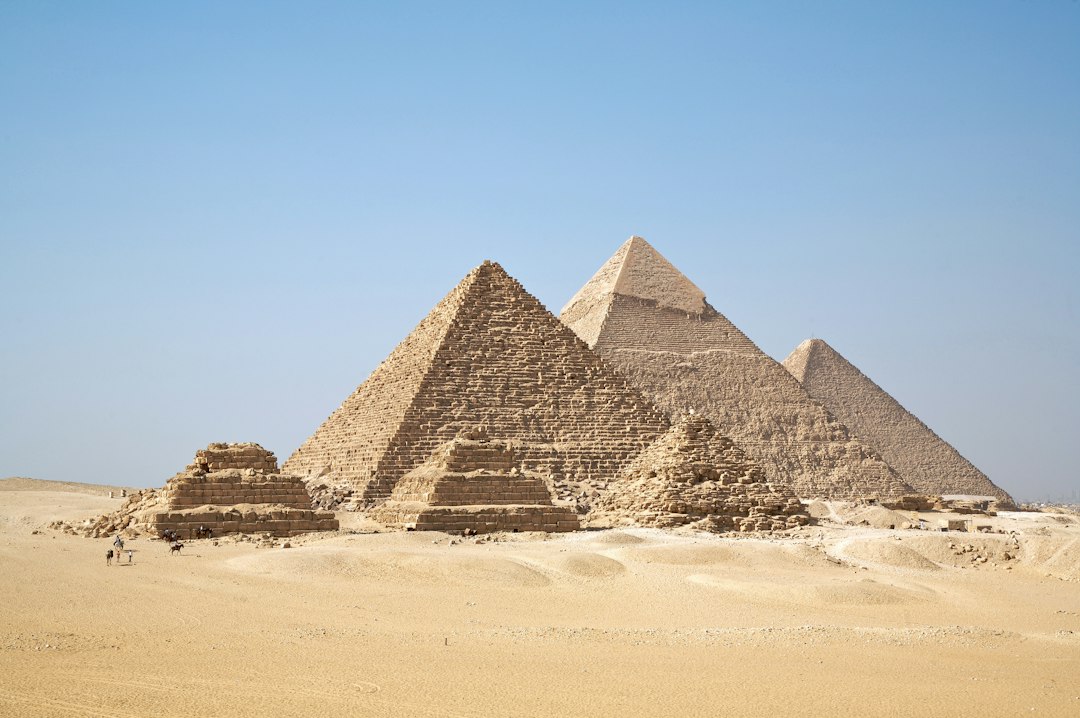
The colossal silhouette of Khafre’s Pyramid, an enduring sentinel of the Giza plateau, has captivated humanity for millennia. While its majestic grandeur is undeniably apparent, a persistent question has echoed through the annals of archaeology and popular imagination: what lies hidden beneath its ancient stone embrace? For centuries, speculation has swirled, fueled by tales of hidden chambers, secret passages, and lost knowledge. Modern scientific inquiry, however, is steadily transforming these whispers into tangible revelations, employing sophisticated technologies to probe the pyramid’s subterranean depths and unravel the secrets it has guarded for over four and a half millennia.
The initial incursions into the secrets of Khafre’s Pyramid were marked by a blend of bold ambition and rudimentary techniques. Driven by treasure-hunting impulses and a thirst for discovery, early explorers often relied on brute force and sheer determination. These pioneering efforts, though sometimes destructive, laid the groundwork for future, more nuanced investigations.
The allure of untouched tombs
The enduring allure of Egyptian pyramids has always been tied to the promise of untouched royal tombs, brimming with riches and historical artifacts. Khafre’s Pyramid, as the second largest and one of the most iconic structures, naturally became a prime target for such endeavors. The belief that the pharaoh’s final resting place, along with its accompanying funerary goods, remained undisturbed beneath the surface fueled generations of speculation.
The challenges of ancient construction
The sheer scale and complexity of ancient Egyptian construction present formidable obstacles to any exploration. The massive blocks of limestone and granite, meticulously fitted together, create a seemingly impenetrable barrier. The absence of detailed architectural plans from the era further compounds the difficulty, leaving modern archaeologists to decipher the intentions and methods of builders long departed.
The persistent questions of void and purpose
Despite the challenges, the question of what might lie beneath the pyramid’s bedrock has never entirely faded. Early theories often centered on the potential for additional burial chambers, storage rooms for funerary equipment, or even elaborate defensive mechanisms. The very act of building such a monumental structure implied a purpose beyond the visible exterior, a purpose that likely extended into the earth itself.
Recent discoveries have shed light on the intriguing structures beneath the Pyramid of Khafre, revealing a complex network that may have served various purposes during the pyramid’s construction and use. For more in-depth information on this topic, you can explore the article titled “Unveiling the Secrets of the Pyramid of Khafre” at XFile Findings, which delves into the latest archaeological findings and theories surrounding this ancient marvel.
The Dawn of Non-Invasive Technologies: Peering Through Stone
The limitations of destructive excavation led to a paradigm shift in archaeological investigation. The development and application of non-invasive technologies have revolutionized the way we study ancient structures like Khafre’s Pyramid, allowing us to “see” through solid stone without causing any damage. These advanced techniques offer a glimpse into the hidden architecture and potential voids that have remained concealed for millennia.
Ground-penetrating radar (GPR): A seismic symphony
Ground-penetrating radar (GPR) has emerged as a cornerstone of subterranean exploration. This technology employs radar pulses transmitted into the ground, which then reflect off buried objects and anomalies. The returning signals are analyzed to create a detailed subsurface profile, revealing changes in density and composition. In the context of Khafre’s Pyramid, GPR surveys have been instrumental in mapping the immediate subsurface and identifying potential areas of interest.
- Principle of operation: GPR works by sending electromagnetic waves into the ground and measuring the time it takes for these waves to reflect off different layers and objects. The speed of these waves varies depending on the material they are passing through, allowing for the identification of different substances and structures.
- Applications in pyramid studies: GPR can detect changes in soil density, the presence of stone blocks, and even potential voids or cavities beneath the pyramid’s surface. This has been crucial in identifying anomalies that might indicate hidden chambers or passages.
- Limitations and interpretations: While powerful, GPR data requires careful interpretation. Factors like soil moisture content, the presence of metallic objects, and the heterogeneity of the pyramid’s construction can influence the readings, necessitating cross-referencing with other techniques.
Muon tomography: Cosmic rays as subterranean eyes
Muon tomography represents a more recent, yet remarkably effective, advancement in non-invasive imaging. This technique utilizes naturally occurring muons, subatomic particles generated by cosmic rays interacting with Earth’s atmosphere. These muons are highly energetic and can penetrate significant amounts of matter, including stone. By detecting the muons that pass through the pyramid, researchers can deduce the density of the material they have traversed, effectively creating a 3D image of internal structures.
- The science of muons: Muons are unstable elementary particles that are constantly bombarding the Earth. Their ability to penetrate dense materials makes them ideal for imaging large structures.
- Detecting muons through the pyramid: Detectors are placed strategically around or within the pyramid to capture the muons that emerge from the opposite side. The pattern of their passage reveals areas of lower density, indicative of voids.
- Unlocking the secrets of internal voids: Muon tomography has been particularly successful in identifying previously unknown voids within ancient structures, offering a unique perspective on their internal architecture.
Infrared thermography: Detecting thermal signatures of change
Infrared thermography, while perhaps less direct in revealing structural voids, can provide valuable insights into temperature variations within and around the pyramid. Differences in temperature can sometimes indicate the presence of internal cavities or changes in material composition that affect heat retention or dissipation.
- Heat as an indicator of anomaly: Variations in surface temperature can sometimes correlate with subsurface features. Areas that retain heat differently or dissipate it more rapidly might suggest underlying structures or voids.
- Mapping thermal patterns: Infrared cameras capture the thermal radiation emitted by surfaces, creating a visual representation of temperature distribution. This can help identify anomalies that might warrant further investigation by other methods.
- Complementary to other techniques: Infrared thermography is often used as a complementary technique, helping to confirm or refine findings from GPR or muon tomography by providing an additional layer of data.
The Sphinx’s Shadow: Exploring the Environs and Potential Connections
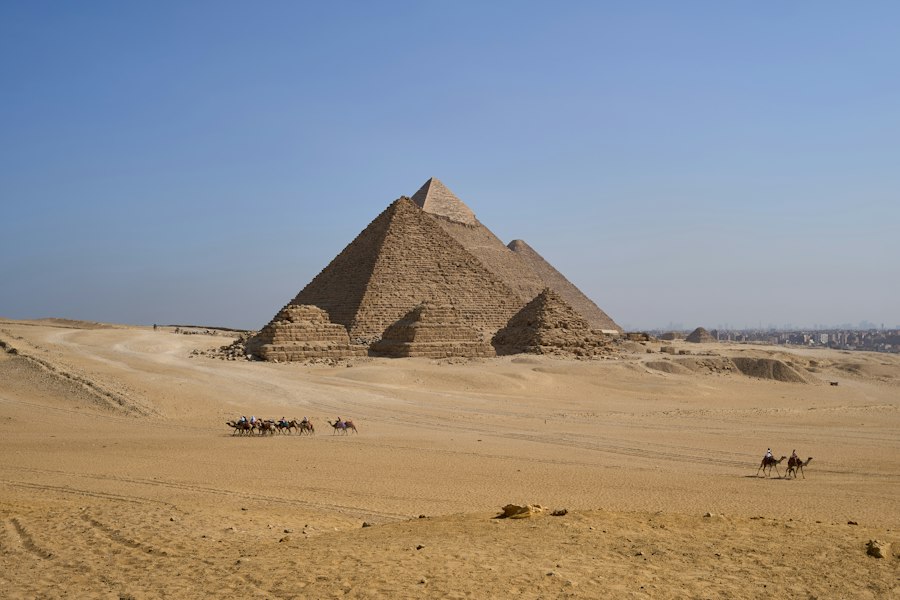
The exploration of Khafre’s Pyramid cannot be undertaken in isolation. The monumental complex surrounding it, particularly the enigmatic Sphinx, offers crucial context and potential clues to the pyramid’s hidden structures. The relationship between these ancient monuments is a subject of ongoing debate and research.
The Sphinx: A silent guardian with its own secrets
The Great Sphinx of Giza, a colossal limestone statue with the body of a lion and the head of a human, stands sentinel near Khafre’s Pyramid. Its weathered visage and enigmatic smile have long fueled speculation about its origins, purpose, and any potential subterranean secrets it might hold.
- Geological anomalies around the Sphinx: Investigations around the Sphinx have revealed geological anomalies and potential chambers or tunnels that could be connected to the larger pyramid complex.
- Theories of underground chambers: Various theories propose the existence of hidden chambers beneath the Sphinx, possibly containing archives, burial sites, or even astronomical observatories.
- The water erosion hypothesis: Some researchers point to signs of water erosion on the Sphinx’s enclosure, suggesting a much older origin than previously believed and potentially linking it to earlier, subterranean structures.
The Valley Temples and the causeway: Architects of connection
The Valley Temples, situated at the edge of the Nile, and the accompanying causeway that once led to the pyramid, were integral components of Khafre’s funerary complex. These structures, with their intricate stonework and precise alignment, suggest a deliberate architectural and symbolic connection to the pyramid itself.
- The role of the Valley Temples in the funerary ritual: These temples were likely used for purification rituals and the mummification process before the pharaoh’s body was transported to the pyramid.
- The causeway as a symbolic and practical link: The elevated causeway served as a ceremonial pathway and a practical route for transporting the sarcophagus and funerary goods. Its construction and alignment may hold clues to the pyramid’s internal layout.
- Potential for subterranean access points: The strategic placement and construction of these surrounding structures raise the possibility of concealed entrances or access points that lead to subterranean areas connected to the pyramid.
Subterranean water systems: An overlooked aspect?
The ancient Egyptians were master engineers, adept at managing water resources. The possibility of sophisticated subterranean water systems, either for structural purposes, ritualistic reasons, or even as a defensive measure, should not be overlooked when considering the hidden structures beneath Khafre’s Pyramid.
- Ancient irrigation and drainage techniques: Evidence suggests the Egyptians employed complex systems for managing water, both for agriculture and for monumental construction.
- Ritualistic significance of water: Water often held deep symbolic meaning in ancient Egyptian religion, associated with creation, purification, and the afterlife.
- Possible defensive or structural functions: Subterranean water channels could have served to stabilize foundations, provide a source of water for rituals within hidden chambers, or even act as a form of defense against tomb robbers.
The Grand Gallery and Beyond: Exploring the Known Internal Architecture
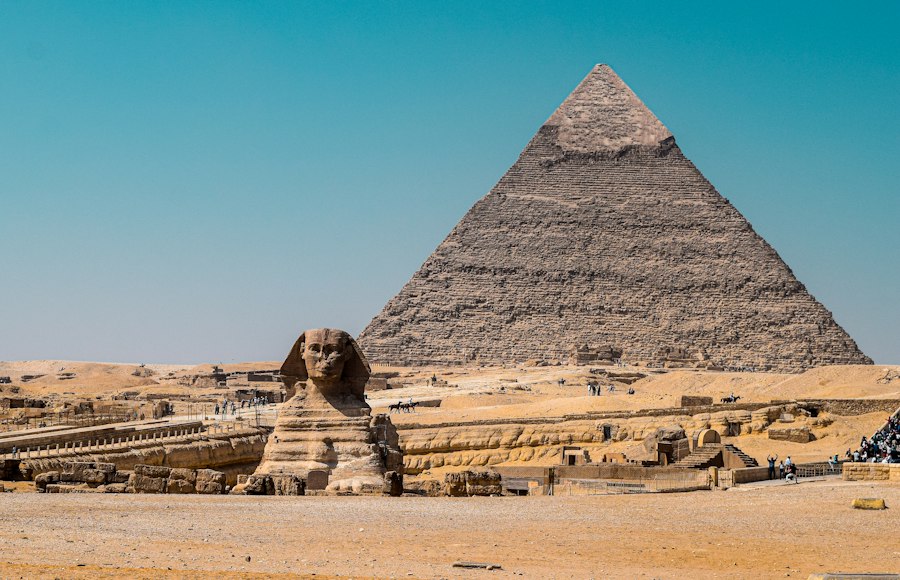
While much remains hidden, Khafre’s Pyramid is not entirely devoid of known internal architecture. The Grand Gallery, a remarkable feat of engineering, offers a tantalizing glimpse into the pyramid’s internal complexity and raises questions about what other passages and chambers might lie beyond.
The Grand Gallery: A sloping marvel of precision
The Grand Gallery is perhaps the most impressive known internal feature of Khafre’s Pyramid. This steeply inclined passageway, with its corbelled ceiling, is a testament to the advanced engineering skills of its builders.
- Dimensions and construction: The Grand Gallery is characterized by its soaring height and the precision with which its massive stone blocks are interlocked, creating a stable and awe-inspiring space.
- Purpose and function: While its exact purpose is debated, it is widely believed to have served a ceremonial function, possibly leading to a royal burial chamber or holding significant ritualistic importance.
- Materials and techniques: The use of large, precisely cut limestone blocks, carefully fitted to create the corbelled ceiling, highlights the sophisticated construction methods employed.
The King’s Chamber and its satellite spaces
The King’s Chamber, though not as grand as the Grand Gallery, is the presumed primary burial chamber for Pharaoh Khafre. Its relatively simple design, in contrast to the grandeur of the gallery, has led to speculation about its intended function and the possibility of additional, more elaborate spaces.
- The sarcophagus and its placement: The presence of Khafre’s sarcophagus within the chamber confirms its primary function, but its starkness invites further inquiry.
- Antechambers and auxiliary rooms: The existence of antechambers and smaller, satellite rooms adjacent to the King’s Chamber suggests a more complex funerary suite than initially apparent.
- The question of unsealed entrances: The possibility that some of these satellite rooms may have concealed entrances or passages to further subterranean areas remains a key area of investigation.
The bedrock and the potential for a foundation chamber
The very foundation of Khafre’s Pyramid, resting directly on the bedrock of the Giza plateau, presents a unique set of possibilities. Could there be intentionally constructed chambers or voids within this bedrock, integral to the pyramid’s design or purpose?
- The nature of the bedrock: Understanding the geological composition of the bedrock is crucial, as it influences the feasibility and methods of creating subterranean spaces.
- Evidence of artificial modification: Any signs of deliberate excavation or modification of the bedrock beneath the pyramid would be a significant indicator of hidden structures.
- The concept of a foundation chamber: The idea of a “foundation chamber” is not new in pyramidology, and Khafre’s Pyramid, with its sheer scale, is a prime candidate for such a feature.
Recent studies have unveiled fascinating insights into the structures beneath the Pyramid of Khafre, shedding light on the architectural techniques used by the ancient Egyptians. These findings suggest that the subterranean chambers may have served various purposes, from storage to ceremonial functions. For a deeper understanding of these discoveries and their implications, you can read more in this related article on the subject. Exploring the intricacies of these hidden structures can provide a greater appreciation for the ingenuity of ancient civilizations. Check out the full details in this related article.
Future Horizons: The Ongoing Quest for Subterranean Truths
| Structure | Description | Dimensions | Material | Function |
|---|---|---|---|---|
| Subterranean Chamber | Unfinished chamber beneath the pyramid, accessed via descending passage | Approx. 8.5 m x 4.5 m | Limestone | Intended burial chamber (never completed) |
| Descending Passage | Passage leading from entrance down to subterranean chamber | Length approx. 30 m, width 1 m, height 1.2 m | Limestone blocks | Access route to underground chamber |
| Horizontal Passage | Passage connecting descending passage to chamber | Length approx. 10 m, width 1 m, height 1.2 m | Limestone | Access to burial chamber |
| Burial Chamber | Chamber intended for the sarcophagus, located beneath the pyramid | Approx. 7 m x 3.5 m | Granite and limestone | Final resting place of Pharaoh Khafre (though no sarcophagus found) |
| Air Shafts | Small shafts leading from burial chamber to outside | Diameter approx. 20-25 cm | Limestone | Ventilation and symbolic passage for the soul |
The exploration of the hidden structures beneath Khafre’s Pyramid is far from over. As technology continues to advance and our understanding of ancient Egyptian ingenuity deepens, the quest to unravel the pyramid’s subterranean secrets will undoubtedly continue, promising further revelations that will undoubtedly reshape our perception of this iconic monument.
The synergy of evolving technologies
The future of exploration lies in the continued synergy of evolving technologies. Combining the strengths of GPR, muon tomography, and potentially other emerging imaging techniques will provide an even more comprehensive and detailed understanding of the subsurface.
- Advancements in sensor resolution and processing: Future technological developments will likely lead to higher resolution data and more sophisticated algorithms for analyzing complex subsurface information.
- Integration of multiple data sets: Combining data from different non-invasive methods will create a more robust and reliable picture, minimizing ambiguity and maximizing discovery.
- Artificial intelligence in data analysis: AI is poised to play a significant role in analyzing the vast amounts of data generated by these techniques, identifying patterns and anomalies that might escape human observation.
Collaboration and international efforts
The monumental nature of Khafre’s Pyramid necessitates international collaboration and the pooling of expertise. Shared resources, knowledge, and diverse perspectives will accelerate the pace of discovery.
- The value of interdisciplinary research: Bringing together archaeologists, geologists, physicists, and engineers will provide a holistic approach to the challenges of subterranean exploration.
- Sharing of data and methodologies: Open access to data and standardized methodologies will foster a more collaborative and efficient research environment.
- Global interest and scientific curiosity: The enduring fascination with ancient Egypt fuels a global interest in these investigations, encouraging support and participation.
The enduring legacy of discovery
Ultimately, the exploration of Khafre’s Pyramid’s hidden structures is not merely about uncovering physical spaces. It is about deepening our understanding of ancient civilizations, their beliefs, their engineering prowess, and their enduring impact on human history. Each discovery, whether a hidden chamber or a subtle anomaly, adds another layer to the complex and fascinating narrative of this extraordinary monument. The silent stones of Khafre’s Pyramid continue to whisper secrets, and with each passing year, science inching closer to deciphering their profound message. The quest for the hidden structures beneath this ancient wonder is a testament to humanity’s insatiable curiosity and its enduring desire to connect with the past.
Did Radar Really Find a City Beneath the Giza Pyramid?
FAQs
What are the structures beneath the Pyramid of Khafre?
The structures beneath the Pyramid of Khafre include a network of passageways, chambers, and tunnels.
How were the structures beneath the Pyramid of Khafre discovered?
The structures beneath the Pyramid of Khafre were discovered through archaeological excavations and explorations conducted by experts.
What is the significance of the structures beneath the Pyramid of Khafre?
The structures beneath the Pyramid of Khafre provide valuable insights into the construction techniques, burial practices, and religious beliefs of the ancient Egyptians.
Are the structures beneath the Pyramid of Khafre open to the public?
Some parts of the structures beneath the Pyramid of Khafre are open to the public for exploration, while other areas may be restricted for preservation purposes.
How do the structures beneath the Pyramid of Khafre compare to other ancient Egyptian sites?
The structures beneath the Pyramid of Khafre are similar to those found beneath other pyramids in Egypt, such as the Pyramid of Khufu, but each site also has unique features and characteristics.