
The sands of Giza have long held their secrets close, whispered on the desert wind and etched into the monumental stones of the pyramids. For millennia, these colossal structures have stood as silent witnesses to the dawn of civilization, their purpose and construction shrouded in an enduring enigma. While the external grandeur of the Great Pyramid of Giza is universally recognized, an aura of mystery persists concerning what lies hidden within its massive heart. The concept of “secret chambers” beneath the Giza pyramids has captivated imaginations, fueled by ancient texts, modern speculation, and the tantalizing hints revealed by persistent scientific investigation. This article will delve into the allure of these subterranean mysteries, exploring the historical context, the scientific endeavors, and the enduring questions surrounding the secret chambers below Giza.
The very construction of the pyramids, particularly the Great Pyramid, is a testament to an advanced understanding of engineering and logistics that still defies complete explanation. This inherent marvel has naturally led to speculation about hidden aspects of their design and purpose, extending beyond the commonly accepted burial chambers and passages.
The Pharaohs’ Intentions: Beyond the Royal Tomb
Ancient Egyptian beliefs were deeply intertwined with the afterlife, and the pharaohs, as divine rulers, were afforded the most elaborate preparations for their eternal journey. It is within this context that the idea of secret chambers gains traction. Were these chambers intended for the pharaohs’ personal belongings, their sacred texts, or perhaps even to safeguard knowledge considered too potent for the uninitiated?
The Lost Library of Thoth: A Repository of Ancient Wisdom
One of the most persistent theories suggests the existence of a hidden library or archive, a repository of ancient Egyptian wisdom. This “Lost Library of Thoth,” named after the god of writing, magic, and knowledge, is envisioned as a place where the most profound secrets of their civilization, including advanced scientific and philosophical understanding, were preserved. Such a discovery would revolutionize our understanding of ancient Egypt and potentially human history itself.
Guardians of Sacred Relics: Treasures Beyond Measure
Another interpretation points to the chambers as holding sacred relics or treasures of immense spiritual and historical significance. These might include artifacts related to religious rituals, symbols of royal power, or even objects believed to possess supernatural properties. The preservation of such items would have been paramount for the pharaohs and their priesthood, ensuring their continued influence in the afterlife and the stability of the earthly realm.
The Prophetic Visions: Ancient Accounts of Subterranean Marvels
Beyond the practical considerations of burial and safeguarding, ancient texts themselves sometimes allude to hidden aspects of these monumental structures. While often allegorical or mythological, these accounts have been interpreted by some as foreshadowing the existence of secret chambers.
Herodotus’s Enigmatic Observations: Hints from the Father of History
The Greek historian Herodotus, who visited Giza in the 5th century BCE, described the pyramids in his Histories. While his accounts are largely focused on the external construction and the known internal passages, some scholars have analyzed his writings for subtle hints or omissions that might suggest an awareness of deeper, unrevealed sections. His descriptions, though detailed, could be interpreted as either a reflection of his limited access or a deliberate avoidance of revealing too much.
The Westcar Papyrus and its Secrets: Stories of Hidden Chambers
The Westcar Papyrus, an ancient Egyptian document, contains several tales of magic and royalty. One story, in particular, describes a hidden chamber containing a collection of magical artifacts and spells, accessible through a concealed entrance. While fictional, its inclusion in ancient Egyptian literature suggests a cultural fascination with the idea of secret places within significant structures.
Recent discoveries have shed light on the hidden structures beneath the Giza pyramids, revealing a complex network that could change our understanding of ancient Egyptian architecture. These findings suggest that the pyramids may be part of a larger, interconnected system, possibly serving religious or astronomical purposes. For more in-depth insights into these intriguing developments, you can read the related article on this topic at Xfile Findings.
The Scientific Quest: Probing the Depths of Giza
The allure of secret chambers has not been confined to the realm of ancient speculation. Modern science, armed with increasingly sophisticated technologies, has undertaken numerous investigations to penetrate the stony veil of the pyramids. These efforts, driven by curiosity and a desire for empirical evidence, have yielded intriguing, albeit often inconclusive, results.
Non-Invasive Exploration: The Power of Technology
The ethical and practical challenges of excavating within the pyramids have necessitated the development of non-invasive techniques. These methods allow researchers to “see” within the structures without causing any physical damage, preserving their integrity for future generations.
Muon Tomography: A Glimpse Through Stone
One of the most promising technologies employed is muon tomography. Muons are naturally occurring subatomic particles that rain down from space. By placing detectors within or around the pyramid, scientists can measure how these muons penetrate the stone. Differences in density within the pyramid will affect the trajectory and absorption of the muons, allowing for the mapping of internal voids, tunnels, and potential chambers.
Ground-Penetrating Radar (GPR): Mapping Subsurface Anomalies
Ground-penetrating radar (GPR) uses radio waves to image the subsurface. By sending pulses of radar into the ground and analyzing the reflected signals, GPR can detect variations in soil density, voids, and buried structures. While more effective on softer ground, GPR has been used in the Giza plateau to identify anomalies that might indicate buried features or chambers.
Infrared Thermography: Detecting Thermal Signatures
Infrared thermography measures the heat emitted by objects. Variations in temperature on the surface of the pyramid, particularly after periods of intense sunlight, can reveal differences in the thermal conductivity of the underlying materials. Anomalies in heat signatures might suggest the presence of cavities or different materials behind the stone.
The ScanPyramids Project: A Modern Endeavor
The ScanPyramids project, launched in 2015, represents a significant, multi-disciplinary effort to explore the internal structure of the Giza pyramids using a combination of advanced technologies, including muon tomography, infrared thermography, and 3D reconstruction. This project has been at the forefront of the modern scientific quest for hidden chambers.
Discovering the Void: The Great Pyramid’s Hidden Cavity
In 2017, the ScanPyramids project announced the discovery of a significant void within the Great Pyramid, dubbed the “Big Void” or “ScanPyramids Big Void.” This discovery, made using muon tomography, was significant because it was a large, previously unknown internal space. The void is estimated to be at least 30 meters long and located above the Grand Gallery.
The Nature of the Big Void: A Chamber or a Construction Feature?
The exact nature of this void remains a subject of intense debate. Is it a deliberate, secret chamber, perhaps intended for a specific purpose? Or could it be a construction-related feature, such as a relieving chamber designed to alleviate pressure on the roof of the Grand Gallery, or an unfinished passage? Further investigation is required to definitively answer this question.
Implications of the Big Void: Rethinking Pyramid Construction
Regardless of its purpose, the discovery of the Big Void challenges existing models of pyramid construction. It suggests that our understanding of the internal architecture of the Great Pyramid is incomplete and that there may be more to its design and construction process than previously believed.
Other Anomalies Detected: Whispers of Further Discoveries
The ScanPyramids project has also identified other smaller anomalies and potential voids within the pyramids. While these are less definitive than the Big Void, they contribute to the ongoing narrative of hidden spaces and warrant further investigation. Each anomaly is a breadcrumb, leading researchers deeper into the mystery.
The Persistent Enigma: What Lies Within?

Despite the advancements in scientific exploration, the question of what specifically lies within any potential secret chambers remains largely unanswered. The absence of definitive physical evidence means that much of the discussion continues to reside in the realm of hypothesis and interpretation.
The Case for Burial Chambers: The Pharaoh’s Hidden Sanctuaries
While the main burial chambers of the Great Pyramid are well-known, it is plausible that secondary or secret burial chambers existed. These might have contained additional treasures, sarcophagi of royal family members, or even served as decoy tombs to protect the primary burial from grave robbers.
The Royal Necropolis: Expanding the Royal Resting Place
The concept of a pharaoh’s eternal resting place was elaborate. It is conceivable that the complex extended beyond the immediately visible structures. Secret chambers could have been designed as extensions of the royal necropolis, housing elements crucial for the pharaoh’s journey and dominion in the afterlife.
Protection from Looters: A Stratagem of Secrecy
Ancient Egypt faced the constant threat of tomb robbery. The construction of elaborate, hidden chambers would have served as an ultimate layer of security, ensuring the sanctity of the pharaoh’s final resting place and the preservation of their worldly possessions for eternity.
The Role of Religious and Ritualistic Spaces: Beyond the Tomb
The pyramids were not merely tombs; they were also immense religious and ritualistic complexes. Secret chambers could have played a vital role in these functions, housing sacred objects or facilitating clandestine ceremonies.
Chambers for Ritual Purity: The Sacredness of Hidden Spaces
Certain religious rituals demanded seclusion and a heightened sense of sanctity. Secret chambers could have provided the necessary environment for priests or the pharaoh themselves to perform specific rites, away from the prying eyes of the uninitiated.
Storage of Sacred Texts and Artifacts: Preserving Divine Knowledge
The priests of ancient Egypt were custodians of immense knowledge, both religious and practical. Secret chambers might have been used to store scrolls, amulets, or other artifacts deemed too sacred or powerful to be kept in public view. This would ensure their preservation and prevent their misuse.
The Future of Exploration: Unraveling Giza’s Mysteries
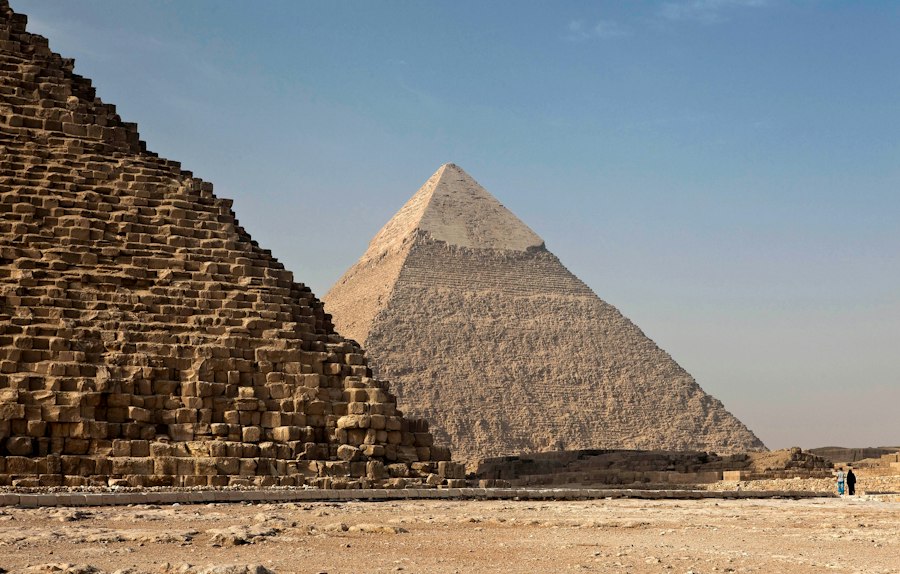
The quest for the secret chambers below Giza is far from over. As technology continues to advance and scientific methodologies become more refined, the potential for uncovering new truths about these ancient marvels grows exponentially.
Continued Research and Development: Pushing the Boundaries of Discovery
The ScanPyramids project and similar ongoing initiatives are crucial for the continued exploration of Giza. Further refinement of muon tomography, the development of more sensitive detection equipment, and innovative imaging techniques will undoubtedly lead to more detailed internal mapping.
Advanced Imaging Techniques: Seeing the Unseen
The next generation of imaging technologies might offer even greater resolution and penetration capabilities. This could allow for the detailed examination of internal structures, potentially revealing the presence of walls, sarcophagi, or even artifacts within any detected voids.
Robotics and Micro-Exploration: Reaching Inaccessible Areas
The development of advanced robotic systems, capable of navigating confined and potentially unstable spaces, could prove invaluable. These robots could be equipped with cameras, sensors, and even sampling tools, allowing for direct investigation of newly discovered cavities without risking human lives or the structural integrity of the pyramids.
The Importance of Interdisciplinary Collaboration: A Unified Approach
Unraveling the secrets of Giza requires a collaborative effort involving archaeologists, physicists, engineers, geologists, and historians. By bringing together diverse expertise, researchers can interpret data more effectively and develop more comprehensive theories.
Bridging the Gap Between Science and Archaeology: A Holistic Understanding
The purely scientific approach needs to be informed by archaeological context and ancient textual analysis. Conversely, archaeological theories can be tested and refined through scientific investigation. This interdisciplinary dialogue is essential for a holistic understanding of the pyramids.
The Ethical Considerations of Discovery: Preservation and Respect
As new discoveries are made, the ethical implications of exploration and potential excavation must be carefully considered. The preservation of these ancient monuments and the respectful handling of any artifacts found are paramount. The goal should always be to learn and understand, not to exploit or damage.
Recent discoveries have shed light on the hidden structures beneath the Giza pyramids, revealing a complex network that has intrigued archaeologists and historians alike. These findings suggest that the ancient Egyptians may have employed advanced engineering techniques that remain largely unexplored. For those interested in delving deeper into this fascinating subject, a related article provides further insights into the implications of these discoveries and their potential impact on our understanding of ancient civilizations. You can read more about it in this detailed analysis.
The Enduring Allure: Why the Secret Chambers Matter
| Metric | Value | Description |
|---|---|---|
| Depth of Hidden Cavities | Up to 30 meters | Estimated depth of voids detected beneath the Great Pyramid using muon tomography |
| Number of Detected Voids | 3 | Confirmed large voids or chambers beneath or within the Great Pyramid |
| Length of Largest Void | ~30 meters | Approximate length of the largest hidden void discovered above the Grand Gallery |
| Detection Method | Muon Radiography | Non-invasive imaging technique used to detect hidden structures |
| Location of Voids | Above Grand Gallery and beneath Pyramid | Specific areas within the Great Pyramid where voids were found |
| Estimated Age of Structures | ~4500 years | Approximate age of the pyramids and their internal structures |
The fascination with secret chambers beneath the Giza pyramids is more than just a curiosity; it speaks to our innate human desire to understand our past and the achievements of those who came before us. These hidden spaces represent the ultimate frontier of discovery within one of humanity’s most iconic and mysterious creations.
A Window into Ancient Beliefs and Practices: Understanding a Lost World
The discovery of secret chambers could provide invaluable insights into the religious beliefs, rituals, and societal structures of ancient Egypt. These hidden spaces might offer tangible evidence of practices that are currently only hinted at in hieroglyphs and fragmented texts.
Unlocking Religious Mysteries: The Sacred and the Profane
Understanding the purpose and contents of these chambers could shed light on the complex religious cosmology of the ancient Egyptians, their beliefs about the afterlife, and the rituals performed to ensure a successful transition.
Revealing Societal Hierarchies: The Lives of the Elite and the Priesthood
The contents of any chambers, if they were to be discovered, could offer clues about the social stratification of ancient Egypt, the roles of the pharaoh and the priesthood, and the organization of their society.
Challenging Our Perceptions of Ancient Capabilities: Rethinking the Past
The very existence of secret chambers, if they prove to be more than just construction anomalies, would further underscore the ingenuity and advanced capabilities of ancient Egyptian civilization. It would challenge any lingering notions of them as a primitive society.
Advanced Engineering and Architectural Prowess: Beyond the Obvious
The sophisticated planning and execution required to construct hidden chambers within such massive structures would be another testament to their engineering prowess, pushing the boundaries of what we currently believe they were capable of.
Preservation of Knowledge and Technology: A Legacy Yet to be Unearthed
If these chambers were intended to safeguard knowledge or technology, their discovery could offer revolutionary insights into ancient scientific understanding, mathematical principles, or even lost technological advancements that could inform our present.
The Human Drive for Exploration: The Unquenchable Thirst for Knowledge
Ultimately, the allure of secret chambers reflects the fundamental human drive to explore, to discover, and to uncover the unknown. The Giza pyramids, in their immense scale and enduring mystery, provide a perfect canvas for this drive, beckoning us to delve deeper and to seek the truths that lie hidden beneath the sands of time. The whisper of secret chambers is a call to continue the journey of discovery, a journey that promises to enrich our understanding of both the past and ourselves.
Did Radar Really Find a City Beneath the Giza Pyramid?
FAQs
What are the hidden structures beneath the Giza pyramids?
The hidden structures beneath the Giza pyramids are believed to be a network of tunnels and chambers that have not been fully explored or understood.
How were these hidden structures discovered?
These hidden structures were discovered using advanced non-invasive scanning techniques such as ground-penetrating radar and thermal imaging.
What is the purpose of these hidden structures?
The purpose of these hidden structures is still a subject of debate among archaeologists and researchers. Some theories suggest they could have been used for burial chambers, storage rooms, or even as part of a larger complex connected to the pyramids.
Are there any plans to further explore these hidden structures?
There are ongoing efforts to further explore and study the hidden structures beneath the Giza pyramids. Archaeologists and researchers are working to uncover more information about these mysterious underground spaces.
What significance do these hidden structures hold for understanding the pyramids of Giza?
Studying the hidden structures beneath the Giza pyramids can provide valuable insights into the construction techniques, purpose, and symbolism of these ancient monuments. It can also shed light on the daily life and beliefs of the ancient Egyptians who built them.