
The Shifting Sands of Perception: How Motion Parallax Fools the Eye
The night sky, a canvas of infinite wonder, has long been a stage for unexplained phenomena. Among the most persistent and captivating are sightings of Unidentified Flying Objects, or UFOs. While many of these encounters remain truly perplexing, a significant portion can be attributed to a common optical illusion: motion parallax. This article delves into the intricacies of this perceptual trick, exploring how the apparent movement of objects relative to a viewer’s position, combined with varying distances, can create the illusion of something solid, tangible, and often, strangely airborne. Understanding motion parallax is key to demystifying many reported UFO experiences, allowing us to appreciate the sophisticated workings of our own visual system and the natural world it interprets.
Motion parallax is a fascinating phenomenon that can often lead to misinterpretations of visual stimuli, including unidentified flying objects (UFOs). For a deeper understanding of how motion parallax can create illusions in the sky, you can explore the article on this topic at XFile Findings. This resource delves into the science behind motion parallax and its implications for UFO sightings, providing insights into how our perception can be influenced by movement and depth cues.
The Mechanics of Motion Parallax: A Visual Symphony of Distance and Speed

Motion parallax is a fundamental principle of human vision, a powerful tool that our brains employ to gauge depth and distance. It’s the reason why, when traveling in a car, nearby objects like fence posts zip past at high speed, while distant mountains appear to glide by with stately slowness. This differential movement is not an inherent characteristic of the objects themselves, but rather a consequence of our own movement through space and the way our eyes process visual information.
Near Objects, Rapid Transit
The core of motion parallax lies in the geometric relationship between the observer, the object, and the observer’s motion. As an observer moves, their line of sight to an object changes. For objects that are close to the observer, this change in the line of sight is relatively large for a given amount of observer movement. Imagine standing close to a wall and taking a single step to the side. The wall will appear to shift significantly in your field of vision. In the context of a moving vehicle, this translates to nearby objects covering a large angular distance in your field of view over a short period. This rapid angular change is perceived by the brain as high speed, reinforcing the notion of proximity.
Distant Objects, Gradual Drift
Conversely, objects that are far away exhibit a much smaller angular change in the observer’s field of view for the same amount of observer movement. Take the same scenario of walking: if you look at a distant tree or a cloud, a single step to the side will cause a barely perceptible shift. In the context of a car journey, distant objects appear to move much slower, almost majestically, across the windscreen. This slow angular drift is interpreted by the brain as an indication of great distance. This interplay of rapid movement for near objects and slow movement for distant objects is the bedrock of motion parallax.
The Role of Convergence and Binocular Vision
While motion parallax is a significant factor, it’s important to note that it’s not the sole determinant of depth perception. Our brains also utilize other cues, such as binocular disparity (the slight difference in the image received by each eye) and the effort our eye muscles make to focus on objects at different distances (accommodation and convergence). When we look at a close object, our eyes converge inward, and the muscles responsible for focusing work harder. These cues work in concert with motion parallax to provide a rich and nuanced understanding of our three-dimensional world. However, in situations where these other cues are diminished, or when the brain is presented with ambiguous information, motion parallax can become an even more dominant, and potentially misleading, factor.
The Optical Illusion in Action: Creating “Unidentified” Objects
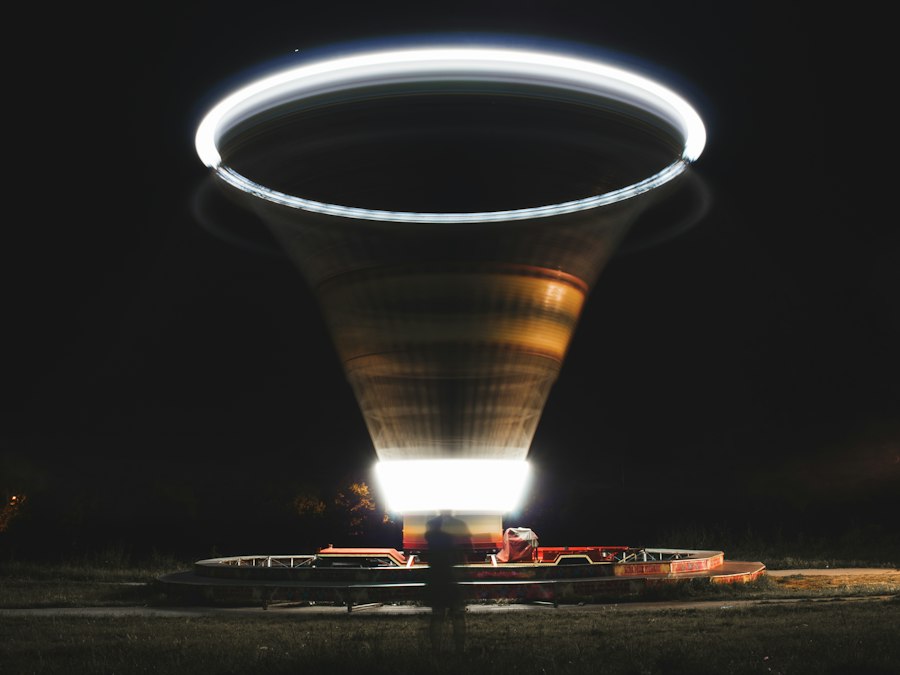
The principles of motion parallax, when misapplied or when observing unusual circumstances, can readily spawn the illusion of unidentified flying objects. The key lies in how our brains interpret the visual data, especially when certain assumptions about the environment or the nature of the observed object are subtly altered.
Witnessing Stationary Objects in Motion
One of the most common ways motion parallax leads to UFO sightings involves stationary objects that are perceived as moving. Consider a person on the ground looking up at a distant airplane. As the airplane traverses the sky, its apparent speed relative to the observer will be dictated by its altitude and its speed. However, if the observer themselves is in motion – perhaps in a car, on a train, or even just walking – their own movement will contribute to the perceived motion of the distant object.
If the observer is moving perpendicular to the distant object’s flight path, the object will appear to move across their field of vision. If the observer is moving towards or away from the object, its apparent speed will also change. However, if the observer is moving in a way that mimics the distant object’s apparent trajectory, or if the object is stationary but the observer is moving in a way that suggests the object is moving relative to a static background, confusion can arise. For example, a person looking at a distant hot air balloon that is tethered and stationary might perceive it as moving if they are themselves moving in a specific direction. The balloon’s apparent movement is not due to its own locomotion, but rather the changing perspective of the observer.
Atmospheric Conditions and Unreliable Backgrounds
Atmospheric conditions play a crucial role in exacerbating motion parallax illusions. Haze, fog, or even light pollution can obscure distant objects, making it difficult to ascertain their true distance and scale. In such conditions, the brain relies more heavily on relative motion to infer depth. If the background against which a distant object is viewed is also indistinct or lacks clear reference points, the motion parallax effect can be amplified.
Imagine observing a distant light source through a hazy atmosphere. If the observer is moving, the light source will appear to shift against the blurred backdrop. Without clear cues to its actual distance, the brain might interpret this apparent movement as indicative of a moving object. Furthermore, weather phenomena can sometimes create unusual visual effects. For instance, the refraction of light through layers of air with different temperatures can cause objects to appear distorted or to shimmer, adding to the confusion. A distant, slowly moving cloud illuminated by the moon, seen through a patchy fog, could easily be misinterpreted as a hovering craft.
Misjudging Scale and Altitude
The human brain is remarkably adept at estimating the size and distance of familiar objects. However, when confronted with unfamiliar objects or seen under unusual conditions, these estimations can go awry. This is where motion parallax can become particularly deceptive. If an object is seen at a great distance, its perceived size will be small, regardless of its actual dimensions. The brain, lacking definitive scale cues, will often extrapolate from the apparent size.
Consider a very large object, like a slow-moving cargo ship seen from a considerable distance at sea. Its apparent speed might be quite low due to its distance. If the observer is also on a moving vessel, their own motion will further influence the apparent speed of the distant ship. Without clear reference points to gauge the ship’s true size, it could be mistaken for something smaller and more agile, especially if its movement is partially obscured by waves or atmospheric distortions. Similarly, a high-altitude drone, though relatively small, could appear to be a larger, closer object if atmospheric conditions make it difficult to judge its altitude and scale accurately, and its own subtle movements are interpreted through the lens of motion parallax.
Case Studies: When Parallax Becomes the Phenomenon
Many historical UFO sightings, when examined with an understanding of motion parallax, can be reinterpreted as misidentified natural or man-made phenomena. The apparent strangeness of the observed object’s movement or behavior often stems from the observer’s own movement and the resulting optical illusion.
The “Saucer” That Wasn’t Spinning
A classic scenario involves reports of “saucer-shaped” objects exhibiting peculiar flight patterns. If an observer is in a moving vehicle and sees a distant, circular object, its apparent rotation might be influenced by the observer’s own lateral movement. Imagine a disc-shaped object in the sky. As the observer moves forward, their line of sight to the top of the disc will shift relative to their line of sight to the bottom. This differential shift can create the illusion of rotation, even if the object itself is perfectly stationary. The perceived speed of this “rotation” would also be dependent on the distance to the object and the speed of the observer, further contributing to its uncanny nature.
The “Silent, Hovering” Lights
Reports of silent, hovering lights in the sky are perennial favorites in UFO lore. Often, these sightings involve multiple lights that appear to move independently or in formation. Motion parallax can explain many such instances. Consider a group of distant aircraft, perhaps at different altitudes and flying at varying speeds. If the observer is also moving, their perspective on these lights will constantly change.
If the observer is moving in a particular direction, a light that is stationary relative to the ground but far away might appear to “hover” or move in an unusual manner. For example, if the observer is flying in a parallel direction to a distant aircraft, but at a different speed or altitude, the distant aircraft might appear to be stationary in their field of vision for a period, creating the illusion of hovering. If the observer is also observing other lights that are genuinely moving, the brain might attempt to find a unifying explanation for all observed phenomena, leading to the conclusion of a single, anomalous craft. The absence of sound, especially at great distances, is also a common characteristic of aircraft, further reinforcing the misidentification.
The “Impossible Maneuvers” Explained by Perspective Shifts
Perhaps the most compelling UFO reports involve objects described as performing “impossible maneuvers” – sudden changes in direction, extreme acceleration, or hovering capabilities beyond known technology. While some of these might indeed be anomalous, many can be attributed to perspective shifts caused by motion parallax.
When an observer changes their own direction of movement, their perception of the motion of distant objects also changes drastically. Imagine an observer in a car making a sharp turn. An object that was previously moving away from them might suddenly appear to be moving towards them, or across their field of vision at a different angle. If the observer is tracking a distant object while making such a turn, the object’s apparent trajectory can appear to change dramatically, leading to the impression of an impossible maneuver. This is especially true if the observer is not consciously aware of their own changing frame of reference. The brain, trying to make sense of the rapid alteration in the object’s apparent path, might conclude that the object itself has performed an extraordinary feat.
Motion parallax is a fascinating phenomenon that can often lead to misinterpretations of objects in the sky, including unidentified flying objects. This effect occurs when objects at different distances move at varying speeds relative to an observer’s viewpoint, which can create the illusion of movement or depth. For those interested in exploring this topic further, a related article that delves into the intricacies of motion parallax and its implications in UFO sightings can be found here. Understanding this concept can help clarify many of the mysteries surrounding aerial phenomena.
Factors Amplifying the Illusion
| Metric | Description | Value/Example |
|---|---|---|
| Motion Parallax | Apparent displacement of objects caused by a change in the observer’s viewpoint | Closer objects appear to move faster than distant objects |
| UFO Sightings Explained | Motion parallax can cause stationary objects to appear as moving UFOs | Example: A distant airplane seen from a moving car |
| Observer Movement Speed | Speed at which the observer changes position, affecting parallax effect | Typical car speed: 60 km/h |
| Distance to Object | Distance between observer and object influences perceived motion | Near object: 10 meters; Far object: 1 kilometer |
| Angular Displacement | Angle through which the object appears to move relative to the observer | Varies with observer speed and object distance |
| Common Misinterpretation | Motion parallax can cause misidentification of objects as UFOs | Stationary objects like balloons or drones |
Beyond the fundamental principles of motion parallax, several factors can amplify its deceptive power, making it more likely for observers to perceive anomalous phenomena where none exist. These factors often relate to the observer’s psychological state, the environmental conditions, and the nature of the observed object.
Cognitive Biases and Expectation
Human perception is not a passive recording of reality; it is an active, interpretive process. Cognitive biases, such as confirmation bias and the expectancy effect, play a significant role in how we interpret visual information. If an individual is predisposed to believe in UFOs, they are more likely to interpret ambiguous visual stimuli as evidence of extraterrestrial craft.
The expectancy effect, in particular, can be a powerful driver of misidentification. If someone is actively looking for UFOs, they are more likely to notice subtle anomalies and interpret them in a way that confirms their expectations. A common example is the “phantom vehicle” phenomenon, where individuals in a moving vehicle report seeing other vehicles that seem to be moving in sync with them, only to realize later that these “vehicles” were distant, stationary objects whose apparent motion was being influenced by their own. The desire to believe can override rational interpretation, leading to the construction of an elaborate illusion from mundane elements.
Lighting Conditions and Time of Day
The time of day and the prevailing lighting conditions significantly influence our ability to accurately perceive depth and distance. Dusk, dawn, and nighttime are notorious periods for UFO sightings. During these times, natural light is diminished, and artificial lights become more prominent.
At night, distant lights – such as aircraft navigation lights, streetlights, or even reflections off atmospheric particles – can appear suspended in the sky. Without the usual cues of distance provided by daylight, the brain relies more heavily on relative motion. If an observer is moving, these distant lights will exhibit motion parallax. A blinking airplane strobe light, seen from a great distance through a murky sky, might appear to be a pulsating, stationary object if the observer’s own motion is not a clear reference point. Similarly, the moon, when seen through clouds or haze, can appear to move in unusual ways, and its perceived scale can be distorted, leading to misinterpretations. The play of light and shadow, coupled with reduced visibility, creates a fertile ground for motion parallax to generate illusions.
The Unfamiliarity Factor: Balloons, Drones, and More
The rise of new technologies has introduced a fresh set of potential candidates for motion parallax-induced UFO sightings. Unfamiliar objects, particularly those that fly at low altitudes and exhibit unusual movement patterns, are prime suspects for misidentification.
Weather balloons, for instance, are large, slow-moving objects that can drift for hundreds of miles. Seen from a distance, especially at night or under hazy conditions, their slow, steady movement can be misinterpreted as that of a deliberate, controlled craft. Their often bulbous or irregular shapes can also contribute to their enigmatic appearance. More recently, the proliferation of drones has added another layer of complexity. Small, agile, and often equipped with lights, drones can perform maneuvers that, when viewed from a distance and influenced by motion parallax, can appear quite baffling. If an observer is unaware of the prevalence of drones in their area, or if they are seeing a drone under suboptimal viewing conditions, they might easily mistake it for something more extraordinary. The key here is the unfamiliarity; our brains struggle to categorize and understand what we haven’t encountered before, and motion parallax provides a convenient mechanism for transforming the known into the unknown.
Conclusion: Embracing Rational Explanations for the Unexplained
The persistent allure of UFOs stems from a deep-seated human curiosity about the unknown and the possibility of phenomena beyond our current understanding. However, a critical examination of many reported sightings reveals that the answer often lies not in extraterrestrial visitation, but in the fascinating and sometimes deceptive workings of our own visual perception. Motion parallax, the phenomenon of objects appearing to move at different speeds depending on their distance from the observer, is a powerful tool our brains use to navigate the world. Yet, under certain conditions, this very tool can lead us astray, transforming mundane objects into mysterious aerial phenomena.
By understanding the principles of motion parallax – how near objects zip past while distant ones drift, how atmospheric conditions can obscure vital cues, and how our own movement dictates our perception – we can begin to demystify many of the classic UFO encounters. The “impossible maneuvers” can often be attributed to perspective shifts, the “silent, hovering lights” to distant aircraft or even static sources viewed under specific lighting and movement conditions, and the “saucer-shaped” objects to familiar forms viewed from unfamiliar angles. While the universe may indeed hold wonders yet undiscovered, it is equally important to acknowledge the remarkable illusions that our own minds can create. Embracing rational explanations, grounded in science and psychology, does not diminish the wonder of the night sky; rather, it enhances our appreciation for the intricate mechanisms of human perception and the natural world we inhabit. The quest for understanding continues, but it is a quest that should always be guided by evidence and critical thought, allowing the extraordinary to stand on its own merits, rather than being conjured by the clever trickery of light and perspective.
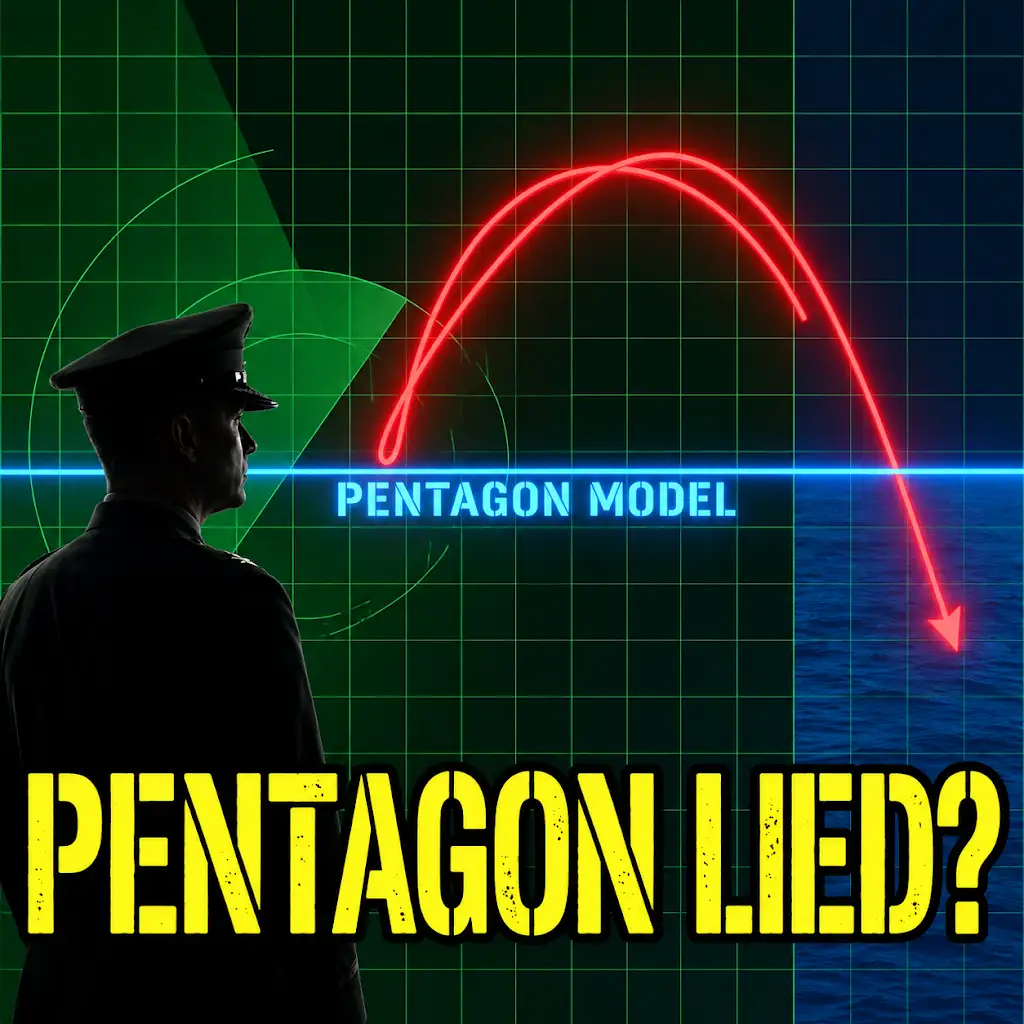
Aguadilla UFO Video: What the Pentagon Got Wrong.
FAQs
What is motion parallax?
Motion parallax is a visual effect where objects closer to an observer appear to move faster than objects that are further away when the observer is in motion.
How does motion parallax relate to UFO sightings?
In the context of UFO sightings, motion parallax can explain why some objects in the sky may appear to be moving in unusual ways or at high speeds when, in reality, they are much closer to the observer than initially perceived.
Can motion parallax create the illusion of a UFO flying at incredible speeds?
Yes, motion parallax can create the illusion of a UFO flying at incredible speeds if the object is relatively close to the observer and the observer is also in motion, such as driving a car or looking out of a moving vehicle.
Why do some UFO sightings turn out to be explainable by motion parallax?
Some UFO sightings turn out to be explainable by motion parallax because the movement of the observer can cause nearby objects, like birds, drones, or balloons, to appear as unidentified flying objects moving erratically or at high speeds.
How can understanding motion parallax help in debunking certain UFO sightings?
Understanding motion parallax can help in debunking certain UFO sightings by providing a scientific explanation for the perceived movement and speed of objects in the sky, leading to a more rational and grounded analysis of the sighting.