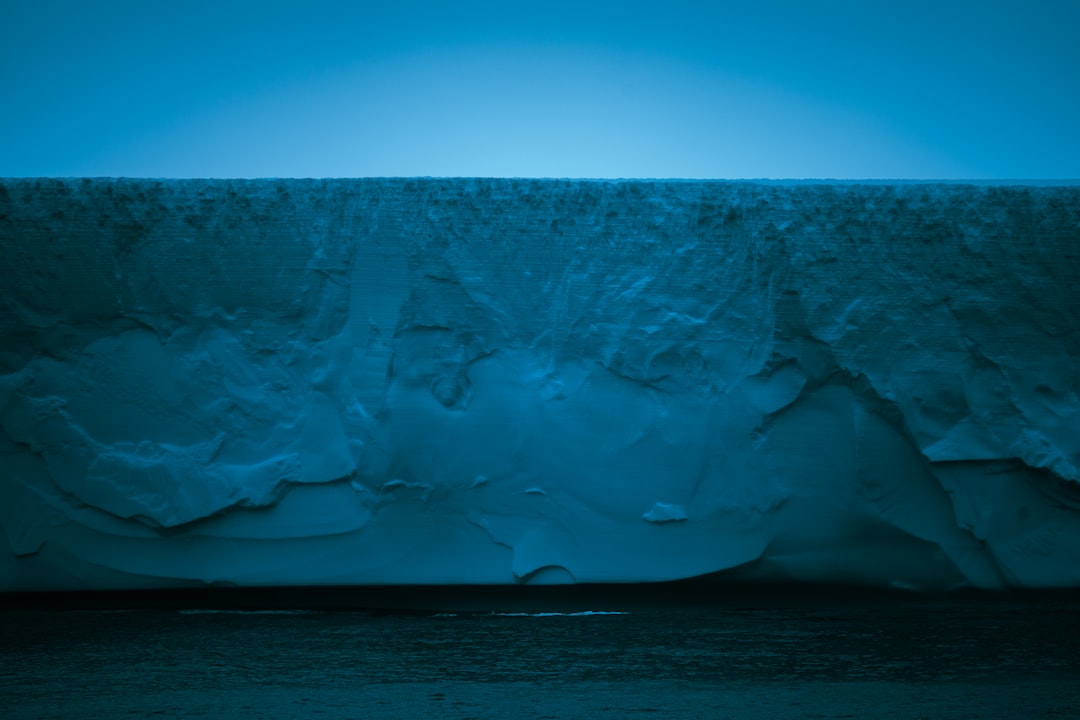
The Antarctic Ice Dome, a vast region of the Antarctic continent, is a critical component of Earth’s climate system. Characterized by its extreme thickness and extensive coverage, this massive ice formation is the largest single ice mass on the planet. The dome significantly influences global weather patterns and sea levels, serving as a key indicator of climate change and therefore remains a priority for scientific research.
Beyond its physical importance, the Antarctic Ice Dome functions as an archive of Earth’s climate history. Its ice layers, accumulated over thousands of years, contain crucial data about historical atmospheric conditions, greenhouse gas levels, and temperature variations. Scientists studying these ice layers gain valuable insights that help inform climate prediction models.
Research on the Antarctic Ice Dome thus provides understanding of both past climate conditions and potential future scenarios in our changing climate system.
Key Takeaways
- A unique gravity anomaly has been discovered at the Antarctic Ice Dome, revealing unexpected variations in Earth’s gravitational field.
- Understanding this anomaly is crucial for insights into the ice dome’s structure and underlying geological features.
- The discovery has significant implications for climate change research, particularly in modeling ice mass and sea-level rise.
- Studying gravity anomalies in Antarctica presents challenges due to harsh conditions and limited accessibility.
- Ongoing collaborative research aims to explore the anomaly further, with potential applications in geophysics and environmental monitoring.
Understanding Gravity Anomalies
Gravity anomalies are variations in the Earth’s gravitational field that can provide critical insights into geological structures and processes. These anomalies occur due to differences in density within the Earth’s crust and mantle, often resulting from variations in rock types, geological formations, or even the presence of large ice masses. By studying these gravitational variations, scientists can infer information about subsurface structures, including the presence of mountains, valleys, and even potential volcanic activity.
In the context of the Antarctic Ice Dome, gravity anomalies take on particular significance. The immense weight of the ice influences the gravitational field in ways that can reveal hidden geological features beneath the surface. Understanding these anomalies is essential for comprehending not only the physical characteristics of the ice dome but also its interactions with the underlying geology.
As researchers analyze gravity data collected from satellites and ground-based measurements, they can piece together a more comprehensive picture of this remote and challenging environment.
The Discovery of Gravity Anomaly at Antarctic Ice Dome

Recent studies have revealed intriguing gravity anomalies at the Antarctic Ice Dome, sparking interest and excitement within the scientific community. These anomalies were identified through advanced satellite measurements and ground-based surveys that mapped variations in gravitational pull across the region. The findings indicated unexpected fluctuations in gravity that could not be easily explained by the known distribution of ice alone.
The discovery of these gravity anomalies has prompted researchers to investigate further, leading to a series of hypotheses about their origins. Some scientists speculate that these anomalies may be linked to geological features hidden beneath the thick ice, such as ancient mountain ranges or sedimentary basins. Others suggest that they could be indicative of changes in ice dynamics or even melting processes occurring at the base of the ice dome.
As investigations continue, the implications of these findings are becoming increasingly significant for understanding both the Antarctic region and global climate patterns.
The Significance of the Gravity Anomaly
The gravity anomaly discovered at the Antarctic Ice Dome holds profound implications for various fields of study, particularly in understanding climate change and its effects on polar regions. These anomalies can provide insights into how ice sheets respond to warming temperatures and changing environmental conditions. By analyzing the gravitational variations, scientists can gain a better understanding of ice flow dynamics, which is crucial for predicting future sea-level rise.
Moreover, the significance of these anomalies extends beyond immediate climate concerns. They may also offer clues about Earth’s geological history and tectonic activity in Antarctica.
This knowledge is vital for developing models that predict how current climate changes may influence not only Antarctica but also global systems.
Possible Explanations for the Gravity Anomaly
| Parameter | Value | Unit | Description |
|---|---|---|---|
| Gravity Anomaly Range | -50 to +30 | mGal | Measured gravity anomaly values over Antarctic ice dome regions |
| Ice Dome Location | Dome A | — | One of the highest points on the East Antarctic Ice Sheet |
| Ice Thickness | 2500 to 4000 | meters | Thickness of ice at the dome area |
| Free-Air Gravity Anomaly | -20 | mGal | Typical free-air gravity anomaly measured at Dome A |
| Bouguer Gravity Anomaly | -10 | mGal | Corrected gravity anomaly accounting for ice mass |
| Geoid Height Variation | ±5 | meters | Variation in geoid height related to gravity anomalies |
| Survey Method | Satellite Gravimetry (GRACE) | — | Method used to measure gravity anomalies over Antarctica |
| Data Resolution | ~50 | km | Spatial resolution of gravity anomaly data |
Several hypotheses have emerged regarding the origins of the gravity anomaly at the Antarctic Ice Dome. One prominent explanation suggests that variations in ice density could be contributing to the observed gravitational fluctuations. As ice accumulates and melts over time, changes in density may create localized areas of differing gravitational pull.
This phenomenon could be particularly pronounced in regions where ice is thinning or where subglacial lakes are present. Another possible explanation involves geological features hidden beneath the ice. Some researchers propose that ancient mountain ranges or sedimentary basins may be influencing gravity readings in unexpected ways.
These geological formations could create localized anomalies that reflect variations in density and composition beneath the surface. As scientists continue to gather data and refine their models, they hope to clarify which factors are most responsible for these intriguing gravitational variations.
Implications for Climate Change Research

The discovery of gravity anomalies at the Antarctic Ice Dome has significant implications for climate change research. Understanding how these anomalies relate to ice dynamics can provide critical insights into how ice sheets respond to warming temperatures. As global temperatures rise, monitoring changes in ice mass and flow becomes increasingly important for predicting future sea-level rise.
Furthermore, these gravity anomalies may serve as indicators of broader environmental changes occurring within Antarctica. By studying how these anomalies evolve over time, researchers can gain valuable information about melting processes, subglacial hydrology, and interactions between ice and underlying geology. This knowledge is essential for developing accurate climate models that account for feedback mechanisms within polar regions.
Challenges in Studying Gravity Anomalies in Antarctica
Studying gravity anomalies in Antarctica presents numerous challenges due to the harsh environmental conditions and logistical difficulties associated with conducting research in such a remote location. The extreme cold, strong winds, and unpredictable weather patterns can hinder data collection efforts and limit access to certain areas of interest. Additionally, the vastness of the Antarctic landscape makes it challenging to obtain comprehensive measurements across large regions.
Moreover, the presence of thick ice cover complicates efforts to understand subsurface geological features accurately. Researchers must rely on advanced technologies such as satellite gravimetry and ground-penetrating radar to gather data about gravitational variations and underlying structures. Despite these challenges, scientists remain committed to overcoming obstacles in order to unlock the secrets held within this icy expanse.
Future Research and Exploration at the Antarctic Ice Dome
As interest in understanding gravity anomalies at the Antarctic Ice Dome continues to grow, future research efforts are likely to expand significantly. Scientists are exploring innovative technologies and methodologies to enhance data collection and analysis capabilities in this challenging environment. For instance, advancements in satellite technology may allow for more precise measurements of gravitational variations over time.
Additionally, interdisciplinary collaborations among geologists, glaciologists, climatologists, and remote sensing experts will be crucial for advancing knowledge about this region. By pooling expertise from various fields, researchers can develop comprehensive models that integrate geological data with climate projections. Such collaborative efforts will be essential for addressing complex questions related to ice dynamics and their implications for global climate systems.
Collaborative Efforts in Uncovering the Gravity Anomaly
Collaboration among international research teams has been instrumental in uncovering the gravity anomaly at the Antarctic Ice Dome. Scientists from various countries have come together to share data, resources, and expertise in order to tackle this complex issue effectively. These collaborative efforts not only enhance scientific understanding but also foster a sense of global responsibility toward preserving Antarctica’s unique environment.
Joint research initiatives often involve field expeditions where teams collect data on-site while also utilizing satellite observations for comprehensive analysis.
Potential Applications of the Gravity Anomaly Discovery
The discovery of gravity anomalies at the Antarctic Ice Dome opens up a range of potential applications beyond academic research. For instance, insights gained from studying these anomalies could inform policy decisions related to climate change mitigation strategies and resource management in polar regions. Understanding how ice dynamics influence sea-level rise can help governments prepare for potential impacts on coastal communities worldwide.
Additionally, knowledge derived from these gravitational studies may have implications for natural resource exploration and management in Antarctica. As interest grows in accessing mineral resources or conducting scientific research in this pristine environment, understanding underlying geological features becomes increasingly important for sustainable practices.
The Importance of Uncovering Gravity Anomaly at Antarctic Ice Dome
In conclusion, uncovering the gravity anomaly at the Antarctic Ice Dome represents a significant advancement in our understanding of both this unique region and broader climate dynamics. The implications of these findings extend far beyond academic curiosity; they hold critical importance for predicting future environmental changes and informing global responses to climate challenges. As researchers continue their investigations into this fascinating phenomenon, they contribute not only to scientific knowledge but also to our collective responsibility toward safeguarding our planet’s fragile ecosystems.
The ongoing exploration of gravity anomalies serves as a reminder of how interconnected our world is—how changes in one part can reverberate throughout global systems. By prioritizing research efforts focused on understanding these complexities within Antarctica’s icy expanse, humanity takes a vital step toward addressing pressing issues related to climate change and environmental sustainability for generations to come.
Recent studies on gravity anomalies in the Antarctic ice dome have revealed significant insights into the underlying geological structures and their implications for climate change. For a deeper understanding of these findings, you can refer to a related article that discusses various aspects of gravity anomalies and their impact on ice dynamics. To explore this further, visit this article for more detailed information.
WATCH THIS! 🚨 They Hid This: The Missing CIA Page That Warns About Antarctica
FAQs
What is a gravity anomaly?
A gravity anomaly refers to a variation in the Earth’s gravitational field caused by differences in the distribution of mass beneath the surface. These anomalies can indicate variations in rock density, geological structures, or ice thickness.
What is the Antarctic ice dome?
The Antarctic ice dome is a large, dome-shaped accumulation of ice that forms part of the Antarctic ice sheet. It is characterized by thick ice layers that flow outward from the dome’s highest point.
How are gravity anomalies related to the Antarctic ice dome?
Gravity anomalies in the region of the Antarctic ice dome can reveal information about the underlying bedrock topography, ice thickness, and density variations. These anomalies help scientists understand the structure and dynamics of the ice sheet.
Why study gravity anomalies in Antarctica?
Studying gravity anomalies in Antarctica helps researchers map subglacial features, assess ice mass balance, and improve models of ice sheet behavior, which are crucial for predicting sea-level rise and understanding climate change.
How are gravity anomalies measured in Antarctica?
Gravity anomalies in Antarctica are measured using satellite gravimetry, airborne surveys, and ground-based instruments. These methods detect subtle changes in gravitational acceleration caused by variations in mass distribution.
What can gravity anomalies tell us about the Antarctic ice dome’s stability?
Gravity anomalies can indicate changes in ice thickness and bedrock conditions, which influence the stability and flow of the ice dome. Understanding these factors helps predict potential ice loss or changes in ice dynamics.
Are gravity anomalies unique to the Antarctic ice dome?
No, gravity anomalies occur worldwide wherever there are variations in subsurface mass distribution. However, the Antarctic ice dome presents unique challenges and opportunities for studying these anomalies due to its thick ice cover and complex geology.
How do gravity anomalies affect climate research?
Gravity anomalies provide critical data for modeling ice sheet mass changes and dynamics, which are essential for understanding Antarctica’s role in global climate systems and predicting future sea-level changes.