
Star clocks were sophisticated astronomical instruments developed by ancient Egyptians to measure time using celestial observations. These devices demonstrated the Egyptians’ advanced knowledge of astronomy and their systematic approach to timekeeping. Typically located in temples, star clocks served both practical and religious functions, enabling priests to coordinate ceremonial activities with astronomical events and maintain accurate calendars.
These instruments operated by tracking the positions and movements of specific stars and constellations throughout the night. Ancient Egyptian astronomers identified key stellar markers that could indicate hours of darkness, allowing them to divide the night into measurable segments. The technology represented a significant achievement in observational astronomy, requiring detailed knowledge of stellar patterns and their seasonal variations.
Star clocks held particular importance in Egyptian religious practices, as the culture viewed celestial bodies as divine entities. The precise timing of religious ceremonies was considered essential for maintaining harmony with cosmic forces. Priests used these instruments to determine appropriate times for rituals, offerings, and other sacred activities.
The integration of astronomical observation with religious practice reflected the Egyptian worldview that connected earthly events with celestial phenomena. The construction and use of star clocks required specialized knowledge passed down through generations of priest-astronomers. These individuals maintained detailed records of stellar observations, contributing to Egypt’s sophisticated understanding of celestial mechanics.
The devices thus served as both practical timekeeping tools and repositories of astronomical knowledge, playing a crucial role in the development of Egyptian science and religious practice.
Key Takeaways
- Star clocks in Egyptian temples were ancient tools used to track time based on the stars.
- They played a significant role in Egyptian astronomy and religious rituals.
- The design of star clocks incorporates complex symbols and hieroglyphs linked to mythology.
- These clocks influenced both ancient and modern timekeeping and astronomical practices.
- Preservation efforts and ongoing research continue to reveal their cultural and historical importance.
The History and Significance of Star Clocks
The history of star clocks in ancient Egypt is a rich tapestry woven from the threads of innovation and tradition. Dating back to the Old Kingdom, these devices evolved over centuries, reflecting advancements in both astronomical knowledge and artistic expression. The earliest forms of star clocks were simple representations of constellations, gradually becoming more sophisticated as the Egyptians honed their observational skills.
By the time of the New Kingdom, star clocks had transformed into complex instruments that could accurately predict celestial events, such as solstices and equinoxes. The significance of star clocks extends beyond their historical context; they were vital for agricultural planning and religious observances. The Egyptians relied heavily on the annual flooding of the Nile, which was closely tied to celestial cycles.
By using star clocks to predict these events, they could optimize planting and harvesting times, ensuring food security for their civilization. Furthermore, star clocks played a crucial role in religious ceremonies, as they helped align temple activities with cosmic events, reinforcing the belief that earthly life was governed by celestial forces.
Understanding the Design and Function of Star Clocks
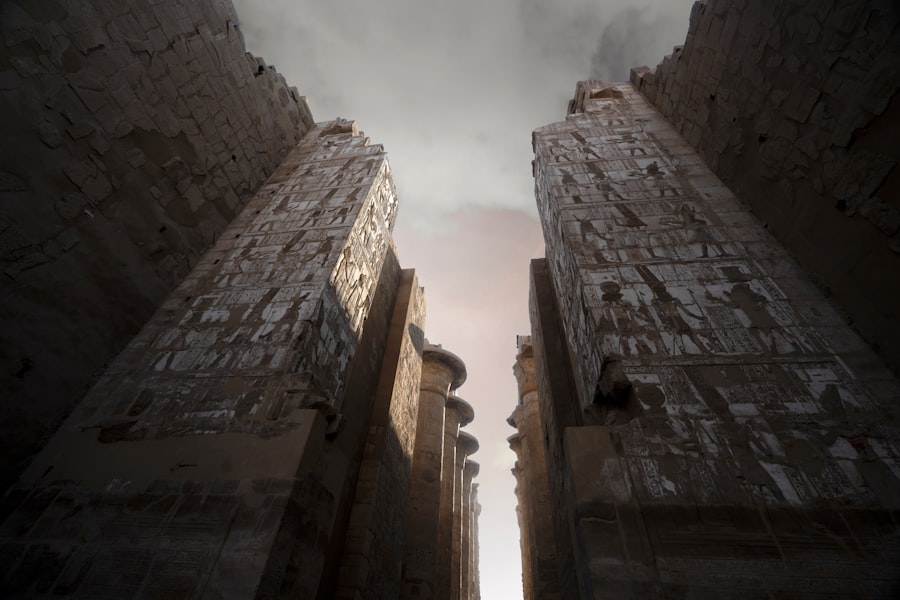
The design of star clocks reflects a remarkable blend of artistry and scientific precision. Typically crafted from stone or wood, these devices featured intricate carvings that depicted various constellations and celestial bodies. The most famous examples include the star clocks found in the tombs of pharaohs, where they served both as decorative elements and functional tools.
The craftsmanship involved in creating these clocks was exceptional, showcasing the skill of ancient artisans who understood not only aesthetics but also the principles of astronomy. Functionally, star clocks operated on principles that would later be recognized as fundamental to modern astronomy. They utilized a combination of gnomons—vertical rods that cast shadows—and rotating disks to track the movement of stars across the night sky.
By observing the positions of specific stars at designated times, priests could determine the time of year and make predictions about future celestial events. This intricate relationship between design and function exemplifies the ancient Egyptians’ profound understanding of both art and science.
The Relationship Between Star Clocks and Ancient Egyptian Astronomy
The relationship between star clocks and ancient Egyptian astronomy is a fascinating study of how a civilization interpreted and interacted with the cosmos. The Egyptians were keen observers of the night sky, meticulously recording the movements of stars and planets. This astronomical knowledge was not merely theoretical; it was applied practically in various aspects of daily life, from agriculture to navigation.
Star clocks served as a tangible manifestation of this knowledge, allowing priests and astronomers to translate celestial observations into actionable insights. Moreover, star clocks were instrumental in developing a calendar system that aligned with both lunar and solar cycles. The Egyptians recognized that certain stars rose and set at specific times throughout the year, marking significant seasonal changes.
By correlating these celestial events with agricultural practices, they established a calendar that was both practical and spiritually significant. This integration of astronomy into everyday life underscores the importance of star clocks as tools for understanding not just time but also the natural world.
The Role of Star Clocks in Egyptian Religious and Ritual Practices
| Temple Name | Location | Star Clock Feature | Associated Star or Constellation | Estimated Construction Date | Purpose of Star Clock |
|---|---|---|---|---|---|
| Karnak Temple | Luxor | Star alignment on temple axis | Sirius (Sothis) | c. 2055–1000 BCE | Marking the heliacal rising of Sirius to predict Nile flooding |
| Temple of Dendera | Dendera | Ceiling star clock depiction | Various stars and constellations | c. 125 BCE | Calendrical and astronomical timekeeping |
| Temple of Hathor | Dendera | Star clock reliefs | Decans (36 star groups) | c. 125 BCE | Tracking time during the night using decans |
| Temple of Isis | Philae | Star clock inscriptions | Orion and Sirius | c. 380 BCE – 117 CE | Religious and calendrical purposes |
In ancient Egypt, religion permeated every aspect of life, and star clocks played a crucial role in religious rituals and practices. Temples were often aligned with specific celestial events, such as solstices or equinoxes, which were believed to be moments when the divine intersected with the earthly realm. Star clocks facilitated this alignment by providing precise measurements of time and celestial positions, ensuring that rituals occurred at auspicious moments.
Priests relied on star clocks to determine when to conduct ceremonies dedicated to various deities. For instance, certain festivals were timed to coincide with the rising of specific stars or constellations, believed to herald blessings from the gods. The synchronization of religious practices with celestial events reinforced the Egyptians’ belief in a cosmic order governed by divine forces.
In this way, star clocks were not merely tools for measuring time; they were integral to maintaining harmony between humanity and the cosmos.
Decoding the Symbols and Hieroglyphs on Star Clocks
The symbols and hieroglyphs found on star clocks are rich with meaning, offering insights into ancient Egyptian beliefs and practices. Each symbol was carefully chosen to convey specific concepts related to timekeeping, astronomy, or mythology. For instance, depictions of certain deities often accompanied representations of stars or constellations, emphasizing the connection between celestial phenomena and divine influence.
Decoding these symbols requires an understanding of both linguistic elements and cultural context. Scholars have dedicated years to interpreting these hieroglyphs, revealing layers of meaning that reflect the complexities of ancient Egyptian thought. The presence of specific symbols can indicate not only astronomical knowledge but also religious significance, illustrating how intertwined these aspects were in Egyptian society.
As researchers continue to study these inscriptions, they uncover new dimensions of understanding regarding how ancient Egyptians viewed their world.
The Connection Between Star Clocks and Egyptian Mythology
Star clocks are deeply intertwined with Egyptian mythology, serving as physical representations of mythological narratives that explain the cosmos’s workings. Many stars were associated with specific deities; for example, Sirius was linked to Isis, while Orion was connected to Osiris. These associations were not arbitrary; they reflected a worldview where celestial bodies embodied divine forces that influenced human affairs.
The myths surrounding these deities often revolved around themes of life, death, and rebirth—concepts that were central to Egyptian spirituality. Star clocks thus became more than mere timekeeping devices; they were symbolic artifacts that encapsulated profound beliefs about existence and the afterlife. By aligning their rituals with celestial events represented on star clocks, ancient Egyptians sought to honor these deities and ensure their favor in both this life and the next.
The Influence of Star Clocks on Modern Astronomy and Timekeeping
The legacy of star clocks extends far beyond ancient Egypt; they have significantly influenced modern astronomy and timekeeping practices. The principles underlying these devices laid foundational concepts for later astronomical instruments developed throughout history. For instance, the use of gnomons in star clocks can be seen in sundials and other early timekeeping devices that followed.
Moreover, the meticulous observations made by ancient Egyptian astronomers contributed to a broader understanding of celestial mechanics that would inform future generations. Their ability to predict astronomical events with remarkable accuracy paved the way for advancements in navigation and calendar systems used today. As modern astronomers continue to explore the cosmos, they stand on the shoulders of those who first gazed at the stars with wonder and curiosity.
The Preservation and Restoration of Star Clocks in Egyptian Temples
Preserving star clocks is essential for maintaining a connection to Egypt’s rich cultural heritage. Many original artifacts have suffered damage over millennia due to environmental factors or human intervention. Archaeologists and conservators work diligently to restore these invaluable pieces while ensuring that their historical integrity remains intact.
Efforts to preserve star clocks involve careful documentation and analysis before any restoration work begins. Techniques such as 3D scanning allow researchers to create digital models that can be used for study without risking further damage to fragile artifacts. Additionally, public awareness campaigns aim to educate people about the importance of preserving these historical treasures for future generations.
The Ongoing Research and Discoveries Surrounding Star Clocks
Research into star clocks is an ongoing endeavor that continues to yield new discoveries about ancient Egyptian civilization. Archaeologists are unearthing previously unknown sites where star clocks may have been used or created, expanding our understanding of their geographical distribution and cultural significance. Advances in technology also enable researchers to analyze artifacts in ways that were previously impossible.
Interdisciplinary collaboration among historians, astronomers, and archaeologists has led to fresh insights into how star clocks functioned within their societal context. As new findings emerge from excavations or technological analyses, scholars are continually revising their interpretations of how these devices shaped ancient Egyptian life.
The Legacy and Continued Relevance of Star Clocks in Egyptian Culture
The legacy of star clocks in ancient Egypt is profound, reflecting a civilization that revered both science and spirituality. These remarkable instruments served as bridges between humanity and the cosmos, guiding agricultural practices, religious rituals, and astronomical observations alike. Their intricate designs and symbolic meanings continue to captivate scholars and enthusiasts today.
As modern society grapples with its own relationship with time and nature, the lessons embedded within star clocks remain relevant. They remind us that our understanding of time is not merely a mechanical construct but is deeply intertwined with our cultural narratives and beliefs about existence itself. In this way, star clocks endure as enduring symbols of humanity’s quest for knowledge—a quest that transcends time itself.
The ancient Egyptian temples were not only places of worship but also sophisticated astronomical observatories, often aligned with celestial events. A fascinating exploration of this topic can be found in the article on star clocks and their significance in Egyptian architecture. For more insights, you can read the full article [here](https://www.xfilefindings.com/sample-page/).
FAQs
What is a star clock in the context of Egyptian temples?
A star clock in Egyptian temples refers to an ancient timekeeping system that used the positions of specific stars or constellations to measure time during the night. These star clocks were often inscribed on temple walls and helped priests track hours and important ritual times.
How did ancient Egyptians use star clocks?
Ancient Egyptians observed the rising and setting of particular stars or star groups to divide the night into segments. By noting the position of these stars relative to the horizon or temple structures, they could determine the time and schedule religious ceremonies accordingly.
Which stars were commonly used in Egyptian star clocks?
The star Sirius (known as Sothis to the Egyptians) was especially significant, as its heliacal rising marked the start of the Egyptian New Year and the annual Nile flood. Other stars and constellations, such as those in Orion and the circumpolar stars, were also used for timekeeping.
Where can star clocks be found in Egyptian temples?
Star clocks are often found inscribed on the walls of temple sanctuaries, tombs, and astronomical ceilings. Notable examples include the star clocks in the tomb of Senenmut and the astronomical ceilings in the Temple of Hathor at Dendera.
What was the purpose of star clocks in Egyptian religious practices?
Star clocks helped priests maintain the correct timing for rituals, festivals, and offerings. Accurate timekeeping was essential for aligning religious activities with celestial events, which were believed to influence the divine order and the well-being of the kingdom.
How accurate were the Egyptian star clocks?
While not as precise as modern clocks, Egyptian star clocks were remarkably effective for their time. By carefully observing star positions and their movements, ancient Egyptians could estimate time intervals during the night with reasonable accuracy.
Are star clocks unique to Egyptian culture?
While star-based timekeeping was prominent in ancient Egypt, other ancient cultures also used stars for time measurement and calendar systems. However, the specific star clocks and their integration into temple architecture are distinctive features of Egyptian astronomy and religion.