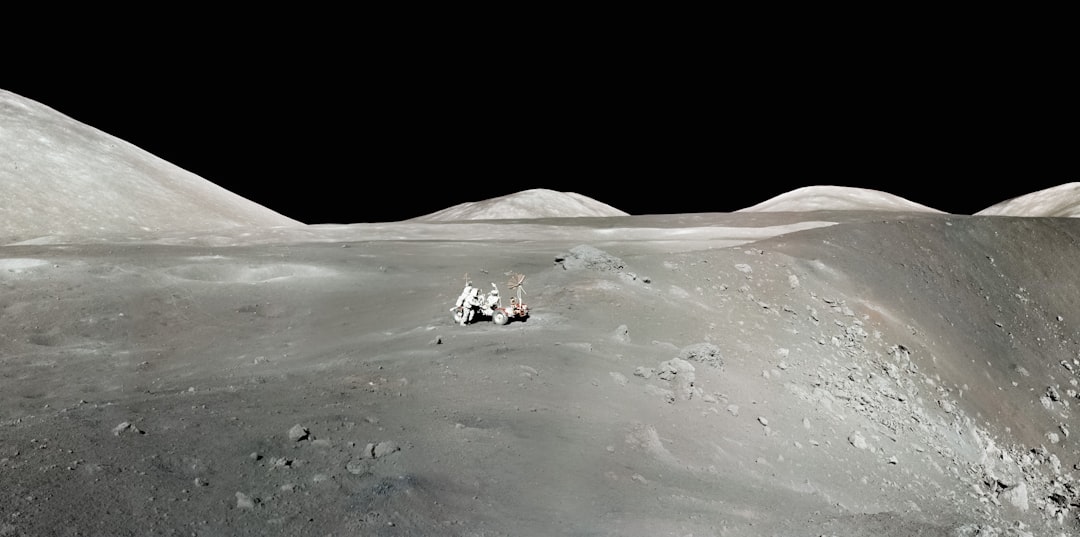
Lunar mascon basins are intriguing geological features found on the Moon’s surface, characterized by their large size and significant gravitational anomalies. These basins, which are believed to be remnants of ancient impact events, are distinguished by their relatively low elevation compared to the surrounding lunar terrain. The term “mascon” is derived from “mass concentration,” referring to the dense material beneath these basins that contributes to their unique gravitational signatures.
The study of mascon basins not only enhances the understanding of the Moon’s geological history but also provides insights into the processes that shaped its surface. The Moon hosts several prominent mascon basins, including the Imbrium, Serenitatis, and Crisium basins. Each of these features is a testament to the Moon’s tumultuous past, marked by violent impacts and subsequent geological activity.
As scientists delve deeper into the formation and evolution of these basins, they uncover clues about the Moon’s early environment and the dynamics of its crust. Understanding mascon basins is crucial for piecing together the history of not only the Moon but also other celestial bodies in our solar system that have undergone similar processes.
Key Takeaways
- Lunar mascon basins are regions of higher gravity on the Moon linked to large impact structures.
- The main formation theories include impact cratering, volcanic activity, and tidal heating.
- Strong evidence supports the impact crater hypothesis, highlighting massive asteroid collisions.
- Volcanic activity and tidal heating also contribute to mascon characteristics but remain less certain.
- Understanding mascon basins aids future lunar exploration and insights into the Moon’s geological history.
Theories on Mascon Basin Formation
The formation of lunar mascon basins has been a subject of extensive research and debate among planetary scientists. Several theories have emerged to explain how these large depressions came into existence, each offering a different perspective on the Moon’s geological history. The most widely accepted theories include the impact crater hypothesis, volcanic activity hypothesis, and tidal heating hypothesis.
Each of these theories presents a unique mechanism for the creation of mascon basins, reflecting the complexity of lunar geology. The impact crater hypothesis posits that mascon basins were formed primarily through large asteroid or comet impacts that excavated vast amounts of material from the lunar surface. This theory suggests that the energy released during such impacts was sufficient to create deep basins, which later became filled with basaltic lava flows.
In contrast, the volcanic activity hypothesis emphasizes the role of volcanic processes in shaping these features, proposing that extensive lava flows contributed to the formation and modification of mascon basins over time. Lastly, the tidal heating hypothesis introduces a dynamic aspect to lunar geology, suggesting that gravitational interactions with Earth may have generated heat within the Moon, leading to volcanic activity and basin formation.
Impact Crater Hypothesis
The impact crater hypothesis is one of the most prominent explanations for the formation of lunar mascon basins. According to this theory, massive impacts from asteroids or comets created large craters that eventually evolved into basins. The energy released during these collisions was immense, resulting in significant excavation of the lunar crust and the formation of deep depressions.
Over time, these depressions may have been filled with basaltic lava, which solidified to create the smooth plains observed in many mascon basins today. This hypothesis is supported by various geological features observed on the Moon’s surface. For instance, many mascon basins exhibit concentric ring structures that are characteristic of large impact events.
Additionally, the distribution of craters within these basins often reflects a history of multiple impacts over time. The presence of highland material surrounding these basins further supports the idea that they were formed through violent collisions, as this material is believed to be remnants of the Moon’s ancient crust that were displaced during impact events.
Volcanic Activity Hypothesis
In contrast to the impact crater hypothesis, the volcanic activity hypothesis posits that volcanic processes played a significant role in the formation of mascon basins. This theory suggests that after an initial impact event created a depression, subsequent volcanic activity filled these basins with basaltic lava flows. The resulting smooth plains are thought to be a product of extensive volcanic eruptions that occurred over millions of years.
Evidence supporting this hypothesis includes the presence of basaltic rock samples collected during lunar missions, which indicate that volcanic activity was prevalent on the Moon. Additionally, some mascon basins exhibit features such as rilles and fissures that are indicative of volcanic processes. These geological formations suggest that lava once flowed across the surface, contributing to the modification and filling of impact-created depressions.
The volcanic activity hypothesis highlights the dynamic nature of lunar geology and emphasizes that both impact events and volcanic processes may have worked in tandem to shape mascon basins.
Tidal Heating Hypothesis
| Metric | Value | Unit | Description |
|---|---|---|---|
| Number of Major Mascon Basins | 5 | count | Identified large mascon basins on the Moon |
| Typical Basin Diameter | 300-1200 | km | Diameter range of major lunar mascon basins |
| Mascon Gravity Anomaly | 50-100 | mGal | Magnitude of positive gravity anomalies over mascon basins |
| Formation Age | 3.8-3.9 | billion years | Estimated age of mascon basin formation during Late Heavy Bombardment |
| Crustal Thickness Reduction | 10-20 | km | Average thinning of lunar crust beneath mascon basins |
| Basaltic Lava Fill Thickness | 1-5 | km | Thickness of mare basalt infill in mascon basins |
| Impact Energy | 10^26 – 10^27 | Joules | Estimated kinetic energy of impactors forming mascon basins |
| Gravity Recovery Missions | 2 | count | Number of missions (GRAIL, Lunar Prospector) that mapped mascon gravity |
The tidal heating hypothesis introduces an intriguing perspective on mascon basin formation by suggesting that gravitational interactions between the Earth and Moon generated internal heat within the lunar crust. This heat could have led to volcanic activity and contributed to the formation of mascon basins over time. According to this theory, as the Moon orbits Earth, gravitational forces create tidal flexing within its interior, generating heat through frictional processes.
This hypothesis is particularly compelling when considering the Moon’s synchronous rotation with Earth, which results in one side always facing our planet. The gravitational pull from Earth creates varying degrees of stress on different parts of the Moon’s crust, potentially leading to localized heating and volcanic activity.
Evidence Supporting Impact Crater Hypothesis
Numerous lines of evidence support the impact crater hypothesis as a primary mechanism for mascon basin formation. One significant piece of evidence is the presence of large impact craters surrounding many mascon basins, indicating a history of violent collisions in those regions. The size and morphology of these craters align with predictions made by impact models, reinforcing the idea that they played a crucial role in shaping the lunar landscape.
Additionally, studies of lunar gravity data have revealed distinct gravitational anomalies associated with mascon basins. These anomalies suggest that dense material lies beneath these features, consistent with the idea that they were formed through impact events that excavated substantial amounts of material from below the surface. The correlation between gravity anomalies and basin morphology further strengthens the case for impact-related origins.
Evidence Supporting Volcanic Activity Hypothesis
The volcanic activity hypothesis is bolstered by various geological observations made during lunar exploration missions. For instance, samples collected from lunar maria—smooth basaltic plains found within mascon basins—indicate a history of volcanic eruptions. These samples reveal that lava flows were responsible for filling depressions created by earlier impacts, supporting the notion that volcanic activity played a significant role in shaping these features.
Moreover, geological mapping has identified rilles and fissures within mascon basins that are characteristic of volcanic processes. These formations suggest that lava once flowed across the surface, contributing to both basin formation and modification over time. The presence of volcanic landforms alongside impact-related features highlights the complex interplay between different geological processes on the Moon.
Evidence Supporting Tidal Heating Hypothesis
The tidal heating hypothesis is supported by theoretical models and observations related to lunar geology and its relationship with Earth. Research indicates that tidal forces exerted by Earth can generate significant internal heat within celestial bodies like the Moon. This heat may lead to localized melting and volcanic activity, contributing to basin formation over geological timescales.
Furthermore, studies have shown that certain regions on the Moon exhibit signs of past volcanic activity that could be linked to tidal heating processes. For example, some areas display irregularities in surface topography consistent with tectonic activity driven by tidal forces. These observations suggest that tidal heating may have played a role in shaping not only mascon basins but also other geological features across the lunar surface.
Challenges in Understanding Mascon Basin Formation
Despite significant advancements in understanding mascon basin formation, several challenges remain for researchers in this field. One major challenge is disentangling the contributions of different geological processes involved in basin formation. The interplay between impact events, volcanic activity, and tidal heating complicates efforts to establish a clear timeline for when and how these features formed.
Additionally, limited access to lunar samples poses another challenge for researchers seeking to understand mascon basins more comprehensively. While samples collected during Apollo missions provided valuable insights into lunar geology, they represent only a fraction of what exists across the Moon’s surface. Future missions aimed at returning additional samples could help address this gap in knowledge and provide further evidence for or against existing hypotheses.
Future Research and Exploration of Mascon Basins
Future research and exploration efforts focused on lunar mascon basins hold great promise for advancing scientific understanding of these enigmatic features. Upcoming missions planned by various space agencies aim to return new samples from different regions on the Moon’s surface, including areas surrounding mascon basins. These samples could provide critical insights into their formation processes and geological history.
In addition to sample return missions, advancements in remote sensing technology will enable scientists to gather more detailed data about mascon basins from orbiting spacecraft. High-resolution imaging and gravity mapping will allow researchers to analyze surface features and gravitational anomalies with greater precision than ever before. Such data will be invaluable for testing existing hypotheses regarding basin formation and refining models of lunar geology.
Implications of Understanding Mascon Basin Formation
Understanding mascon basin formation has far-reaching implications beyond lunar geology alone. Insights gained from studying these features can inform broader theories about planetary formation and evolution across our solar system and beyond. By examining how different geological processes interact to shape celestial bodies like the Moon, scientists can develop more comprehensive models applicable to other planets and moons.
Moreover, understanding mascon basins is crucial for future exploration endeavors aimed at establishing human presence on the Moon or utilizing its resources. Knowledge about potential landing sites, geological hazards, and resource availability will be essential for planning sustainable missions in lunar exploration. As humanity looks toward returning to the Moon and venturing further into space, unraveling the mysteries surrounding mascon basins will play a pivotal role in shaping our understanding of both our nearest celestial neighbor and planetary science as a whole.
Recent studies on lunar mascon basin formation have shed light on the complex geological processes that shaped the Moon’s surface. One particularly insightful article discusses the implications of these findings for our understanding of lunar history and evolution.