
This article delves into the intricate phenomenon of hippocampal coupling failure, exploring its multifaceted implications for memory and cognition. The hippocampus, a seahorse-shaped structure nestled deep within the medial temporal lobe, is widely recognized as a cornerstone of memory formation and retrieval. Its crucial role lies not just in storing information, but in coordinating and binding diverse streams of sensory and contextual data into coherent memories. When this delicate coupling process falters, the consequences for an individual’s cognitive landscape can be profound, ranging from subtle memory deficits to severe amnesia and impaired executive functions.
You can watch the documentary about the concept of lost time to better understand its impact on our lives.
The hippocampus is not a monolithic entity; rather, it is a complex circuit comprising several distinct subregions, each contributing to its overall function. Understanding the normal operation of these interconnected parts is essential before appreciating what happens when their synchronicity breaks down.
Entorhinal Cortex Linkage
The entorhinal cortex (EC) serves as the primary gateway for information entering and exiting the hippocampus. It acts as a critical interface, receiving processed sensory information from various cortical areas and projecting it to the dentate gyrus and CA3 subregions. This unidirectional flow is the initial step in the hippocampal memory circuit. Imagine the EC as the grand central station of the brain’s memory network, meticulously directing incoming data to its proper platform within the hippocampus.
Tri-synaptic Circuit
Within the hippocampus, information flows predominantly through a well-defined tri-synaptic circuit. This pathway begins with projections from the EC’s layer II to the dentate gyrus (DG). The DG, often considered the “input layer,” then sends mossy fiber projections to the CA3 subregion. Finally, CA3 pyramidal cells project to the CA1 subregion via Schaffer collaterals. This sequential activation is crucial for the early stages of memory encoding. This circuit is akin to a meticulously choreographed dance, where each step leads to the next, building a sequence of neural activation that underpins memory formation.
Recurrent Collaterals in CA3
A unique feature of the CA3 region is its extensive network of recurrent collaterals. These allow CA3 neurons to communicate with each other, forming a powerful autoassociative network. This intrinsic connectivity is believed to be vital for pattern completion – the ability to retrieve an entire memory from a partial cue – and for the formation of arbitrary associations between different elements of an experience. Think of CA3 as a highly interconnected team, where each member can instantly collaborate with any other, enabling the rapid reconstruction of a whole picture from a few fragments.
CA1 and Output Pathways
The CA1 subregion serves as the primary output of the hippocampus, receiving input from CA3 and projecting back to the EC, as well as to other cortical and subcortical areas. It plays a crucial role in consolidating newly formed memories and in their eventual transfer to long-term storage in the neocortex. CA1 is the final stage of the hippocampal relay, sending the processed and consolidated memory packet off to broader cortical regions for permanent archiving.
Recent studies have highlighted the significance of hippocampal coupling failure in various cognitive disorders, suggesting that disruptions in this neural connectivity may contribute to memory impairments. For further insights into this topic, you can explore a related article that delves into the mechanisms behind hippocampal dysfunction and its implications for understanding conditions such as Alzheimer’s disease. To read more, visit this article.
Mechanisms Implicated in Coupling Failure
Coupling failure in the hippocampus can arise from a multitude of factors, disrupting the delicate balance and synchronicity required for efficient memory processing. These disruptions can occur at various levels, from molecular to network-wide.
Synaptic Dysfunction
At the microscopic level, impaired synaptic plasticity is a primary suspect. Long-term potentiation (LTP) and long-term depression (LTD), the cellular mechanisms underlying learning and memory, rely on efficient neurotransmitter release, receptor activation, and downstream signaling cascades. Disruptions in any of these processes, such as altered glutamate receptor function or dysfunctional signaling pathways, can hinder the strengthening and weakening of synaptic connections, thereby impeding the formation of new associations. Imagine the synapses as communication bridges; if these bridges are damaged or poorly maintained, the flow of information across them becomes unreliable, leading to signal loss.
Neuronal Hyperexcitability/Inhibition
An imbalance between excitatory and inhibitory neurotransmission can also lead to hippocampal coupling failure. Hyperexcitability, often observed in conditions like epilepsy, can disrupt the precise timing of neuronal firing, leading to “noisy” or desynchronized activity that interferes with memory encoding. Conversely, excessive inhibition can suppress necessary neural activity, preventing the formation of robust memory traces. The brain’s neuronal activity is a finely tuned symphony; hyperexcitability introduces jarring discord, while excessive inhibition silences crucial instruments, each disrupting the overall harmony of memory formation.
White Matter Atrophy/Degeneration
While the hippocampus itself is gray matter, its effective communication with other brain regions relies heavily on the integrity of white matter tracts. Demyelination or axonal degeneration in pathways connecting the hippocampus to other cortical areas can impede the rapid and efficient transfer of information, leading to a breakdown in coupling. Envision the white matter as the electrical wiring of a complex circuit board; if these wires are frayed or broken, crucial components can no longer communicate effectively, crippling the system.
Neuroinflammation and Oxidative Stress
Chronic neuroinflammation and oxidative stress are increasingly recognized as contributors to neurodegenerative processes, including those affecting the hippocampus. These detrimental processes can damage neurons, impair synaptic function, and disrupt the delicate microenvironment necessary for optimal hippocampal activity. These internal stressors are like a slow, corrosive process, gradually eroding the structural and functional integrity of the hippocampus, making it less capable of its memory-forming tasks.
Manifestations in Memory and Cognition

The consequences of hippocampal coupling failure are far-reaching, impacting various aspects of memory and cognitive function. The specific deficits observed often depend on the nature and extent of the coupling failure.
Episodic Memory Impairments
One of the most prominent consequences of hippocampal coupling failure is a profound impairment in episodic memory, which refers to the memory of specific events and experiences, including their spatial and temporal context. Individuals may struggle to recall recent events, failing to remember where or when something happened. This is not simply a matter of forgetting facts, but of losing the “what, where, and when” tapestry that defines personal experiences. Imagine trying to piece together a story when half the pages are missing and the remaining ones are out of order; that’s the struggle with episodic memory impairments.
Spatial Memory Deficits
Given the hippocampus’s well-established role in spatial navigation and memory, coupling failure often leads to difficulties with spatial orientation and the formation of cognitive maps. Individuals may become disoriented in familiar surroundings, struggle to learn new routes, or have trouble remembering the layout of a known environment. The hippocampal “GPS” becomes faulty, making it challenging to navigate the world effectively.
Contextual Binding Failures
A core function of the hippocampus is to bind together disparate elements of an experience – the sights, sounds, smells, emotions, and thoughts – into a coherent memory trace. When coupling fails, this binding process is compromised, leading to fragmented or isolated memories. An individual might recall a face but not the conversation that accompanied it, or remember a factual detail but not the circumstances under which it was learned. The glue that holds memories together becomes weak, leaving only scattered pieces.
Working Memory and Executive Function Impairments
While primarily associated with long-term memory, hippocampal coupling also indirectly impacts working memory and executive functions. The ability to hold and manipulate information in mind (working memory) and to plan, organize, and problem-solve (executive functions) relies on efficient communication between the hippocampus and prefrontal cortex. Dysfunctional hippocampal coupling can disrupt these interconnected circuits, leading to a diminished capacity for complex cognitive tasks. The hippocampus is not an island; its functional integrity affects the smooth operation of neighboring cognitive “continents.”
Associated Neurological and Psychiatric Conditions
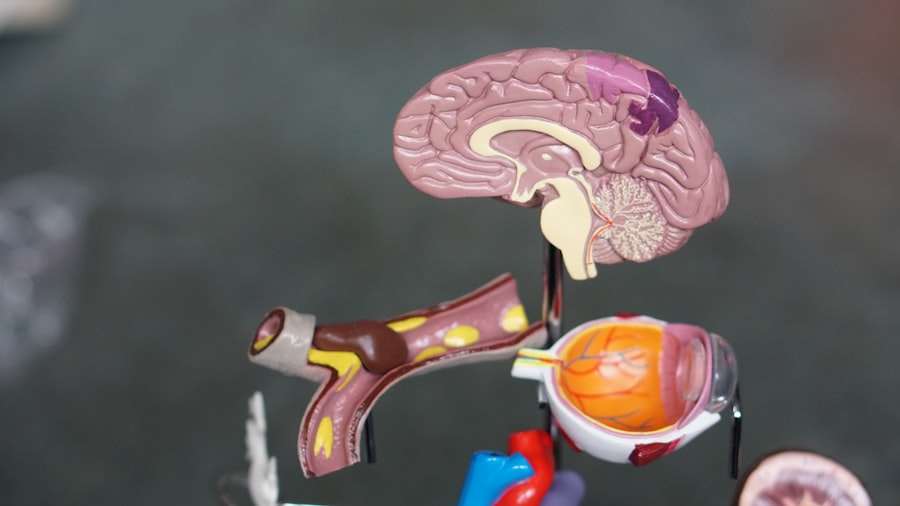
Hippocampal coupling failure is not an isolated phenomenon but is frequently observed in the context of various neurological and psychiatric disorders. Its presence often contributes significantly to the cognitive burden of these conditions.
Alzheimer’s Disease and Other Dementias
Alzheimer’s disease (AD) is characterized by early and severe hippocampal pathology, including amyloid plaque deposition, neurofibrillary tangles, and significant neuronal loss. These pathological hallmarks directly contribute to synaptic dysfunction and neuronal death, impairing hippocampal coupling and leading to the characteristic episodic memory deficits seen in AD. In AD, the hippocampal infrastructure itself crumbles, making coordinated activity increasingly impossible.
Temporal Lobe Epilepsy
Temporal lobe epilepsy (TLE) frequently involves the hippocampus, with chronic seizures often leading to hippocampal sclerosis – a condition characterized by neuronal loss and gliosis. The aberrant electrical activity during seizures disrupts normal hippocampal function and can lead to long-term changes in synaptic plasticity, resulting in memory impairments and coupling deficits even in seizure-free intervals. The repeated electrical storms of epilepsy wreak havoc on the delicate balance of hippocampal circuits.
Schizophrenia
Individuals with schizophrenia often exhibit subtle structural and functional abnormalities in the hippocampus, including reduced volume and altered connectivity. These changes are thought to contribute to the cognitive deficits, particularly in episodic memory and contextual processing, that are a hallmark of the disorder. The hippocampal engine, though present, runs less efficiently, impacting the overall performance of the cognitive “vehicle.”
Major Depressive Disorder (MDD)
Chronic stress and major depressive disorder have been linked to hippocampal atrophy and functional alterations. Elevated levels of stress hormones can impair neurogenesis and synaptic plasticity in the hippocampus, potentially leading to coupling failure and contributing to the memory and cognitive deficits often reported by individuals with depression. The persistent shadow of depression dims the light of healthy hippocampal function.
Recent studies have highlighted the significance of hippocampal coupling failure in various neurological conditions, shedding light on its potential implications for memory and cognition. For a deeper understanding of this phenomenon, you can explore a related article that discusses the intricate relationship between hippocampal function and cognitive decline. This article provides valuable insights into how disruptions in hippocampal connectivity may contribute to the progression of neurodegenerative diseases. To read more about this topic, visit this informative resource.
Therapeutic and Research Directions
| Metric | Description | Typical Values | Relevance to Hippocampal Coupling Failure |
|---|---|---|---|
| Phase Locking Value (PLV) | Measures synchronization between hippocampus and other brain regions | 0.6 – 0.9 (healthy coupling) | Reduced PLV indicates impaired hippocampal coupling |
| Coherence | Frequency domain measure of connectivity | 0.5 – 0.8 (normal) | Lower coherence in theta and gamma bands suggests coupling failure |
| Cross-Correlation | Temporal correlation between hippocampal and cortical signals | 0.4 – 0.7 (typical) | Decreased cross-correlation reflects disrupted communication |
| Spike Timing Reliability | Consistency of neuronal firing timing | 70% – 90% in healthy neurons | Reduced reliability indicates coupling failure |
| Functional MRI Connectivity Strength | Correlation of BOLD signals between hippocampus and other regions | 0.3 – 0.6 (normal) | Lower connectivity strength linked to coupling failure |
Understanding hippocampal coupling failure opens new avenues for therapeutic interventions and research. The goal is to restore or mitigate the disruptions to hippocampal function, thereby improving memory and cognition.
Pharmacological Interventions
Current pharmaceutical approaches often focus on treating the underlying conditions that lead to hippocampal coupling failure. For instance, in Alzheimer’s disease, cholinesterase inhibitors and NMDA receptor antagonists are used to modestly improve cognitive function. Future research aims to develop drugs that directly enhance synaptic plasticity, promote neurogenesis, or reduce neuroinflammation specifically within the hippocampus. These pharmacological agents are like finely tuned wrenches, attempting to tighten the loose connections and mend the broken parts within the hippocampal machinery.
Neuromodulation Techniques
Techniques such as deep brain stimulation (DBS) and transcranial magnetic stimulation (TMS) are being investigated for their potential to modulate hippocampal activity and improve cognitive function. By precisely stimulating specific hippocampal subregions or associated circuits, these methods aim to restore synchronized neural activity and enhance coupling. Neuromodulation acts like a conductor, attempting to bring the dissonant sections of the hippocampal orchestra back into harmonious play.
Cognitive Rehabilitation and Training
Behavioral interventions, including cognitive rehabilitation and memory training programs, are designed to leverage residual cognitive capacities and develop compensatory strategies. While they may not directly reverse coupling failure, they can help individuals adapt to their memory deficits and improve their functional independence. These programs equip individuals with mental “crutches” and “maps” to navigate their cognitive challenges.
Advanced Imaging and Biomarker Development
The development of more sophisticated neuroimaging techniques, such as high-resolution fMRI and PET scans, allows for a more detailed examination of hippocampal structure, function, and connectivity in vivo. Identifying early biomarkers of coupling failure could enable earlier diagnosis and intervention, potentially slowing or preventing the progression of cognitive decline. These advanced imaging techniques are like powerful magnifying glasses, allowing researchers to observe the subtle and early signs of hippocampal dysfunction.
In conclusion, hippocampal coupling failure represents a critical area of investigation for understanding memory and cognitive impairment. By unraveling the complex interplay of anatomical, physiological, and pathological factors that contribute to this phenomenon, researchers and clinicians are paving the way for innovative diagnostic tools and therapeutic strategies to preserve and restore the invaluable functions of memory. The intricate dance of hippocampal neurons, when disrupted, reveals the profound fragility of our cognitive landscape, underscoring the urgent need to address this fundamental breakdown.
WATCH THIS 🔥LOST 8 HOURS: What Hospitals Won’t Tell You About Missing Time
FAQs
What is hippocampal coupling failure?
Hippocampal coupling failure refers to a disruption in the normal communication and synchronization between the hippocampus and other brain regions. This failure can impair memory formation, retrieval, and other cognitive functions associated with the hippocampus.
What causes hippocampal coupling failure?
Hippocampal coupling failure can be caused by various factors including neurodegenerative diseases like Alzheimer’s, traumatic brain injury, epilepsy, and disruptions in neural connectivity due to aging or genetic conditions.
How does hippocampal coupling failure affect brain function?
When hippocampal coupling fails, it can lead to deficits in memory consolidation, spatial navigation, and learning. The hippocampus plays a critical role in coordinating brain activity, so its impaired coupling can disrupt overall cognitive processing.
Can hippocampal coupling failure be detected through brain imaging?
Yes, advanced brain imaging techniques such as functional MRI (fMRI) and electroencephalography (EEG) can detect abnormalities in hippocampal connectivity and coupling by measuring brain activity patterns and synchronization between regions.
Are there treatments available for hippocampal coupling failure?
Currently, treatments focus on managing underlying causes such as neurodegenerative diseases or epilepsy. Research is ongoing into therapies that may restore or improve hippocampal connectivity, including pharmacological interventions, cognitive rehabilitation, and neuromodulation techniques.