
The Saros cycle, a period of approximately 18 years, 11 days, and 8 hours, serves as a powerful tool for predicting solar and lunar eclipses. This ancient astronomical phenomenon, observed and utilized by civilizations for millennia, is not a mere coincidence but a testament to the predictable nature of celestial mechanics. Understanding the gears of the Saros cycle allows for remarkable accuracy in forecasting these awe-inspiring cosmic events, a feat that continues to fascinate scientists and stargazers alike.
The Saros cycle is defined by the precise alignment of the Sun, Earth, and Moon. Its predictive power stems from the near-simultaneous recurrence of three key orbital periods: the synodic month, the draconic month, and the anomalistic month.
The Synodic Month: The Lunar Phase Cycle
The synodic month, the period of time it takes for the Moon to complete one full cycle of phases (from new moon to new moon), is approximately 29.53 days. This is the familiar cycle that governs the waxing and waning of moonlight we observe.
The Draconic Month: The Eclipse Plane Alignment
The draconic month, also known as the nodal month, refers to the time it takes for the Moon to orbit from one of its orbital nodes (the points where the Moon’s orbit intersects the Earth’s orbital plane, the ecliptic) to the same node again. This period is approximately 27.21 days. Eclipses can only occur when the Moon is near one of these nodes, as this is when the Sun, Earth, and Moon can align in a straight line.
The Anomalistic Month: The Moon’s Orbital Eccentricity
The anomalistic month is the time it takes for the Moon to travel from perigee (its closest point to Earth) to perigee again. This period is approximately 27.55 days. The Moon’s orbit is elliptical, not perfectly circular, and this variation in distance affects the apparent size of the Moon in the sky. This is crucial for determining whether an eclipse is total, annular, or partial.
The Convergence of Cycles
The magic of the Saros cycle lies in the fact that these three distinct lunar orbital periods converge to a remarkably close integer ratio.
- 1 Synodic Month $\approx$ 29.53059 days
- 1 Draconic Month $\approx$ 27.21222 days
- 1 Anomalistic Month $\approx$ 27.55455 days
After approximately 223 synodic months, 242 draconic months, and 239 anomalistic months, the Sun, Earth, and Moon return to nearly the same relative positions. This intricate dance of orbital periods, like the synchronized gears of a finely crafted timepiece, ensures that the conditions for an eclipse are replicated.
The Saros cycle is a fascinating phenomenon that plays a crucial role in predicting eclipses, and for those interested in delving deeper into this topic, a related article can be found at this link. This article provides insights into how the Saros cycle operates, its historical significance, and its application in modern eclipse predictions, making it an excellent resource for both enthusiasts and scholars alike.
The Mechanics of Eclipse Prediction
The Saros cycle’s predictive capability is not a matter of guesswork but of meticulous calculation. By understanding the recurrence of these fundamental orbital periods, astronomers can forecast the timing and nature of eclipses with astonishing accuracy.
The Saros Period Duration
The Saros period itself is approximately 18 years, 11 days, and 8 hours. This slight difference from an exact multiple of integer days means that each successive eclipse in a Saros series shifts westward by about 120 degrees of longitude on Earth.
Saros Series: Families of Eclipses
Eclipses are not isolated events but belong to families known as Saros series. Each series begins with a partial eclipse on one pole of the Earth, progresses through increasingly central eclipses (including total or annular eclipses), and eventually ends with partial eclipses on the opposite pole.
The Genesis of a Saros Series
A Saros series typically begins with a lunar eclipse near the Earth’s north pole or a solar eclipse near the Earth’s south pole. The initial eclipses are often shallow and short-lived.
The Progression of Centrality
As the series progresses, the eclipses become more central. For solar eclipses, this means the Moon moves more directly across the face of the Sun, leading to longer durations of totality or annularity. For lunar eclipses, this means the Moon passes deeper into Earth’s umbra, resulting in darker and more prolonged eclipses.
The Climax of the Series
The most significant eclipses within a Saros series are those where the alignment is closest to perfection. These typically occur when the Moon is near perigee for solar eclipses, leading to total eclipses, or when the Moon passes through the center of Earth’s umbra for lunar eclipses.
The Demise of a Saros Series
Eventually, the eclipses in a Saros series dwindle in duration and magnitude. They cease to be visible from Earth when they become too shallow or occur at extreme latitudes.
The Significance of the Eclipse Path
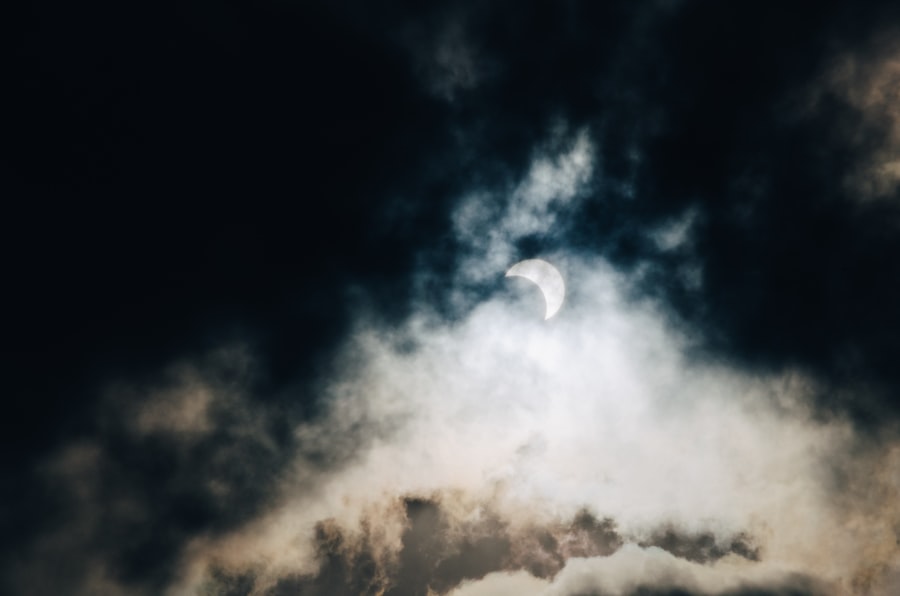
The Saros cycle’s predictive power extends beyond just the timing of eclipses; it also provides insights into their geographical path. The slight offset in the Saros period causes each subsequent eclipse in a series to occur approximately one-third of the way around the Earth, westward, from the previous one.
The Geographic Shift
Imagine the Earth as a spinning top. The eclipse path, like a chalk mark on that top, gradually moves across its surface with each repetition of the Saros cycle. This predictable shift is a crucial element in mapping out where an eclipse will be visible.
The Eight-Hour Rotation Factor
The additional 8 hours in the Saros period are particularly important. In those 8 hours, the Earth rotates approximately one-third of a full rotation (360 degrees / 24 hours * 8 hours = 120 degrees). This is why the visibility of successive eclipses in a Saros series shifts westward.
Predicting Visibility
By understanding the longitude of previous eclipses in a particular Saros series, astronomers can project the longitude of future eclipses with remarkable accuracy. This allows for the mapping of the eclipse path across continents and oceans.
The Role of Orbital Perturbations
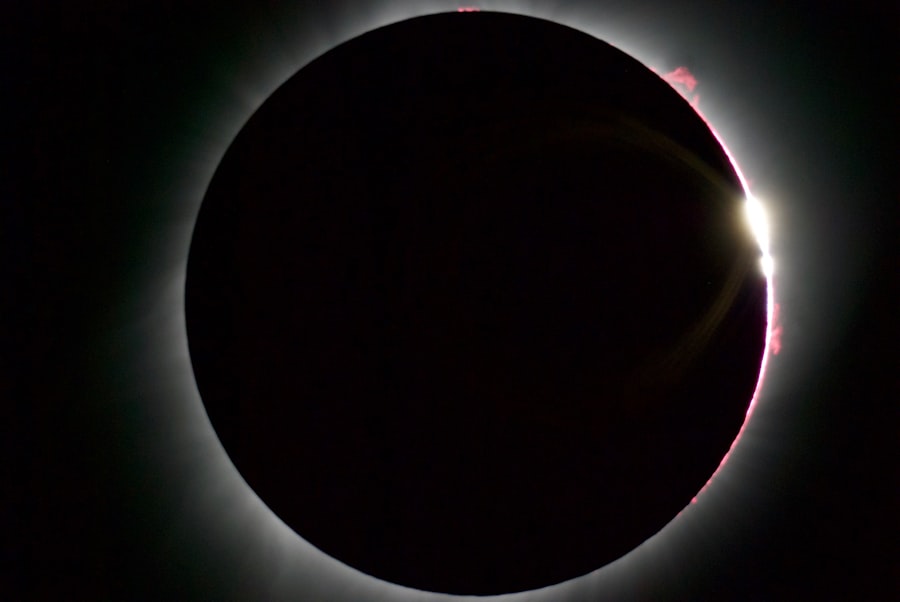
While the Saros cycle provides a remarkably robust framework for prediction, it’s not perfectly constant. The gravitational influences of other celestial bodies, particularly the Sun and other planets, cause small perturbations in the Moon’s orbit.
Gravitational Tugs and Wobbles
The complex gravitational interactions within the solar system act like subtle tugs and wobbles on the Moon’s path. These forces, though minute, accumulate over time and cause deviations from the idealized orbital periods.
The Gradual Drift of the Saros Cycle
These perturbations lead to a gradual drift in the Saros cycle itself. The period is not precisely constant and can vary slightly from one series to another. This means that while Saros predictions are highly accurate for a number of centuries, their long-term precision can be affected.
Corrective Calculations
Modern eclipse prediction models incorporate sophisticated calculations that account for these gravitational perturbations. This ongoing refinement ensures that the predictive power of the Saros cycle remains a cornerstone of astronomical forecasting.
The Saros cycle is a fascinating astronomical phenomenon that plays a crucial role in predicting eclipses. For those interested in delving deeper into the mechanics and implications of this cycle, a related article can be found on the topic of eclipse prediction gears. This resource provides valuable insights into how ancient civilizations utilized the Saros cycle for their astronomical observations. To explore this further, you can read more about it in this informative piece at Xfile Findings.
Harnessing Celestial Patterns for Modern Science
| Gear Name | Number of Teeth | Rotation Period | Function in Saros Cycle Prediction | Notes |
|---|---|---|---|---|
| Metonic Gear | 127 | 19 years (235 lunar months) | Tracks the Metonic cycle to align lunar months with solar years | Essential for predicting lunar phases |
| Saros Gear | 223 | 18 years 11 days 8 hours (Saros cycle) | Predicts the recurrence of eclipses | Core gear for eclipse prediction |
| Exeligmos Gear | 669 | 54 years 33 days (3 Saros cycles) | Adjusts for the extra 8 hours in Saros cycle to predict exact eclipse timing | Improves accuracy of eclipse predictions |
| Synodic Month Gear | 29.53 (approximate) | 29.53 days | Tracks lunar phases | Fundamental lunar cycle gear |
| Draconic Month Gear | 27.21 (approximate) | 27.21 days | Tracks the Moon’s node cycle for eclipse alignment | Critical for eclipse occurrence |
The Saros cycle, a concept that has captivated ancient astronomers, continues to be a valuable tool in modern science. Its predictable nature underpins our understanding of celestial mechanics and aids in various scientific endeavors.
Astronomical Observatories and Research
Astronomical observatories around the world rely on the Saros cycle to plan observations and catalog future eclipse events. This allows for dedicated study of the Sun’s corona, the Earth’s atmosphere during eclipses, and other phenomena.
Space Mission Planning
Understanding the timing and occurrence of eclipses is also crucial for planning certain space missions, particularly those involving solar observation or satellite operations that might be affected by the Earth’s shadow.
Educational Outreach and Public Engagement
The awe-inspiring spectacle of a solar or lunar eclipse, predicted with such precision by the Saros cycle, serves as a powerful tool for engaging the public in astronomy and science. It connects us to the grand cosmic ballet unfolding above.
Historical Astronomical Records
The study of historical astronomical records, often inscribed on ancient texts or artifacts, can be cross-referenced with Saros cycle predictions to validate the accuracy of these ancient observations and to reconstruct past celestial events.
The Saros cycle, then, is far more than a simple astronomical curiosity. It is a deeply ingrained rhythm within our solar system, a cosmic clockwork that has allowed humanity to anticipate and understand the mesmerizing dance of the Sun, Earth, and Moon for millennia. Its persistent predictability, honed by the convergence of fundamental orbital periods, continues to be a testament to the order and beauty of the universe, proving that even the most dramatic celestial events are, in many ways, preordained by the elegant gears of celestial physics.
FAQs
What is the Saros cycle in eclipse prediction?
The Saros cycle is an approximately 18-year period after which similar solar and lunar eclipses repeat. It is used to predict the timing and characteristics of eclipses based on the alignment of the Earth, Moon, and Sun.
How do Saros cycle gears work in eclipse prediction devices?
Saros cycle gears are mechanical components designed to replicate the 18-year Saros period. They rotate at specific rates to model the relative motions of celestial bodies, enabling mechanical eclipse prediction by indicating when eclipses will occur.
Why is the Saros cycle important for predicting eclipses?
The Saros cycle is important because it accounts for the periodicity and recurrence of eclipses. After one Saros period, the Earth, Moon, and Sun return to nearly the same relative geometry, allowing astronomers to forecast future eclipses with high accuracy.
Can the Saros cycle predict both solar and lunar eclipses?
Yes, the Saros cycle applies to both solar and lunar eclipses. It helps predict when and where these eclipses will occur by tracking the repeating alignment patterns of the Earth, Moon, and Sun.
Are Saros cycle eclipse prediction gears still used today?
While modern eclipse predictions primarily rely on computer simulations and astronomical data, Saros cycle gears remain significant in historical astronomical instruments and educational models that demonstrate eclipse cycles mechanically.