
Space weather, a multifaceted phenomenon driven by the Sun, encompasses a range of events that can profoundly impact Earth and its technological infrastructure. While much research focuses on short-term, energetic events such as solar flares and coronal mass ejections (CMEs), the scientific community increasingly recognizes the critical importance of understanding long period modulation in space weather. These slower, often subtler variations, spanning from months to decades, can significantly influence the background state of the heliosphere and, consequently, the frequency and intensity of more immediate space weather hazards. This article delves into the various aspects of long period modulation, exploring its origins, observational techniques, profound impacts, and the ongoing efforts to model and predict its behavior.
The ultimate source of long period modulation in space weather resides within the Sun itself, primarily driven by its internal dynamo. This complex process, involving the convection of plasma and differential rotation, generates and maintains the Sun’s magnetic field.
The Solar Cycle: An 11-Year Rhythm
The most prominent long period modulation is the approximately 11-year solar cycle, often referred to as the Schwabe cycle. This cycle is characterized by a periodic variation in the number of sunspots, solar flares, and CMEs.
Sunspot Number and Magnetic Field Reversal
Sunspots, dark regions on the solar surface with strong magnetic fields, serve as a primary indicator of solar activity. Their number waxes and wanes over the 11-year cycle, reaching a maximum during solar maximum and a minimum during solar minimum. Crucially, at each solar maximum, the Sun’s global magnetic field reverses polarity, completing a full magnetic cycle (Hale cycle) over 22 years. This magnetic reversal has profound implications for the heliospheric magnetic field and cosmic ray propagation.
Indices of Solar Activity
Beyond sunspot numbers, various other indices track the solar cycle. These include the F10.7 cm radio flux, which correlates well with solar ultraviolet and extreme ultraviolet emissions, and the solar irradiance, which reflects the total energy output of the Sun. Each of these indices provides a distinct window into the Sun’s varying activity levels, allowing researchers to build a comprehensive picture of its long-term behavior.
Beyond the 11-Year Cycle: Longer-Term Variations
While the 11-year cycle is dominant, the Sun exhibits even longer-term variations that modulate the amplitude and characteristics of the Schwabe cycle itself. These longer cycles are often more difficult to discern due to the limited historical data available.
Gleissberg Cycle: The 80-90 Year Modulation
The Gleissberg cycle, spanning approximately 80 to 90 years, represents a long-term modulation of the 11-year solar cycle amplitude. During periods of Gleissberg maxima, solar cycles tend to be more intense, with higher sunspot numbers and more frequent energetic events. Conversely, during Gleissberg minima, the 11-year cycle can be significantly suppressed, as exemplified by the Maunder Minimum.
Millennial and Grand Minima
On even longer timescales, evidence suggests the existence of millennial and multi-millennial solar cycles. These are often inferred from cosmogenic isotope records found in ice cores and tree rings, which act as proxies for past solar activity. Periods of significantly reduced solar activity, known as grand minima (e.g., the Maunder Minimum, Spörer Minimum), have been linked to colder climatic conditions on Earth, highlighting the intricate connection between the Sun and Earth’s climate.
Long period modulation in space weather is a fascinating topic that explores the intricate interactions between solar activity and Earth’s magnetosphere. For those interested in delving deeper into this subject, a related article can be found at XFile Findings, which discusses the implications of long period modulation on satellite communications and navigation systems. This article provides valuable insights into how these long-term variations can affect technological infrastructure and our daily lives.
Observational Techniques: Peering into the Sun’s Past and Present
Understanding long period modulation in space weather requires a combination of both direct, in-situ measurements and indirect proxy data stretching back centuries and millennia.
Satellite-Based Observations: Real-Time Monitoring
Contemporary space weather monitoring relies heavily on a fleet of satellites that provide real-time observations of the Sun and the heliosphere. These instruments measure a wide array of parameters critical for tracking solar activity and its propagation.
Solar Imaging and Spectroscopic Instruments
Satellites like the Solar Dynamics Observatory (SDO) capture high-resolution images of the Sun across various wavelengths, revealing sunspots, flares, CMEs, and the ever-changing solar atmosphere. Spectroscopic instruments on board these spacecraft analyze the light emitted by the Sun, providing information about temperature, density, and magnetic fields. This allows for detailed tracking of solar features over the course of the 11-year cycle.
Heliospheric and Interplanetary Measurements
Beyond the Sun itself, spacecraft positioned in the solar wind provide crucial in-situ measurements of plasma density, velocity, temperature, and the interplanetary magnetic field. Missions like ACE, WIND, and the Parker Solar Probe offer direct insights into how solar fluctuations propagate through the heliosphere, allowing scientists to understand the evolving space weather environment.
Ground-Based Telescopes: A Long History of Observation
Ground-based observatories complement satellite observations, particularly for long-term data sets that predate the space age.
Sunspot Records: A Century-Spanning Legacy
The meticulous recording of sunspots dates back to the early 17th century, providing the longest continuous direct record of solar activity. These historical sunspot numbers form the bedrock of our understanding of the 11-year solar cycle and its long-term variations. The Royal Greenwich Observatory, for example, has an invaluable collection of sunspot drawings.
Magnetograms and Spectroheliographs
Modern ground-based telescopes are equipped with magnetographs, which measure the strength and direction of magnetic fields on the solar surface. Spectroheliographs capture images of the Sun in specific spectral lines, revealing activity in the chromosphere and corona. These instruments contribute to a detailed understanding of the solar magnetic field’s evolution over cycles.
Paleodata Records: Unveiling Ancient Solar Activity
To extend our knowledge of solar activity beyond direct observational records, scientists turn to paleodata records, which act as natural archives of past solar behavior.
Cosmogenic Isotopes in Ice Cores and Tree Rings
Cosmogenic isotopes, such as Carbon-14 and Beryllium-10, are produced in the Earth’s atmosphere by cosmic ray bombardment. The flux of cosmic rays is modulated by the solar magnetic field and solar wind, meaning periods of stronger solar activity lead to lower cosmic ray fluxes and thus lower production rates of these isotopes. By analyzing the concentrations of these isotopes in ice cores (dating back hundreds of thousands of years) and tree rings (dating back thousands of years), scientists can reconstruct past variations in solar activity, revealing grand minima and other long-term cycles.
Aurora Borealis Historical Records
Historical accounts of aurora borealis, the shimmering polar lights, also offer clues to past solar activity. Auroras are generated by energetic particles from the Sun interacting with Earth’s magnetosphere. More frequent and widespread auroral displays suggest periods of higher solar activity. These records, often found in ancient chronicles and navigational logs, provide qualitative insights into solar behavior extending back millennia.
Impacts on Earth and Space Systems: The Long Shadow of Modulation
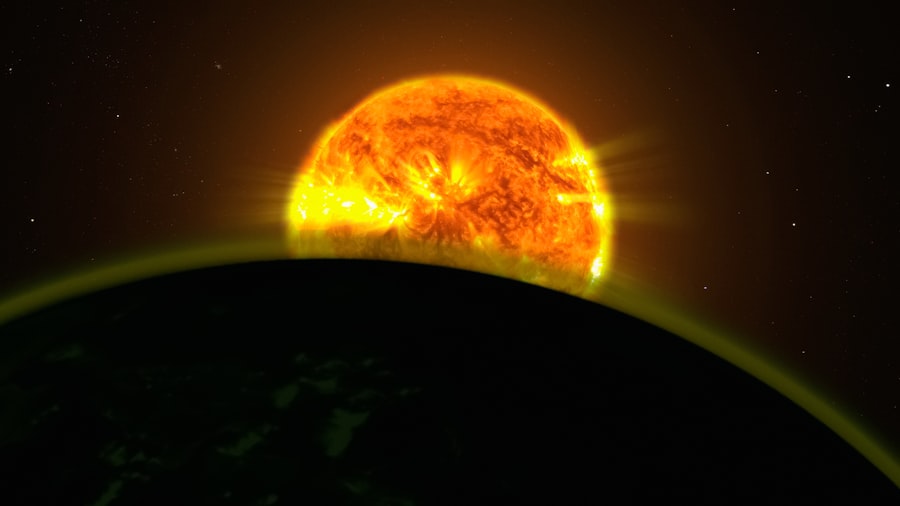
Long period modulation in space weather exerts a profound influence on Earth’s environment, technological infrastructure, and even climate. These slower variations act as a fundamental control knob, setting the stage for the more immediate impacts of individual space weather events.
Spacecraft and Satellite Operations: A Changing Environment
The operational lifetime and performance of spacecraft are intrinsically linked to the long-term variations in solar activity.
Atmospheric Drag and Orbital Decay
During solar maximum, the Sun’s ultraviolet and extreme ultraviolet irradiance increases dramatically, heating and expanding Earth’s upper atmosphere. This increased atmospheric density leads to greater drag on low Earth orbit (LEO) satellites, causing their orbits to decay more rapidly. Mission operators must expend more fuel for orbital maintenance or face premature reentry, a critical factor for constellations and long-duration missions.
Radiation Environment and Hardware Degradation
The interplanetary radiation environment is also modulated by the solar cycle. During solar minimum, the heliospheric magnetic field is weaker and more open, allowing more galactic cosmic rays (GCRs) to penetrate the inner solar system. These high-energy particles can cause single-event upsets (SEUs) in satellite electronics and lead to gradual material degradation over time. Conversely, during solar maximum, while periods of intense GCRs are fewer, energetic solar particle events (SEPs) become more frequent and powerful, posing acute radiation hazards to spacecraft and astronauts.
Terrestrial Technologies: Vulnerability to Long-Term Trends
On Earth, critical infrastructure systems are also susceptible to the long-term modulations of space weather.
Power Grids and Geomagnetic Storms
While individual strong geomagnetic storms can induce geomagnetically induced currents (GICs) that damage power transformers, the frequency and intensity of these storms are modulated by the solar cycle. Solar maximum periods are associated with an increased likelihood of CMEs and high-speed solar wind streams, which are the primary drivers of significant geomagnetic disturbances. Understanding the long-term trends in solar activity is therefore crucial for assessing and mitigating risks to national power grids.
Radio Communication and GPS Accuracy
The Earth’s ionosphere, a highly ionized layer of the upper atmosphere, plays a critical role in radio communication and GPS signal propagation. The state of the ionosphere is strongly dependent on solar ultraviolet and X-ray radiation. During solar maximum, the ionosphere is more ionized and dense, which can enhance or degrade radio propagation depending on the frequency and path. These long-term changes in ionospheric conditions necessitate adaptive strategies for communication and navigation systems, including corrections for GPS accuracy.
Earth’s Climate: A Sun-Climate Connection
The potential influence of long period solar modulation on Earth’s climate remains a significant area of scientific inquiry, though the exact mechanisms are complex and not fully understood.
Total Solar Irradiance Variability
While the total solar irradiance (TSI) varies by only about 0.1% over the course of an 11-year solar cycle, even small, sustained changes can accumulate over centuries. Long-term variations in TSI, such as those associated with grand minima, could contribute to shifts in Earth’s energy balance. However, the magnitude of these solar-induced variations is generally considered insufficient to explain all observed climate change without the influence of anthropogenic factors.
Indirect Effects: Cosmic Rays and Cloud Formation
Beyond direct irradiance, indirect mechanisms have been proposed. One hypothesis suggests that variations in galactic cosmic ray flux, which is modulated by solar activity, could influence cloud formation. Higher cosmic ray fluxes (during solar minima) might lead to increased cloud nucleation, potentially altering Earth’s albedo and influencing temperature. However, the evidence for a strong, direct causal link between cosmic rays and global cloud cover remains controversial and is a subject of active research.
Modeling and Prediction: Forecasting the Solar Future

Predicting long period modulation in space weather is a grand challenge in solar physics, akin to forecasting long-term weather patterns on Earth. However, advancements in observational capabilities and computational models are steadily improving our foresight.
Empirical Models: Learning from the Past
Empirical models draw upon historical data to identify and extrapolate patterns in solar activity. These models are relatively straightforward but limited by the quality and length of the observational record.
ARIMA Models and Neural Networks
Time series analysis techniques, such as Autoregressive Integrated Moving Average (ARIMA) models, have been applied to sunspot number data to predict future solar cycle amplitudes. More sophisticated approaches, including neural networks and machine learning algorithms, can identify complex non-linear relationships within the data, potentially offering more accurate long-term forecasts. However, all empirical models are inherently tied to past observations and may struggle with unprecedented solar behavior.
Proxy Data Inferences
By analyzing paleodata sources like cosmogenic isotopes, scientists can infer past solar activity, providing a longer baseline for empirical modeling. These proxy records are crucial for understanding very long-term cycles and grand minima, allowing for a more complete statistical picture of solar variability.
Dynamo Models: Simulating the Sun’s Interior
First-principles dynamo models attempt to simulate the physical processes within the Sun that generate its magnetic field. These models aim to provide a more fundamental understanding of solar cycle mechanisms and, ultimately, more robust predictions.
Flux Transport Models
A prominent class of dynamo models are flux transport models. These models simulate the transport of magnetic flux generated at the base of the convection zone towards the solar surface, where it emerges as sunspots. By varying parameters within these models, researchers can explore how the advection and diffusion of magnetic fields influence the length and amplitude of the solar cycle, offering insights into future solar behavior.
Challenges and Future Directions
Despite significant progress, dynamo models face considerable challenges. The Sun’s interior is a turbulent, complex environment, and many physical processes are not fully understood or accurately parameterized. High-resolution simulations require immense computational resources. Future advancements will likely involve incorporating more realistic physics, finer spatial resolutions, and perhaps integrating these models with machine learning techniques to further refine their predictive power.
Recent studies have highlighted the significance of long period modulation in understanding space weather phenomena, which can have profound effects on satellite operations and communication systems. For a deeper insight into this topic, you can explore a related article that discusses the implications of these modulations on Earth’s magnetosphere. This research emphasizes the need for continuous monitoring and predictive modeling to mitigate potential disruptions. To read more about this fascinating subject, visit this article.
Conclusion: Preparing for the Long Game
| Parameter | Description | Typical Range | Impact on Long Period Modulation |
|---|---|---|---|
| Solar Wind Speed | Velocity of charged particles emitted by the sun | 300 – 800 km/s | Higher speeds enhance modulation amplitude over long periods |
| Interplanetary Magnetic Field (IMF) | Magnetic field carried with the solar wind | 1 – 10 nT | Stronger IMF can increase cosmic ray modulation |
| Cosmic Ray Intensity | Flux of high-energy particles from outside the solar system | Varies with solar cycle | Inverse correlation with solar activity; modulated over long periods |
| Solar Cycle Phase | Stage of the approximately 11-year solar activity cycle | Minimum to Maximum | Modulation amplitude varies with cycle phase |
| Geomagnetic Activity Index (Kp) | Measure of disturbances in Earth’s magnetic field | 0 – 9 | Higher values correlate with increased modulation effects |
| Heliospheric Current Sheet Tilt | Angle of the wavy surface separating magnetic polarities | 0° – 90° | Greater tilt leads to stronger long period modulation |
Understanding long period modulation in space weather is not merely an academic exercise; it is a critical endeavor with tangible implications for our technologically dependent society. By recognizing the Sun’s intrinsic rhythms and their slower, overarching influence, we gain a context for interpreting immediate space weather events and preparing for future challenges. Just as a sailor understands the seasonal currents that shape their journey, so too must humanity grasp the long-term currents of the Sun. Continued investment in observational capabilities, across both space and ground, combined with the relentless pursuit of more sophisticated theoretical and computational models, will be paramount in unraveling the mysteries of the solar dynamo and improving our ability to forecast the Sun’s future, safeguarding our exploration and utilization of space and its effects on Earth.
FAQs
What is long period modulation in space weather?
Long period modulation in space weather refers to variations in solar and geomagnetic activity that occur over extended timescales, typically ranging from days to years. These modulations influence the intensity and frequency of space weather events such as solar flares, geomagnetic storms, and cosmic ray flux.
What causes long period modulation in space weather?
Long period modulation is primarily caused by changes in the Sun’s magnetic activity cycle, including the 11-year solar cycle and longer-term variations. Other factors include the solar wind’s interaction with Earth’s magnetosphere and the heliospheric environment, which can modulate space weather conditions over extended periods.
How does long period modulation affect Earth’s space environment?
Long period modulation affects the intensity and occurrence of geomagnetic storms, radiation levels in near-Earth space, and the behavior of the ionosphere and magnetosphere. These changes can impact satellite operations, communication systems, navigation, and power grids on Earth.
Can long period modulation be predicted?
To some extent, yes. Scientists use solar observations, historical data, and models of solar cycles to forecast long period modulation patterns. However, precise prediction remains challenging due to the complex and dynamic nature of solar and space weather processes.
Why is understanding long period modulation important?
Understanding long period modulation is crucial for preparing and mitigating the effects of space weather on technological systems and human activities. It helps improve forecasting accuracy, protect satellites and power infrastructure, and ensure the safety of astronauts and aviation operations.