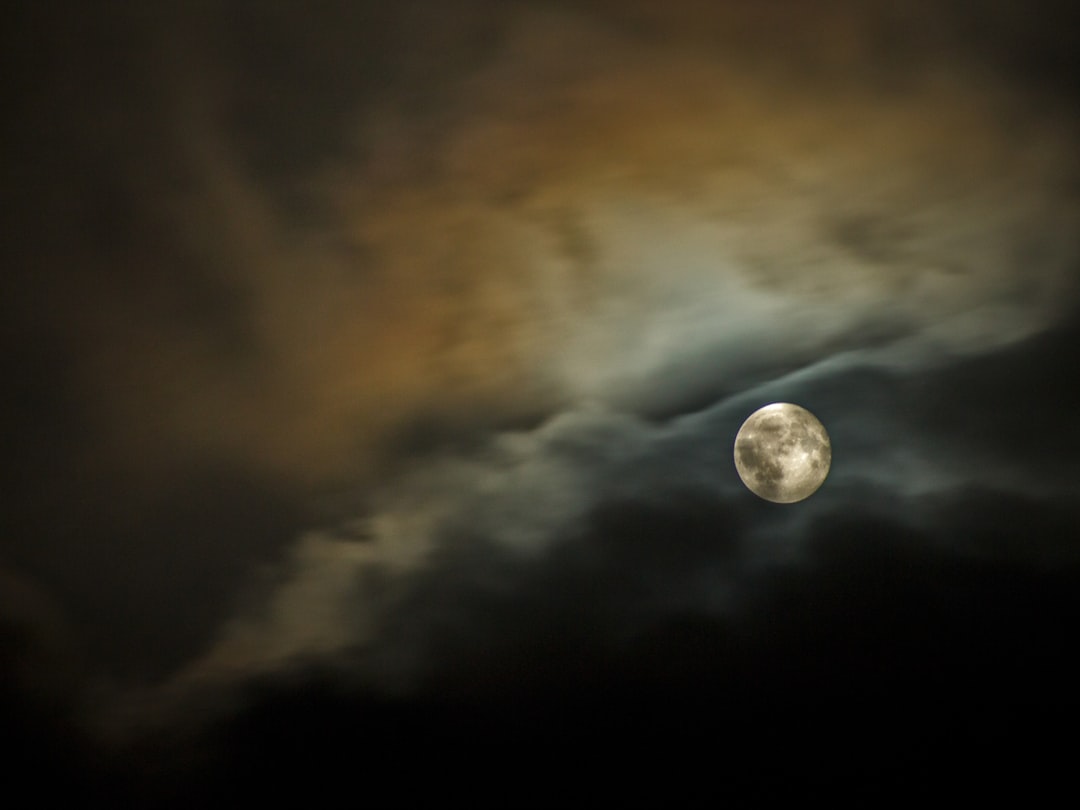
The Moon has long captivated human imagination, serving as a source of inspiration, myth, and mystery. Among the myriad interpretations of its significance, the notion of the Moon as a soul trap has emerged as a compelling concept. This idea posits that the Moon acts as a celestial prison for souls, capturing them after death and preventing their ascension to higher realms or reincarnation into new lives.
This perspective raises profound questions about the nature of existence, the afterlife, and the potential for spiritual liberation. As humanity continues to explore the depths of consciousness and the cosmos, the Moon’s role in this intricate web of beliefs remains a topic of fascination and debate. The allure of the Moon as a soul trap is not merely a modern invention; it draws upon ancient wisdom and cultural narratives that have persisted through time.
The Moon’s ethereal glow and its rhythmic cycles have inspired countless stories and interpretations, leading many to ponder its influence on the human soul. In this exploration, one can uncover a rich tapestry of historical beliefs, spiritual practices, and scientific inquiries that converge around the enigmatic presence of the Moon in human life.
Key Takeaways
- The concept of the Moon as a soul trap suggests that the Moon has a significant influence on the human soul and its journey through reincarnation.
- Historical and cultural beliefs from various traditions around the world have long held that the Moon plays a crucial role in the cycle of life and death, and in the journey of the soul.
- Theories and speculation about the Moon’s role in reincarnation range from it being a place where souls are cleansed and prepared for their next life, to it being a prison for the soul, trapping it in a cycle of rebirth.
- Scientific perspectives on the Moon’s impact on the human soul are largely skeptical, attributing any perceived influence to psychological or cultural factors rather than any inherent power of the Moon.
- Comparing ancient and modern interpretations of the Moon as a soul trap reveals a shift from mystical and spiritual beliefs to more rational and scientific explanations, but the concept continues to hold significance in many spiritual traditions.
Historical and cultural beliefs about the Moon’s influence on souls
Throughout history, various cultures have attributed significant spiritual meaning to the Moon, often associating it with the soul’s journey after death. In ancient Egypt, for instance, the Moon was linked to Thoth, the god of wisdom and writing, who was believed to guide souls through the afterlife. The lunar phases were thought to reflect the cycles of life and death, with the full Moon symbolizing completion and rebirth.
Such beliefs underscore the Moon’s role as a mediator between earthly existence and the spiritual realm, suggesting that it holds sway over the fate of souls. Similarly, in many Indigenous cultures, the Moon is revered as a powerful entity that influences not only natural phenomena but also human emotions and spiritual well-being. The lunar cycles are often seen as markers for important rituals and ceremonies, guiding communities in their connection to the cosmos.
These traditions highlight a deep-seated understanding of the Moon’s impact on human consciousness, reinforcing the idea that it may play a pivotal role in shaping the soul’s journey through life and beyond.
Theories and speculation about the Moon’s role in reincarnation

The concept of reincarnation is intricately linked to beliefs about the soul’s journey through various lifetimes. Some theorists propose that the Moon serves as a gateway or intermediary in this process, influencing how souls transition from one existence to another. According to this view, when individuals pass away, their souls may be drawn to the Moon before embarking on their next incarnation.
This notion suggests that the Moon acts as a cosmic waiting room, where souls are evaluated or prepared for their next life. Speculation surrounding this idea often delves into metaphysical realms, exploring how lunar energy might affect the timing and nature of reincarnation. Some believe that certain lunar phases can enhance or hinder a soul’s ability to reincarnate, with specific alignments offering opportunities for growth or stagnation.
This perspective invites contemplation on how celestial bodies might interact with human consciousness, shaping not only individual destinies but also collective experiences across generations.
Scientific perspectives on the Moon’s impact on the human soul
| Scientific Perspectives on the Moon’s Impact on the Human Soul | |
|---|---|
| Research Study | Findings |
| Lunar Phase Study | Correlation between full moon and increased emotional distress |
| Psychological Impact Study | Association between lunar cycles and changes in mood and behavior |
| Biological Rhythms Study | Links between lunar phases and human sleep patterns and hormone levels |
While much of the discourse surrounding the Moon as a soul trap is rooted in spiritual and metaphysical beliefs, scientific inquiry offers a different lens through which to examine its influence on humanity. Researchers have long studied the effects of lunar cycles on human behavior, emotions, and even physiological processes. For instance, studies have suggested correlations between full moons and increased incidences of sleep disturbances or heightened emotional responses.
These findings hint at a potential connection between lunar phases and human consciousness, though they do not necessarily validate the idea of the Moon as a soul trap. Moreover, scientists have explored how gravitational forces exerted by the Moon affect tides and other natural phenomena on Earth. This interplay between celestial bodies and terrestrial life raises intriguing questions about how such forces might extend beyond physical effects to influence psychological or spiritual dimensions.
While empirical evidence may not directly support the notion of the Moon capturing souls, it does open avenues for further exploration into how cosmic elements might shape human experience in profound ways.
Comparing ancient and modern interpretations of the Moon as a soul trap
The interpretation of the Moon as a soul trap has evolved over time, reflecting shifts in cultural beliefs and scientific understanding. In ancient civilizations, where spirituality was often intertwined with daily life, the Moon was seen as an omnipresent force guiding souls through their journeys.
In contrast, modern interpretations often grapple with a more complex relationship between science and spirituality.
This divergence highlights an ongoing tension between traditional beliefs and modern scientific paradigms, prompting individuals to navigate their own understanding of the Moon’s role in their spiritual lives.
The connection between lunar cycles and spiritual experiences
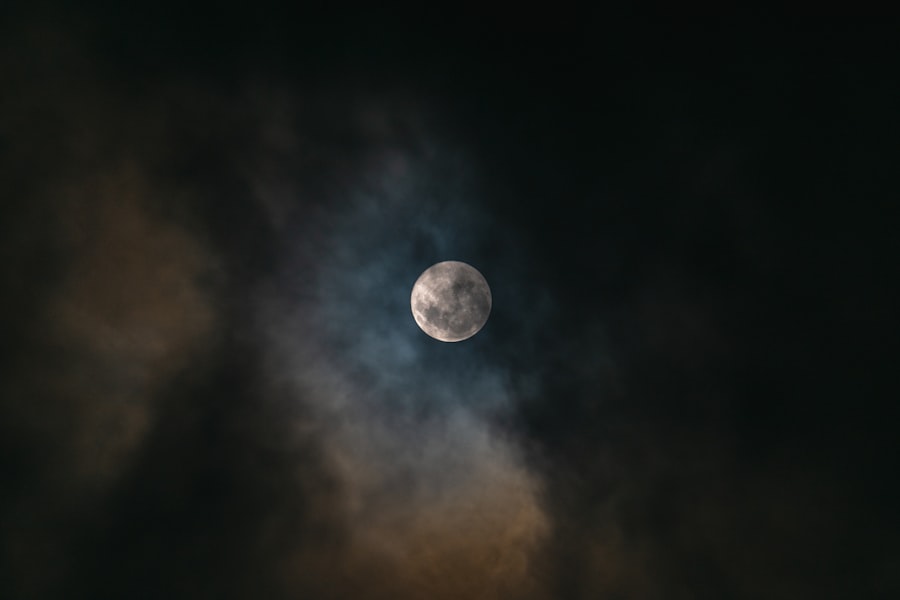
Lunar cycles have long been associated with various spiritual experiences and practices across cultures. Many traditions recognize specific phases of the Moon—new moon, waxing crescent, full moon, and waning gibbous—as potent times for rituals, meditation, or introspection. The new moon is often viewed as a time for setting intentions and new beginnings, while the full moon is celebrated for its illumination and clarity.
This cyclical nature resonates with human experiences of growth, transformation, and renewal. The connection between lunar cycles and spiritual experiences invites individuals to attune themselves to these rhythms in their own lives. By aligning personal practices with lunar phases, many find enhanced clarity or insight into their spiritual journeys.
This synchronization fosters a deeper understanding of one’s place within the cosmos and encourages reflection on how external forces may shape internal experiences.
The role of the Moon in various religious and spiritual traditions
Across diverse religious and spiritual traditions, the Moon occupies a significant place in cosmology and ritual practice. In Hinduism, for example, lunar phases are integral to determining auspicious times for ceremonies and festivals. The full moon is particularly revered during celebrations like Guru Purnima, where devotees honor their spiritual teachers under its radiant light.
Similarly, in Wicca and other pagan traditions, lunar cycles are central to rituals that honor nature’s rhythms and celebrate life’s cycles. In contrast, some monotheistic religions view the Moon through different lenses. In Islam, for instance, the lunar calendar dictates important religious observances such as Ramadan.
The sighting of the new moon marks significant events in Islamic life, emphasizing its role as a temporal guide rather than a spiritual entity itself. These varied interpretations illustrate how cultural contexts shape understandings of the Moon’s significance in relation to spirituality and religious practice.
Exploring the idea of escaping the Moon’s influence on the soul
The notion of escaping the Moon’s influence on the soul raises intriguing philosophical questions about free will and spiritual autonomy. If one subscribes to the belief that the Moon acts as a soul trap, then what does it mean for individuals seeking liberation from its grasp? Some spiritual traditions advocate for practices aimed at transcending lunar influences—such as meditation, energy work, or shamanic journeys—believing that these methods can facilitate a deeper connection with higher realms or divine consciousness.
Conversely, others argue that embracing lunar energies can lead to greater self-awareness and understanding of one’s place within the cosmic order. This perspective suggests that rather than seeking to escape from lunar influence, individuals might benefit from integrating these energies into their spiritual practices. By acknowledging and working with lunar cycles, one may find pathways toward personal growth and enlightenment rather than viewing them solely as obstacles to overcome.
Examining the potential consequences of being caught in a soul trap
The implications of being caught in a soul trap—whether metaphorically represented by the Moon or otherwise—can evoke feelings of existential dread or concern about one’s spiritual journey. If souls are indeed ensnared by lunar energies after death, what does this mean for their potential for growth or evolution? Some theorists posit that remaining trapped could lead to stagnation or repeated cycles of suffering until one learns necessary lessons or resolves karmic debts.
This perspective invites contemplation on how individuals might navigate their own spiritual paths to avoid such entrapment. Engaging in self-reflection, seeking guidance from spiritual mentors, or participating in community rituals may serve as means to break free from limiting patterns or beliefs that bind one’s soul. Ultimately, understanding these potential consequences can empower individuals to take charge of their spiritual journeys with intention and awareness.
Alternative explanations for the Moon’s significance in spirituality and consciousness
While many interpretations focus on the Moon as a soul trap or guiding force for reincarnation, alternative explanations exist that emphasize its role as a symbol rather than a literal entity influencing souls. Some scholars argue that cultural narratives surrounding the Moon reflect deeper psychological archetypes related to femininity, intuition, and emotional depth. In this view, lunar symbolism serves as a mirror for human experience rather than an external force dictating spiritual outcomes.
Additionally, some contemporary thinkers explore how modern understandings of consciousness intersect with lunar symbolism. They suggest that rather than viewing celestial bodies as separate entities exerting influence over human lives, individuals might consider them as representations of internal states or collective consciousness. This perspective encourages individuals to engage with lunar energies not as external traps but as reflections of their own inner landscapes.
Reflecting on the possibility of the Moon as a soul trap
The concept of the Moon as a soul trap invites profound reflection on humanity’s relationship with celestial bodies and their potential influence on spiritual journeys. While historical beliefs and cultural narratives provide rich insights into this idea, modern interpretations challenge individuals to navigate between ancient wisdom and contemporary understanding. Whether viewed through scientific inquiry or spiritual exploration, the Moon remains an enduring symbol that resonates deeply within human consciousness.
Ultimately, contemplating whether the Moon serves as a soul trap encourages individuals to engage with their own beliefs about existence, spirituality, and personal growth. As humanity continues to explore these mysteries—both within themselves and in relation to cosmic forces—they may find that understanding their connection to celestial bodies can illuminate pathways toward greater awareness and liberation from limiting beliefs about their souls’ journeys through time and space.
In exploring the intriguing concept of the Moon as a soul trap, one might find it beneficial to delve into related discussions that expand on extraterrestrial theories and cosmic mysteries. A pertinent article that complements this topic can be found on X File Findings, which delves into various unexplained phenomena and theories. For those interested in a broader context of such enigmatic subjects, you can read more about it in this