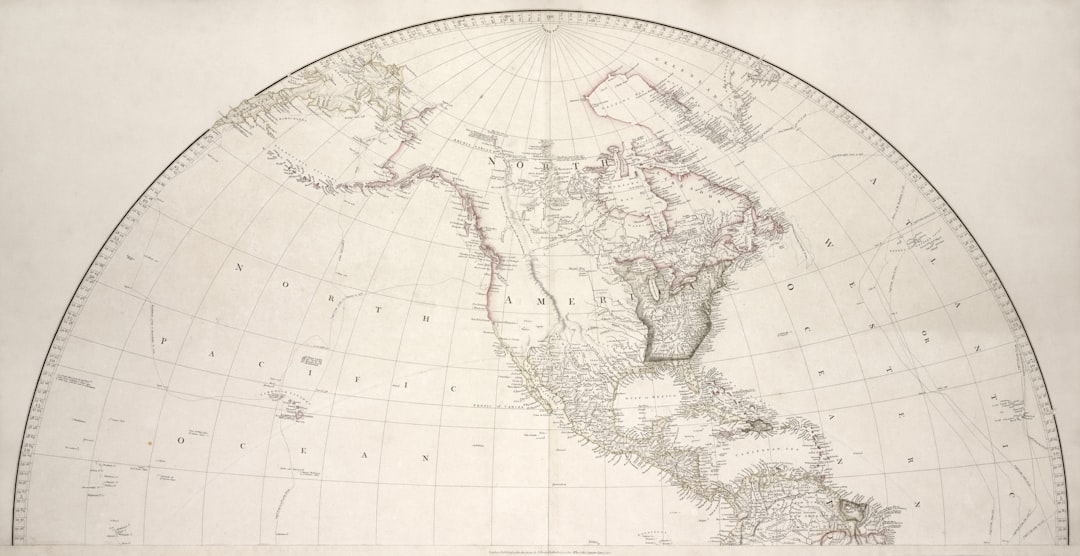
In the annals of declassified government documents, few possess the enigmatic allure or potential for misinterpretation as the “CIA Non-Terrestrial Cartographic Logic Memo.” This document, a seemingly innocuous internal communication, has become a focal point for researchers, conspiracy theorists, and the merely curious, each group attempting to decipher its true intent and implications. Its very existence opens a window into the clandestine agency’s broader intellectual inquiries, challenging conventional understandings of intelligence gathering.
Origins and Context of the Memo
The “CIA Non-Terrestrial Cartographic Logic Memo” did not materialize in a vacuum. Its emergence is inextricably linked to the Cold War era, a period characterized by intense geopolitical rivalry, technological leaps, and a pervasive sense of the unknown. As the space race escalated, so too did the intelligence community’s interest in celestial phenomena and the potential implications of discovering extraterrestrial life or technologies.
The Cold War and its Precursors to Unconventional Intelligence
During the Cold War, the United States and the Soviet Union engaged in an ideological and technological arms race that extended beyond terrestrial boundaries. Both nations invested heavily in space exploration, not solely for scientific prestige but also for strategic advantage. This era fostered an environment where unconventional intelligence gathering methods and speculative analyses gained a foothold. The possibility of adversaries developing advanced space-based weaponry or encountering non-terrestrial entities became a legitimate, albeit often highly classified, concern. This memo can be viewed as one such artifact born from this climate of intense apprehension and intellectual exploration, a testament to the fact that intelligence agencies were not only concerned with human adversaries but also with the wider cosmos.
The Rise of Unconventional Analytical Units
Within the CIA and other intelligence agencies, specialized units were often formed to tackle particularly sensitive, unusual, or speculative topics. These units, often operating outside conventional bureaucratic structures, were given the latitude to explore concepts that might otherwise be dismissed as fringe or non-credible. The “Non-Terrestrial Cartographic Logic Memo” likely originated from such a unit, or at the very least, was destined for review by analysts tasked with considering “blue-sky” scenarios. Such units acted as a nation’s intellectual early warning system, attempting to map the unknown, even if the terrain was largely theoretical.
Deconstructing the “Non-Terrestrial Cartographic Logic”
At the heart of the document lies its evocative title: “Non-Terrestrial Cartographic Logic.” To understand its significance, one must dissect each component word, recognizing that in intelligence parlance, every word carries weight and intent.
The Meaning of “Non-Terrestrial”
The term “Non-Terrestrial” is perhaps the most captivating aspect of the memo. It immediately steers the reader away from Earth-based concerns, compelling them to consider phenomena or entities beyond our planet. This could encompass objects in Earth’s orbit, lunar phenomena, or indeed, objects of interstellar origin. The very inclusion of this modifier indicates a deliberate expansion of the agency’s analytical scope, moving beyond traditional geopolitical boundaries to embrace a cosmic perspective. It suggests an acknowledgment, at some level, of the possibility of observation or interaction from non-Earthly sources.
The Implications of “Cartographic”
“Cartographic” traditionally refers to the science and art of making maps. On Earth, cartography involves the meticulous surveying and representation of geographical features, political boundaries, and topographical data. When applied to “Non-Terrestrial” phenomena, its meaning becomes far more abstract. It implies an attempt to map, understand, or even predict the movements, origins, or characteristics of something not of this world. This could range from charting the orbital paths of unidentified aerial phenomena (UAP), to attempting to map potential “routes” of hypothesized extraterrestrial craft, or even charting theoretical communication pathways. The phrase suggests a logical framework was being sought to bring order to potentially chaotic or anomalous observations.
The Essence of “Logic”
The inclusion of “Logic” within the title is crucial. It signifies a methodical, rational approach to understanding these non-terrestrial cartographic concerns. This was not merely an exercise in speculative fiction, but an attempt to apply rigorous analytical frameworks to highly unusual data or hypotheses. The memo likely outlined specific logical processes, algorithms, or inferential models that could be used to interpret patterns, identify anomalies, and potentially predict behaviors of non-terrestrial objects or phenomena. It reflects a desire to move beyond mere observation into the realm of actionable intelligence, seeking to establish predictable parameters for the unpredictable.
Content and Structure (Based on Hypothetical Reconstruction)
While the full contents of the “CIA Non-Terrestrial Cartographic Logic Memo” remain shrouded in classification, informed speculation, based on intelligence practices, allows for a hypothetical reconstruction of its likely structure and content. Such a memo would not be a mere collection of raw sightings but a more systemic endeavor.
Section 1: Introduction and Problem Statement
Like any formal intelligence document, the memo would likely begin with an introductory section outlining its purpose and the perceived problem it seeks to address. This might include:
- Rationale for Non-Terrestrial Cartography: Why is such an endeavor necessary? What strategic or national security interests are at stake?
- Defining the Scope: What constitutes “non-terrestrial” for the purpose of this analysis? Are we speaking of orbital debris, UAP, or something more profound?
- Historical Context of Related Observations: A brief overview of unexplained aerial phenomena or unusual celestial events that necessitated this kind of analytical framework. This section serves as the intellectual scaffolding, explaining why the agency has dedicated resources to such an unusual topic.
Section 2: Methodological Frameworks and Analytical Tools
This section would delve into the proposed methods for conducting non-terrestrial cartography. It would be the operational heart of the memo, laying out the blueprints for analytical action.
- Data Acquisition and Collection Protocols: How would “non-terrestrial” data be gathered? This might involve satellite imagery, radar tracking, human observer reports (e.g., pilot sightings), and even signals intelligence. The memo might specify reporting formats and verification procedures.
- Classification and Categorization Systems: A system for classifying observations based on characteristics such as trajectory, speed, apparent origin, and observed behavior. This is akin to taxonomy in biology, applying order to a new domain of inquiry.
- Predictive Modeling and Pattern Recognition: Discussion of algorithms or computational models designed to identify recurring patterns, predict trajectories, or ascertain potential intent (if such a concept could be applied to non-terrestrial entities). This section might explore the use of early forms of artificial intelligence or statistical analysis.
- Interagency Cooperation: Protocols for sharing data and analysis with other intelligence agencies, military branches, or even scientific institutions. This highlights the interdisciplinary nature of such a complex challenge.
Section 3: Threat Assessment and Strategic Implications
This critical section would move from data analysis to actionable intelligence, exploring the potential consequences of “non-terrestrial” interactions or observations. It would be the intelligence agency’s attempt to forecast the weather in uncharted skies.
- Potential Adversarial Exploitation: How could a rival nation (e.g., the Soviet Union) potentially exploit non-terrestrial phenomena or technologies? This might involve the development of advanced propulsion systems or surveillance capabilities based on reverse-engineering or observation.
- Strategic Responses and Contingency Planning: What are the recommended responses to various non-terrestrial scenarios? This could range from heightened alert levels to specific engagement protocols, or even public messaging strategies.
- Long-Term Research Goals: Recommendations for continued investment in non-terrestrial research, requiring enhanced sensor technologies, theoretical physics research, and interdisciplinary collaboration.
Section 4: Budgetary and Resource Considerations
No intelligence proposal is complete without a discussion of the resources required for its implementation. This section would provide the nuts and bolts of how such a program would be funded and staffed.
- Personnel Requirements: What types of specialists would be needed – astrophysicists, signal analysts, linguists, cultural anthropologists (in the imaginative possibility of communication), and data scientists?
- Technological Investments: What new sensor arrays, computing power, or R&D initiatives would be necessary to advance non-terrestrial cartography?
- Funding Projections: An estimated budget outlining the financial commitment required for sustained research and analysis. This is the practical anchor for a highly speculative endeavor.
The Broader Implications and Public Response
The revelation of such a memo, even in redacted form, has profound implications for public understanding of governmental knowledge regarding anomalous phenomena. It acts as a prism, refracting light differently for various observers.
Fueling Conspiracy Theories vs. Inspiring Legitimate Research
For many, the “CIA Non-Terrestrial Cartographic Logic Memo” serves as definitive proof that the United States government has been actively investigating extraterrestrial intelligence for decades, perhaps even possessing classified information about such encounters. It fuels narratives of cover-ups and secret programs. For others, particularly in academic and scientific communities, it represents a validation of inquiries into UAP that have long been marginalized. It could inspire researchers to apply more rigorous scientific and analytical methods to unexplained phenomena, shifting the conversation away from sensationalism towards evidence-based inquiry. The memo thus becomes both a source of speculative fascination and a call to intellectual arms.
The Declassification Process and its Strategic Intent
The declassification of documents like this is rarely accidental. It is a carefully managed process, often serving strategic purposes. The release of the “Non-Terrestrial Cartographic Logic Memo” could be interpreted as:
- Information Control: A measured release of previously classified information to control the narrative surrounding UAP, preventing more damaging or uncontrolled leaks.
- Public Preparation: A gradual acclimatization of the public to the idea that non-terrestrial phenomena are a legitimate concern for national security, paving the way for further disclosures or policy changes. The government, like a careful chef, might be slowly introducing new ingredients into the national dish.
- Intelligence Signaling: A subtle message to other nations or non-state actors about U.S. capabilities and concerns, projecting an image of comprehensive intelligence awareness.
Conclusion: Glimpsing Beyond the Terrestrial Veil
The “CIA Non-Terrestrial Cartographic Logic Memo” is far more than just a piece of paper; it is a historical artifact that speaks volumes about the intellectual frontiers pushed by intelligence agencies during a period of immense global uncertainty. It represents a foray into mapping the truly unknown, an attempt to bring rational order to what might appear inherently chaotic or fantastic.
For the modern reader, it serves as a powerful reminder that the reach of intelligence, and indeed human curiosity, extends far beyond the familiar boundaries of Earth. It challenges us to consider where the traditional lines of national security truly end, and where the cosmic begins. As we continue to gaze skyward, both literally and figuratively, documents like this compel us to consider what other classified charts might exist, detailing unknown territories that lie just beyond our current understanding, waiting for their own moment of declassification to illuminate new vistas of knowledge. The memo acts as a historical waypoint, marking a point in time when the intelligence apparatus began to consider the universe itself as a potential theater of operations, a vast ocean whose currents and islands were yet to be charted.
FAQs
What is the CIA Non-Terrestrial Cartographic Logic Memo?
The CIA Non-Terrestrial Cartographic Logic Memo is a classified document that discusses methodologies and logic used by the CIA for mapping and analyzing non-terrestrial environments, such as outer space or extraterrestrial terrains.
What topics are covered in the memo?
The memo covers topics including cartographic techniques, data interpretation, spatial analysis, and the application of logic frameworks for mapping areas beyond Earth, potentially including celestial bodies or unidentified aerial phenomena.
Why is the memo considered important?
The memo is important because it provides insight into how intelligence agencies approach the challenge of mapping and understanding environments that are not on Earth, which can be critical for national security, scientific research, and space exploration.
Is the CIA Non-Terrestrial Cartographic Logic Memo publicly available?
Most versions of the memo remain classified or heavily redacted, but some portions have been declassified or leaked, allowing limited public access to its contents through freedom of information requests or investigative journalism.
How does the memo impact current cartographic or intelligence practices?
The memo influences current practices by informing the development of advanced mapping technologies and analytical methods used in intelligence gathering, surveillance, and research related to non-terrestrial domains.