Yutu-2, China’s lunar rover, embarked on its mission to explore the Moon’s far side in January 2019, marking a significant milestone in space exploration. This mission, part of the Chang’e 4 program, aimed to gather data and conduct experiments in an area that had never been explored by any previous missions. The rover’s name, which translates to “Jade Rabbit,” is derived from Chinese mythology, symbolizing the cultural significance of the Moon in Chinese heritage.
The mission’s primary objective was to study the lunar surface, analyze its composition, and investigate the potential for future human habitation. The Lunar Cube, a companion satellite launched alongside Yutu-2, plays a crucial role in facilitating communication between the rover and Earth. This satellite not only relays data but also assists in navigation and provides a broader perspective of the lunar environment.
Together, Yutu-2 and the Lunar Cube represent a leap forward in lunar exploration, showcasing China’s growing capabilities in space technology and research. Their collaborative mission aims to enhance humanity’s understanding of the Moon and its potential resources, paving the way for future explorations.
Key Takeaways
- Yutu-2, China’s lunar rover, and Lunar Cube’s mission aim to explore the Moon’s surface and make significant discoveries.
- Yutu-2 has made groundbreaking discoveries on the Moon’s surface, including the identification of new lunar rocks and minerals.
- The significance of Yutu-2’s discoveries on the Moon lies in advancing our understanding of the Moon’s geological composition and history.
- Yutu-2’s advanced technology enables precise lunar exploration, including the ability to analyze lunar soil and rocks.
- Exploring the Moon’s environment with Yutu-2 poses challenges such as extreme temperatures and the rugged lunar terrain.
Yutu-2’s exploration of the Moon’s surface
Yutu-2’s journey across the Moon’s surface has been nothing short of remarkable. Equipped with advanced scientific instruments, the rover has traversed diverse terrains, including craters, plains, and rocky outcrops. Its primary tasks involve analyzing soil samples, capturing high-resolution images, and conducting spectroscopic studies to determine the mineral composition of the lunar regolith.
The rover’s ability to navigate autonomously allows it to cover significant distances while avoiding obstacles, showcasing its sophisticated engineering. One of Yutu-2’s notable achievements includes its exploration of the Von Kármán crater, where it has conducted in-depth analyses of the geological features present. The rover has encountered various types of rocks and soil, providing invaluable insights into the Moon’s geological history.
By studying these materials, scientists can better understand the processes that shaped the Moon over billions of years. The data collected by Yutu-2 not only enriches scientific knowledge but also serves as a foundation for future lunar missions.
The significance of Yutu-2’s discoveries on the Moon

The discoveries made by Yutu-2 have profound implications for lunar science and exploration. One of its most significant findings is the identification of a unique type of lunar soil rich in hydroxyl molecules. This discovery suggests that water may exist in some form on the Moon, challenging previous assumptions about its arid environment.
The presence of water ice could have far-reaching consequences for future human missions, as it could provide a vital resource for sustaining life and supporting long-term habitation. Additionally, Yutu-2 has uncovered evidence of ancient volcanic activity on the Moon’s surface. By analyzing rock samples and geological formations, scientists have gained insights into the Moon’s volcanic history and its evolution over time.
These findings not only enhance our understanding of the Moon but also contribute to broader discussions about planetary formation and geological processes across the solar system. The significance of Yutu-2’s discoveries extends beyond academic interest; they lay the groundwork for future exploration and potential resource utilization.
How Yutu-2’s technology enables lunar exploration
| Technology | Benefits |
|---|---|
| Rover Mobility System | Allows Yutu-2 to traverse the lunar surface, collecting data and samples from different locations. |
| Panoramic Camera | Provides high-resolution images of the lunar terrain, aiding in navigation and scientific analysis. |
| Spectrometer | Enables the identification of minerals and chemical compounds on the lunar surface. |
| Ground-Penetrating Radar | Allows for the study of the lunar subsurface, providing insights into the moon’s geological composition. |
Yutu-2 is equipped with cutting-edge technology that enables it to conduct detailed scientific investigations on the Moon’s surface. Its suite of instruments includes a panoramic camera, a ground-penetrating radar system, and a visible and near-infrared spectrometer. These tools allow the rover to capture high-resolution images, analyze soil composition, and probe beneath the lunar surface for hidden features.
Moreover, Yutu-2’s autonomous navigation system is a testament to modern robotics and artificial intelligence. This capability allows the rover to make real-time decisions based on its surroundings, ensuring safe travel across challenging terrains.
The rover can adapt to unexpected obstacles and adjust its path accordingly, maximizing its operational efficiency. Such technological innovations not only facilitate Yutu-2’s mission but also set a precedent for future robotic explorers venturing into uncharted territories.
The challenges of exploring the Moon’s environment with Yutu-2
Despite its impressive capabilities, Yutu-2 faces numerous challenges while exploring the harsh lunar environment. One of the most significant obstacles is the extreme temperature fluctuations on the Moon’s surface. During the lunar day, temperatures can soar above 100 degrees Celsius, while at night, they can plummet to minus 170 degrees Celsius.
These conditions pose risks to both the rover’s electronics and its scientific instruments, necessitating robust thermal management systems to ensure operational integrity. Additionally, the lunar regolith presents unique challenges for mobility and data collection. The fine dust can cling to surfaces and interfere with mechanical components, potentially hindering Yutu-2’s movement and functionality.
To mitigate these issues, engineers designed the rover with specialized wheels that can navigate through loose soil while maintaining stability. Furthermore, Yutu-2 must contend with communication delays due to its distance from Earth and reliance on the Lunar Cube for data transmission. These challenges underscore the complexities involved in lunar exploration and highlight the ingenuity required to overcome them.
Yutu-2’s role in understanding the Moon’s geological history
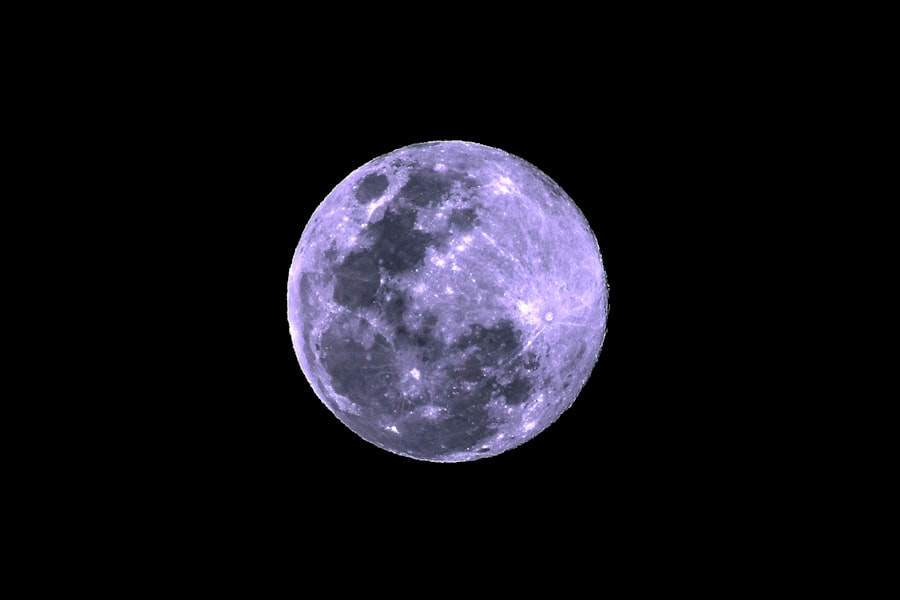
Yutu-2 plays a pivotal role in unraveling the Moon’s geological history through its extensive exploration efforts. By analyzing rock samples and conducting geological surveys, the rover provides critical data that helps scientists piece together the Moon’s formation and evolution over billions of years. The findings from Yutu-2 contribute to a more comprehensive understanding of planetary geology and offer insights into similar processes occurring on other celestial bodies.
One of Yutu-2’s key contributions is its investigation of impact craters and their surrounding areas. By studying these features, scientists can gain insights into the frequency and scale of impacts that have shaped the Moon’s surface. Additionally, Yutu-2 has identified various mineral compositions that indicate past volcanic activity, shedding light on the Moon’s thermal history.
These discoveries not only enhance our knowledge of lunar geology but also inform theories about planetary formation across the solar system.
The potential for future human exploration of the Moon with Yutu-2’s data
The data collected by Yutu-2 holds immense potential for future human exploration of the Moon. As space agencies around the world plan missions aimed at returning humans to lunar soil, insights gained from Yutu-2 will be invaluable in selecting landing sites and understanding potential hazards. The identification of water ice deposits could significantly influence mission planning, as these resources could support life support systems for astronauts.
Moreover, Yutu-2’s findings regarding lunar geology will aid in assessing suitable locations for establishing bases or habitats on the Moon. Understanding the composition of lunar soil will be crucial for developing technologies that utilize local materials for construction or resource extraction. As humanity looks toward a sustainable presence on the Moon, Yutu-2’s contributions will serve as a guiding light in navigating this new frontier.
Yutu-2’s contributions to international collaboration in lunar exploration
Yutu-2’s mission has also fostered international collaboration in lunar exploration efforts. As countries increasingly recognize the importance of cooperative ventures in space research, Yutu-2 serves as an example of how shared knowledge can advance scientific understanding. The data generated by this mission is made available to researchers worldwide, promoting collaboration across borders and disciplines.
Furthermore, China’s achievements with Yutu-2 have sparked interest from other nations looking to engage in lunar exploration initiatives. Collaborative projects involving multiple countries can lead to shared resources, expertise, and technology development that benefit all parties involved. This spirit of cooperation is essential as humanity embarks on ambitious plans for returning to the Moon and exploring beyond.
The impact of Yutu-2’s mission on our understanding of the solar system
The impact of Yutu-2’s mission extends beyond just lunar studies; it significantly enhances our understanding of the solar system as a whole. By examining the Moon’s geological features and processes, scientists can draw parallels with other celestial bodies such as Mars or asteroids. The insights gained from Yutu-2 contribute to broader discussions about planetary formation, evolution, and potential habitability across different environments.
Moreover, Yutu-2’s discoveries regarding water presence on the Moon may have implications for understanding water distribution throughout the solar system. As researchers investigate how water exists in various forms on different planets and moons, findings from Yutu-2 could inform theories about life’s potential beyond Earth. This interconnectedness highlights how lunar exploration serves as a stepping stone toward unraveling larger cosmic mysteries.
Yutu-2’s discoveries and their implications for future space missions
The discoveries made by Yutu-2 carry significant implications for future space missions beyond just lunar exploration. The identification of water ice deposits opens up possibilities for resource utilization not only on the Moon but also on Mars or other celestial bodies where water may exist. Understanding how to extract and utilize these resources will be crucial as humanity seeks to establish a sustainable presence beyond Earth.
Additionally, Yutu-2’s findings regarding volcanic activity provide valuable insights into planetary processes that could inform future missions targeting similar environments elsewhere in the solar system. As space agencies plan missions aimed at exploring Mars or icy moons like Europa or Enceladus, lessons learned from Yutu-2 will guide mission design and scientific objectives.
The ongoing legacy of Yutu-2’s exploration of the Moon
In conclusion, Yutu-2’s exploration of the Moon represents a significant chapter in humanity’s quest for knowledge about our celestial neighbor and beyond. Its discoveries have reshaped our understanding of lunar geology while paving the way for future human exploration efforts. As scientists continue to analyze data collected by this remarkable rover, its legacy will endure through ongoing research initiatives aimed at unlocking further secrets hidden within our solar system.
The collaborative spirit fostered by Yutu-2’s mission exemplifies how international cooperation can propel advancements in space exploration. As nations unite in their pursuit of knowledge beyond Earth’s atmosphere, they build upon each other’s successes—ensuring that future generations will continue to explore new frontiers inspired by missions like that of Yutu-2.
The Yutu-2 rover, part of China’s Chang’e 4 mission, has been making headlines with its intriguing discovery of a mysterious cube-shaped object on the far side of the moon. This enigmatic find has sparked curiosity and speculation about its origins and nature. For those interested in exploring more about lunar anomalies and other fascinating discoveries, you might find the article on XFileFindings particularly insightful. It delves into various unexplained phenomena and offers a broader context for understanding such unusual lunar findings.
WATCH THIS 🌙 The Moon’s Soul Trap: John Lear’s Chilling Revelation
FAQs
What is the Yutu-2 lunar cube?
The Yutu-2 lunar cube is a small, cube-shaped device that was deployed by the Chinese lunar rover Yutu-2 on the far side of the moon.
What is the purpose of the Yutu-2 lunar cube?
The Yutu-2 lunar cube is designed to conduct scientific experiments and measurements on the lunar surface, including studying the composition of the lunar soil and the space environment.
How was the Yutu-2 lunar cube deployed?
The Yutu-2 lunar cube was deployed by the Yutu-2 rover using a robotic arm. It was placed on the lunar surface to begin its scientific operations.
What are the dimensions of the Yutu-2 lunar cube?
The Yutu-2 lunar cube measures approximately 23 centimeters on each side, making it a small and compact device for conducting experiments on the moon.
What are the potential benefits of the Yutu-2 lunar cube’s scientific research?
The scientific research conducted by the Yutu-2 lunar cube could provide valuable insights into the geological and environmental conditions on the far side of the moon, as well as contribute to our understanding of the moon’s formation and evolution.