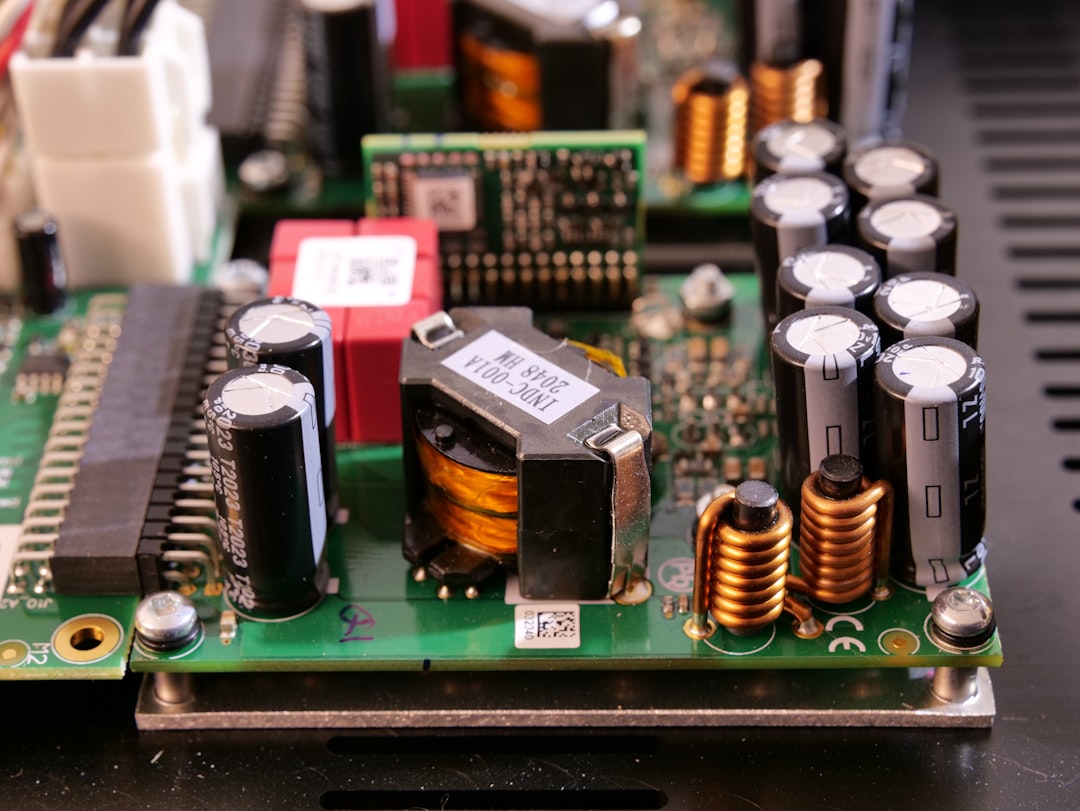
The pursuit of enhanced energy storage solutions remains a critical endeavor in contemporary technological advancement. As global demand for efficient and sustainable power sources escalates, the limitations of traditional battery technologies become increasingly apparent. Issues such as charge-discharge cycle longevity, power density, and safety concerns necessitate exploration into novel paradigms. Among these, the realm of capacitors, particularly those exhibiting asymmetric charge storage mechanisms, has garnered significant attention. Project Amber, a recently unveiled initiative, aims to address some of these challenges through the development of a unique asymmetric capacitor design. This article elucidates the technical underpinnings and potential implications of Project Amber’s contribution to the field of energy storage.
Before delving into the specifics of Project Amber, it is imperative to contextualize the broader field of energy storage. The landscape is primarily dominated by two major players: batteries and conventional capacitors. Each possesses distinct characteristics that dictate their suitability for various applications.
Batteries: The Workhorses of Portable Power
Batteries, relying on electrochemical reactions, are celebrated for their high energy density, meaning they can store a substantial amount of energy within a relatively small volume. This attribute makes them indispensable for portable electronic devices, electric vehicles, and grid-scale energy storage where sustained power delivery over extended periods is required.
Electrochemical Principles
At their core, batteries operate on the principle of redox reactions. During discharge, an oxidization reaction occurs at the anode, releasing electrons that flow through an external circuit to the cathode, where a reduction reaction consumes them. The electrolyte facilitates ion transport between the electrodes, completing the circuit.
Limitations of Traditional Batteries
Despite their widespread use, conventional batteries suffer from several inherent drawbacks. The charge-discharge cycle life is finite, as repeated intercalation and deintercalation of ions can lead to structural degradation of the electrode materials. Furthermore, their power density—the rate at which energy can be delivered—is often limited by the kinetics of the electrochemical reactions. Safety concerns, such as thermal runaway in lithium-ion batteries, also represent a significant challenge.
Capacitors: The Speed Demons of Stored Energy
In contrast to batteries, conventional capacitors store energy electrostatically. They consist of two conductive plates separated by a dielectric material. When a voltage is applied, charge accumulates on the surfaces of the plates.
Electrostatic Storage Mechanisms
Capacitors operate by separating charge. Positive charges accumulate on one plate, and negative charges on the other, creating an electric field across the dielectric. The amount of charge stored is directly proportional to the applied voltage and the capacitance of the device.
Advantages and Disadvantages
The primary advantage of capacitors lies in their extremely high power density. They can charge and discharge very rapidly due to the absence of chemical reactions, making them ideal for applications requiring bursts of power, such as flash photography or regenerative braking systems. However, their energy density is typically several orders of magnitude lower than that of batteries, limiting their ability to store large quantities of energy.
Project Amber has garnered attention in the field of electronics, particularly with its innovative approach to asymmetric capacitors. For those interested in exploring more about the implications and advancements related to this project, a related article can be found at this link. This article delves into the technical aspects and potential applications of asymmetric capacitors, providing valuable insights for researchers and enthusiasts alike.
The Promise of Asymmetric Capacitors
The concept of an asymmetric capacitor offers a compelling middle ground between the high energy density of batteries and the high power density of conventional capacitors. Asymmetric capacitors differentiate themselves by utilizing electrodes made from dissimilar materials, often combining a battery-type electrode with a capacitor-type electrode.
Bridging the Performance Gap
This hybrid approach allows the device to leverage the strengths of both energy storage mechanisms. One electrode might offer a high specific capacitance due to its porous structure and large surface area, while the other might exhibit faradaic reactions, similar to a battery electrode, contributing to higher energy storage.
Materials Science Innovations
The development of asymmetric capacitors is heavily reliant on advances in materials science. Researchers are exploring novel electrode materials, including metal oxides, conducting polymers, and various carbon allotropes, to optimize both the energy and power characteristics of these devices. The judicious selection and combination of these materials are crucial for achieving desirable performance metrics.
Project Amber’s Innovative Design

Project Amber introduces a novel asymmetric capacitor architecture that distinguishes itself through its specific electrode material choice and proprietary electrolyte formulation. The design aims to overcome some of the limitations observed in previous asymmetric capacitor iterations, particularly regarding long-term stability and scalability.
Electrode Material Selection
At the heart of Project Amber’s design is the careful selection of its electrode materials. The project utilizes a specialized doped carbon material for one electrode, offering a high surface area and excellent electronic conductivity, characteristic of a conventional capacitive electrode. For the other electrode, a proprietary metal oxide composite is employed.
Crystalline Structure and Porosity
The doped carbon electrode’s efficacy stems from its meticulously engineered crystalline structure and controlled porosity. This allows for rapid ion adsorption and desorption, contributing significantly to the device’s power density. The porosity is designed to optimize ion accessibility while maintaining structural integrity over many cycles.
Faradaic and Non-Faradaic Contributions
The metal oxide composite electrode exhibits both faradaic and non-faradaic charge storage mechanisms. The faradaic reactions contribute significantly to the energy density, similar to a battery, while the non-faradaic processes enhance the power characteristics. The composite’s unique structure is engineered to facilitate these dual mechanisms efficiently.
Proprietary Electrolyte System
A crucial component of Project Amber’s innovation lies in its proprietary electrolyte system. Unlike conventional aqueous or organic electrolytes, Project Amber employs a custom-synthesized ionic liquid-based gel electrolyte.
Enhanced Ionic Conductivity
This electrolyte is designed to exhibit superior ionic conductivity across a wider temperature range compared to traditional organic electrolytes. This characteristic is vital for maintaining consistent performance under varying environmental conditions.
Improved Safety Profile
Ionic liquid-based electrolytes are generally non-flammable and possess low vapor pressure, significantly enhancing the safety profile of the capacitor. This addresses a critical concern often associated with high-energy-density storage devices, making them more suitable for a broader range of applications.
Performance Metrics and Potential Applications

Initial evaluations of Project Amber’s asymmetric capacitor have yielded promising results, demonstrating a significant improvement in energy density compared to traditional capacitors, while largely retaining the high power density characteristics.
Energy Density Advancements
Project Amber’s capacitor prototypes have achieved energy densities in the range of 30-50 Wh/kg, which is a substantial improvement over the typical 5-10 Wh/kg seen in conventional double-layer capacitors. This advancement brings them closer to the performance of some lower-end battery technologies.
Life Cycle and Efficiency
Crucially, these devices demonstrate excellent cycle life stability, retaining greater than 90% of their initial capacitance after tens of thousands of charge-discharge cycles. The round-trip efficiency is also noteworthy, consistently exceeding 95%, indicating minimal energy loss during operation.
High Power Delivery
Despite the enhanced energy density, Project Amber capacitors maintain a power density exceeding 5 kW/kg, enabling rapid charging and discharging capabilities. This dual capability positions them uniquely in the energy storage spectrum.
Fast Charging Capabilities
The high power density directly translates to exceptional fast-charging capabilities. This characteristic is particularly appealing for applications where rapid turnaround times are essential, such as electric vehicle charging stations or grid stabilization.
Diverse Application Potential
The combination of improved energy density, high power density, long cycle life, and enhanced safety positions Project Amber’s asymmetric capacitor for a wide array of potential applications across various sectors.
Electric Vehicles and Hybrid Systems
In the electric vehicle landscape, these capacitors could function as crucial components in hybrid power systems, buffering energy during regenerative braking and providing bursts of power for acceleration. They could also extend the range and improve the charging speed of fully electric vehicles when integrated with existing battery packs. Imagine the efficiency gains if a significant portion of braking energy could be recaptured and instantly deployed.
Grid-Scale Energy Storage
For grid-scale applications, Project Amber’s capacitors could contribute to frequency regulation, voltage stabilization, and smoothing out intermittent renewable energy sources like solar and wind. Their fast response time allows for instant adjustments to grid fluctuations, thereby enhancing grid stability and reliability. Consider them the agile shock absorbers of the power grid, instantly reacting to changes.
Portable Electronics and Wearables
The compactness and rapid charging potential make them attractive for portable electronic devices, offering extended battery life and quicker recharges. In wearables, their flexible design, if further developed, could enable novel form factors and functionalities.
Medical Devices
In certain medical devices requiring rapid bursts of power or high reliability over long durations, Project Amber’s capacitors could offer a safer and more durable alternative to traditional batteries.
Project Amber has garnered significant attention in the field of electronics, particularly due to its innovative approach to asymmetric capacitors. These capacitors promise to enhance energy storage efficiency and performance in various applications. For those interested in exploring more about the advancements in this area, a related article can be found at XFile Findings, which delves into the implications of these technologies on future electronic designs. The insights provided in this article complement the ongoing discussions surrounding Project Amber and its potential impact on the industry.
Challenges and Future Outlook
| Metric | Value | Unit | Description |
|---|---|---|---|
| Capacitance | 150 | µF | Measured capacitance of the asymmetric capacitor |
| Voltage Rating | 400 | V | Maximum operating voltage |
| Dielectric Material | Amber Resin Composite | N/A | Type of dielectric used in the capacitor |
| Asymmetry Ratio | 1.8 | Ratio | Ratio of electrode surface areas |
| Equivalent Series Resistance (ESR) | 0.05 | Ω | Internal resistance affecting performance |
| Operating Temperature Range | -40 to 85 | °C | Temperature range for stable operation |
| Energy Density | 2.5 | J/cm³ | Energy stored per unit volume |
| Leakage Current | 0.2 | µA | Current leakage at rated voltage |
While Project Amber presents a compelling vision for future energy storage, the project acknowledges several challenges that remain to be addressed for widespread commercialization and adoption.
Scalability and Manufacturing Costs
One significant hurdle lies in scaling up the manufacturing processes for the specialized electrode materials and the ionic liquid electrolyte. Currently, these materials can incur higher production costs compared to established battery chemistries. Further research and development are needed to optimize synthesis routes and reduce manufacturing expenses.
Economic Viability
The long-term economic viability hinges on achieving cost parity or superior performance-to-cost ratios compared to existing solutions. This will require continuous innovation in material design and process engineering.
Regulatory Approvals and Standardization
As a novel technology, Project Amber’s asymmetric capacitors will need to navigate various regulatory approval processes, particularly concerning safety and environmental impact. Standardization of performance metrics and testing protocols will also be crucial for market acceptance.
Industry Collaboration
Collaboration with industry partners and regulatory bodies will be essential to streamline the path to market and ensure the technology meets the highest standards of safety and performance.
Long-Term Stability in Extreme Environments
While initial tests show promising stability, further research is ongoing to evaluate the long-term performance of the devices under extreme environmental conditions, such as very high or low temperatures, and in high-vibration applications. The robustness of the packaging and sealing mechanisms will also be critical in ensuring durability.
Research and Development Roadmap
Project Amber’s research and development roadmap includes continued exploration of even more advanced electrode materials, optimized electrolyte formulations, and sophisticated device architectures to push the boundaries of energy and power density further. The team is also actively investigating methods for enhancing the recyclability of the capacitor components.
In conclusion, Project Amber’s work on asymmetric capacitors represents a significant step forward in the quest for superior energy storage solutions. By intelligently combining the strengths of both batteries and conventional capacitors, the project offers a balanced approach to addressing the complex demands of modern power systems. While challenges remain, the potential benefits in terms of enhanced performance, increased safety, and reduced environmental impact position Project Amber as a key player in shaping the future of how energy is stored and utilized. The ongoing advancements in this field underscore the relentless human endeavor to unlock new energy potentials, pushing the boundaries of what is technologically feasible.

WARNING: The 1956 Report NASA Doesn’t Want You To Read
FAQs
What is the Project Amber Asymmetric Capacitor?
The Project Amber Asymmetric Capacitor is an experimental energy storage device designed to improve efficiency and energy density by using asymmetric electrode materials. It aims to enhance capacitor performance beyond traditional symmetric designs.
How does an asymmetric capacitor differ from a traditional capacitor?
An asymmetric capacitor uses different materials or structures for its positive and negative electrodes, which allows it to store more energy and operate at higher voltages compared to traditional symmetric capacitors that use identical electrodes.
What are the potential applications of the Project Amber Asymmetric Capacitor?
Potential applications include energy storage for renewable energy systems, electric vehicles, portable electronics, and other technologies requiring rapid charge and discharge cycles with high energy density.
What materials are typically used in the electrodes of an asymmetric capacitor?
Asymmetric capacitors often use a combination of materials such as activated carbon for one electrode and metal oxides or conducting polymers for the other, optimizing charge storage and voltage stability.
What advantages does the Project Amber Asymmetric Capacitor offer over conventional capacitors?
The Project Amber Asymmetric Capacitor offers higher energy density, improved charge/discharge rates, longer cycle life, and better voltage stability, making it a promising technology for advanced energy storage solutions.