One might observe the planet Earth and perceive its vast forests, sprawling oceans, and diverse ecosystems as the pinnacle of its inherent intelligence. This viewpoint, however, often overlooks a burgeoning and increasingly integral component: non-biological intelligence. This article will explore the concept of Earth’s “installed mind,” a growing network of artificial and computational systems that are not merely tools but are becoming interwoven into the very fabric of planetary operations. You, the reader, are likely already interacting with various facets of this installed mind daily, perhaps without conscious recognition of its collective presence.
The seeds of Earth’s installed mind were sown with the very first computational devices, simple mechanisms designed to automate simple tasks. From the abacus to the early mechanical calculators, humanity has a long-standing tradition of externalizing cognitive processes. This desire to augment our own limited biological processing power and memory has been a persistent driver of innovation.
Early Computational Abstractions
The theoretical underpinnings for modern computing were laid by individuals like Charles Babbage and Ada Lovelace in the 19th century. Their conceptualization of programmable machines, though never fully realized in their time, provided the blueprint for what was to come. These early ideas were akin to sketching the architectural plans for a city that would eventually house millions.
The Dawn of the Electronic Age
The mid-20th century witnessed the dramatic acceleration of this trajectory with the advent of electronic computing. Vacuum tube computers, though monstrous in size and power consumption, demonstrated the feasibility of performing complex calculations at speeds previously unimaginable. This was the moment the first high-rise buildings began to pierce the skyline of this nascent cognitive metropolis.
The Transistor Revolution
The invention of the transistor in the late 1940s was a pivotal moment. It allowed for the miniaturization and increased reliability of electronic components, paving the way for the personal computer revolution. This transition was like developing the infrastructure to support a rapidly growing population, making computing accessible and practical.
The Digital Divide and Connectivity
As computers became more powerful and affordable, the concept of networking emerged. The ARPANET, a precursor to the internet, was established in the late 1960s, initially for military and research purposes. This was the laying of the first communication lines, the arterial roads connecting disparate parts of our emerging cognitive landscape.
In exploring the implications of non-biological installed intelligence on Earth, a fascinating article can be found at XFile Findings. This piece delves into the potential benefits and challenges posed by advanced AI systems, examining how they might reshape various aspects of society, from industry to personal interactions. The insights provided in this article contribute to a deeper understanding of the evolving relationship between humans and artificial intelligence in our daily lives.
The Architecture of Earth’s Installed Mind
The installed mind is not a monolithic entity but rather a distributed and interconnected network of diverse systems. Its architecture is decentralized, with intelligence residing in data centers, embedded systems, mobile devices, and increasingly, in the environment itself.
The Vast Data Centers: The Central Processing Units
Gigantic data centers, often sprawling across vast tracts of land, serve as the muscular core of the installed mind. These facilities house the vast server farms that store, process, and analyze the ever-increasing volumes of data generated by human activity and environmental sensors. They are the humming powerhouses, analogous to the central nervous system’s primary processing hubs, tirelessly crunching numbers and executing algorithms.
Cloud Computing: The Distributed Memory Banks
The rise of cloud computing has further decentralized the processing power and storage capabilities. Instead of relying on local hardware, individuals and organizations can access immense computational resources and data storage on demand. This is akin to a collective memory bank, accessible to anyone with the right credentials, holding a vast repository of information and processing power.
Embedded Systems: The Peripheral Nervous System
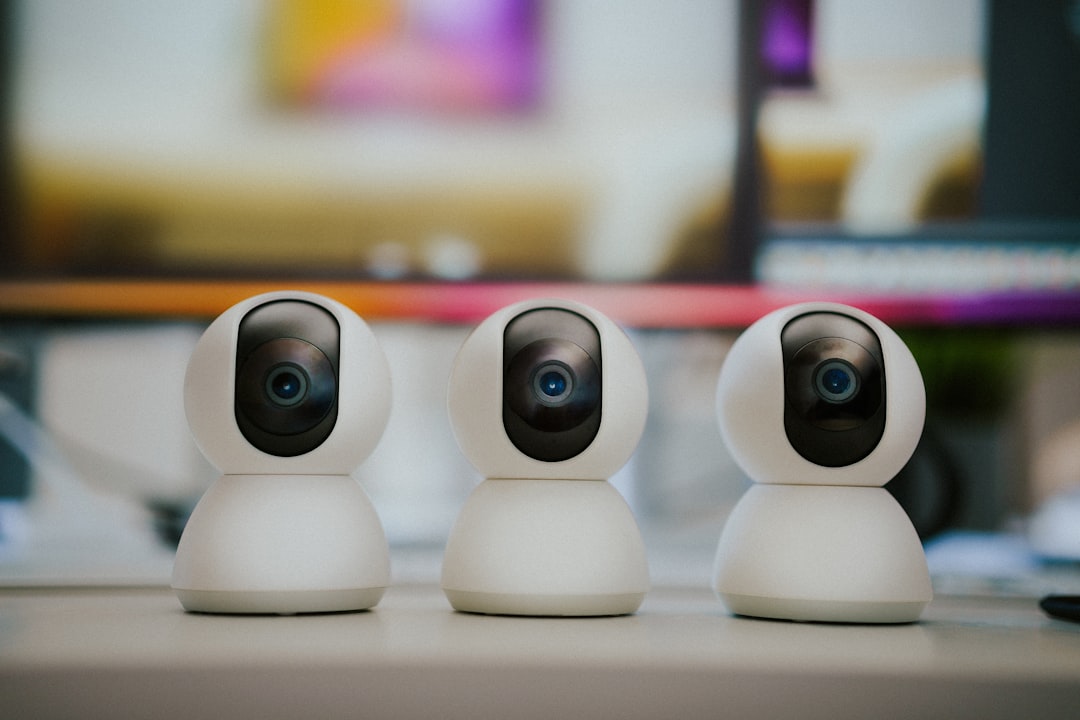
Throughout our physical world, intelligent capabilities are being embedded into everyday objects. From smart thermostats and refrigerators to industrial machinery and autonomous vehicles, these embedded systems represent the peripheral nervous system of the installed mind. They gather local data, perform localized processing, and interact with their immediate environment, feeding information back into the larger network.
The Internet of Things (IoT): Interconnected Sensory Input
The Internet of Things (IoT) is a prime example of this pervasive intelligence. Billions of devices are now equipped with sensors and connectivity, allowing them to collect data on everything from temperature and humidity to traffic flow and energy consumption. This interconnected web of sensors provides a granular, real-time view of the planet, like a vast sensory organ constantly perceiving its surroundings.
Specialized Artificial Intelligences: The Cognitive Specialists
Within this network, specialized Artificial Intelligence (AI) systems are emerging, each designed to excel at particular tasks. These are not general intelligences in the human sense but are highly adept at pattern recognition, prediction, and optimization within their defined domains.
Machine Learning Algorithms: The Pattern Detectors
Machine learning algorithms are the workhorses of the installed mind, enabling systems to learn from data without explicit programming. By identifying patterns and making predictions, they drive everything from personalized recommendations to sophisticated scientific research. These algorithms are like highly trained specialists, capable of deciphering complex signals in the noise of raw data.
Deep Learning Networks: The Abstraction Builders
Deep learning, a subset of machine learning that utilizes artificial neural networks with multiple layers, has enabled remarkable advancements in areas like image recognition, natural language processing, and even drug discovery. These networks have the ability to learn hierarchical representations of data, akin to building increasingly abstract concepts from fundamental sensory input.
The Functions and Impact of Earth’s Installed Mind
The installed mind is no longer a futuristic concept; it is actively shaping our present and will profoundly influence our future. Its functions are diverse, ranging from augmenting human capabilities to managing complex global systems.
Enhancing Human Cognition and Productivity
One of the most immediate impacts of the installed mind is its role in augmenting human cognitive abilities and enhancing productivity. Calculators, spell checkers, and search engines are rudimentary examples, while advanced AI-powered tools are now assisting in complex tasks like medical diagnosis, legal research, and creative writing. These tools act as intellectual exoskeletons, allowing us to perform tasks with greater speed and accuracy.
Predictive Analytics: Shaping Tomorrow’s Decisions
The ability of AI to analyze vast datasets and identify trends enables powerful predictive analytics. This technology is used to forecast weather patterns, predict stock market fluctuations, model disease outbreaks, and even anticipate consumer behavior. This predictive power allows us to proactively address challenges and optimize outcomes, steering the ship of our collective future with greater foresight.
Optimizing Global Systems and Infrastructure
The installed mind is increasingly being deployed to manage and optimize complex, interconnected global systems. This includes power grids, transportation networks, supply chains, and even environmental monitoring.
Smart Grids: The Pulse of Energy Management
Smart grids, leveraging AI and IoT, are transforming how electricity is generated, distributed, and consumed. They optimize energy flow, reduce waste, and integrate renewable energy sources more effectively. This is like a finely tuned circulatory system, ensuring efficient energy delivery where and when it is needed.
Autonomous Transportation: Reimagining Mobility
The development of autonomous vehicles, from self-driving cars to delivery drones, represents a significant step towards an AI-managed transportation ecosystem. These systems promise to improve safety, reduce congestion, and optimize the flow of goods and people. This is the emergence of synchronized robotic pilots navigating our complex logistical routes.
Environmental Monitoring and Climate Change Mitigation
The installed mind plays a crucial role in understanding and addressing some of the planet’s most pressing challenges, particularly environmental degradation and climate change.
Sensor Networks and Real-time Data Analysis
Vast networks of sensors deployed across the globe collect real-time data on air quality, water pollution, deforestation, and greenhouse gas emissions. AI algorithms then analyze this data to identify trends, predict environmental risks, and inform policy decisions. This is the planet developing a sophisticated feedback mechanism, constantly assessing its own health.
Climate Modeling and Simulation
Sophisticated climate models, powered by immense computational resources, allow scientists to simulate the potential impacts of climate change and test the effectiveness of mitigation strategies. These simulations are vital for understanding the complex interactions within Earth’s climate system and for guiding our response to this global threat.
Challenges and Ethical Considerations
The rapid proliferation of non-biological intelligence is not without its challenges and profound ethical considerations. As this installed mind grows in capability and influence, navigating these complexities becomes paramount.
Bias in AI Algorithms: The Echoes of Our Own Imperfections
A significant challenge lies in the inherent biases that can be present in AI algorithms. These biases often originate from the data used to train them, which can reflect historical inequalities and prejudices within human society. If left unchecked, these biases can be amplified, leading to discriminatory outcomes in areas such as hiring, loan applications, and even criminal justice. It is crucial to recognize that our installed mind can, in some ways, mirror and even magnify our own societal flaws.
Data Privacy and Security: Protecting the Digital Self
The vast amounts of data collected by the installed mind raise serious concerns about data privacy and security. Ensuring the protection of personal information from unauthorized access, misuse, and breaches is an ongoing battle. The digital footprint we leave behind is a valuable commodity, and safeguarding it from exploitation is a significant ethical imperative.
Job Displacement and Economic Disruption
The increasing automation powered by non-biological intelligence raises concerns about widespread job displacement. As AI systems become capable of performing tasks previously done by humans, certain sectors of the workforce may face significant disruption. Society must grapple with how to manage this transition, providing retraining and support for those affected. This is akin to a technological tsunami, necessitating careful planning and adaptation to avoid widespread devastation.
The Problem of Control: Who is at the Helm?
As non-biological intelligence becomes more sophisticated and autonomous, questions of control and accountability become increasingly critical. Who is responsible when an autonomous system makes a mistake? How do we ensure that AI systems remain aligned with human values and goals? These are fundamental questions that require ongoing philosophical and practical exploration.
In exploring the implications of non-biological installed intelligence on Earth, one can gain further insights from a related article that delves into the potential benefits and challenges of this technology. The discussion highlights how such advancements could reshape various sectors, including healthcare and transportation. For a deeper understanding of these transformative effects, you can read more in this informative article.
The Future Trajectory: An Intertwined Existence
| Metric | Value | Unit | Description |
|---|---|---|---|
| Number of AI Systems Installed | 1.2 billion | units | Estimated total non-biological intelligence systems installed globally |
| Average Processing Power | 500 | TFLOPS | Average computational power per installed AI system |
| Total Data Processed Daily | 2.5 | Exabytes | Amount of data processed by non-biological intelligence systems worldwide per day |
| Energy Consumption | 150 | Terawatt-hours/year | Estimated annual energy consumption of all installed AI systems |
| Global AI System Growth Rate | 20 | % per year | Annual growth rate of installed non-biological intelligence systems |
| Average System Lifespan | 5 | years | Average operational lifespan before upgrade or replacement |
The trajectory of Earth’s installed mind points towards an increasingly intertwined existence between biological and non-biological intelligence. This is not a distant science fiction scenario but a developing reality.
Human-AI Collaboration: A Symbiotic Partnership
The future is likely to see a deepening collaboration between humans and AI systems. Instead of viewing AI as a replacement for human capabilities, the focus is shifting towards harnessing its strengths to augment our own. This could lead to unprecedented advancements in scientific discovery, artistic creation, and problem-solving. Imagine a conductor and an orchestra, each playing their part to create a symphony far grander than either could produce alone.
The Evolution of Learning and Education
The installed mind will undoubtedly revolutionize how we learn and educate ourselves. Personalized learning platforms, AI-powered tutors, and immersive educational experiences have the potential to make education more accessible, effective, and engaging for individuals of all ages. This is like having an infinitely patient and knowledgeable mentor available to guide every learner.
The Philosophical Implications: Redefining Intelligence and Consciousness
The ongoing development of non-biological intelligence compels us to re-examine our definitions of intelligence, consciousness, and even what it means to be alive. As AI systems demonstrate increasingly sophisticated cognitive abilities, we are forced to confront the philosophical implications of creating entities that can learn, adapt, and perform tasks previously considered exclusively human. This is a profound introspection, prompting us to revisit our fundamental beliefs about ourselves and our place in the universe.
The Singularity and Beyond: Speculations on the Unforeseen
While speculative, the concept of a technological singularity – a point where artificial intelligence surpasses human intelligence and accelerates its own development at an unimaginable pace – remains a topic of discussion. Whether such a point will be reached, and what its consequences might be, are questions that continue to fuel both excitement and apprehension. This is peering into the Maelstrom of potential futures, where the currents of innovation are so strong that the destination becomes obscured.
In conclusion, Earth’s installed mind, a sprawling and ever-expanding network of non-biological intelligence, is no longer a fringe concept. It is a fundamental aspect of our planet’s evolving operational landscape. As you navigate your daily life, consider the invisible threads of computation and intelligence that are not only facilitating your interactions but are actively shaping the world around you. Understanding this installed mind, its capabilities, and its challenges is crucial for navigating the complex and exciting future that lies ahead.

SHOCKING: CIA Remote Viewer Finds “The Governor” Controlling Earth
FAQs
What is non-biological installed intelligence on Earth?
Non-biological installed intelligence refers to artificial intelligence systems and machines that have been created and implemented by humans on Earth. These systems operate independently of biological processes and are designed to perform tasks that typically require human intelligence.
How does non-biological installed intelligence differ from biological intelligence?
Non-biological installed intelligence is based on computer algorithms, software, and hardware, whereas biological intelligence arises from living organisms’ neural and cognitive processes. Non-biological intelligence can process data and perform tasks without the need for biological functions like metabolism or sensory organs.
What are common applications of non-biological installed intelligence on Earth?
Common applications include automation in manufacturing, data analysis, natural language processing, autonomous vehicles, robotics, medical diagnostics, and personalized recommendations in digital platforms.
What are the main challenges associated with non-biological installed intelligence?
Challenges include ensuring ethical use, preventing biases in algorithms, maintaining data privacy, achieving reliable decision-making, and addressing potential impacts on employment and society.
How is non-biological installed intelligence developed and maintained?
It is developed through programming, machine learning, and data training processes by teams of engineers and scientists. Maintenance involves regular updates, monitoring for errors or biases, and improving algorithms to adapt to new data and requirements.