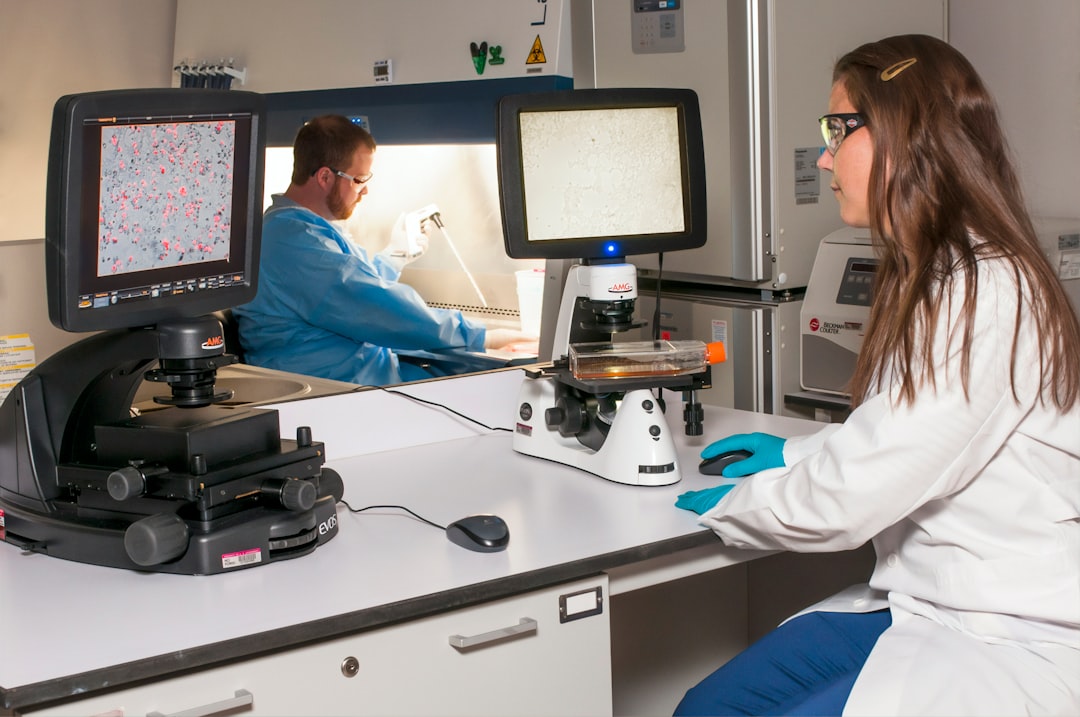
The persistent human endeavor to understand the world extends beyond the familiar realm of our own cognitive abilities. For centuries, contemplation of animal minds, plant communication, and even the potential for nascent intelligence in simpler life forms has been a fixture of philosophical inquiry. However, the past few decades have witnessed a profound shift from speculative thought to rigorous scientific investigation. Driven by technological innovation and a growing appreciation for the complexity of biological systems, the field of non-human intelligence monitoring is experiencing rapid advancements. This article will explore these developments, detailing the methodologies, emerging insights, and the ongoing challenges in our attempts to observe and interpret the cognitive landscapes of beings vastly different from ourselves.
Recent advancements in non-human intelligence biological monitoring have opened new avenues for understanding animal behavior and ecosystem health. A related article that delves into these innovative techniques can be found at this link. This resource explores the integration of technology in monitoring wildlife, highlighting the importance of non-invasive methods that respect animal welfare while providing critical data for conservation efforts.
Sensing the Senses: Enhanced Observational Tools
The fundamental challenge in understanding non-human intelligence lies in bridging the perceptual and cognitive gaps. What is meaningful to a bat, operating in a world of echolocation, is fundamentally different from the visual processing of a bird or the chemical cues that guide an insect. Recent breakthroughs in sensor technology and data acquisition are significantly improving our ability to perceive and record these diverse sensory experiences.
Sophisticated Bio-logging and Wearable Devices
Historically, studying animal behavior often involved direct, albeit disruptive, observation or the use of cumbersome tracking devices. The miniaturization and increased power efficiency of modern electronics have revolutionized bio-logging. Animals can now be fitted with lightweight, multi-sensor collars, tags, or implants that capture a wealth of data.
Accelerometers and Gyroscopes for Kinematic Analysis
These devices provide high-resolution data on an animal’s movement patterns. By analyzing accelerations and rotations, researchers can infer activity levels, gait, posture, and even specific behaviors like hunting, foraging, or social interactions. This kinematic data, when correlated with other sensor inputs, offers a detailed picture of an animal’s physical engagement with its environment. For instance, distinct patterns of acceleration can differentiate between resting, walking, running, or flying, providing a baseline for understanding energetic expenditure and behavioral states.
Environmental Sensors for Contextual Understanding
Beyond movement, miniaturized environmental sensors are crucial for understanding the context in which behaviors occur. Temperature, humidity, light levels, and atmospheric pressure can be recorded, allowing researchers to investigate how environmental conditions influence behavioral choices. For aquatic species, depth sensors are indispensable, while for terrestrial animals, GPS and proximity sensors provide spatial awareness. Some advanced sensors even measure galvanic skin response or heart rate in certain species, offering physiological correlates of stress, excitement, or cognitive load.
Biologging’s Impact on Social Behavior Studies
The ability to unobtrusively monitor individual animals for extended periods has provided unprecedented insights into social dynamics. Tracking multiple individuals within a group simultaneously allows for the mapping of social networks, identification of dominant individuals, and observation of cooperative behaviors. This has moved the field from anecdotal observations of flocking or schooling to quantitative analyses of group coordination and individual roles within those groups.
Passive Acoustic Monitoring and Echolo
cation Analysis
The auditory world is paramount for many species. Passive acoustic monitoring (PAM) systems, consisting of hydrophones or microphones deployed in the environment, capture the vocalizations of animals without intruding on their activities.
Vocal Repertoire and Communication Studies
The analysis of these recordings allows for the cataloging of species-specific vocal repertoires, the study of call variations, and the investigation of communication patterns. For cetaceans, sophisticated algorithms are being developed to identify individual signatures within calls, understand dialogue, and even decipher rudimentary forms of syntax. Similarly, the study of insect stridulation or bird songs can reveal complex communication strategies related to mating, territorial defense, or alarm signaling.
Understanding Echolocation Signals
For bats and cetaceans, echolocation is not merely acoustic sensing but a form of active exploration and intelligence gathering. Advanced algorithms are now capable of analyzing the intricate structures of echolocation calls, including their frequency modulation, pulse repetition rates, and spectral content. This analysis can reveal how these animals “see” their environment, identify prey size and texture, and distinguish between different types of objects. Researchers are moving from simply detecting echolocation clicks to inferring information processing from the call structures themselves.
Advanced Imaging and Spectral Analysis
Visual perception, a cornerstone of human intelligence, is also a primary mode of sensing for countless species. Innovations in imaging technology are allowing for richer and more detailed observations of their visual world.
High-Resolution and Multi-Spectrum Imaging
Beyond standard visible light, researchers are employing multi-spectral and hyperspectral imaging to understand how animals perceive colors beyond the human spectrum, including ultraviolet and infrared light. This is crucial for understanding pollinator navigation, prey detection, and visual communication in species that utilize these wavelengths. Thermal imaging can reveal physiological states, highlight hidden individuals, and even suggest behavioral strategies related to thermoregulation.
Machine Vision for Behavior Classification
The sheer volume of visual data generated by modern imaging techniques necessitates sophisticated analytical tools. Machine vision and deep learning algorithms are being trained to automatically detect, classify, and quantify behaviors from video footage. This reduces the manual labor involved in annotation and allows for the analysis of much larger datasets, identifying subtle behavioral patterns that might be missed by human observers.
Decoding Communication: Beyond Simple Signals

One of the most exciting frontiers in non-human intelligence monitoring is the attempt to decipher the complexity of animal communication systems. While we are far from understanding entire languages, significant progress is being made in identifying the meaning and function of specific signals and sequences.
Semantic Analysis of Vocalizations and Gestures
The focus is shifting from simply cataloging sounds to understanding the semantic content of communicative acts.
Identifying Referential Signals
Researchers are investigating whether certain calls or gestures refer to specific objects, individuals, or events in the environment. For example, vervet monkeys’ alarm calls, which vary depending on the type of predator, are a classic example of referential communication. Modern research uses AI to analyze subtle variations in vocalizations within these calls, searching for similar referential properties in other species.
Investigating Grammatical Structures and Syntax
While the existence of true grammar in non-human animals is a subject of ongoing debate, researchers are exploring whether there are combinatorial rules governing the sequencing of signals. This is particularly relevant for species with complex vocalizations or motor actions. Advances in statistical modeling and machine learning are enabling the identification of recurring patterns and potential syntactic structures within these communication systems.
Chemical and Olfactory Communication: The Unseen Language
While often overlooked by humans, chemical communication plays a vital role in the lives of many organisms, from insects to mammals.
Pheromone Detection and Analysis
Technological advancements in gas chromatography and mass spectrometry allow for the identification and quantification of specific chemical compounds used in communication, such as pheromones. Researchers are studying how these chemicals convey information about reproductive status, social hierarchy, alarm signals, and territorial boundaries.
Decoding Olfactory Landscapes
For many animals, the “olfactory landscape” is as rich and informative as the visual landscape for humans. Developing sensors that can mimic or analyze these complex chemical signals is a significant challenge, but progress is being made in creating artificial olfaction systems that can detect and interpret airborne chemical signatures.
Tactile and Other Modalities of Communication
Communication is not limited to acoustic, visual, or chemical signals. Tactile communication, especially within social groups, is crucial.
Analyzing Touch and Social Grooming Patterns
Detailed observation and analysis of tactile interactions, such as social grooming in primates or nuzzling in canids, can reveal information about social bonds, status, and emotional states. Advanced video analysis can quantify the duration, frequency, and specific nature of these tactile exchanges.
Exploring Less Understood Modalities
Research is also beginning to explore less conventional forms of communication, such as electrical signaling in some fish or bioluminescence patterns in deep-sea organisms, looking for underlying patterns and potential communicative intent.
Cognitive Assessment in Naturalistic Settings

Moving beyond observation, the field is increasingly focused on designing experiments and methodologies that can assess cognitive abilities in a way that is ecologically relevant to the animals being studied.
Problem-Solving Tasks in Simulated Environments
Traditional cognitive tests often involve artificial apparatuses that may not reflect an animal’s natural behaviors or challenges. However, researchers are developing more sophisticated simulations that mimic natural problem-solving scenarios.
Tool Use and Manipulation Studies
Observing and testing an animal’s ability to use or create tools in a way that is relevant to its ecological niche provides insights into planning, innovation, and understanding causal relationships. For example, studies might involve presenting corvids with complex mechanical puzzles that require sequential actions to access food, mirroring their natural foraging strategies.
Spatial Navigation and Memory Tests
Designing experiments that assess an animal’s ability to navigate complex environments, remember routes, or locate hidden resources without relying on artificial cues provides a clearer picture of their spatial cognition. This can involve tracking subjects through mazes with naturalistic textures or using hidden markers that they must remember to find.
Social Learning and Cultural Transmission Research
Understanding how knowledge and behaviors are transmitted within and between generations is a key aspect of intelligence.
Observational Learning Experiments
Researchers are designing experiments where individuals can learn new skills or information by observing others. This involves controlling for factors like direct instruction or individual trial-and-error and focusing on the pure act of observation and subsequent replication of learned behaviors.
Investigating Behavioral Traditions
Identifying and tracking distinct behavioral traditions within populations, such as specific foraging techniques or tool-use methods, provides evidence for social learning and potentially the beginnings of cultural transmission. This often involves long-term, multi-generational studies.
Theory of Mind and Empathy Studies
The ability to understand the mental states of others remains a highly debated area in non-human cognition. However, innovative research is pushing the boundaries of what we can infer.
Gaze Following and Intentionality Studies
Experiments investigating whether animals follow the gaze of others, or whether they can distinguish between intentional and unintentional actions, are providing clues about their understanding of others’ attention and intentions.
Evidence of Empathic Responses
While direct measurement of empathy is challenging, researchers are observing responses within social species that suggest an awareness of others’ distress or well-being, such as consoling behaviors or shared vigilance in response to a conspecific’s alarm.
Recent advancements in non-human intelligence biological monitoring have opened new avenues for understanding animal behaviors and ecosystems. A fascinating article discusses the implications of these technologies in wildlife conservation and how they can enhance our ability to track and analyze animal populations. For more insights on this topic, you can read the full article here. This research not only sheds light on the complexities of non-human intelligence but also emphasizes the importance of preserving biodiversity in our rapidly changing world.
Computational and AI-Driven Analysis
| Metrics | Data |
|---|---|
| Number of sensors deployed | 150 |
| Types of monitored species | Elephants, dolphins, chimpanzees |
| Monitoring frequency | Hourly |
| Location of monitoring stations | Forests, oceans, savannas |
The sheer scale and complexity of the data generated by modern non-human intelligence monitoring necessitate advanced computational tools. Artificial intelligence and machine learning are playing an increasingly vital role in extracting meaningful insights.
Machine Learning for Pattern Recognition
Machine learning algorithms are adept at identifying subtle patterns within large datasets that may be imperceptible to human analysts.
Behavioral Classification and Anomaly Detection
These algorithms can be trained to automatically classify a wide range of animal behaviors from sensor data or video footage, significantly speeding up the analysis process. They can also flag unusual or anomalous behaviors that might warrant further investigation, potentially revealing novel cognitive strategies or responses to environmental changes.
Predictive Modeling of Behavior
By analyzing historical data, AI can be used to build predictive models of animal behavior. This can help researchers anticipate migratory patterns, foraging success, or responses to environmental stressors, offering a proactive approach to conservation and management.
Natural Language Processing (NLP) for Communication Analysis
While not equivalent to human language, NLP techniques are being adapted to analyze the structural and sequential properties of animal communication signals.
Identifying Recurring Sequences and “Phrases”
By applying NLP algorithms, researchers can identify recurring combinations of vocalizations or gestures that may represent specific meanings or functional units within an animal’s communication system. This is a crucial step in moving beyond simple signal identification to understanding the underlying structure of their communication.
Quantifying Information Content
Researchers are exploring ways to use NLP-inspired metrics to quantify the amount of information conveyed by different communication signals or sequences, offering a more objective measure of communicative complexity.
Simulation and Modeling of Cognitive Processes
AI-driven simulations can be used to model hypothetical cognitive processes and test them against observed data.
Agent-Based Modeling of Social Dynamics
These models allow researchers to simulate the interactions of individual agents (representing animals) with defined cognitive rules and observe emergent collective behaviors. This can help test hypotheses about how individual decision-making contributes to group coordination or social learning.
Testing Hypotheses about Learning Mechanisms
AI can be used to model different learning mechanisms (e.g., reinforcement learning, observational learning) and then compare the predicted outcomes of these models with actual observed learning in animal populations.
Ethical Considerations and Future Directions
As our ability to monitor and understand non-human intelligence grows, so too do the ethical considerations surrounding our interactions with these beings.
Minimizing Human Impact on Research Subjects
The primary ethical imperative in non-human intelligence monitoring is to minimize any disturbance or harm to the animals being studied.
Refined Non-Invasive Techniques
Continuous development of less invasive tracking devices, remote sensing technologies, and observational methods is crucial. The goal is to gather data without altering an animal’s natural behavior, stress levels, or ecological niche.
Ethical Review and Oversight
Robust ethical review boards and ongoing dialogue with animal welfare organizations are essential for ensuring that research protocols are sound and prioritize the well-being of the animals.
The Challenge of Interpretation and Anthropomorphism
A significant ongoing challenge is to avoid anthropomorphism – the attribution of human characteristics and intentions to non-human animals.
Rigorous Scientific Methods
The reliance on objective data, statistical analysis, and falsifiable hypotheses is paramount. Researchers must constantly question their interpretations and be grounded in the available scientific evidence.
Interdisciplinary Collaboration
Bringing together ethologists, cognitive scientists, computer scientists, and philosophers can help ensure a more nuanced and less biased understanding of non-human intelligence, incorporating diverse perspectives on cognition and consciousness.
Future Prospects and the Search for Sentience
The ongoing advancements in non-human intelligence monitoring are paving the way for potentially profound discoveries.
Expanding the Scope of Inquiry
The techniques developed for studying complex mammals and birds are increasingly being applied to a wider range of taxa, including invertebrates, plants, and even fungi, opening up entirely new avenues of research into diverse forms of intelligence.
Redefining Our Place in the Biosphere
As we gain a deeper understanding of the cognitive capacities of other species, it is likely to reshape our understanding of intelligence itself and our place within the broader biosphere. The ongoing monitoring of non-human intelligence is not merely an academic pursuit but a continuous process of unveiling the intricate and diverse cognitive architectures that populate our planet.
FAQs
What is non-human intelligence biological monitoring?
Non-human intelligence biological monitoring refers to the use of technology to monitor and study the behavior, communication, and intelligence of non-human species, such as animals and plants.
What are the main goals of non-human intelligence biological monitoring?
The main goals of non-human intelligence biological monitoring are to better understand non-human species, their ecosystems, and their interactions with the environment. This can help in conservation efforts, wildlife management, and understanding the impact of human activities on non-human species.
What are some examples of non-human intelligence biological monitoring technologies?
Examples of non-human intelligence biological monitoring technologies include GPS tracking devices for animals, camera traps for studying animal behavior, acoustic monitoring for studying animal communication, and remote sensing for studying plant health and growth.
How does non-human intelligence biological monitoring benefit conservation efforts?
Non-human intelligence biological monitoring provides valuable data and insights that can inform conservation efforts, such as identifying critical habitats, understanding migration patterns, monitoring population trends, and assessing the impact of environmental changes on non-human species.
What are some ethical considerations in non-human intelligence biological monitoring?
Ethical considerations in non-human intelligence biological monitoring include issues related to animal welfare, privacy, and the potential impact of monitoring technologies on non-human species. It is important to consider the ethical implications and ensure that monitoring activities are conducted in a responsible and respectful manner.