
The Black Knight Satellite, a persistent enigma in the annals of space observation, prompts a deep dive into its observational history and the potential influences of time upon its perceived characteristics. This article aims to analyze the epoch dependence of data surrounding this purported extraterrestrial artifact, examining how its interpretation and the very nature of the evidence have evolved alongside advancements in technology, scientific understanding, and shifting societal contexts.
The legend of the Black Knight Satellite is not a monolithic narrative but a tapestry woven from various threads of alleged sightings and interpretations stretching back decades. To understand its epoch dependence, one must first establish the foundational elements of its story.
Pre-Space Age Whispers: Unidentified Aerial Phenomena and Early Space Speculation
Before the dawn of the Space Age, the concept of objects in orbit, or even aerial phenomena of unknown origin, was already a fertile ground for speculation. While direct evidence of the Black Knight prior to the Space Age is scarce, the cultural readiness to entertain such possibilities laid the groundwork for future interpretations. This era was characterized by a burgeoning interest in the skies, fueled by technological advancements and a growing awareness of the vastness of the universe. The early days of aviation and rocket development naturally led to questions about what else might be traversing these newfound frontiers.
Sputnik and the Dawn of Space Surveillance
The launch of Sputnik 1 by the Soviet Union in 1957 marked a paradigm shift in the exploration of space. This event not only ushered in the Space Race but also the era of dedicated space surveillance. It is within this context that the earliest credible reports of an anomalous object in Earth orbit began to emerge.
The “Black Knight” Designation and Its Origins
The name “Black Knight” itself is attributed to a specific period and event, often linked to the U.S. Air Force and the early interpretation of radar and optical observations. The exact origin and dissemination of this moniker are subject to historical debate, but its association with a mysteriously orbiting object solidified its place in popular consciousness. This was not an official designation born from scientific consensus, but rather a codename whispered in the corridors of intelligence and later amplified by the burgeoning media landscape.
Initial Observations: Radar Anomalies and Photographic Evidence
Early reports describing the Black Knight often involved unexplained radar signals and what were interpreted as photographic evidence of a dark, possibly metallic object in a polar orbit. These observations, while intriguing, were often based on nascent technologies and were susceptible to misinterpretation.
The Role of Military Intelligence and Declassified Documents
The declassification of certain documents, while often incomplete or redacted, has fueled speculation about the military’s awareness of this anomaly. These documents, like fragments of a forgotten map, offer glimpses into a past where such objects were subjects of investigation, adding a layer of official intrigue to the narrative. The very act of classifying and then declassifying information suggests a history of interest, even if the original nature of that interest remains opaque.
The “Northwest Passage” and Orbital Path Speculations
Specific orbital paths, such as a hypothesized polar orbit often termed the “Northwest Passage,” have been proposed for the Black Knight. These early hypotheses, while lacking definitive proof, established a framework for understanding the object’s potential movement and origin. The idea of a “Northwest Passage” in orbit conjured images of an uncharted territory, a cosmic secret waiting to be discovered.
In exploring the intriguing topic of Black Knight Satellite epoch dependence analysis, one can gain further insights by referring to a related article that delves into the historical context and theories surrounding this enigmatic object. For a comprehensive overview, you can visit the article at XFile Findings, which discusses various aspects of the Black Knight Satellite and its implications in both scientific and conspiracy theory circles. This resource provides valuable information that complements the analysis of epoch dependence and its significance in understanding the satellite’s origins and purpose.
Epochal Shifts in Detection Technology and Data Interpretation
The evolution of technology has been a crucial
FAQs
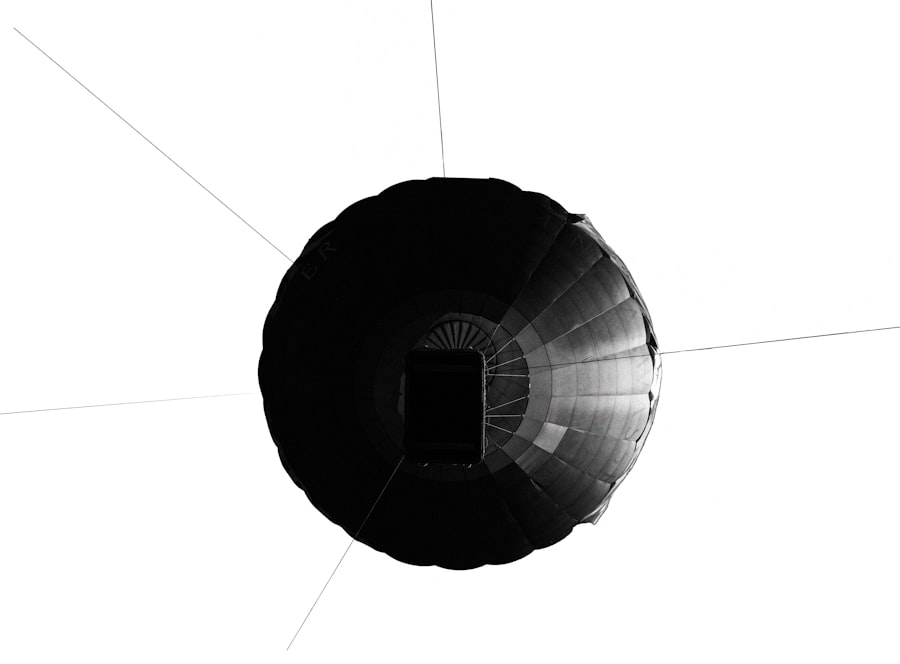
What is the Black Knight Satellite?
The Black Knight Satellite is a purported object said to be in near-polar orbit around Earth, often described in conspiracy theories and UFO lore. It is claimed to be an extraterrestrial satellite monitoring Earth, though there is no verified scientific evidence supporting its existence.
What does “epoch dependence analysis” mean in the context of the Black Knight Satellite?
Epoch dependence analysis refers to studying how observations or data related to the Black Knight Satellite change over different time periods or epochs. This type of analysis helps researchers understand temporal variations and patterns in the satellite’s reported behavior or signals.
Why is the Black Knight Satellite considered significant in space research or conspiracy theories?
The Black Knight Satellite is significant mainly in conspiracy theories and popular culture as an alleged alien artifact orbiting Earth for thousands of years. It symbolizes the mystery of unidentified objects in space and fuels speculation about extraterrestrial life and government cover-ups.
Is there any scientific evidence supporting the existence of the Black Knight Satellite?
No credible scientific evidence supports the existence of the Black Knight Satellite. Most claims are based on misinterpretations of space debris, natural satellites, or radio signals. Official space agencies have not confirmed any such object.
How do researchers conduct epoch dependence analysis on satellite data?
Researchers collect data from various sources such as radar, telescopes, and satellite tracking systems over different time periods. They then analyze changes in orbital parameters, signal characteristics, or observational data to identify trends, anomalies, or consistent patterns related to the satellite or object under study.