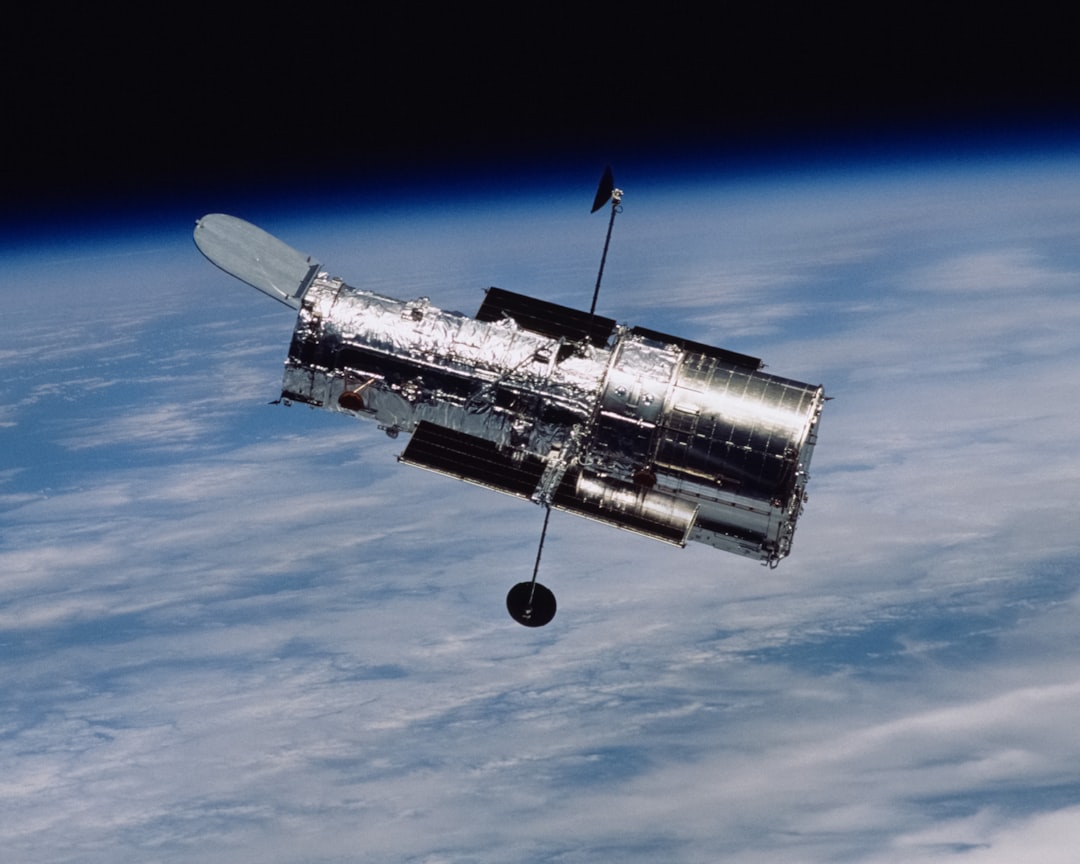
The enigmatic object, often referred to as the Black Knight Satellite, has captivated the attention of amateur astronomers, conspiracy theorists, and ufologists for decades. Its purported origins and purpose remain shrouded in mystery, with a persistent narrative suggesting it is an extraterrestrial probe or a forgotten piece of human spacefaring history. This article will delve into the available information, focusing on its alleged polar ground tracks and the challenges of verifying its existence and nature.
The tale of the Black Knight Satellite is not a recent phenomenon. Its origins can be traced back to the mid-20th century, a period of burgeoning interest in space exploration.
The Sputnik Connection
One of the earliest and most compelling narratives links the Black Knight Satellite to early Soviet space missions, particularly Sputnik. Following the launch of Sputnik 1 in 1957, there were reports of a secondary, man-made object orbiting Earth. This object, distinct from Sputnik, was observed by radar operators and optical instruments.
Early Radar Detections
Reports emerged of radar echoes that did not correspond to known satellites. These echoes were often described as originating from a high, polar orbit. The consistency of these detections, even as Sputnik and other early satellites decayed or burned up, fueled speculation.
Optical Observations and Photographic Evidence
Beyond radar, optical observations also contributed to the legend. Accounts speak of a dark object, often described as large, with a metallic or dark, non-reflective surface, maneuvering in orbit. Attempts were made to capture photographic evidence, with some amateur images presented as proof, though their authenticity and interpretation remain widely debated.
The ‘Alien Probe’ Hypothesis
As the space race progressed and our understanding of orbital mechanics and the cosmos grew, the ‘alien probe’ theory gained traction. The idea that an advanced civilization might have sent unmanned craft to observe Earth is a cornerstone of this hypothesis.
Extraterrestrial Intelligence as a Possible Origin
The perceived unusual characteristics of the Black Knight Satellite – its alleged polar orbit, its perceived age, and its supposed evasive maneuvers – led some to theorize it was a scout or observer sent by an alien race. This aligns with broader fascination concerning potential extraterrestrial life and its exploration of the universe.
The ‘Lost’ Technology Argument
Another facet of the alien probe theory suggests that if it were human-made, it represents technology far beyond our current capabilities, implying an extraterrestrial origin. The argument here is that if humanity were capable of building such a craft, it would likely be known and documented.
The Black Knight Satellite has long been a subject of intrigue and speculation, particularly regarding its polar watcher ground tracks. For those interested in exploring this fascinating topic further, a related article can be found at this link, which delves into the various theories and observations surrounding the enigmatic satellite and its implications for our understanding of space phenomena.
Tracing the Polar Path: Ground Tracks in Question
The concept of “ground tracks” refers to the path an orbiting object traces over the Earth’s surface as it completes its orbits. For the Black Knight Satellite, the emphasis on a polar orbit is significant.
The Significance of Polar Orbits
A polar orbit is a nearly circular orbit that passes above or nearly above both poles of the planet at each revolution. Satellites in polar orbits typically orbit at altitudes of around 800 kilometers (500 miles). This allows them to eventually pass over the entire surface of the Earth.
Global Coverage and Observation
The primary advantage of polar orbits for observation is their ability to provide global coverage. As the Earth rotates beneath the satellite, the satellite’s ground track shifts, allowing it to eventually image or sense every part of the planet. This makes them ideal for mapping, reconnaissance, and environmental monitoring.
Reconnaissance and Surveillance Applications
Historically, polar orbits have been crucial for intelligence gathering and military reconnaissance. The ability to periodically observe any point on Earth from a vantage point in space is invaluable for monitoring activities and understanding global situations.
Alleged Black Knight Ground Tracks: A Puzzle of Data
The notion of the Black Knight Satellite having specific, verifiable ground tracks, especially in polar regions, is where the legend faces its most significant challenges.
Elusive and Undocumented Tracks
Despite decades of supposed sightings and observations, there is a striking absence of concrete, officially documented ground tracks attributed to an object consistently identified as the Black Knight Satellite. While anecdotal reports exist, they often lack the precision and verifiable data required for scientific or historical confirmation.
The Role of Amateur Observations
Much of the evidence for the Black Knight’s ground tracks originates from amateur astronomers and enthusiasts. While their dedication is commendable, the tools and methodologies used by amateurs, though improving, can be prone to misinterpretation, signal interference, and photographic artifacts.
Challenges in Verification
Verifying the existence and origin of any celestial object, let alone one as elusive as the Black Knight Satellite, requires rigorous scientific methodology and robust data.
Lack of Official Astronomical Cataloging
Established astronomical observatories and space surveillance networks meticulously catalog all known satellites and space debris. The Black Knight Satellite, if it were a persistent object in a verifiable orbit, would undoubtedly be listed in these registries. Its absence from these official catalogs is a significant barrier to its verifiable existence.
Potential for Misidentification
The vastness of space and the numerous objects orbiting Earth make misidentification a common issue. Satellites in stable orbits, atmospheric phenomena, and even optical illusions can be mistaken for unknown objects.
Debunking and Alternative Explanations

As with many enduring mysteries, the Black Knight Satellite has been subjected to various debunking efforts and alternative explanations that attempt to reconcile the reported observations with known scientific principles.
The Specter of Atmospheric Phenomena
Many purported sightings of the Black Knight Satellite can be attributed to natural phenomena that occur in Earth’s atmosphere.
Meteors and Fireballs
Bright meteors, also known as fireballs, are streaks of light caused by small pieces of debris entering the Earth’s atmosphere at high speed. Their fleeting nature and brilliant displays can be mistaken for solid objects.
Ball Lightning and Other Electrical Events
Less common but equally spectacular are atmospheric electrical phenomena like ball lightning. These luminous spheres can appear to hover or move in unusual ways, leading to misinterpretations.
Orbital Debris and Rogue Satellites
The orbital environment around Earth is far from empty. It is littered with defunct satellites, rocket stages, and fragments from past missions, collectively known as space debris.
The Kepler Satellite Anomaly
One of the most frequently cited explanations for the Black Knight Satellite legend involves a defunct NASA satellite named Kepler, which was launched in 2009 to search for exoplanets.
Peculiar Orbits and Extended Missions
The Kepler telescope had a highly elliptical orbit that sometimes brought it closer to Earth than anticipated. Its mission was also extended, leading to prolonged observation periods. Some researchers have suggested that descriptions of the Black Knight Satellite’s movements might align with the operational characteristics and orbital path of Kepler, especially during periods when it was not actively transmitting. The perceived “darkness” could simply be the non-reflective nature of its solar arrays and the main body of the spacecraft.
Misinterpreted Communications and Data
It is also plausible that early reports of unusual signals or observations were misinterpreted communications or data from existing, albeit possibly unusual, space missions. The early days of space exploration were rife with novel technologies and unexpected orbital behaviors.
Photographical Artifacts and Illusions
The human eye can play tricks, especially when viewing the night sky with limited equipment or under challenging conditions.
Lens Flares and Light Reflections
When photographing celestial objects, particularly with long exposures or when pointing cameras towards bright light sources (like the Sun or Moon), lens flares, internal reflections, and light scattering can create luminous or unusual shapes in images.
Pareidolia and Pattern Recognition
The human brain is hardwired to find patterns and familiar shapes in random data. This phenomenon, known as pareidolia, can lead individuals to perceive faces, figures, or objects in clouds, random arrangements of stars, or even in blurred photographic images.
The Persistent Allure of the Unknown

Despite the reasoned explanations and scientific skepticism, the Black Knight Satellite continues to hold a powerful sway over the imagination.
The Human Desire for Discovery
The universe is vast and filled with untold wonders. The idea that we might not be alone, or that remnants of ancient or advanced civilizations might be within our reach, taps into a deep-seated human desire for discovery and cosmic connection.
The Appeal of Conspiracy and Hidden Truths
For many, the Black Knight Satellite represents a potential “hidden truth” – something that governments or space agencies are deliberately concealing from the public. This aligns with a broader appeal of conspiracy theories, which often suggest that powerful entities are withholding knowledge for their own gain.
Distrust of Official Narratives
In an era where trust in institutions can be shaky, narratives that challenge official explanations often find fertile ground. The Black Knight Satellite becomes a symbol of this distrust, a beacon for the idea that there is more to the story than what we are told.
The “X-Files” Effect
Popular culture, exemplified by shows like “The X-Files,” has normalized the idea of mysterious UFOs, government cover-ups, and unexplained phenomena. This cultural context creates a receptive audience for stories like that of the Black Knight Satellite.
The recent developments in satellite technology have sparked interest in various tracking systems, including the Black Knight Satellite polar watcher ground tracks. These innovative systems provide crucial data for understanding orbital mechanics and satellite behavior. For those looking to delve deeper into the subject, a related article can be found at XFile Findings, which explores the implications of satellite tracking on global communications and environmental monitoring. This resource offers valuable insights into how such technologies are shaping our understanding of space and its impact on Earth.
Conclusion: A Legend in Orbit
| Parameter | Description | Value | Unit |
|---|---|---|---|
| Orbital Type | Type of orbit followed by the satellite | Polar Orbit | – |
| Altitude | Height above Earth’s surface | 800-1000 | km |
| Inclination | Angle of orbit relative to Earth’s equator | 90 | degrees |
| Orbital Period | Time taken to complete one orbit | 100-110 | minutes |
| Ground Track Coverage | Latitude range covered by ground tracks | 90°N to 90°S | degrees |
| Repeat Cycle | Time for ground track to repeat | 16 | days |
| Velocity | Orbital velocity of the satellite | 7.5 | km/s |
The Black Knight Satellite remains a fascinating enigma. While concrete, verifiable evidence of its existence as an independent, anomalous object is scarce, the legend persists, fueled by a combination of historical anecdotal reports, compelling popular culture narratives, and the undeniable human fascination with the unknown.
The Importance of Critical Inquiry
In exploring the Black Knight Satellite, it is crucial to maintain a critical and analytical perspective. While the allure of extraterrestrial contact or lost human technology is powerful, it is equally important to examine all available information through the lens of scientific methodology and logical reasoning.
Separating Fact from Fiction
The task of separating factual observations from misinterpretations, speculative theories, and outright fabrication is paramount. The scientific community’s reliance on repeatable experiments, verifiable data, and peer review serves as a vital filter for understanding our universe.
The Continuing Search for Answers
Whether the Black Knight Satellite is a misidentified piece of space debris, a peculiar orbital behavior of a known satellite, or something more profound, the questions it raises highlight our ongoing quest to comprehend our place in the cosmos. The “polar watcher” may never reveal its true identity, but its enduring presence in public consciousness serves as a testament to our insatiable curiosity about what lies beyond our planet. The true ground tracks of this legend are etched not in the orbital paths of satellites, but in the collective imagination, forever tracing a path of wonder, skepticism, and endless speculation.
FAQs
What is the Black Knight Satellite?
The Black Knight Satellite is a name given to an object that some believe to be an extraterrestrial satellite orbiting Earth. It has been the subject of various conspiracy theories and speculation, but there is no confirmed scientific evidence supporting its existence.
What does “polar watcher” mean in the context of satellites?
A “polar watcher” satellite refers to a satellite that orbits Earth in a polar orbit, passing over or near the planet’s poles on each revolution. This type of orbit allows the satellite to observe the entire surface of the Earth over time.
What are ground tracks in satellite observation?
Ground tracks are the paths on the Earth’s surface directly beneath a satellite’s orbit. They show the trajectory of the satellite as it moves around the planet and are used to predict where and when the satellite will be visible from specific locations.
How are ground tracks useful for monitoring satellites like the Black Knight?
Ground tracks help observers and researchers determine the satellite’s position relative to Earth at any given time. For a satellite like the Black Knight, ground tracks would theoretically allow tracking its orbit, predicting visibility, and studying its movement patterns.
Is there scientific evidence supporting the existence of the Black Knight Satellite?
No verified scientific evidence exists to confirm the Black Knight Satellite as an extraterrestrial or unknown object. Most sightings and claims have been debunked or attributed to known satellites, space debris, or natural phenomena.