
The vast cosmic expanse, a canvas speckled with an untold number of stars, presents a profound paradox: the Fermi Paradox, which questions the apparent absence of extraterrestrial civilizations despite the high probability of their existence. Among the many proposed solutions to this enigmatic silence, the Dark Forest Theory stands out as a particularly sobering, yet scientifically plausible, explanation. This theory suggests that the universe, rather than being a bustling metropolis of sentient life, is more akin to a dark, silent forest, where every civilization must tread with extreme caution, lest it attract unwanted attention.
The Dark Forest Theory, popularized by Liu Cixin in his seminal science fiction novel The Dark Forest, draws its conceptual roots from observational astrophysics and game theory. It posits that the silence observed in the universe is not due to a lack of life, but rather a deliberate strategy of concealment adopted by all intelligent species. This idea, while originating in fiction, offers a framework for understanding the challenges and potential dangers inherent in interstellar communication.
Precursors and Early Concepts
While Liu Cixin’s novel brought the Dark Forest Theory to prominence, the underlying anxieties about extraterrestrial contact and the potential for hostility have been present in scientific and philosophical discourse for decades. Early discussions about the nature of alien intelligence often veered into speculation about their intentions, ranging from benevolent observers to predatory conquerors. The concept of a “cosmic zoo” or a “galactic quarantine” hints at similar survival strategies.
The Core Tenets of the Theory
At its heart, the Dark Forest Theory is built upon a few fundamental assumptions:
- Survival is the primary instinct of any civilization. Like a single cell striving to exist, each civilization’s ultimate goal is self-preservation.
- Civilizations expand and consume resources. Growth is a natural, and often necessary, process for surviving civilizations. This expansion inevitably leads to competition for limited cosmic resources.
- The universe is vast and communication is slow and unreliable. The immense distances involved in interstellar travel and communication mean that any interaction carries inherent risks and uncertainties.
- It is impossible to know the true intentions of other civilizations. Given the limitations of communication and the fundamentally different evolutionary paths alien species might have taken, assuming benevolent intent is a dangerous gamble.
A Universe of Suspicious Hunters
Imagine the universe as an immense, dark forest at night. Each civilization is an individual hunter, equipped with its own weapons and motivations. They are aware of the potential for other hunters to exist, but their true nature, their skill, and their intentions remain unknown. The safest course of action, from a purely self-preservationist standpoint, is to remain silent, unseen, and to eliminate any other hunter that reveals itself. This is the fundamental logic that underpins the Dark Forest.
The Dark Forest Theory presents a compelling perspective on the Fermi Paradox, suggesting that civilizations may remain silent to avoid detection by potentially hostile extraterrestrial life. This concept aligns with the idea of an “Earth Shield,” a protective measure humanity might adopt to safeguard itself from outside threats. For further insights into these intriguing theories and their implications for our understanding of the universe, you can read a related article at XFile Findings.
The Axioms of Cosmic Sociology
The Dark Forest Theory introduces a set of “axioms” or fundamental truths that govern the behavior of civilizations in this cosmic ecosystem. These axioms are not laws in a physical sense, but rather emergent properties of intelligent life facing the harsh realities of an indifferent universe.
The Chain of Suspicion
The theory proposes a “chain of suspicion” that propagates through the cosmos. Civilization A observes faint evidence of Civilization B. Civilization A cannot be certain of Civilization B’s intentions. If Civilization A reveals itself, it might attract the attention of Civilization B, which could then pose a threat. Therefore, A remains silent. However, if civilization B has already detected A, and B is also operating under the Dark Forest principle, B will also remain silent, or worse, preemptively strike at A. This creates a dynamic where every civilization is both a potential victim and a potential aggressor, leading to a pervasive atmosphere of distrust.
Technological Saturation and the Limits of Knowledge
A key aspect of the theory hinges on the idea that advanced civilizations will eventually reach a state of technological saturation, where their ability to manipulate their environment and gather information becomes incredibly sophisticated. This saturation, however, does not necessarily lead to enlightenment or universal love. Instead, it can empower civilizations to monitor the cosmos with extreme precision, capable of detecting even the faintest signals of other intelligent life. This enhanced observational capability, coupled with the inherent risks of contact, makes concealment even more crucial.
The Great Filter and the Cosmic Silence
The Dark Forest Theory can be viewed as a specific interpretation of the “Great Filter” hypothesis. The Great Filter suggests that there is a barrier or series of barriers that prevent life from developing into a detectable, interstellar civilization. The Dark Forest proposes that this filter is not a rare abiogenesis event or a difficult evolutionary leap, but rather the inherent danger of cosmic interaction itself. Civilizations that fail to effectively conceal themselves or that engage in reckless communication are systematically eliminated, creating the observed silence.
Earth’s Apparent Shield: The Value of Silence

In the context of the Dark Forest Theory, Earth’s current lack of confirmed communication with extraterrestrial civilizations can be seen not as an indicator of our insignificance, but potentially as a testament to our effective, albeit perhaps unintentional, adherence to the principles of cosmic silence. Our relative technological limitations in transmitting signals that would be easily detectable across vast interstellar distances might, in fact, be our greatest shield.
The Inadvertent Stealth of Early Humanity
For most of its history, humanity has been effectively invisible to any advanced interstellar observers. The radio waves that have permeated Earth’s atmosphere for the past century, while significant to us, are exceptionally weak and diffuse on a cosmic scale. These signals, akin to a whisper in a hurricane, are unlikely to penetrate the immense static of the universe and attract the attention of a technologically superior, and potentially hostile, civilization. This has allowed Earth to exist in a state of relative cosmic obscurity, a nascent forest seedling yet to draw the gaze of seasoned hunters.
The Search for Extraterrestrial Intelligence (SETI) as a Double-Edged Sword
The ongoing efforts by SETI (Search for Extraterrestrial Intelligence) programs to actively listen for alien signals, and the more nascent proposals for intentional interstellar messaging, are viewed with particular apprehension through the lens of the Dark Forest Theory. The act of broadcasting our existence, of shouting into the cosmic void, is akin to striking a match in a dark forest. It immediately signals our presence to any potential observers, including those who might be actively seeking out new targets for resource acquisition or territorial expansion.
The Dangers of Signal Propagation
Once a signal is sent, it travels at the speed of light. This means that any message dispatched from Earth today will take years, decades, or even centuries to reach its destination. The response, if any, will take an equally long time to return. This vast temporal and spatial gulf amplifies the risks. A civilization that receives our message might be undergoing a period of aggressive expansion precisely during the time our signal arrives. Without the ability to understand our cultural context or our technological capabilities, they might err on the side of caution and perceive us as a future threat that must be neutralized.
The “Dark Forest” Analogy: A Deeper Examination
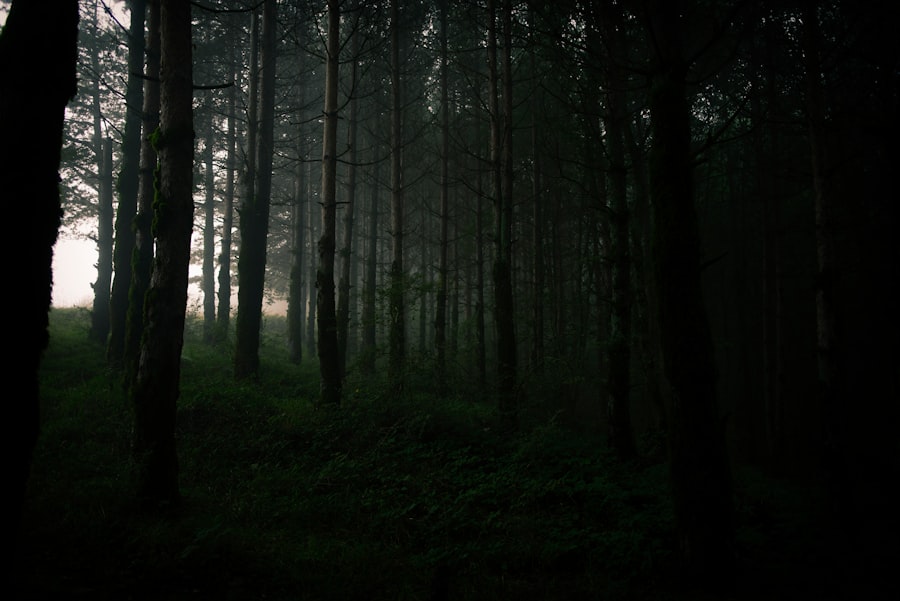
The metaphor of the “dark forest” is not merely an evocative literary device; it encapsulates a set of profound implications for how we should approach the question of extraterrestrial intelligence. It forces us to move beyond romanticized notions of welcoming alien visitors and confront the biological imperative for self-preservation extrapolated to a cosmic scale.
The Zero-Sum Game of the Cosmos
The Dark Forest Theory suggests that the universe operates as a zero-sum game when it comes to resources and survival. For one civilization to thrive and expand, it might require resources that another civilization also needs or already possesses. This fundamental scarcity, when coupled with the uncertainty of intent, creates a perpetually competitive environment. Each civilization is effectively competing for the limited real estate of cosmic habitability.
The Implied Existential Threat
The theory’s chilling conclusion is that any civilization that reveals itself invites the possibility of being preemptively destroyed. This is not necessarily due to malice, but rather a cold, calculating risk assessment. The potential cost of ignoring a nascent technological threat, however small it might currently appear, could be existential. Therefore, the safest strategy for any mature civilization is to eliminate any other detectable civilization before it can become a threat. This makes every star system a potential target, and every signal a beacon of danger.
The Cosmic Silence as a Lullaby of Fear
The overwhelming silence we observe is, in this interpretation, not a sign of emptiness, but rather a testament to the success of widespread, albeit perhaps involuntary, adherence to the Dark Forest principle. It is the sound of countless civilizations holding their breath, waiting in the shadows, and ensuring their own survival by remaining undetected. The absence of “noise” is the most telling signal of all.
The concept of the dark forest theory presents a fascinating perspective on the potential existence of extraterrestrial civilizations and their motivations for remaining hidden. This theory suggests that the universe is like a dark forest, where every civilization is a silent hunter, wary of revealing its location to avoid potential threats. A related article that delves deeper into this intriguing idea and explores its implications for humanity’s future is available at XFile Findings. Understanding these theories can help us grasp the complexities of our place in the cosmos and the potential for an Earth shield against unknown dangers.
Reassessing Our Cosmic Strategy
| Metric | Description | Value / Status | Source / Notes |
|---|---|---|---|
| Dark Forest Theory | Hypothesis that civilizations remain silent to avoid detection and potential threats | Conceptual Framework | Proposed by Liu Cixin in “The Dark Forest” novel |
| Earth Shield Concept | Hypothetical protective measures to conceal Earth’s signals from extraterrestrial detection | Under Theoretical Discussion | Inspired by Dark Forest Theory implications |
| Signal Leakage | Amount of electromagnetic signals Earth emits into space | Approx. 100 light years radius | Based on radio and TV broadcasts since early 20th century |
| Shielding Effectiveness | Potential reduction in detectable signals by Earth Shield | Estimated 70-90% reduction | Hypothetical, no practical implementation yet |
| Technological Feasibility | Current ability to implement Earth Shield | Low | Requires advanced global coordination and technology |
| Risk Level | Potential threat from revealing Earth’s location | Moderate to High | Depends on assumptions about extraterrestrial intentions |
The Dark Forest Theory compels us to critically re-evaluate humanity’s approach to interstellar communication and exploration. If the theory holds even a modicum of truth, our current strategies might be dangerously naive.
The Precautionary Principle in a Cosmic Context
Just as environmental scientists advocate for a precautionary principle when dealing with potential hazards, the Dark Forest Theory suggests a similar approach to our interactions with the cosmos. The potential consequences of a single misstep – a broadcast that attracts hostile attention – are so profound that the utmost caution is warranted. This means prioritizing observation over direct communication, and concealment over overt signaling.
The Ethical Dilemma of Broadcasts
The ethical debate surrounding intentional interstellar broadcasts is deeply intertwined with the Dark Forest Theory. While some argue for the moral imperative to share humanity’s existence and culture, the theory presents a stark counter-argument: that such broadcasts are an act of cosmic recklessness, akin to giving away the location of a vulnerable prey animal to a pack of unseen predators.
The Future of Exploration Under the Shadow of the Dark Forest
If Earth is indeed living under the shadow of the Dark Forest, our future exploration should be guided by a profound respect for cosmic privacy and a deep understanding of potential risks. This might involve developing technologies that allow for passive observation and data gathering from afar, rather than active engagement and communication. It could mean shifting our focus from seeking contact to understanding the cosmic landscape and our place within it, all while ensuring our own continued existence through discretion. The journey of exploring the stars, when viewed through this somber lens, becomes a mission of careful navigation in a vast, silent, and potentially perilous wilderness.
FAQs
What is the Dark Forest Theory?
The Dark Forest Theory is a hypothesis about the behavior of intelligent civilizations in the universe. It suggests that all civilizations remain silent and hidden to avoid detection by potentially hostile extraterrestrial beings, much like hunters in a dark forest who stay quiet to avoid being found.
How does the Earth Shield relate to the Dark Forest Theory?
The Earth Shield concept involves creating protective measures or technologies to shield Earth from potential threats posed by extraterrestrial civilizations. It is inspired by the Dark Forest Theory’s idea that revealing our presence could invite danger, so the shield aims to keep Earth undetectable or defend against hostile contact.
Why do proponents of the Dark Forest Theory believe silence is necessary?
Proponents argue that since the intentions of other civilizations are unknown, broadcasting our existence could attract aggressive entities. Silence is seen as a survival strategy to prevent being targeted or destroyed by more advanced or hostile civilizations.
Are there any scientific efforts to implement an Earth Shield?
Currently, there are no widely recognized scientific projects specifically designed as an Earth Shield based on the Dark Forest Theory. However, discussions about limiting active messaging to extraterrestrials (METI) and protecting Earth’s biosignatures are ongoing in the scientific community.
What are the criticisms of the Dark Forest Theory?
Critics argue that the theory is speculative and based on assumptions about alien behavior that may not be accurate. Some believe that advanced civilizations might be peaceful or indifferent, and that hiding could limit opportunities for beneficial contact or knowledge exchange.