
Eugene Podkletnov’s 1992 Gravity Shielding Experiment
In the annals of experimental physics, certain claims, even if unconfirmed or controversial, leave an indelible mark, prompting debate and further investigation. One such claim emerged in 1992 from the laboratory of Russian scientist Eugene Podkletnov, who, along with R. Nieminen, reported a phenomenon they termed “gravity shielding.” This purported effect, if validated, would have profound implications for our understanding of gravity and could revolutionize fields ranging from propulsion to materials science. This article will delve into the details of Podkletnov’s groundbreaking, albeit highly debated, 1992 experiment, examining its methodology, alleged results, the scientific community’s reaction, and the subsequent, often turbulent, path of investigation into this enigmatic phenomenon.
The concept of gravity shielding, the idea of reducing or nullifying the gravitational force of an object, has long been a staple of science fiction. However, Podkletnov’s approach was rooted in the established physics of superconductivity and explored a speculative link between these peculiar states of matter and the fundamental force of gravity.
Superconductivity: A Realm of Zero Resistance
At its core, Podkletnov’s experiment leveraged the phenomenon of superconductivity. Discovered in 1911 by Heike Kamerlingh Onnes, superconductivity occurs when certain materials are cooled below a critical temperature, at which point their electrical resistance drops to precisely zero. This means that an electric current, once initiated in a superconducting loop, can flow indefinitely without any loss of energy. This seemingly simple property unlocks a host of exotic behaviors.
Meissner Effect and Magnetic Levitation
One of the most striking manifestations of superconductivity is the Meissner effect. When a superconductor is cooled below its critical temperature in the presence of an external magnetic field, it expels this field from its interior. This expulsion creates a repulsive force that can levitate magnets, a phenomenon that has captivated scientists and the public alike. This principle of magnetic levitation, while not directly gravity shielding, underscores the ability of superconductors to interact with external forces in unusual ways.
Quantum Mechanical Nature of Superconductors
Superconductivity is not merely a classical phenomenon; it is deeply rooted in quantum mechanics. Below the critical temperature, electrons in a superconductor pair up to form what are known as Cooper pairs. These pairs behave as a single quantum entity, capable of moving through the material’s lattice without scattering. This collective, quantum behavior is thought to be key to understanding some of the more peculiar properties of superconductors, including those Podkletnov sought to exploit.
Rotational Dynamics: Introducing the Spin Factor
Podkletnov’s hypothesis was not solely based on the static properties of superconductors. It incorporated the dynamic aspect of rotation. He theorized that by imparting a high-speed rotation to a superconducting bob, it might interact with the surrounding gravitational field in a way that would induce a reduction in its weight. This idea bridged the gap between the microscopic quantum world of superconductivity and the macroscopic force of gravity.
The Role of Angular Momentum
The introduction of angular momentum, a measure of an object’s rotational motion, was central to Podkletnov’s thinking. He posited that the organized spin of the Cooper pairs within the rotating superconductor could, under specific conditions, somehow influence the gravitational field in its vicinity. This was a bold departure from conventional gravitational theories, which typically do not incorporate such a direct link between rotational motion and gravitational field modulation.
Speculative Theoretical Frameworks
While Podkletnov’s experiment was primarily empirical, it was implicitly guided by speculative theoretical frameworks that sought to unify gravity with other fundamental forces or explore novel aspects of gravitational physics. These frameworks often ventured into realms beyond the Standard Model of particle physics and General Relativity, suggesting that gravity might not be as immutable as commonly perceived.
Eugene Podkletnov’s 1992 gravity shielding experiment has sparked considerable interest and debate within the scientific community, particularly regarding its implications for our understanding of gravity and potential applications in advanced propulsion systems. For those looking to delve deeper into this intriguing topic, a related article can be found at XFile Findings, which explores the details of Podkletnov’s work and its impact on contemporary research in the field of gravitational physics.
The Experimental Setup: A Dance of Superconductors and Spin
The 1992 experiment, conducted at the Tampere University of Technology in Finland, was meticulously designed to test Podkletnov’s hypothesis. The setup involved a YBCO (Yttrium barium copper oxide) superconducting disc, cooled to cryogenic temperatures, and subjected to rapid rotation.
The Superconducting Disc: The Heart of the Matter
The choice of YBCO was significant. It is a high-temperature superconductor, meaning it can achieve superconductivity at relatively higher temperatures (though still well below freezing) compared to traditional superconductors. This made the experimental setup more manageable in a laboratory setting. The disc was shaped for optimal rotational stability.
Cryogenic Cooling: The Essential Environment
Achieving superconductivity necessitates extremely low temperatures. The YBCO disc was immersed in liquid nitrogen, and in some crucial stages of the experiment, likely liquid helium, to reach its superconducting state. The cooling process was not just a backdrop; it was an integral part of enabling the superconducting properties that Podkletnov believed were essential for the gravity shielding effect.
Precision Engineering and Material Purity
The purity and structural integrity of the superconducting material were paramount. Any imperfections or impurities could disrupt the delicate quantum state required for superconductivity and potentially mask or mimic genuine effects. The careful fabrication of the YBCO disc was therefore a critical factor in the experiment’s design.
The Rotational Mechanism: Imparting Angular Momentum
The disc was then spun at high speeds. This was achieved through an external motor system, designed to impart and maintain the necessary angular velocity. The precise measure of this rotation was crucial, as the magnitude of the alleged shielding effect was hypothesized to be dependent on the speed of rotation.
High-Speed Rotation: The Driving Force
The speeds achieved were significant, reaching thousands of revolutions per minute. This level of rotation places considerable stress on any material, and in the context of a brittle superconductor, it presented engineering challenges in maintaining structural integrity while achieving the desired rotational velocity.
Stability and Balancing: Avoiding Artifacts
Maintaining a stable rotation without wobbling or vibration was essential. Any uncontrolled movement could introduce spurious forces or measurements that might be misinterpreted as a gravitational anomaly. Therefore, the disc and its rotational mechanism were likely subjected to rigorous balancing and stabilization procedures.
The Measurement Apparatus: Detecting the Subtle Shift
The core of the experiment lay in detecting any change in the weight of the superconducting disc as it spun. This was achieved by suspending the disc on a sensitive balance or load cell. The apparatus was designed to measure minute changes in the downward force exerted by the disc.
The Sensitive Balance: A Delicate Ear
The balance or load cell used was calibrated to detect extremely small variations in weight. The gravitational pull on the spinning superconductor was expected to be reduced, a subtle shift that would require highly sensitive instrumentation to register. It was like trying to hear a whisper in a crowded room; the measuring device had to be exceptionally attuned.
Control Experiments: Ruling Out Other Factors
Crucially, control experiments were conducted. This involved measuring the weight of the disc when it was not superconducting, or when it was not rotating, or when rotating at lower, non-superconducting speeds. These controls were vital to isolate the observed effect to the specific combination of superconductivity and high-speed rotation.
The Alleged Results: A Diminished Downward Pull
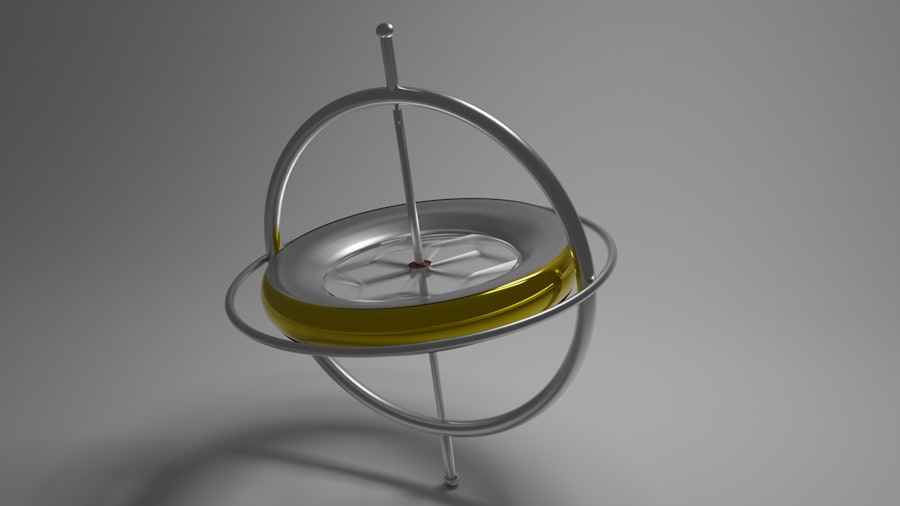
The reported findings of the 1992 experiment were astounding. Podkletnov and Nieminen claimed to have observed a reduction in the weight of the spinning superconducting disc. This reduction, though seemingly small, was statistically significant and, if confirmed, represented a direct manipulation of gravitational force.
The Observed Reduction: A Weighty Observation
The experiments indicated that the spinning superconducting disc experienced a decrease in its apparent weight, ranging from 1% to 2%. This might sound insignificant, but in the context of gravity, it was a seismic shift. Imagine a feather suddenly becoming lighter when spun; it would defy our intuitive understanding of its mass.
Magnitude of the Effect: A Subtle but Real Change
The reported percentage of weight reduction, while not a complete obliteration of gravity, was substantial enough to be considered a genuine phenomenon. The consistency of this reduction across multiple runs and under slightly varied conditions lent weight to their claims.
Percentage Variation and Reproducibility
The reported percentages, while not identical in every run, fell within a specific range, suggesting a reproducible effect. However, the challenge for any replication effort would be to achieve the same level of precision and to confirm that this range of variation was indeed due to gravity shielding and not some other environmental or experimental factor.
Discussion of Anomalous Behavior: Beyond Conventional Explanations
The researchers attributed this reduction in weight to the interaction of the rotating superconductor with the gravitational field. They proposed that the organized quantum state within the spinning superconductor was somehow creating a “gravity shield.”
The “Gravity Shield” Hypothesis
This term, “gravity shield,” became synonymous with the experiment. It suggested a region around the spinning superconductor where the gravitational influence of the Earth on the disc was diminished. This was a direct challenge to the prevailing understanding of gravity as an omnipresent and fundamental force.
Ruling Out Other Potential Causes
The researchers went to considerable lengths to rule out conventional explanations. This included accounting for aerodynamic effects, magnetic forces (though the setup was designed to minimize them), thermal effects, and vibrations. The challenge was to convince the broader scientific community that the observed anomaly was indeed gravitational in nature.
The Scientific Community’s Reaction: Skepticism and Scrutiny

As with most groundbreaking claims that challenge established paradigms, Podkletnov’s 1992 experiment was met with a mixture of intense interest and profound skepticism. The scientific community, a bastion of empirical validation and rigorous peer review, approached the findings with cautious optimism coupled with a healthy dose of doubt.
Initial Interest and Excitement: The Siren Song of Discovery
The potential implications of gravity shielding were so immense that even a whisper of its discovery generated considerable buzz. If true, it could unlock technologies previously confined to the realm of imagination. This inherent promise drew the attention of physicists, engineers, and even speculative thinkers.
The Allure of Paradigm Shift
The possibility of a paradigm shift in physics is a powerful lure for any scientist. The idea that gravity, a force so fundamental yet so poorly understood at the quantum level, could be manipulated was inherently exciting and opened up entirely new avenues of research. It was like finding a hidden doorway in a familiar landscape.
Potential Technological Revolutions
The potential applications were so vast, from propulsion systems that could revolutionize space travel to novel methods of construction and material handling, that even the most hardened skeptics couldn’t entirely dismiss the findings without careful investigation.
Skepticism and Demand for Reproducibility: The Gatekeepers of Science
However, the history of science is also littered with claims that, upon closer inspection or attempted replication, proved to be either erroneous or misinterpreted. Therefore, the immediate reaction from the wider physics community was one of caution and a demand for independent verification.
The Burden of Proof: A High Bar
In science, extraordinary claims require extraordinary evidence. Podkletnov’s findings, being so revolutionary, placed a very high burden of proof upon him and his team. The scientific method relies on reproducibility, and the initial experiment, while reported as reproducible by the authors, needed to be replicated by independent laboratories.
Scrutiny of Methodology and Analysis: Picking Apart the Details
The experimental setup, the data analysis, and the theoretical underpinnings were subjected to intense scrutiny. Researchers meticulously examined every aspect of the published paper, searching for potential flaws, overlooked variables, or alternative explanations that the original authors might have missed. This detailed deconstruction is a fundamental part of the scientific process, ensuring that conclusions are robust.
Challenges in Replication: The Elusive Double
The primary hurdle for Podkletnov’s claim was the difficulty in replicating the results. Several research groups attempted to reproduce the experiment, but most reported negative or inconclusive findings. This lack of independent confirmation was a significant factor in the scientific community’s hesitation to fully embrace the gravity shielding phenomenon.
Obstacles to Independent Verification
Replicating advanced physics experiments is often a complex and resource-intensive undertaking. Factors such as access to specialized equipment, the precise sourcing of materials, the need for highly skilled personnel, and the understanding of subtle experimental nuances can all pose significant challenges to independent verification. Without direct access to Podkletnov’s exact setup and operational details, replication can be akin to trying to bake a cake from a recipe that omits crucial ingredients.
Varying Experimental Conditions and Interpretations
Even when attempts at replication were made, differences in experimental parameters, environmental conditions, and the interpretation of results could lead to discrepancies. These variations made it difficult to definitively conclude whether the observed differences were due to the absence of the effect or simply variations in the experimental approach.
Eugene Podkletnov’s 1992 gravity shielding experiment has sparked considerable interest and debate within the scientific community, particularly regarding its implications for our understanding of gravity and potential applications in advanced propulsion systems. For those looking to explore more about the various theories and findings related to this intriguing topic, a related article can be found at X-File Findings, which delves into the broader context of gravity manipulation and its potential impact on future technologies.
Later Claims and Ongoing Debates: A Lingering Mystery
| Parameter | Value | Unit | Notes |
|---|---|---|---|
| Experiment Year | 1992 | – | Year of initial gravity shielding experiment |
| Researcher | Eugene Podkletnov | – | Lead scientist conducting the experiment |
| Material Used | YBa2Cu3O7-x (Yttrium Barium Copper Oxide) | – | High-temperature superconductor disk |
| Rotation Speed | 5000 | rpm | Speed of the superconducting disk rotation |
| Temperature | 77 | K | Liquid nitrogen temperature for superconductivity |
| Magnetic Field Strength | 2 | Tesla | Applied magnetic field during the experiment |
| Reported Gravity Shielding Effect | 0.3 – 0.5 | % | Reduction in gravitational force above the disk |
| Distance of Measurement | 15 | cm | Height above the disk where effect was measured |
| Reproducibility | Controversial | – | Other researchers have had difficulty replicating results |
Following his 1992 publication, Eugene Podkletnov continued to conduct research and make further claims regarding gravity-related effects. These subsequent reports, often involving different experimental configurations and purported results, further fueled the debate and controversy surrounding his work.
Developments in Podkletnov’s Research: More Experiments, More Claims
Podkletnov did not cease his investigations after the initial publication. He went on to conduct further experiments, sometimes in collaboration with others, reporting on phenomena such as inertial mass reduction and even the possibility of generating thrust. These later experiments often involved different geometries and materials, expanding the scope of his investigations.
Inertial Mass Reduction: A Related Phenomenon
One of Podkletnov’s later claims involved the reduction of inertial mass. Inertial mass is a measure of an object’s resistance to acceleration. If this could be reduced, it would have profound implications for propulsion systems, as less force would be required to achieve a given acceleration. This, in turn, would lead to more efficient and faster travel.
The Force Field Generator: A More Ambitious Device
Podkletnov also spoke of developing a “force field generator,” a device that he claimed could create a localized region of reduced gravitational or inertial effects. These descriptions, often lacking detailed technical specifications in publicly accessible sources, further contributed to the mystique and controversy surrounding his work.
The Elusive Thruster: The Holy Grail of Propulsion
Perhaps the most tantalizing of Podkletnov’s later claims was the development of a thruster that did not expel propellant but instead generated thrust by interacting with the gravitational field. Such a device would represent a monumental leap in space propulsion, allowing for sustained acceleration without the need to carry vast amounts of fuel. This concept, if realizable, would be the ultimate answer to the limitations of current rocket technology.
The Enduring Enigma: Unanswered Questions and Future Potential
Despite the lack of widespread acceptance and independent verification, the specter of Podkletnov’s experiments continues to linger in the fringes of physics. The possibility, however remote, that there is a grain of truth in his claims continues to inspire a small but dedicated group of researchers.
The Unexplored Frontiers of Physics
The enduring debate highlights the fact that our understanding of gravity, especially at the quantum level and in extreme conditions, is far from complete. Podkletnov’s work, even if ultimately proven incorrect, forces us to confront the limitations of our current models and to remain open to the possibility of phenomena that lie beyond our current comprehension.
The Nature of Scientific Progress: Pushing the Boundaries
The history of science is replete with examples of ideas that were initially ridiculed or dismissed but later proved to be correct. While it is crucial to maintain rigorous standards of proof, it is also important not to stifle potentially revolutionary ideas out of hand. Podkletnov’s experiments serve as a reminder that scientific progress often involves pushing the boundaries of known physics and exploring the unconventional.
Replicating the Unreplicable: The Quest for Confirmation
The scientific community’s primary tool for validating novel phenomena is independent replication. For Podkletnov’s 1992 experiment, this proved to be a monumental challenge, a quest that for many has become akin to chasing a phantom.
Challenges in Building and Operating the Apparatus
The construction of the precise apparatus used in Podkletnov’s laboratory was itself a significant hurdle. The use of specialized superconducting materials, the ability to achieve and maintain cryogenic temperatures accurately, and the engineering required for high-speed, stable rotation all demanded a level of expertise and resources that not all research institutions possessed.
Material Science and Cryogenics: The Foundation of Success
Sourcing and fabricating high-quality YBCO or similar superconducting materials in the exact form and purity required for the experiment was a critical step. Furthermore, the ability to reliably and consistently cool these materials to their superconducting state, a process that requires sophisticated cryogenic equipment and expertise, was essential. Without these foundational elements, any attempt to replicate the experiment was doomed from the start.
Precision Engineering for High-Speed Rotation
The rotational mechanism needed to achieve and sustain thousands of revolutions per minute without excessive vibration or instability was a feat of precision engineering. The slightest imbalance or wobble could introduce spurious forces that could be easily misinterpreted as a gravitational anomaly, leading to false positives or masking a genuine effect.
The Problem of Subtle Effects: Detecting the Whisper
The claimed gravity shielding effect was reported to be subtle, a small percentage of weight reduction. Detecting such a minute change requires highly sensitive measurement equipment and meticulous control of environmental factors. Even minor vibrations, temperature fluctuations, or electromagnetic interference could easily mask or mimic the purported effect.
The Noise Floor: Distinguishing Signal from Static
Scientific measurements are always contending with a certain amount of “noise” – random fluctuations or interfering signals. In Podkletnov’s experiment, the signal (the alleged gravity shielding) was small, meaning that the noise floor had to be incredibly low. Any uncontrolled experimental variable that added to this noise could make it impossible to discern the true signal.
Environmental Controls: The Unseen Influences
Factors such as air currents, barometric pressure changes, and even the subtle gravitational pull of nearby objects could potentially influence a sensitive weight measurement. Rigorous environmental controls were necessary to account for these external influences and to ensure that any observed weight change was indeed due to the intended gravitational manipulation.
The “Podkletnov Effect” Legacy: A Scientific Ghost Story?
Despite numerous failed replication attempts, the “Podkletnov effect” has not entirely faded into obscurity. It continues to be a topic of discussion in certain scientific circles, often relegated to the realm of fringe science or speculative physics.
The Enduring Appeal of the Unexplained
The allure of the unexplained is a powerful driver for scientific inquiry. The idea that gravity might be manipulable, even if the initial claims remain unproven, continues to spark curiosity and inspire a small number of researchers to explore related avenues.
The Importance of Open-Mindedness and Rigor
Podkletnov’s experiments serve as a poignant reminder of the constant tension in scientific endeavor between maintaining rigorous standards of evidence and remaining open to the possibility of revolutionary discoveries. While scientific skepticism is essential for preventing flawed conclusions, an overly closed-minded approach can stifle progress. The challenge lies in finding the balance, meticulously investigating claims while acknowledging that the universe may still hold surprises beyond our current understanding. The legacy of Eugene Podkletnov’s 1992 experiment remains a fascinating, albeit unresolved, chapter in the ongoing exploration of gravity’s mysteries.
FAQs
What was the Eugene Podkletnov 1992 gravity shielding experiment?
The Eugene Podkletnov 1992 gravity shielding experiment was a scientific test conducted by Eugene Podkletnov, a Russian physicist, who claimed to have observed a reduction in gravitational force above a rotating superconducting disc. The experiment suggested the possibility of gravity shielding or gravity modification.
What materials and setup were used in the experiment?
The experiment involved a superconducting ceramic disc made of yttrium barium copper oxide (YBCO), which was cooled to superconducting temperatures using liquid nitrogen. The disc was rotated at high speeds within a magnetic field, and measurements were taken to detect any changes in gravitational force above the disc.
What were the main findings reported by Podkletnov?
Podkletnov reported a small but measurable reduction in the weight of objects placed above the rotating superconducting disc, with reductions up to 2% under certain conditions. He suggested this indicated a form of gravity shielding or weakening effect caused by the superconducting rotation.
Has the gravity shielding effect been independently replicated?
No widely accepted independent replication of Podkletnov’s gravity shielding results has been reported. Many attempts to reproduce the experiment have failed to observe the claimed gravity reduction, leading to skepticism within the scientific community about the validity of the findings.
What is the scientific consensus on the gravity shielding experiment?
The scientific consensus is generally skeptical of the gravity shielding claims made by Podkletnov. The results have not been reliably reproduced, and the theoretical basis for gravity shielding remains unsupported by mainstream physics. The experiment is considered controversial and not validated as a practical demonstration of gravity modification.