
The pursuit of efficient and sustainable space travel has long been a driving force behind NASA’s research and development. While chemical rockets have been the workhorses of space exploration for decades, their inherent limitations—such as the need to carry vast amounts of propellant, which translates to significant weight and cost—have spurred NASA’s enduring interest in exploring alternative propulsion systems. These non-chemical approaches, often operating on different physical principles, promise to unlock new frontiers in space, enabling longer-duration missions, faster transit times, and even interstellar travel. This article delves into NASA’s significant innovations in non-chemical propulsion systems, examining the underlying science, current progress, and future potential of these groundbreaking technologies.
Chemical rockets, the stalwart of space launches, operate by expelling hot gas at high velocity, generating thrust through Newton’s third law of motion. This method, while effective for escaping Earth’s gravity and maneuvering in space, comes with inherent drawbacks that NASA has sought to overcome.
The Rocket Equation and Propellant Mass
At the heart of chemical propulsion’s limitations lies the rocket equation, a fundamental principle governing spaceflight. The equation demonstrates that to achieve a certain change in velocity (delta-v), a rocket must carry a significant amount of propellant. For every kilogram of payload that reaches orbit, many kilograms of propellant must be burned. This “tyranny of the rocket equation” means that as missions become more ambitious, requiring greater delta-v, the amount of propellant needed increases exponentially, making the spacecraft prohibitively heavy and expensive. Imagine trying to carry enough water for a cross-country hike solely within a small canteen – you’d be making many trips.
Specific Impulse and Efficiency
Another key metric for evaluating rocket engine efficiency is specific impulse (Isp). Specific impulse is a measure of how effectively a rocket engine uses propellant. Higher specific impulse means more thrust is generated per unit of propellant consumed. Chemical rockets, while powerful, generally have lower specific impulses compared to many non-chemical alternatives. This means they require more propellant to achieve the same amount of push, further exacerbating the propellant mass problem for long-duration missions.
Environmental Concerns and Earth-Based Launches
While less of a direct concern for deep space missions, the environmental impact of large-scale chemical rocket launches from Earth cannot be entirely discounted. The combustion of propellants releases gases into the atmosphere, and while the scale is currently manageable, future increases in launch frequency could necessitate considering cleaner alternatives.
NASA has been exploring various non-chemical propulsion systems that could revolutionize space travel, and a related article discusses the advancements in this field. For those interested in learning more about these innovative technologies, you can read the article at this link. The exploration of non-chemical propulsion methods, such as ion drives and solar sails, could significantly enhance the efficiency and capabilities of future space missions.
Electric Propulsion: The Dominant Non-Chemical Frontier
Electric propulsion systems have emerged as a leading category in NASA’s non-chemical propulsion research. These systems utilize electrical energy to accelerate a propellant to very high velocities, achieving significantly higher specific impulses than chemical rockets. This efficiency makes them ideal for long-duration missions where propellant mass is a critical factor.
Ion Propulsion
Ion propulsion is a well-established form of electric propulsion where propellant atoms are ionized (given an electric charge) and then accelerated by an electric field. The charged ions are expelled at high speeds, generating thrust.
Gridded Ion Thrusters
NASA has a long history with gridded ion thrusters, famously deploying them on missions like the Deep Space 1 spacecraft and the Dawn mission, which explored the asteroid Vesta and the dwarf planet Ceres. These thrusters use a pair of electrostatic grids to accelerate the ionized propellant. Xenon is a common propellant choice due to its high atomic mass and ease of ionization. While the thrust produced by ion engines is typically very low – often comparable to the force exerted by a piece of paper resting on your hand – their exceptional efficiency means they can accelerate a spacecraft continuously over long periods, achieving significant velocity changes that would be impossible with chemical rockets carrying the same amount of propellant. This is akin to a gentle, persistent breeze eventually pushing a sailboat across an ocean.
Hall Effect Thrusters
Hall effect thrusters are another widely used type of electric propulsion. They generate thrust by accelerating ions through a combination of electric and magnetic fields. Electrons emitted from a cathode flow into a plasma channel where propellant (often xenon) is introduced and ionized. A radial magnetic field traps these electrons, creating a high-density plasma and an axial electric field that accelerates the propellant ions. Hall thrusters generally offer higher thrust densities than gridded ion thrusters, making them suitable for a wider range of orbital maneuvers and potentially faster transit times for certain missions. NASA has been developing and testing advanced Hall effect thrusters for various applications.
Other Electric Propulsion Concepts
Beyond ion and Hall effect thrusters, NASA continues to explore other electric propulsion concepts, each with its unique advantages and challenges.
Electrospray Propulsion
Electrospray propulsion, also known as colloid or ionic liquid propulsion, employs the electrohydrodynamic (EHD) breakup of liquid propellant from sharp emitters to produce a beam of charged droplets or ions. This technology offers the potential for extremely small and precise thrust control, making it suitable for attitude control, micro-gravity experiments, and small satellite applications. NASA has been investigating electrospray thrusters for their potential to provide fine-tuned maneuverability in space.
Magnetoplasmadynamic (MPD) Thrusters
Magnetoplasmadynamic thrusters use strong magnetic fields to accelerate a plasma generated by an electric arc. They can produce higher thrust levels than ion engines, but also consume more power. Research in this area aims to improve efficiency and extend operational lifetimes.
Advanced Concepts: Pushing the Boundaries of Physics
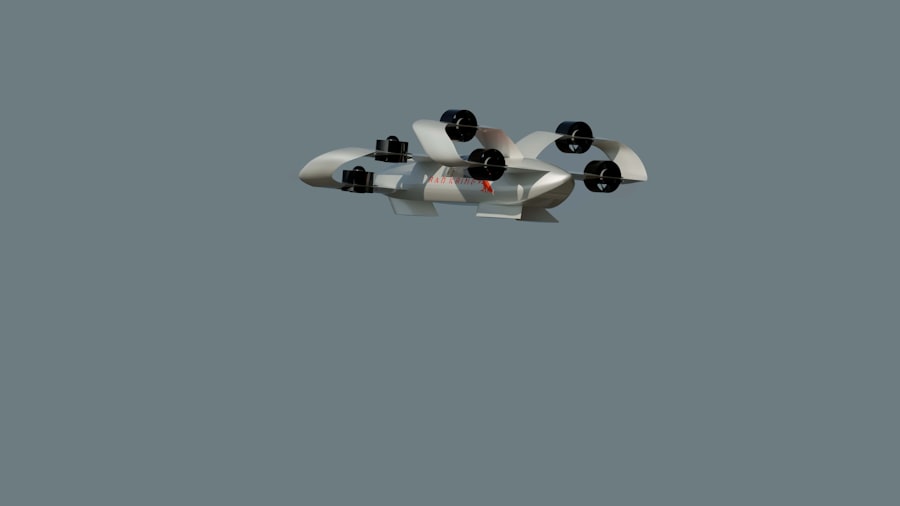
While electric propulsion is currently the most mature non-chemical technology, NASA’s innovative spirit extends to more advanced concepts that explore fundamental physics principles for propulsion. These systems are often in earlier stages of development but hold immense potential for revolutionary breakthroughs.
Nuclear Thermal Propulsion (NTP)
Nuclear thermal propulsion (NTP) is a highly promising technology that uses a nuclear reactor to heat a propellant (typically hydrogen) to extremely high temperatures. The superheated propellant is then expelled through a nozzle to generate thrust.
Advantages of NTP
NTP offers a significant increase in specific impulse compared to chemical rockets, roughly doubling it. This means that missions to Mars, for example, could be completed in much shorter times. Instead of a months-long journey, an NTP-powered spacecraft could potentially reach Mars in as little as three to four months. This reduction in transit time is crucial for crewed missions, as it minimizes exposure to space radiation and the physiological effects of prolonged microgravity. Furthermore, NTP systems can generate higher thrust levels than electric propulsion, allowing for faster acceleration and more agile maneuvering. Imagine the difference between a slow, steady push and a powerful surge – NTP offers the latter with greater efficiency.
Challenges and Development
The development of NTP involves significant engineering challenges, including designing and testing reliable nuclear reactors for spaceflight, managing the intense heat generated, and ensuring the safety of both the propulsion system and the crew. NASA, in partnership with the Department of Energy, has been actively researching and developing NTP technologies, including the design of advanced reactors and thruster systems. Test facilities are being established to enable ground testing of these systems to validate their performance and safety.
Nuclear Electric Propulsion (NEP)
Nuclear electric propulsion (NEP) combines a nuclear reactor power source with electric propulsion thrusters. This approach addresses the power limitations of solar-electric propulsion for missions far from the sun, where solar panels become less effective.
Synergistic Power Generation
A nuclear reactor can generate a substantial and continuous supply of electricity, powering electric propulsion systems for extended periods. This allows for high-efficiency, high-thrust electric propulsion on deep space missions or for heavy cargo transport. NEP could enable missions to the outer solar system and beyond, which are currently impractical with solar-electric systems. It offers a way to keep the “lights on” and the engines running steadily, no matter how far from the Sun’s warmth you venture.
Mission Applications
NEP is considered a key technology for future ambitious missions, such as transporting large payloads to Mars, exploring the outer planets and their moons, and potentially even enabling faster transit to the Kuiper Belt and beyond. The increased power availability also allows for more sophisticated onboard scientific instruments and life support systems.
Propulsion for the Future: Emerging and Theoretical Concepts
NASA’s exploration of non-chemical propulsion is not limited to existing or near-term technologies. The agency also invests in fundamental research into more theoretical concepts that could revolutionize space travel in the distant future.
Fusion Propulsion
Fusion propulsion envisions harnessing the energy released from nuclear fusion reactions to generate thrust. This is the same process that powers stars, and if successfully replicated and controlled on Earth, it could provide an almost inexhaustible source of energy for spacecraft.
The Promise of Fusion
Fusion propulsion offers the potential for extremely high specific impulses and thrust levels, far exceeding any current propulsion technology. This could enable incredibly fast transit times to distant celestial bodies and even make interstellar travel a plausible long-term goal. The energy density of fusion fuel is immense, meaning a small amount of fuel could power a spacecraft for an extended duration.
Hurdles and Research
The challenges in developing fusion propulsion are immense. Achieving controlled, sustained nuclear fusion on Earth is itself a monumental scientific and engineering undertaking. Miniaturizing fusion reactors for spacecraft, managing the intense heat and radiation, and developing efficient exhaust mechanisms are all significant hurdles. NASA’s involvement in this area is primarily through fundamental research and theoretical studies, laying the groundwork for future possibilities.
Solar Sails
Solar sails are a novel propulsion concept that uses the pressure of sunlight to propel a spacecraft. They consist of large, thin, reflective membranes that are deployed in space. Photons from the Sun collide with the sail, transferring momentum and creating a continuous, albeit small, propulsive force.
The Sun’s Gentle Push
While the force exerted by sunlight is minuscule, over vast distances and long durations, it can accelerate a spacecraft to significant velocities. Solar sails require no propellant, making them incredibly efficient for long-duration missions where propellant would otherwise be a limiting factor. Imagine a dandelion seed catching a gentle breeze and traveling miles – that is the essence of a solar sail’s journey.
Mission Examples and Applications
NASA has experimented with solar sail technology, notably with the NEA Scout (Near Earth Asteroid Scout) mission, which aimed to use a solar sail to travel to a near-Earth asteroid. Other proposed applications include interstellar precursor missions and enabling rapid transit for smaller payloads. The key is patience and continuous acceleration.
Advanced Concepts Requiring Further Fundamental Research
NASA also supports research into even more speculative propulsion concepts that push the boundaries of our current understanding of physics. These include studies into warp drives, antimatter propulsion, and other theoretical mechanisms that are currently in the realm of science fiction. While these concepts face significant scientific and technological hurdles, NASA’s commitment to fundamental research ensures that no avenue for revolutionary propulsion is entirely overlooked.
NASA has been exploring innovative alternatives to traditional chemical propulsion systems, focusing on non-chemical methods that could revolutionize space travel. One interesting article discusses the potential of using solar sails and electromagnetic propulsion, highlighting how these technologies could enable spacecraft to travel longer distances with greater efficiency. For more insights on this topic, you can read the full article here. These advancements not only promise to reduce the reliance on chemical fuels but also open up new possibilities for deep space exploration.
Conclusion: A Future Powered by Innovation
| Propulsion System | Type | Thrust (mN) | Specific Impulse (s) | Application | NASA Mission Example |
|---|---|---|---|---|---|
| Ion Thruster | Electric Propulsion | 90 | 3000 | Deep space propulsion | Dawn Mission |
| Hall Effect Thruster | Electric Propulsion | 50-300 | 1500-2000 | Satellite station-keeping | AEHF Satellites |
| Solar Sail | Photon Propulsion | 0.0001 | Unlimited (no propellant) | Long-duration missions | NEA Scout (planned) |
| Electrodynamic Tether | Electromagnetic Propulsion | Variable | Not applicable | Orbital maneuvering and deorbit | ProSEDS (technology demonstration) |
| Magnetoplasmadynamic Thruster | Electric Propulsion | Up to 10,000 | 1000-2000 | High thrust electric propulsion | Research stage |
NASA’s relentless pursuit of non-chemical propulsion systems represents a vital commitment to advancing humanity’s presence in space. From the established efficiency of ion engines to the ambitious potential of fusion power, these innovations are not merely incremental improvements. They are foundational shifts that promise to redefine the possibilities of space exploration. By understanding and overcoming the limitations of traditional chemical rockets, NASA is charting a course towards longer missions, faster travel times, and a deeper understanding of our universe. The journey ahead is complex, but the dedication to exploring and developing these groundbreaking technologies ensures that the future of spaceflight will be an exciting and transformative one, powered not by the explosive force of chemical reactions, but by the ingenuity of human intellect and the fundamental forces of nature.

WARNING: The 1956 Report NASA Doesn’t Want You To Read
FAQs
What are non-chemical propulsion systems used by NASA?
Non-chemical propulsion systems are methods of spacecraft propulsion that do not rely on traditional chemical rocket engines. Instead, they use alternative technologies such as electric propulsion, solar sails, or ion thrusters to generate thrust.
Why does NASA explore non-chemical propulsion systems?
NASA investigates non-chemical propulsion systems to achieve more efficient, longer-duration space missions. These systems can provide continuous thrust over extended periods, enabling spacecraft to travel farther with less propellant compared to chemical rockets.
What types of non-chemical propulsion systems has NASA developed or tested?
NASA has developed and tested several non-chemical propulsion technologies, including ion thrusters, Hall-effect thrusters, solar electric propulsion, and solar sails. These systems have been used in missions like Dawn, Deep Space 1, and the upcoming Artemis program.
How do ion thrusters work in NASA’s propulsion systems?
Ion thrusters generate thrust by ionizing a propellant gas (usually xenon) and accelerating the ions through an electric field to produce a high-velocity exhaust. This process provides efficient propulsion with a high specific impulse, suitable for deep-space missions.
What are the advantages of non-chemical propulsion over traditional chemical rockets?
Non-chemical propulsion systems offer higher fuel efficiency, longer operational lifetimes, and the ability to provide continuous low-thrust acceleration. This makes them ideal for deep-space exploration, reducing the amount of propellant needed and enabling more flexible mission designs.