
High latitude regions, characterized by their proximity to the Earth’s poles, present a unique environment for radio communications. The ionosphere, a crucial layer for reflecting radio waves, exhibits distinct behaviors in these areas, largely influenced by solar activity and the Earth’s magnetic field. This variability poses significant challenges for reliable and consistent communication, necessitating specialized protocols and careful management of the radio spectrum. One such protocol, designed to mitigate interference and ensure operational integrity, is the establishment of “Quiet Hours.” This advisory outlines the principles, implementation, and operational considerations for implementing Quiet Hours in high latitude communication systems.
The ionosphere is not a static entity but a dynamic region of the Earth’s upper atmosphere, ionized by solar and cosmic radiation. Its density and structure vary significantly with time of day, season, and solar cycle. In high latitude regions, the interaction of the Earth’s magnetic field with solar energetic particles creates phenomena like auroras, which are visual manifestations of intense ionospheric disturbances.
The Influence of Geomagnetic Activity
Daily Variations
The ionosphere in high latitude areas experiences significant daily variations. During daylight hours, increased solar radiation leads to higher ionization levels, which can, in some cases, improve radio propagation. However, at night, recombination of ions and electrons leads to lower ionization, presenting different propagation challenges. These diurnal cycles are amplified by geomagnetic activity in polar regions.
Seasonal Effects on Propagation
Winter Anomaly
The winter anomaly is a phenomenon observed in the ionosphere, particularly at mid and high latitudes, where the absorption of radio waves during nighttime hours can be unusually high in winter. This is contrary to the expected behavior based solely on diurnal changes and is thought to be related to changes in atmospheric chemistry and temperature profiles.
Polar Cap Absorption Events
Solar Energetic Particle Precipitation
During periods of heightened solar activity, such as solar flares and coronal mass ejections, energetic particles from the sun can be injected into the Earth’s magnetosphere. In high latitude regions, the magnetic field lines are more directly connected to interplanetary space, allowing these particles to precipitate into the ionosphere. This precipitation can cause significant ionization and absorption of radio waves, leading to communication blackouts.
The Role of the Magnetosphere
The Earth’s magnetosphere acts as a shield against the solar wind. However, at high latitudes, the magnetic field lines converge and reach deeper into the atmosphere, creating pathways for charged particles to enter. These interactions are fundamental to understanding the unique radio propagation characteristics of the polar regions.
For those interested in understanding the implications of high latitude communications advisory quiet hours, a related article can provide valuable insights. This article discusses the impact of solar activity on communication systems and the importance of adhering to quiet hours to maintain optimal performance. To explore this further, you can read the article at XFile Findings.
The Rationale for Quiet Hours
The unpredictability and intensity of ionospheric disturbances in high latitude regions necessitate proactive measures to ensure the integrity of radio communication systems. Quiet Hours are a strategic tool for managing the radio spectrum, minimizing interference, and maximizing the probability of successful communication under challenging conditions.
Mitigating Ionospheric Scintillation
Fading and Distortion
Ionospheric scintillation refers to rapid variations in the amplitude and phase of radio waves as they pass through irregularities in the ionosphere. These irregularities can be caused by turbulent plasma dynamics, particularly prevalent in high latitude regions due to geomagnetic activity. Scintillation can lead to severe signal fading, distortion, and data loss, rendering communication unreliable.
Impact on Digital Communications
For digital communication systems, scintillation can be particularly disruptive. Error rates can increase dramatically, requiring retransmissions and reducing data throughput. In critical applications, such as navigation or command and control, this can have severe consequences. Quiet Hours aim to reduce the exposure of these sensitive signals to scintillation-prone periods.
Reducing Interference from Auroral Backscatter
Natural Radar Phenomena
Auroral backscatter occurs when radio waves are reflected or scattered by the turbulent plasma structures associated with auroral displays. This phenomenon can act as a source of natural radar, generating unwanted signals that can interfere with legitimate communications, especially in the VHF and UHF bands commonly used for many communication systems.
Spectrum Congestion
In already crowded radio spectrum, interference from auroral backscatter can exacerbate congestion, making it difficult to establish and maintain clear communication channels. By designating Quiet Hours, operators can avoid transmitting during periods when auroral activity is likely to be high, thereby reducing the risk of interference.
Maximizing Signal-to-Noise Ratio
Signal Degradation
The combination of ionospheric absorption, scintillation, and interference contributes to a degraded signal-to-noise ratio (SNR). A low SNR means that the desired signal is close to the level of background noise, making it difficult for receivers to distinguish the signal from the noise. This is a fundamental limitation on the reliability of radio communication.
Strategic Transmission Planning
Quiet Hours allow for the strategic planning of transmissions when ionospheric conditions are predicted to be more favorable, leading to a higher SNR and thus a greater probability of successful reception. This is akin to choosing the calmest seas for a voyage, rather than sailing into a storm.
Defining and Implementing Quiet Hours
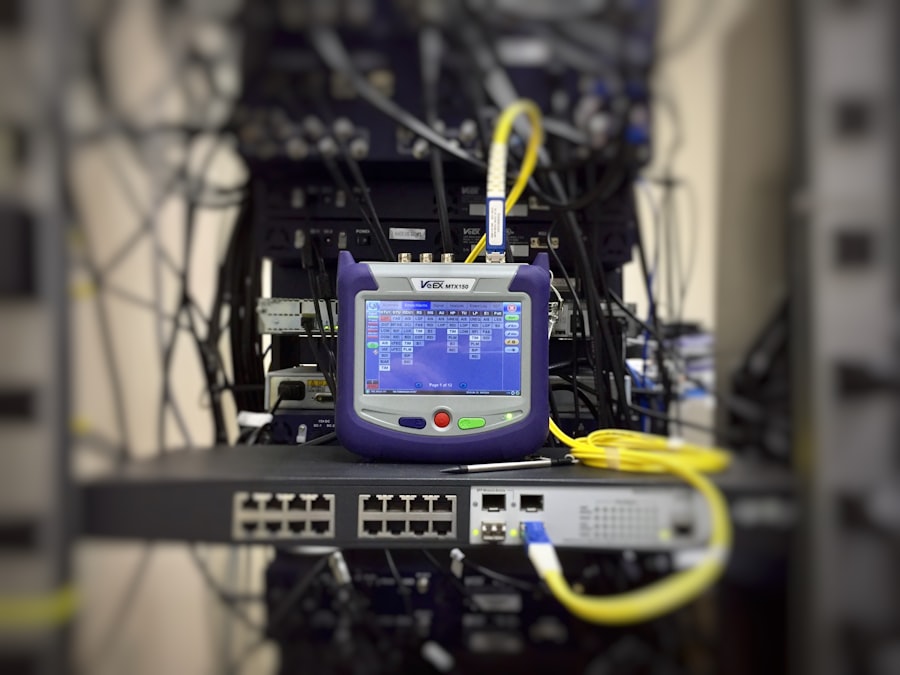
The effective implementation of Quiet Hours requires a clear definition of what constitutes these periods and a robust system for identifying and announcing them. This involves a combination of predictive tools and real-time monitoring.
Establishing Criteria for Quiet Hours
Geomagnetic Activity Thresholds
Kp-Index and Other Parameters
The Kp-index is a measure of global geomagnetic activity. When the Kp-index exceeds certain predefined thresholds, it indicates a period of significant geomagnetic disturbance, often correlating with increased ionospheric activity. Other geomagnetic indices, such as the AE-index, which measures auroral zone activity, can also be used.
Aurora Forecasts
Space Weather Services
Dedicated space weather services provide forecasts of auroral activity. These forecasts are based on solar observations, solar wind data, and magnetospheric models. Incorporating these forecasts into the Quiet Hour definition allows for proactive scheduling.
Ionospheric Disturbance Indices
Real-time Ionospheric Data
In addition to geomagnetic indices, directly measuring ionospheric characteristics can be valuable. This can include monitoring parameters like total electron content (TEC), which is related to ionospheric density, and measurements of ionospheric absorption.
Operational Scheduling Procedures
Predetermined Quiet Hour Schedules
Seasonal and Daily Variations
Based on historical data and climatological models of ionospheric behavior in high latitude regions, predetermined Quiet Hours can be established. These schedules might vary seasonally, with more stringent Quiet Hour requirements during periods of higher expected geomagnetic activity, such as during the equinoxes.
Real-time Alerts and Adjustments
Dynamic Quiet Hour Management
While predetermined schedules are useful, a truly effective Quiet Hour strategy must be dynamic. Real-time monitoring of geomagnetic activity and ionospheric conditions should trigger immediate alerts and allow for adjustments to the Quiet Hour schedule. This ensures that the system is reacting to current space weather, not just past predictions.
Communication Protocols for Quiet Hours
Notification Systems
Internal Communication Channels
Operators must have reliable methods for informing all relevant personnel and systems about the activation and deactivation of Quiet Hours. This could involve email alerts, dedicated communication channels, or integration with command and control systems.
Status Indicators
Visual and Audible Cues
Clear visual and audible indicators within the communication system can immediately convey the status of Quiet Hours, ensuring that all users are aware of the current operational constraints.
Best Practices for Operating During Quiet Hours

Operating during Quiet Hours requires a disciplined approach and adherence to specific procedures to ensure that communications are successful and do not contribute to interference.
Minimizing Unnecessary Transmissions
Transmission Discipline
During Quiet Hours, the emphasis is on essential communication. This means avoiding casual conversations, excessive testing, and any transmissions that are not critical to the immediate operational mission. Think of it as speaking only when absolutely necessary, ensuring each word carries weight.
Scheduled Operations
Optimal Timing of Essential Communications
Essential transmissions should be carefully scheduled to coincide with periods of predicted or observed better ionospheric conditions, even within the designated Quiet Hours if the operational flexibility allows for it. This requires careful planning and coordination.
Utilizing Lower Frequency Bands
Propagation Characteristics
Certain radio frequency bands exhibit more robust propagation characteristics under disturbed ionospheric conditions. While this is not a universal solution, exploring the use of lower frequency bands, where available and appropriate for the mission, can sometimes improve reliability.
Bandwidth Limitations
Trade-offs in Data Rate
Lower frequency bands often have more limited bandwidth, which can impact data rates. This requires a trade-off between reliability and the speed of data transmission.
Employing Robust Modulation Techniques
Error Detection and Correction
Advanced modulation techniques that incorporate robust error detection and correction codes can significantly improve the resilience of communication signals to ionospheric disturbances. These techniques are like adding a protective armor to the data.
Spread Spectrum Techniques
Resistance to Interference
Spread spectrum techniques, such as frequency hopping or direct sequence spread spectrum, spread the signal energy over a wider bandwidth, making them more resistant to narrow-band interference and fading.
In the realm of high latitude communications, understanding the concept of quiet hours is essential for optimizing signal clarity and reducing interference. A related article that delves deeper into this topic can be found at this link, where various strategies and insights are discussed. By adhering to these quiet hours, operators can enhance their communication efficiency, ensuring that critical messages are transmitted without disruption.
Monitoring and Evaluation of Quiet Hour Effectiveness
| Metric | Description | Typical Quiet Hours (UTC) | Impact on Communications | Recommended Actions |
|---|---|---|---|---|
| Solar Activity Level | Measure of solar flares and geomagnetic storms affecting ionospheric conditions | Varies (often higher impact during local night) | High solar activity can disrupt HF and satellite communications | Schedule critical transmissions outside peak solar disturbance periods |
| Ionospheric Disturbance Index (Kp Index) | Scale from 0 to 9 indicating geomagnetic storm intensity | Quiet hours typically when Kp ≤ 3 | Lower Kp values improve signal clarity and reduce noise | Plan communications during low Kp index periods |
| Quiet Hours Duration | Time window recommended for minimal radio interference | 22:00 – 06:00 UTC (typical advisory) | Reduced background noise and interference | Limit non-essential transmissions during these hours |
| Signal-to-Noise Ratio (SNR) | Ratio of signal strength to background noise | Improves during quiet hours by 3-6 dB | Better reception and fewer errors | Optimize receiver sensitivity settings during quiet hours |
| Communication Frequency Bands | HF, VHF, UHF bands affected differently by quiet hours | HF most affected; VHF/UHF less so | HF experiences less ionospheric noise during quiet hours | Use HF bands preferentially during quiet hours for long-range comms |
The implementation of Quiet Hours is not a static process. Continuous monitoring and evaluation are essential to assess their effectiveness and make necessary adjustments to optimize performance.
Data Collection and Analysis
Log Keeping
Transmission Records
Detailed logs of all transmissions, including their timing, frequency, modulation, and success or failure, are crucial for analysis. Records of ionospheric and geomagnetic conditions during these periods are equally important.
Performance Metrics
Bit Error Rate and Signal Strength
Key performance indicators, such as bit error rate (BER), signal strength, and successful connection rates, should be consistently tracked and analyzed. This provides objective measures of communication quality.
Feedback Mechanisms
User Reporting
Incident Reporting Systems
Encouraging and facilitating reporting from users about communication issues experienced during or outside designated Quiet Hours is invaluable. This provides ground truth information on the impact of ionospheric conditions.
Post-Mission Reviews
Lessons Learned
Conducting post-mission reviews that specifically examine the effectiveness of the Quiet Hour protocol can identify areas for improvement and capture lessons learned for future operations.
Challenges and Future Considerations
Despite the benefits of Quiet Hours, their implementation in high latitude regions is not without challenges, and ongoing research and technological advancements will continue to shape their future.
Predictability of Ionospheric Disturbances
Solar Cycle Variations
The highly variable nature of solar activity, which drives ionospheric disturbances, makes precise prediction of these events a persistent challenge. The solar cycle, a roughly 11-year period of increasing and decreasing solar activity, introduces long-term variability.
Space Weather Modeling Improvements
Advanced Algorithms and Data Assimilation
Continued advancements in space weather modeling, incorporating more sophisticated algorithms and assimilating a wider range of observational data, are crucial for improving the accuracy of ionospheric disturbance predictions.
Integration with Evolving Communication Technologies
Software-Defined Radios (SDRs)
Dynamic Spectrum Access and Cognitive Radio
The rise of Software-Defined Radios (SDRs) and cognitive radio technologies offers new possibilities for dynamic spectrum management. These technologies can potentially adapt transmission parameters in real-time based on observed ionospheric conditions, potentially making static Quiet Hour definitions less critical.
Artificial Intelligence and Machine Learning
Pattern Recognition for Prediction and Adaptation
The application of artificial intelligence and machine learning techniques to analyze vast amounts of space weather and ionospheric data could lead to improved prediction models and more adaptive communication strategies.
Global Cooperation and Spectrum Harmonization
International Standards
Coordinated Space Weather Monitoring
Given the global nature of space weather impacts, international cooperation in space weather monitoring and data sharing is essential. Harmonizing operational protocols and spectrum usage across different regions and countries will enhance the overall effectiveness of communication systems in high latitude and polar environments. The radio spectrum, like the airwaves themselves, is a shared resource, and its responsible management is a collective endeavor.
FAQs
What are high latitude communications?
High latitude communications refer to communication systems and technologies designed to operate effectively in the polar and near-polar regions of the Earth, where unique atmospheric and geomagnetic conditions can affect signal transmission.
Why are quiet hours important in high latitude communications?
Quiet hours are designated periods during which communication activities are minimized to reduce interference and allow for clearer signal reception, especially important in high latitude regions where natural phenomena like auroras can disrupt transmissions.
When are quiet hours typically observed in high latitude communications?
Quiet hours are usually scheduled during nighttime or periods of increased geomagnetic activity, as these times are more prone to signal disturbances caused by solar and atmospheric conditions.
How do quiet hours improve communication quality in high latitude areas?
By limiting transmissions during quiet hours, interference from overlapping signals and natural atmospheric noise is reduced, leading to improved clarity and reliability of communication channels.
Who should follow the high latitude communications advisory quiet hours?
Operators of radio, satellite, and other communication systems in high latitude regions, including scientific researchers, military personnel, and commercial entities, should adhere to quiet hours to ensure optimal communication performance.